NOTE: WhoRulesAmerica.net is largely based on my book, Who Rules America?, first published in 1967 and now in its 7th edition. This on-line document is presented as a summary of some of the main ideas in that book.
Who has predominant power in the United States? The short answer, from 1776 to the present, is: Those who have the money — or more specifically, who own income-producing land and businesses — have the power. George Washington was one of the biggest landowners of his day; presidents in the late 19th century were close to the railroad interests; for the Bush family, it was oil and other natural resources, agribusiness, and finance. In this day and age, this means that banks, corporations, agribusinesses, and big real estate developers, working separately on most policy issues, but in combination on important general issues — such as taxes, opposition to labor unions, and trade agreements with other countries — set the rules within which policy battles are waged.
A new scientific report took into account 1,779 policy issues as well as many variables and found that the people of the United States have little, if any, say in the policies that impact them. You won't believe the rest.
In a detailed report from Malaysia Chronicle dated April 8, it said that Freescale launched what could be the world's smallest microcontroller in Feb 2013 called the Kinesis KL02.
KL02 measures 1.9 mm by 2mm and contains RAM, ROM and a clock. Even with its minute size, KL02 might be the most potent next-generation war weaponry.
Whether remotely controlled or automatically programmed, KLO2 can be utilised to employ drones smaller than flies. Such small-sized drones were allegedly being used to deliver lab-cloned viruses or toxic drugs instrumental for spreading plague, virus and disease; track spy satellites or large scale and hidden weaponries.
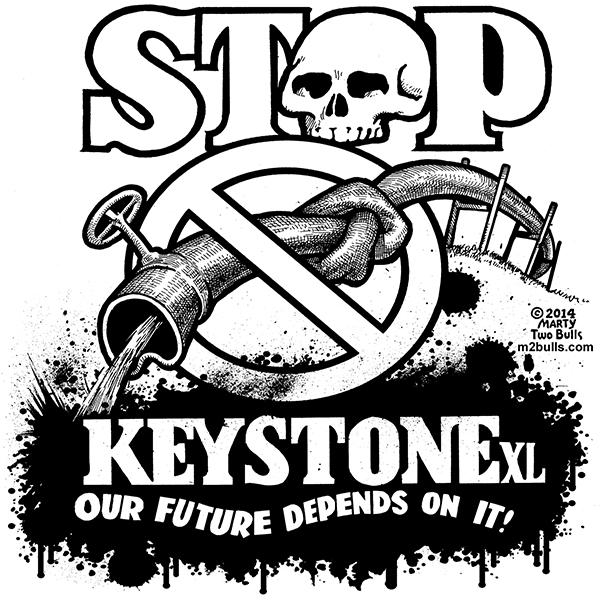
2.5 million outraged public comments and one honest state (Nebraska) — the Administration is, for the very first time, feeling the weight of collective intelligence both individual and state. Is fracking next?
The Obama administration is putting off its decision on the Keystone XL oil pipeline, likely until after the November elections, by extending its review of the controversial project indefinitely.
In a surprise announcement Friday as Washington was winding down for Easter, the State Department said federal agencies will have more time to weigh in on the politically fraught decision — but declined to say how much longer. Officials said the decision will have to wait for the dust to settle in Nebraska, where a judge in February overturned a state law that allowed the pipeline's path through the state.
“In addition, during this time we will review and appropriately consider the unprecedented number of new public comments, approximately 2.5 million, received during the public comment period that closed on March 7, 2014,” the State Department said.
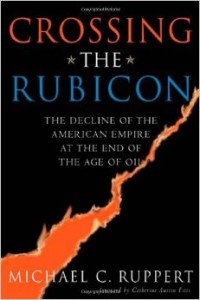
Mike Ruppert, a former LA police officer, was best known for his book, Crossing the Rubicon: The Decline of the American Empire at the End of the Age of Oil, which is about 9-11, peak oil and related issues. When one reads up on his life, what he fought against and went through, it is without a doubt evident he stimulated push-back from dark forces with no interest in seeing his information commonly available. From all the articles below, one can see it is very likely that he did indeed kill himself, no other people were involved, he was not “suicided.” War always entails casualties and deaths, and warring against the dark side can take its toll on the psyche or spirit and lead to suicide, another type of war casualty.
This piece first appeared at TomDispatch. Read Tom Engelhardt’s introduction here.
After an argument about a leave denied, Specialist Ivan Lopez pulled out a .45-caliber Smith & Wesson handgun and began a shooting spree at Fort Hood, America’s biggest stateside base, that left three soldiers dead and 16 wounded. When he did so, he also pulled America’s fading wars out of the closet. This time, a Fort Hood mass killing, the second in four and a half years, was committed by a man who was neither a religious nor a political “extremist.” He seems to have been merely one of America’s injured and troubled veterans who now number in the hundreds of thousands.
Some 2.6 million men and women have been dispatched, often repeatedly, to the wars in Iraq and Afghanistan, and according to a recent survey of veterans of those wars conducted by the Washington Post and the Kaiser Family Foundation, nearly one-third say that their mental health is worse than it was before they left, and nearly half say the same of their physical condition. Almost half say they give way to sudden outbursts of anger. Only 12% of the surveyed veterans claim they are now “better” mentally or physically than they were before they went to war.
The media coverage that followed Lopez’s rampage was, of course, 24/7 and there was much discussion of PTSD, the all-purpose (if little understood) label now used to explain just about anything unpleasant that happens to or is caused by current or former military men and women. Amid the barrage of coverage, however, something was missing: evidence that has been in plain sight for years of how the violence of America’s distant wars comes back to haunt the “homeland” as the troops return. In that context, Lopez’s killings, while on a scale not often matched, are one more marker on a bloody trail of death that leads from Iraq and Afghanistan into the American heartland, to bases and backyards nationwide. It’s a story with a body count that should not be ignored.
War Comes Home
During the last 12 years, many veterans who had grown “worse” while at war could be found on and around bases here at home, waiting to be deployed again, and sometimes doing serious damage to themselves and others. The organization Iraq Veterans Against the War (IVAW) has campaigned for years for a soldier’s “right to heal” between deployments. Next month it will release its own report on a common practice at Fort Hood of sending damaged and heavily medicated soldiers back to combat zones against both doctors’ orders and official base regulations. Such soldiers can’t be expected to survive in great shape.
Immediately after the Lopez rampage, President Obama spoke of those soldiers who have served multiple tours in the wars and “need to feel safe” on their home base. But what the president called “that sense of safety… broken once again” at Fort Hood has, in fact, already been shattered again and again on bases and in towns across post-9/11 America—ever since misused, misled, and mistreated soldiers began bringing war home with them.
Since 2002, soldiers and veterans have been committing murder individually and in groups, killing wives, girlfriends, children, fellow soldiers, friends, acquaintances, complete strangers, and—in appalling numbers—themselves. Most of these killings haven’t been on a mass scale, but they add up, even if no one is doing the math. To date, they have never been fully counted.
A new reports finds the killings of environmental and land rights activists worldwide has tripled over the past decade. The group Global Witness documented 147 activists who were killed in 2012, compared to 51 in 2002. The death rate is now an average of two per week. Almost none of the killers have faced charges. We air interviews with some of the late activists featured in the report, including José da Silva, a Brazilian conservationist and environmentalist who campaigned against logging and clearcutting of trees in the Amazon rainforest. In 2011, José and his wife, Maria, were murdered by masked gunmen. “This could be the tip of the iceberg in terms of the scale of the real problem,” says Global Witness campaigner Oliver Courtney, who says details about the murders were nearly impossible to locate.