The latest Snowden document is the US intelligence “black budget.” There’s a lot of information in the few pages the Washington Post decided to publish, including an introduction by Director of National Intelligence James Clapper. In it, he drops a tantalizing hint: “Also, we are investing in groundbreaking cryptanalytic capabilities to defeat adversarial cryptography and exploit internet traffic.”
Honestly, I’m skeptical. Whatever the NSA has up its top-secret sleeves, the mathematics of cryptography will still be the most secure part of any encryption system. I worry a lot more about poorly designed cryptographic products, software bugs, bad passwords, companies that collaborate with the NSA to leak all or part of the keys, and insecure computers and networks. Those are where the real vulnerabilities are, and where the NSA spends the bulk of its efforts.
At first glance, it appears that the Department of Defense (DoD) and the Intelligence Community (IC) have the same cyber security needs as other large organizations in the commercial world. While this is true to a certain extent, the business rules and requirements are significantly different.
The Federal Government, in general, and the DoD/IC are heavily scrutinized and regulated in terms of acquisition policy. The Federal Acquisition Regulations (FAR) and the applicable DoD regulations (DFAR) are comprehensive, administrative and largely bureaucratic in an attempt to protect the interests of the American taxpayer – Cyber Security Solutions have been affected by this process.
This administrative approach has had an initial negative impact on cyber security effectiveness with state sponsored and agile criminal groups enjoying repeated success. As a result, many DoD/IC agencies are reevaluating their cyber security requirements with a more solutions-oriented strategy.
DoD and IC requirements for an effective cyber system include:
Last week, President Obama met with the five-member review board that he recently appointed to review the National Security Agency’s (NSA) controversial electronic surveillance program. The review board is part of the president’s effort to build confidence in the surveillance program and its respect for privacy rights.
But when Obama speaks about the program, he leaves the impression that its existing privacy protections are sufficient, if only we knew enough to appreciate them. That hardly instills confidence. If the president is serious about fixing the enormous overreach of U.S. surveillance that Edward Snowden helped to highlight, he should take these steps:
First, recognize 4th Amendment protection for our metadata. More than 30 years ago, in a different technological era, the Supreme Court ruled that, unlike the content of our phone conversations, we have no privacy rights in the numbers we call. The rationale was that we share those numbers with the phone company. The intrusion mattered little at the time because if the police wanted to reconstruct someone’s circle of contacts, they had to undertake the enormously time-consuming process of manually linking phone number to phone number.
The United States, Afghan, Qatari, and Pakistani governments have all voiced their support for the opening of a Taliban office in Doha in order to promote peace negotiations. Some consider transforming the Taliban from an armed insurgency into a legitimate political group to be the critical first step in the Afghan peace process. However, to date, reconciliation efforts have stalled and focus more on rhetoric rather than substance.
There is no concrete evidence that Taliban leadership is either worn down or desperate to reach a peace agreement. Attempting to secure his legacy as a peacemaker, Afghan President Hamid Karzai wants to reach an agreement before the end of his term in April 2014. Because the Taliban have also cooperated somewhat with this principle of reconciliation, it is not immediately clear why the current approach has achieved nothing.
Viet-Nam Viet-Cong Redux
The answer is that the Doha peace process has been riddled with unrealistic expectations, and remains hopelessly inconsistent. Such reconciliation efforts without strategy and clear objectives reflect a hook without bait – while encouraging, these talks are doomed to fail without significant reform. Only with realistic expectations, a coherent strategy, national solidarity, and lots of patience, will reconciliation stand a chance of materializing.
Where We've Been Thus Far
The reconciliation offer requires three specific things from the Taliban: ending violence, breaking ties with al-Qaeda, and accepting the Afghan Constitution. The fourth, less advertised condition is the acceptance of a residual ISAF element in Afghanistan post-2014. At a recent summit in London, British, Afghan and Pakistani leaders set a six-month timeline to reach a peace settlement.
But substantive results are unlikely to emerge until after the 2014 Afghan Presidential elections. This is the single most important date in the reconciliation process and will set the tone for future debate. A six-month deadline to reach an agreement is not only unrealistic, but also damaging to the credibility of the process.
Maintaining a large military presence in Afghanistan is not in the strategic interests of either the U.S. or the Afghan government. It does not help the United States accomplish its long-term goal of countering terrorism from the Afghanistan-Pakistan region, nor its short-term goal of helping Afghanistan achieve stability and self-reliance in fighting insurgency. It is also economically unsustainable. However, retaining a smaller, lighter, residual presence in Afghanistan is critical to U.S. strategy and vital to core U.S. interests.
Additionally, U.S. strategy in Afghanistan must be based on a vision that goes out decades: Considering only short-term goals amounts to strategic myopia, unworthy of the sacrifices made by almost 2,200 U.S. service members in Afghanistan alone.
A Case for Lighter, Smarter, Long-term Residual Presence
With Osama Bin Laden dead and al-Qaeda's capabilities diminished in the Af-Pak region, the immediate threat of attacks on the U.S. from the region has greatly diminished. But the ingredients that could help Al Qaeda regenerate in the next decade remain, and thus the mission endures.
In fact, the “surge” of U.S. troops in Afghanistan in 2009 had little to do with bin Laden; rather, it was an attempt to rescue the failing mission of stabilizing Afghanistan. Bin Laden was hunted and killed not by the surge, but by a small, specialized group, the likes of which I argue should remain in Afghanistan to monitor and guard against the long-term threat of terrorist cells.
More importantly, a comprehensive counter-terrorism strategy must include the training of the Afghan National Security Forces (ANSF) to counter domestic threats. But this will take significantly longer than estimates suggest. As such, the U.S. must alter its stated strategy in Afghanistan to consider the training and equipping of the ANSF a key element of its plan to counter threats, and support Afghanistan in its domestic fight against terrorists that, left unchecked, could re-emerge. The numbers of trainers must be kept low and should not be outsourced to contractors. Currently, the only elements specifically designed to counter insurgencies are the U.S. Special Operations Forces (SOF). Considering the nuanced task, the training force should be predominantly SOF.
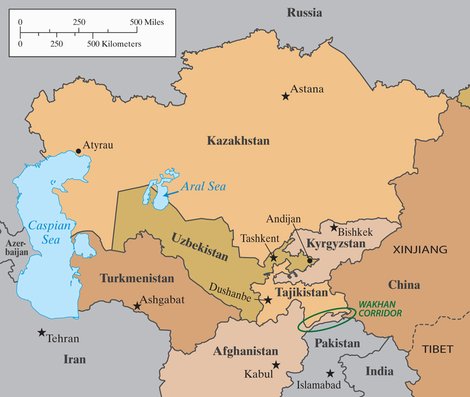
None of the works under review provides the full answers to these questions, although Alexander Cooley’s book, Great Games, Local Rules, comes closest. They all agree on the unprecedented rise of China’s influence in Central Asia. Marlène Laruelle and Sébastien Peyrouse, scholars at George Washington University in Washington, D.C., demonstrate in The Chinese Question in Central Asia that China is already the dominant economic power in the region.
Click on Image to Enlarge
China has also taken care of one vital strategic interest since 1991: making sure that the Uighurs, China’s largest Muslim ethnic group who live in the western province of Xinjiang, do not seriously threaten to become independent and that the hundreds of thousands of Uighurs who live in Central Asia do not help them do so. During the 1950s large numbers of Uighurs fled the Maoist regime to seek shelter in Soviet Central Asia where they were relatively well treated.
After 1991 China put immense pressure on the three Central Asian states that border Xinjiang—Kazakhstan, Tajikistan, and Kyrgyzstan—to tightly restrict all Uighur political activity on their soil. China offered sweeteners such as resolving the border disputes that had plagued Chinese–Soviet relations in Central Asia for decades. Within a decade the borders between China and the Central Asian states were demarcated and settled, allowing for China’s rapid economic involvement in the region.
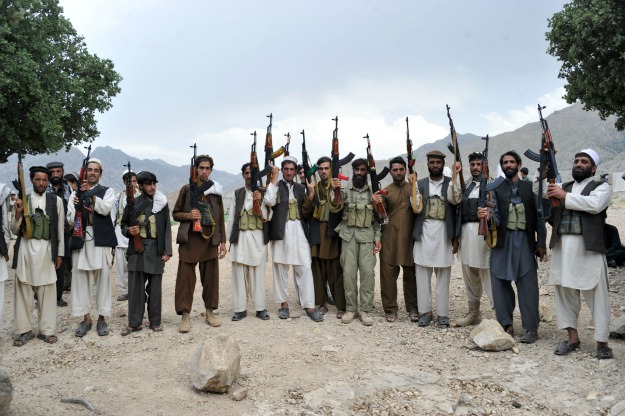
Still, Uighur nationalism and Islamic militancy have continued to mount in Xinjiang, as China has inundated the province with Han Chinese and severely repressed the Muslims. While the Uighur populations in Central Asia have been largely silenced, some Uighurs have been training and fighting with the Taliban in Pakistan and Afghanistan.
During the past decade China has invested heavily in Central Asia. Laruelle and Peyrouse write that
Key takeaway from this item by Julian Assange, which came out in Australia August 24, 2013 (my emphasis):
“Back in 2011 I had a meeting with Eric Schmidt, the then Chairman of Google, who came out to see me with three other people while I was under house arrest. You might suppose that coming to see me was gesture that he and the other big boys at Google were secretly on our side: that they support what we at WikiLeaks are struggling for: justice, government transparency, and privacy for individuals. But that would be a false supposition. Their agenda was much more complex, and as we found out, was inextricable from that of the US State Department. The full transcript of our meeting is available online through the WikiLeaks website.
The pretext for their visit was that Schmidt was then researching a new book, a banal tome which has since come out as The New Digital Age. My less than enthusiastic review of this book was published in the New York Times in late May of this year. On the back of that book are a series of pre-publication endorsements: Henry Kissinger, Bill Clinton, Madeleine Albright, Michael Hayden (former head of the CIA and NSA) and Tony Blair. Inside the book Henry Kissinger appears once again, this time given pride of place in the acknowledgements.
Schmidt’s book is not about communicating with the public. He is worth $6.1 billion and does not need to sell books. Rather, this book is a mechanism by which Google seeks to project itself into Washington. It shows Washington that Google can be its partner, its geopolitical visionary, who will help Washington see further about America’s interests. And by tying itself to the US state, Google thereby cements its own security, at the expense of all competitors.