Human Cities Symposium in Bruxelles.
The proceedings for the conference have just been published.
You can also click below to download them.

The truth at any cost lowers all other costs — curated by former US spy Robert David Steele.
Human Cities Symposium in Bruxelles.
The proceedings for the conference have just been published.
You can also click below to download them.

Fukushima Disaster Was Man-Made, Investigation Finds
The Fukushima nuclear disaster was the result of “man-made” failures before and after last year’s earthquake, according to a report from an independent parliamentary investigation.
The breakdowns involved regulators working with the plant operator Tokyo Electric Power Co. to avoid implementing safety measures as well as a government lacking commitment to protect the public, the Fukushima Nuclear Accident Independent Investigation Commission said in the report.
The March 11 accident, which set off a wave of reactor safety investigations around the world, “cannot be regarded as a natural disaster,” the commission’s chairman, Tokyo University professor emeritus Kiyoshi Kurokawa, wrote in the report released yesterday in Tokyo. It “could and should have been foreseen and prevented. And its effects could have been mitigated by a more effective human response.”
The report dealt the harshest critique yet to Tokyo Electric (9501) and the government. The findings couldn’t rule out the possibility that the magnitude-9 earthquake damaged the Fukushima Dai-Ichi No. 1 reactor and safety equipment. This is a departure from other reports that concluded the reactors withstood the earthquake, only to be disabled when the ensuing tsunami slammed into the plant.
Towards a Match.com for Economic Resilience in a Crisis-Stricken World
So that’s what he’s been up to! My good friend and mentor Ken Banks of Kiwanja fame has just launched a very interesting initiative entitled “Means of Exchange“. Ken wants to democratize opportunities for radical economic self-sufficiency and thus render local communities more resilient to exogenous shocks. “I’ve been taking an increasing interest in economic resilience,” writes Ken, “particularly how technology might help buffer local communities from global economic down-turns. Ironically, since I started my research the world has entered a period of growing economic uncertainty. The causes–although fascinating–don’t so much interest me, more the response at local, grassroots level.”
To say that Ken’s ideas directly resonate with my ideals would be a huge understatement. My iRevolution blog is currently in its fifth year of production and as the About page explains, “This blog features short thought pieces on how innovation and technology are revolutionizing the power of the individual through radical self-sufficiency, self-determination, independence, survival and resilience.” I’m incredibly excited by Ken’s new initiative. He quotes this excellent comment by Calvin Coolidge, which really hits home:
“We pay too little attention to the reserve power of the people to take care of themselves. We are too solicitous for government intervention, on the theory, first, that the people themselves are helpless, and second, that the government has superior capacity for action. Often times both of these conclusions are wrong.”
I have written many a blog post on this very people-centered notion as applied to crisis early warning and humanitarian response. Hence my pitch two years ago for a Match.com applied to humanitarian relief. Take this blog post, for example: “The Crowd is Always There: A Marketplace for Crowdsourcing Crisis Response.” But Ken is not just advocating for a “Match.com for Economic Resilience,” he is also building the infrastructure to make it happen: “A number of apps to support this work are planned for rollout during the year, with the first due for release in summer 2012.”

Despite appearances, Indignados are (not so) silently gaining strength
The 15-M movement has gone beyond protest: it has succeeded in altering the collective imagination and the political atmosphere at its very roots. It has generated a process of re-politicization of society. The agenda of actions has expanded and been radicalized: now we do not only occupy the squares, but we are taking back the public spaces in our own neighborhoods. We stop evictions. We crowd-fund our initiatives. We bring legal actions against bankers. We build our own parallel networks of social support. Does this show a weakened movement, running out of strength? Or does it rather show a dynamic movement, working in the underground on a silent revolution?
Far from losing strength, decentralization has allowed 15-M to become ever more dynamic, writes Martha Sanchez:
“Is the 15-M movement going invisible? Or is it rather gaining strength in the ‘underground’? The mainstream media keep claiming that the indignados have lost support since last year, that its only success is its ability to bring people together on special dates. Spanish newspaper El País concluded in May 2012 that, one year after the birth of the movement, popular support and sympathy for the indignados had decreased around 13% among the Spanish population, despite the massive mobilizations that took place from the 12th until the 15th of May, commemorating the anniversary of the movement. ABC opened its edition of May 15 stating that “the indignados movement shows less strength on their anniversary.” But the media misses the point. In reality, rather than losing strength, the movement has become stronger, more organized, better coordinated, and supported by the commitment of hundreds of people.
The decentralization of the movement
Continue reading “Michel Bauwens: Indignados are (not so) silently gaining strength”
Outlines the two reasons Steele ran for President (to put all the best non-partisan ideas in one place, at http://www.bigbatusa.org) and to connect with an evaluate all of the other Presidential candidates. Steele goes on to outline precisely what needs to happen in the way of an Electoral Reform Summit and a non-negotiable national demand for the Electoral Reform Act of 2012–the only real possibility for a constructive non-violent restoration of democracy in the USA–and thence elsewhere. We are living a lie, suffocated by the two-party tyranny that has sold out the birthright of every citizen. This is not rocket science — all it demands is citizens with intelligence and integrity coming together around the obvious….open source everything, starting with US politics.
Tags: democracy Republic Constitution tyranny transparency truth toxicity theft trust
YouTube LINK: http://youtu.be/nL2f0qr4IJk
See Also:
YouTube (4:10) The Open Source Everythinig Manifesto: Transparency, Truth & Trust
http://tom-atlee.posterous.
Short URL: http://post.ly/83Ojt
Dear friends,
I'm interested in derivatives as a symbol of an economic system that's NOT based on productivity that satisfies real human needs. Derivatives are contracts that shift risk from players who are risk averse (and want insurance against loss) to players who have an appetite for risk (and want a big gambling win).* While originally intended to serve much like an insurance policy, they have turned into a tool for high-stakes gambling that puts everyone else at risk.
The speculative market in financial derivatives is – depending on whose estimate you read – THREE to TWENTY (or more) times bigger than the whole global economy – way bigger than the GDP of the entire world. Derivatives are a very big part of what is called “the casino economy”. Financial speculation is basically gambling that the value of something – commodities, stocks, currency, whatever – will go up or down. The casino economy is not about producing or financing real goods or services.* It is about making lots of money for the successful gamblers.
The rest of us could let them go ahead and gamble except for two things. First, many of them use the money they get to buy more influence and power, making a mockery of “the free market” and “democratic self-governance”. Secondly, the wrong sequence of bad guesses, responses and glitches in this highly computerized money-making game could wipe out the global economy that the rest of us depend on. We are still stumbling from the last global financial crash in 2008 – in which derivatives played a major role. But far bigger crashes are possible.
Continue reading “Tom Atlee: Derivatives as Fatal Cancer Discussion and Links”
by John Robb on June 25, 2012
Writing from: Aspen, CO. I’m speaking/attending the National Geographic Environmental Conference (focus of the conference: adapting to climate change).
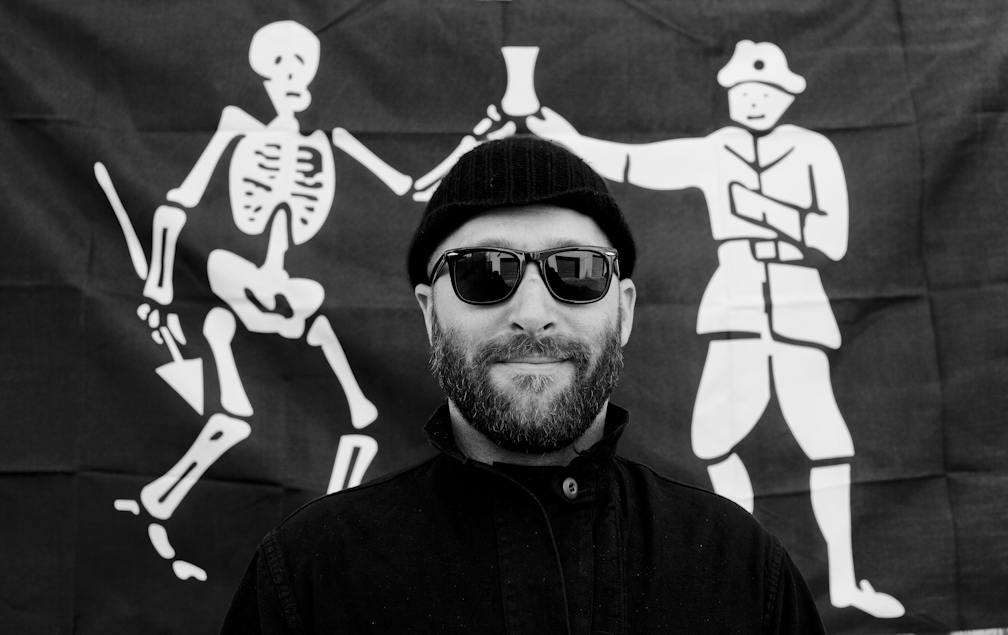
I had the good fortune of sitting on a conference panel with Mayor Fetterman of Braddock, PA.
He’s a great bear of a guy (he makes me, at 6′ 1″ and well built, look small in comparison), but despite his size, he looked like he was slowly being crushed by the weight of the world when he showed up at the panel.
His story explained why. He’s spent the last decade trying to save a storied American town, crushed by global economic and financial forces. Forces that gutted a prosperous steel town of 18,000 with some historical treasures (e.g. the first Carnegie Library) and a thriving retail sector.
When Fetterman arrived in Braddock, the town was already in shambles. The population had fallen to below 3,000 and gang crime was rampant. In fact, the landscape of the town was so bleak, the town was used as a setting for the darkest apocalypse movie I’ve ever seen, “The Road“
