The Cyber Racket

Advanced Cyber/IO
Richard Wright

In the fall of 2010, CACI of Arlington, a major player in the U.S. government's cyber security business, held a symposium entitled “Cyber Threats to National Security,” in partnership with the U.S. Naval Institute to discuss the issue of Cyber Security. CACI is chasing roughly $2 billion worth of cyber-related contracts over the next few years and company executives said they sponsored the symposium pro bono.

The symposium's conclusions: There are redundancies, little coordination and a lack of clarity among the various government agencies, organizations and military command posts that do cyber work. The symposium report notes, “agencies have overlapping and uncoordinated responsibilities for cyber security activities.”

The Obama administration's new Comprehensive National Cybersecurity Initiative (CNCI), it says, “faces substantial challenges that cannot be overcome unless roles and responsibilities of all key CNCI participants are fully coordinated.” That includes several agencies: “Commerce, Defense, and Homeland Security; the Intelligence Community and other executive branch entities,” all with “various overlapping and potentially competing responsibilities.”

Cybercom under General Alexander is not even going to come close to addressing these problems. Indeed the whole CNCI Program looks increasingly like yet another ploy to grow the U.S. National Security Establishment and spread the government largesse to a new party of contractors. There is no evidence that I have seen that any persons of consequence in the U.S. Government have actually examined the concept of U.S. cyberspace, much less explored methods and techniques that could be employed to provide it with minimum security.

The reason this suggests that the whole CNCI is a scam is that in point of fact that concepts such as ‘cyberspace’ and securing cyberspace have been extensively studied by computer and telecommunications experts in and out of government.  No less a government authority than the U.S. National Defense University (a DOD institution) published a detailed and accurate study of these topics in the book Cyberpower and National Security.  So the ignorance and confusion over the development of a comprehensive cybersecurity plan on the part of the leaders of the CNCI Program, including General Alexander, is really inexcusable.

That is not to say that the people leading the CNCI are not intelligent, but it is to say they are not serious. They are detached from the real world of cyber threats and information operations and live in a world where all problems are solved by what Robert Steele accurately refers to as contactor vapor ware.


Continue reading “The Cyber Racket”

Worth a Look: Gaming, Artificial Life & Intelligence

Advanced Cyber/IO, Technologies, Worth A Look
Who, Me?

Imagine a game in which “true cost” is the norm, and the public can see alternative realities that are fully transparent and show the art of the possible in the absence of corruption….note the “bottom up” nature of the project.

Inside One Man’s Kickstarter Quest to Build True Artificial Life

Virtual worlds have long been populated by creatures that interact, reproduce, compete, evolve and die. But by and large, they do so because their behavior is programmed by developers. These efforts can produce complex virtual ecosystems, but they’re not quite the digital reflections of what happens in nature.

Life in the real world is “programmed” by DNA, but its form and behavior are determined by the random mutation of genetic code, not by the intentions of a developer. Computer scientists have always been intrigued by the prospect of creating “artificial life” — that is, digital genetic code that can sustain itself over generations and adapt to meet the demands of a virtual environment without human interference.

Q & A With Steve Grand, Artificial Life Developer

Continue reading “Worth a Look: Gaming, Artificial Life & Intelligence”

Worth a Look: Open Enterprise

Advanced Cyber/IO, Collaboration Zones, Communities of Practice, Ethics, IO Multinational, Key Players, Methods & Process, Open Government, Policies, Threats

The Open Enterprise is a new organizational design. Unlike organizations using traditional management structures, Open Enterprises replace the command and control hierarchy with a meritocracy based on collaboration and open participation.

Open Enterprise Manifesto

Open Enterprise Governance Model

BetterMeans Open Project Management Software

Reference: Cook Report on Internet Protocol

Advanced Cyber/IO, Autonomous Internet
Gordon Cook

The COOK Report serves an international community of thought leaders focused on strategy affecting the Internet as a global utility that is critically important to the advancement of education, science, and the economy of every nation that it touches.  The COOK Report sponsors an international community of interest limited to 200 industry visionaries.  Subscribers gain access to the Economics and Architecture of IP Networks mail list [Arch-econ] now in its seventh year. Arch-econ is a private creation space offering a unique online discussion where industry leaders share knowledge and develop ideas.

Testimonial (one of many):  “Gordon Cook is fiber in a world of dial-up. He asks timely and provocative questions, invites leading practitioners and experts on all sides to debate them online for several weeks, cuts to the heart of the debates, and publishes the results in language that serious lay readers can understand. No other online journal matches the Cook Report's combination of richness of content and accessibility.”

The Cook Report on Internet Protocol: Technology, Economic, and Policy (A Practical Navigator for the Internet Economy)

Phi Beta Iota: A member of our collective met for four hours with Gordon Cook, and came away deeply impressed.  He is a very difficult man to interview, with so much knowledge of the Internet across the spectrum from governance to corruption, from technical to standards, from abuse to world-saving potential, that focusing in on any particulars is a time-consuming task.  Having said that, when he does produce a product, it is brilliant, replete with detail not to be found anywhere else, and for those who care about an Autonomous Internet, priceless.  We strongly recommend his private list which is by subscription (link immediately above).

Gordon Cook at Phi Beta Iota

Gordon Cook at DuckDuckGo

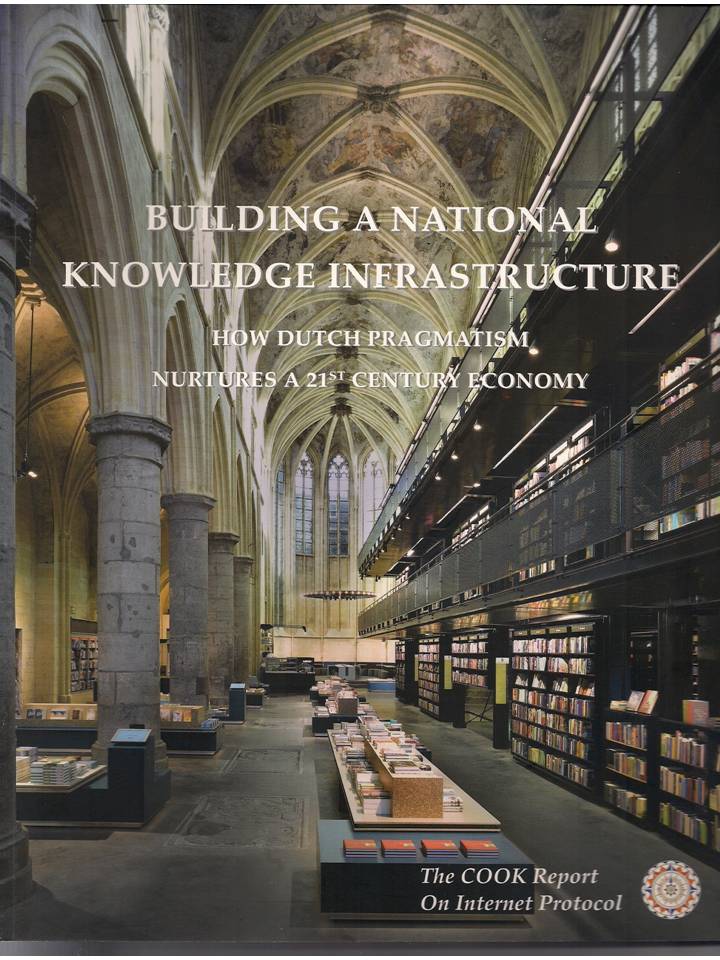
Reference: Building National Knowledge Infrastructure–How Dutch Pragmatism Nurtures a 21st Century Economy (The Cook Report on Internet Protocol)

Advanced Cyber/IO, Autonomous Internet, Collaboration Zones, Communities of Practice, Ethics
Click on Image to Enlarge

P2P Foundation Post on the Book

Download Book from CookReport

FREE Color Copy to New Subscribers to the Private List of Dr. Gordon Cook, email him to his last name only @cookreport.com.

See Also:

Reference: Cook Report on Internet Protocol V4 E Pluribus Unum* Resurrected: How Human Ingenuity, DIY Technology, and Global R&E Networks Are Remaking the World Part 1 of 2 Parts

Who’s Who in Collective Intelligence: Gordon Cook

Autonomous Internet [Open, Free, Distributed]

Range Networks: The ONLY OpenBTS Real Deal

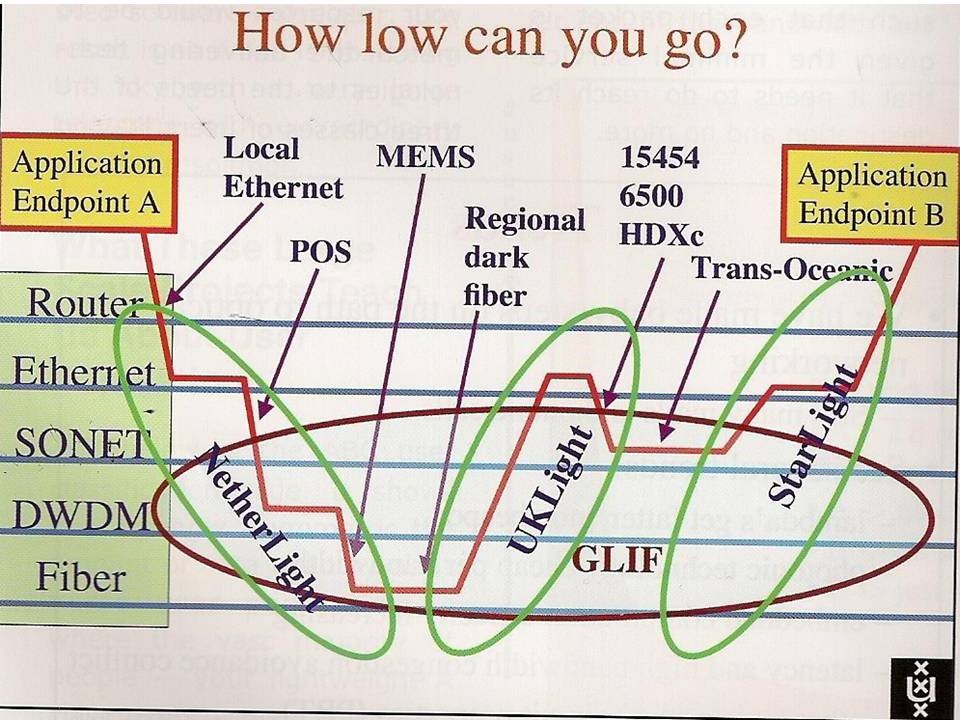
Core Graphic from this Reference

Click on Image to Enlarge

The Dutch, unaffected by the corruption that plagues the US government and its corporate patrons (aptly documented in Matt Tabbi's GRIFTOPIA), have done it right.  They have built Roger Karraker's  “Highways of the Mind, done so from the bottom-up, and recognized the massive efficiencies that come from a combination of optical paths and clever holistic architectures that allow data to move at lower levels when the fit is right.  The Dutch are deep and holistic; the US is superficial and corrupt.  That's the story.

Related Commentary:

We need to ignite a Layer-1 revolution

Security: Risk and Reward By Andreas M. Antonopoulos, Network World March 02, 2011 10:57 AM ET

Crowd-Sourcing Comes of Age on Libya

Advanced Cyber/IO, Analysis, Civil Society, Collective Intelligence, Corruption, Counter-Oppression/Counter-Dictatorship Practices, Ethics, Government, info-graphics/data-visualization, InfoOps (IO), Intelligence (government), IO Sense-Making, Methods & Process, Mobile, Real Time
May the Crowd be with you, always.

Volunteers Behind Libya Crisis Map: A True Story

Patrick Meier, iRevolutiion, 8 March 2011

My colleague Clay Shirky called it “Cognitive Surplus” in his recent book. Don Tapscott and Anthony Williams refer to it as “MacroWikinomics” in theirs.

What is cognitive surplus? The trillion hours of free time enjoyed by the world's educated population every year. Don and Tony describe MacroWikinomics as mass distributed collaboration on scales we've never seen before thanks to technology.

We're familiar with deficits and shortages, writes, Clay, but when it comes to surplus social capital, things quickly become unpredictable—especially when this capital scales thanks to the use of social networking platforms and Web 2.0 technologies. But then again, says Clay, “Many of the unexpected uses of communication tools are surprising because our old beliefs about human nature were so lousy.”

Rest of story, maps, photos….

Phi Beta Iota: Over bagels and lox yesterday, Doug Rushkoff summarized his intention for ContactCon: “to take us back to 1992, but this time with 2012 technology and human understanding.”  Here is what the US Government was told in 1992 about crowd-sourcing.  20 years and 1 trillion dollars later (20 years, average of 50 billion a year), we still have the world's most expensive ineffective wasteland pretending to “do” intelligence.  The lunacy continues.

1992 AIJ OSS Steele’s Original Vision

1992 AIJ Fall ‘New Paradigm” and Avoiding Future Failures

Reference: 1992 USMC C4I Campaign Plan

1992 E3i: Ethics, Ecology, Evolution, & intelligence (An Alternative Paradigm)

Reference: Reinventing Management

Advanced Cyber/IO, Articles & Chapters, Commercial Intelligence, Communities of Practice
Feb. 26 2011 – 12:42 pm By STEVE DENNING

My article, The Reinvention of Management” has just been published in a special issue of Strategy & Leadership on “outracing change: learning to foresee, adapt, re-invent and innovate faster.” (Strategy & Leadership, 2011, Vol. 39 Issue: #2, pp.9 – 17)

The article explains why business leaders and writers are increasingly exploring a fundamental rethinking of the basic tenets of management. It synthesizes a number of books including Umair Haque’s  The New Capitalist Manifesto, The Power of Pull by John Hagel, John Seely Brown and Lang Davison and my own book, The Leader’s Guide to Radical Management. The article shows how management is being reinvented with five fundamental shifts:

  • the firm’s goal (a shift from inside-out to outside-in);
  • the role of managers (a shift from controller to enabler);
  • the mode of coordination (from command and control to dynamic linking);
  • the values practiced (a shift from value to values); and
  • the communications (a shift from command to conversation).

The raison d’être of the firm changes from a focus on reducing transaction costs to scalable collaboration, learning and innovation. The shifts are interdependent: if only some shifts are made, the firm will slide back into hierarchical bureaucracy.

By adopting a people-centered goal, a people-centered role for managers, a people-centered coordination mechanism, people-centered values and people-centered communication the leaders of a firm can focus on the people who are its customers.

The article is available here.

noble gold