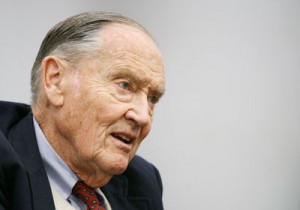
John Bogle: ENOUGH – Speculation Bad Investment Good

03 Economy, 07 Other Atrocities, 09 Justice, 10 Transnational Crime, Civil Society, Commerce, Commercial Intelligence, Corporations, Corruption, Government, Money, Banks & Concentrated Wealth, Power Behind-the-Scenes/Special Interests

MARK JEWELL

Associated Press, 22 December 2011

EXTRACTS:

Bogle says he's paying close attention to tax policies he considers unfair, including one that's favorable to the fund industry and investors with taxable accounts. The top rate for dividends and long-term capital gains is historically low at 15 percent, as a result of the extension of Bush era tax cuts that Congress and President Barack Obama agreed to a year ago. In contrast, top earners pay 35 percent on regular income. He doesn't like that disparity.

. . . . . . .

As for capital gains, there ought to be some distinction between capital made by people who start businesses, and contribute value to society, and capital made by gamblers on Wall Street, some of whom win. Earned capital income should carry the regular dividend rate, but capital income gains by trading, and particularly short-term trading, should pay a higher tax, even than the present ordinary income rate.

. . . . . . .

Q: What's your take on the Occupy movement?

A: I'm happy to say that my current income puts me in the 99 percent group. So maybe I'm not so happy, I don't know.

This movement has brought to the surface some very serious problems in our country about disparities in opportunity and income. So many young people are having a terrible time getting a job.

Young people have great idealism, and the Occupy movement has been a bit unrealistic at times. So what? I can't imagine a worse America if our younger generation didn't have great idealism. I salute them for their enthusiasm, and their mission.

The negative side is that they just pushed too hard for too long. It's very difficult for any movement without any seeming leadership — other than a good idea — to have any sense of taste or judgment. Who's to say, ‘This is going too far'? In some places, it's just gone on too long, and it's been too disruptive. So I think it's good that we've been cleaning up the plazas where the Occupy movement set up.

Read full interview.

See Also (Steele Reviews in Each Case):

John Bogle, The Battle for the Soul of Capitalism

William Greider, The Soul of Capitalism: Opening Paths to a Moral Economy

Matt Taibbi, Griftopia: A Story of Bankers, Politicians, and the Most Audacious Power Grab in American History
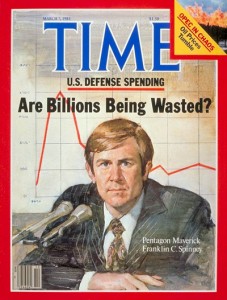
Chuck Spinney: Europe in Crisis Rule by Troika Spain and Hungary Next

03 Economy, 06 Russia, 08 Wild Cards, 11 Society, Commerce, Commercial Intelligence, Corruption, Government
Chuck Spinney

Rule by troika

by Serge Halimi
Le Monde Diplomatique, December 2011

Former bankers Lucas Papademos and Mario Monti have taken over in Athens and Rome, exploiting the threat of bankruptcy and the fear of chaos. They are not apolitical technicians but men of the right, members of the Trilateral Commission that blamed western societies for being too democratic.

In November, the Franco-German directorate of the European Union, the European Central Bank and the International Monetary Fund — the “troika” — were furious when the Greek prime minister, George Papandreou, announced plans to hold a referendum. This, they said, would call into question an agreement reached in October to strengthen the economic policy that had brought the country to its knees. Summoned to Cannes for an interview during a summit that his country was too small to attend, kept waiting, and publicly upbraided by Angela Merkel and Nicolas Sarkozy (who were responsible for exacerbating the crisis), Papandreou was forced to abandon the plan for a referendum and resign. His successor, a former vice-president of the ECB, promptly decided to include in the Athens government a far-right organisation banned since the Greek colonels lost power in 1974. (The troika expressed no views on this.)

The European project was supposed to secure prosperity, strengthen democracy in states formerly ruled by juntas (Greece, Spain, Portugal), and defuse “nationalism as a source of war”. But it is having the opposite effect, with drastic cuts, puppet governments at the call of the brokers, and renewed strife between nations. A young Spaniard voiced his anger at having to go to Berlin or Hamburg to find work: “We can’t go on being Germany’s slaves.” The Italians find the French president’s high and mighty attitude offensive and wonder, rightly, what exceptional talents might justify this.  Some Greeks are complaining about the “occupation” of Greece, with cartoons depicting the German chancellor in Nazi uniform.

For people in countries suffering under austerity measures, the history of Europe provides some outstanding examples. In some ways, recent events in Athens recall Czechoslovakia in 1968: the crushing of the Prague Spring and the removal of the Communist leader Alexander Dubcek. The troika has played the same part in reducing Greece to a protectorate as the Warsaw Pact did in Czechoslovakia, with Papandreou in the role of Dubcek, but a Dubcek who would never have dared to resist. The doctrine of limited sovereignty has been applied, though admittedly it is preferable and less immediately lethal to have its parameters set by rating agencies rather than by Russian tanks rolling over the borders.

Having crushed Greece and Italy, the EU and the IMF have now set their sights on Hungary and Spain.

See Also:

Mini-Me: Iceland Breaks the Back of Western Banking

Mini-Me: European-US Banking–Tangled Web — Tell Me Again, Why Shouldn’t We Default and Let the Banks Fry? + Financial Terrorism RECAP

John Steiner: Who Is the Government “For”?

03 Economy, 09 Justice, 11 Society, Civil Society, Commerce, Commercial Intelligence, Corruption, Cultural Intelligence, Government
John Steiner

The Defining Issue: Not Government's Size, But Who It's For

Robert Reich

Huffington Post, 19 December 2011

The defining political issue of 2012 won't be the government's size. It will be who government is for.

Americans have never much liked government. After all, the nation was conceived in a revolution against government.

But the surge of cynicism now engulfing America isn't about government's size. It's the growing perception that government isn't working for average people. It's for big business, Wall Street, and the very rich instead.

In a recent Pew Foundation poll, 77 percent of respondents said too much power is in the hands of a few rich people and corporations.

Read rest of article.

Michael Ostrolenk: Should Corporations Have People Rights?

03 Economy, 07 Other Atrocities, 09 Justice, 10 Transnational Crime, 11 Society, Civil Society, Commerce, Commercial Intelligence, Corruption, Counter-Oppression/Counter-Dictatorship Practices, Government, IO Deeds of War, Law Enforcement
Michael Ostrolenk

Corporations are artificial creations of the state and receive special protections from the state. Thus, claims attorney and author Jeff Clements, corporations should not have the same Constitutional rights as individuals even though some argue that they are simply organized associations of individuals.

In this interview with Michael Ostrolenk, Mr. Clements outlines his belief that many of the abuses of crony capitalism are allowed by corporations exploiting these illegitimate “rights.”

He also exposes how tobacco industry attorney turned Supreme Court Justice, Lewis Powell, helped to spearhead the creation of a constitutional right to corporate “speech” which was recently strengthened by theCitizens United decision.  Read more about this issue (and buy his new book Corporations Are Not People) at Mr. Clement’s website.

Listen to Interview

Reform Coalition: “True Cost” Economics & Genuine Progress + True Cost RECAP

03 Economy, 07 Other Atrocities, 11 Society, Analysis, Blog Wisdom, Budgets & Funding, Civil Society, Commerce, Corruption, Earth Intelligence, Ethics, General Accountability Office, Money, Banks & Concentrated Wealth, Office of Management and Budget, Politics of Science & Science of Politics, Power Behind-the-Scenes/Special Interests

Definition of ‘True Cost Economics'

An economic model that seeks to include the cost of negative externalities into the pricing of goods and services. Supporters of this type of economic system feel products and activities that direct or indirectly cause harmful consequences to living beings and/or the environment should be accordingly taxed to reflect the somewhat hidden costs.

Continue reading “Reform Coalition: “True Cost” Economics & Genuine Progress + True Cost RECAP”

Mini-Me: Iceland Breaks the Back of Western Banking

03 Economy, 08 Wild Cards, 09 Justice, 11 Society, Civil Society, Commerce, Counter-Oppression/Counter-Dictatorship Practices, Cultural Intelligence, Ethics, Government, Law Enforcement
Who? Mini-Me?

Pay attention, grasshopper. One day you will be able to think for yourself, and restore Of, By, and For….  Emphasis added.

Why Iceland Should Be in the News, But Is Not

By Deena Stryker

An Italian radio program's story about Iceland’s on-going revolution is a stunning example of how little our media tells us about the rest of the world. Americans may remember that at the start of the 2008 financial crisis, Iceland literally went bankrupt.  The reasons were mentioned only in passing, and since then, this little-known member of the European Union fell back into oblivion.

As one European country after another fails or risks failing, imperiling the Euro, with repercussions for the entire world, the last thing the powers that be want is for Iceland to become an example. Here's why:

Continue reading “Mini-Me: Iceland Breaks the Back of Western Banking”

John Robb: YouTube Censorship by the Millions

03 Economy, 07 Other Atrocities, 09 Justice, 11 Society, Blog Wisdom, Commerce, Corruption, Government, IO Impotency
John Robb

What do you think of the following: YouTube has an “informal system” that allows companies with copyrights to automatically scan all uploads for potential violations. If the software detects the “possibility” of a violation (image, tune, trademark, etc.), it automatically tells YouTube to delete the content. This software is so automated, it can censor millions of uploads a day without human intervention.

Here's an example of how this censoring system was used to block speech that Universal music found objectionable:

A site called MegaUpload, a “large file” sharing service based in Hong Kong, is targeted by copyright holders, including Universal Music, for shutdown. They believe the site makes “copyright piracy” easier.

To fight back on the media front, MegaUpload, a popular (50 m users a day), pays $3 million to produce a music video that promotes the service. The video features big name musical talent.

MegaUpload posts the music video to YouTube to share it with a global audience.

Universal Music, uses special access it has the to the YouTube system (inappropriately named the “content management system”) that allows it to scan all videos posted to the service for potential uses of Universal musical content or the mention of or likenesses of artists it has under contract.

Universal Music identifies that several of its artists are in the MegaUpload video. It automatically signals YouTube to remove/take down the video. YouTube complies. It does so automatically and without verification that Universal even has a valid claim to the copyright. Why?

Continue reading “John Robb: YouTube Censorship by the Millions”

noble gold