“Participatory Budgeting” (PB) is a process that allows citizens to decide directly how to allocate all or part of a public budget, typically through a series of meetings, work by community “delegates” or representatives, and ultimately a final vote. It was first implemented in the city of Porto Alegre, Brazil, in 1990, and has since spread.
PB has recently taken root in Canadian and American soils.
Chicago’s 49th Ward, for example, uses this process to distribute $1.3 million of annual discretionary funds. The ward’s residents have praised the opportunity to make meaningful decisions, take ownership over the budget process, and win concrete improvements for their neighborhood – community gardens and sidewalk repairs to street lights and public murals. The initiative proved so popular that the ward’s alderman, Joe Moore, credits PB with helping to reverse his political fortunes.
The wave is not stopping in Chicago, either. Elected officials and community leaders elsewhere – from New York City to San Francisco and from Greensboro, N.C. to Springfield, Mass. – are considering launching similar initiatives.
October 3, 2011
Contact: Glenn Turner, 917-817-3396
glenn@ripplestrategies.com
Corn vs. Sugar Industries Legal Battle Heats Up Over “High Fructose Corn Syrup” Name Change
New Website FoodIdentityTheft.com Provides Background for Reporters and Consumers
Expert Legal Spokesperson Available For Interviews
WASHINGTON, October 3, 2011 High-Fructose Corn Syrup (HFCS) is a man-made sweetener used in thousands of grocery store products and it has a serious image problem. Consumers are avoiding it. Food companies are taking it out of the products they make. Some supermarkets have banned it. Demand for this highly-processed ingredient is falling fast.
The Corn Refiners Association comprised of corporations that make HFCS -decided that changing the name was a way to fix this problem. They are petitioning the FDA so that HFCS can legally be called “corn sugar” and ultimately just “sugar². An official decision hasn¹t yet been made, but in 2008 the Corn Refiners Association began a $50 million dollar marketing campaign labeling HFCS as ³corn sugar². They are now being sued by a group of sugar farmers and refiners who believe the name change will confuse consumers and harm the sugar industry.
How Real is Versailles on the Potomac?
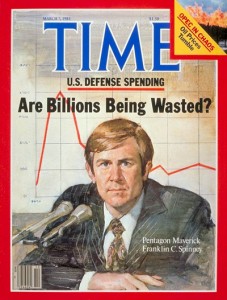
Chuck Spinney, 11 October 2011
Barcelona, Catalunya
I began using the phrase Versailles on the Potomac in the late 1990s as a metaphor for the ‘let-them-eat-cake’ politics of the Military – Industrial – Congressional Complex or MICC. The MICC’s pervasive practices of front loading and political engineering evolved insensibly during the Cold War to create a dysfunctional majority faction in the Congress that undermined the checks and balances of the Constitution by gradually transferring Congress’s power of the purse to the President. By 1990, it was clear the insatiable greed of MICC would prevent a sensible adaptation to the end of the Cold War.1 In my view, which I think has been borne out by events, the MICC’s greed not only undermined our nation’s adaptation to the collapse of the Soviet Union, but drove the United States into a reckless policy of adventurism and war warmongering, a policy that benefitted a few at the expense of the many. I summed up this viewpoint last January in my essay, The Domestic Roots of Perpetual War, which is also the first chapter in the Defense Labyrinth, a short handbook written by insiders to help interested citizens understand how the Pentagon really operates.2
Fast forward to the fall of 2011: The economic crash that began in 2007, the government's response to it, and the moral collapse of a one of the most promising presidents in American history make it clear that the metaphor Versailles on the Potomac should not have been limited to the MICC, because the MICC is but one thread in a larger fabric of degenerate political mutation. Since the late 1970s, democratic governance in the United States has been mutating into what can now be characterized as an intolerant neo-fascist oligarchy, where an increasingly unequal distribution of wealth is destroying the American middle class by enriching a tiny minority with unprecedented wealth. It is also clear that this super-rich minority is using its wealth to entrench and perpetuate its power by destroying our traditional institutions.
Think my statement is a little too wild?
Read the essay Debt and Dumb, published by the current issue of Vanity Fair. The authors, Simon Johnson and James Kwak, are hardly radicals,3 but they end their essay on in the same place: on the larger question of the ongoing political mutation of the United States into a Versailles on the Potomac.
Are the current demonstrations triggered by the Occupy Wall Street movement, and more importantly, the Oligarchy's hysterical reaction to them, in any way indicative of pre-revolutionary instabilities similar to those that emerged spontaneously in France during the late 18th Century?
Only time will tell, but massive forces may be afoot, and if they are afoot, they may well spin out of control.
1 James Madison explained the dangers of a majority faction in Federalist #10, where he laid out the logic of the system of checks and balances in the design of the Constitution. My pamphlet, Defense Power Games (1990), explained how the gaming strategies evolved by the MICC during the Cold War undermined these checks and balances and explained why the end of the Cold War would not result in a real peace dividend.
2 Defense Labyrinth was written by 10 pentagon insiders, retired military officers and specialists with over 400 years of defense experience and is available free of charge in pdf format, downloaded here or here.
3 They are editors of the influential financial blog, The Baseline Scenario. Johnson is a professor at MIT and a former Chief Economist of the International Monetary Fund.<
Phi Beta Iota: A tough read, getting through it twice confirms that the US Government and its ability to borrow are of concern to the 1% only in relation to their selfish interests. There is a chasm between those that pay taxes and those that steal their tax funds so great as to warrant a revolution.See Also:
One of the most interesting aspects of Occupy Wall Street (#ows) is the work it is doing to set up permanent occupations in EVERY city (over 1,000 locations globally, and growing) of note.
Here's a quick overview:
Navigation of the complex legalities of sleeping/living in an urban, public space (park, square). Every major city has a thicket of regulations in place to prevent people from congregating, let alone sleep overnight.
Defusing provocations from police to prevent more aggressive action. The police made a couple of attempts at provocations already (lots of pepper spray, lots of beatings with batons, and lots of arrests) in NYC. So far, the protesters just took it and didn't fight back.
Acquiring provisions. On-line support has helped the protest acquire many of the food, water, and other items it needs (although its unclear how many locations get anything approaching the level of support seen in NYC).
Food preparation. By keeping the permanent group small, the need for food/food prep stays manageable.
Shelter. Most locations selected prohibit tents. Lots of variants (cardboard, tarps, etc.) have emerged. This is going to be tougher in winter in the northern climes, but not undoable with small numbers of overnight residents.
Defense. Currently, the occupy movement is strictly adhering to the regulations and non-violence to avoid being ejected from their locations. The best medium term defense is a flashmob.
Media. 24x7x365
Local Governance. Open source. Consensus needed. Leaderless (pitch in if something needs doing, but don't assume you are running the show).
A permanent camp in each location means that there is a gathering point for HUGE protests in the future (quick response to shocks/events/etc.). Also, protests that span hundreds or thousands of cities simultaneously.
A Bitcoin wallet ID for me: 18YYkAMVyZVt6gzpZvBEF5RgsJ7aT7a8Yh
Bitcoin, the digital currency system, is starting to mature. As is always the case, maturity isn't based on age (weak correlation) or success level. It's based on experience. More specifically, maturity is based on how many difficulties the system overcomes. The greater or more fiendish the difficulties successfully navigated, the more maturation gained.
Few systems have been through meat grinder of experience as much as bitcoin. From the media to pundits/experts to (the) government to hackers to criminals. Even a bubble! Everyone has taken a shot at it. Despite all of this, it is still trading at around ~ $4. The software is getting better (there is encryption built into the desktop wallet now). The core system remains intact and unbroken despite a huge number of attacks.
Most importantly, people are starting to learn how to handle real/tangible digital cash. Handling digital cash, particularly lots of it, is serious business. It needs to be protected and you can't leave it in the care of anybody you don't trust.
Essentially, bitcoin has repeatedly proven that digital currencies can work in the wild.
NOTE: The most interesting us of bitcoin to me? If it was used as a PLATFORM for private currencies or publicly traded securities rather than as simply as a currency.
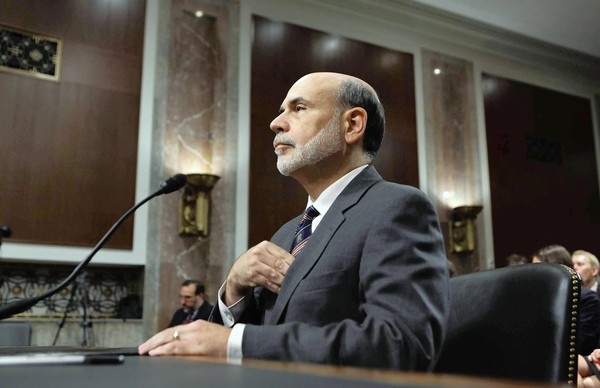
Let's step a bit outside of the day to day grind. I spent a bit of time watching the Chairman of the Federal Reserve “scold” Congress. This got my brain thinking a bit outside the box. So I'll share with you my thoughts.
The Chairman of the Federal Reserve is part:
Religious figure. The Pope of the Church of Capitalism. The leader of the Church. Final arbiter on the meaning of scripture (arcane economic indicators and economic papers). Is trained in ancient mysteries (economics). Has a council of Cardinals (the Fed board). He also issues indulgences (bailouts and free loans) to banks that he likes.
Royalty. A king of Capitalism. Surrounded by the noble houses of Goldman, JP Morgan, US Bank, and Citibank. Is trotted out to “stabilize” and “orient” government action. Protector of the privileges of nobility (a national/perpetual first night). Be-suited in the garb of royalty. Sometimes (as above) deigns to speak to the assembly of commoners.
Ideologue. General Secretary of the Capitalist Party. When he speaks, the party faithful in the markets listen. He ensures the purity of the ideology (Capitalism). Fights to expand the party's influence around the world. Has analysts devoted to watching/deciphering the actions of his Capitalist Politburo.
Click on Image to Enlarge
Phi Beta Iota: More like the Capo of Government-Sanctioned Financial Terrorism. The Federal Reserve is neither Federal nor a Reserve, but rather a front for the New York banks that are in turn a front for a tiny cabal of financial families that have the full protection (genuflection) of the two political parties that have destroyed democracy to achieve a velvet form of financial facsicm. As the recent audit demonstrates, this organization is out of control.