Here's a strong motive for open source warfare — the model of warfare that has become the hallmark of 21st century conlfict, from potest movements to fullscale insurgencies.
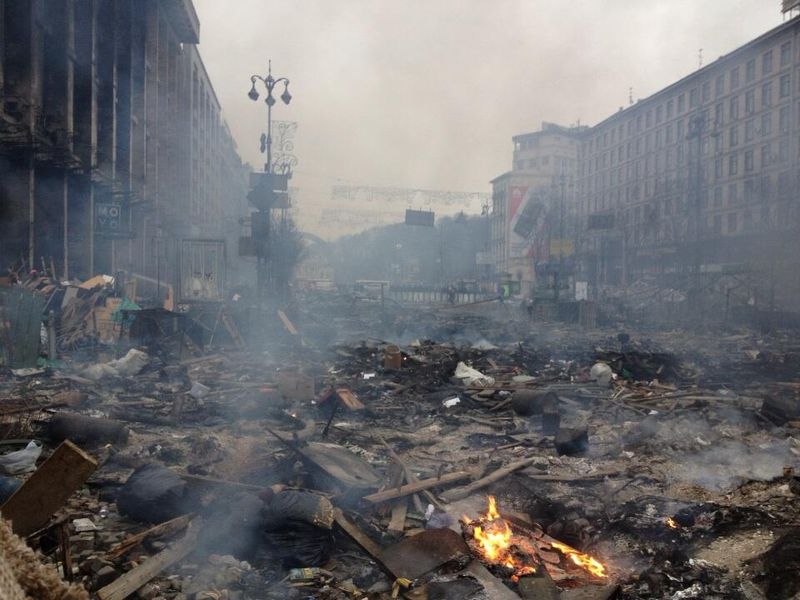
It's the driver of the recent conflict in Ukraine.
A conflict we're going to see much more of. A struggle between the people that want the opportunity to earn some prosperity, and those that want to take all of it.
In other words, a growing number of people around the world now want to make the American Dream their own.
Click on Image to Enlarge
Unfortunately, they face a kleptocracy of government, business, and finance that wants to prevent that.
Here's one story from that fight. One that you should know.
It's the story of a young man that pursued the Dream, only to have it stolen away from him.
Did you know that the U.S. state that produces the most vegetables is going through the worst drought it has ever experienced and that the size of the total U.S. cattle herd is now the smallest that it has been since 1951? Just the other day, a CBS News article boldly declared that “food prices soar as incomes stand still”, but the truth is that this is only just the beginning.
Further dimensions of the growing surveillance state that is placing the world under scrutiny. If you think this is just about terrorism you haven't been paying attention. This is a growing information matrix whose purpose is to allow a small virtual corporate state elite that, in turn, controls the U.S. and other governments, to control the world. It sounds like some loony conspiracy tale — but it i! s true. Its very size makes in seem implausible. Once again we owe a vote of thanks to Edward Snowden. Spying by N.S.A. Ally Entangled U.S. Law Firm
JAMES RISEN and LAURA POITRAS – The New York Times
Democracy by design is a zero sum game. Elections are revolutions without the guns. Part of the problem faced by social progressives is that all too many of us have a gut rejection of reality when it is negative. In my view you can't fight a battle if you are unwilling to accurately assess the truth of the battlefield. Here is some truth.
1. Azodicarbonamide in Bread
2. Plastic Microbeads in Fish and Waterways
3. Brominated Vegetable Oil in Soft Drinks and Beverages
4. High Fructose Corn Syrup and Artificial Sweeteners in Soft Drinks
5. Transglutaminase Also Known as “Meat Glue”
Finally, it is becoming impossible to deny that the industrial chemicals that pollute every aspect of our lives are the source many illnesses. Everything shouts to us that we must make national wellness, from the individual to the planet our first priority. Whether we can hear these cries is not clear, at least to me.
Where I live about half the women I know live on Gluten-free diets. Here is the back story. It is another tale of corners cut in the name of increased profit and decreased national wellness. Happily the story not only explains something, it provides a solution.
Inflection points in history are usually very difficult to see until well after they have occurred. Jonathan Cook, one of the most astute observers of the Palestinian Question, argues that one may be at hand wrt to the Palestinian Question. To me, this seems incredible, but we live in interesting times. CS
Israeli prime minister Benjamin Netanyahu has rarely been so politically embattled. His travails indicate the Israeli right’s inability to respond to a shifting political landscape, both in the region and globally.
The context for his troubles was his commitment in 2009, under great pressure from a newly elected US president, Barack Obama, to support the creation of a Palestinian state. It was a concession he never wanted to make and one he has regretted ever since.
The US secretary of state, John Kerry, has exploited that pledge by imposing the current peace talks. Now Netanyahu faces an imminent “framework agreement” that may require him to make further commitments towards an outcome he abhors.
Mahmoud Abbas, the head of the Palestinian Authority, is not helping. Rather than digging in his own heels, he offers constant accommodation. Last week Abbas told the New York Times that Israel could take a leisurely five years removing its soldiers and settlers from a key piece of Palestinian territory, the Jordan Valley. The Palestinian state would remain demilitarised, while Nato troops could stay “for a long time, and wherever they want”.
The Arab League is another thorn. It has obliged by renewing its offer from 2002, the Arab Peace Initiative, that promises Israel peaceful relations with the Arab world in return for its agreement to Palestinian statehood.
Meanwhile, the European Union is gently turning the screws on the occupation. It regularly trumpets condemnation of Israel’s settlement-building frenzies, including last week’s announcement of 558 settler homes in East Jerusalem. And in the background sanctions loom over settlement goods.
European financial institutions are providing a useful barometer of the mood among the 28 EU member states. They have become the unexpected pioneers of the boycott, divestment and sanctions (BDS) movement, with a steady trickle of banks and pension funds pulling out their investments in recent weeks.
Pointing out that boycotts and “delegitimisation” campaigns are only going to gather pace, Kerry has warned that Israel’s traditional policy is “unsustainable”.
That message rings true with many Israeli business leaders, who have thrown their weight behind the US diplomatic plan. They believe that a Palestinian state is the key to Israel gaining access to lucrative regional markets and continued economic growth.
Netanyahu must have been disconcerted by the news that among those meeting Kerry to express support at the World Economic Forum in Davos last month was Shlomi Fogel, the prime minister’s long-time intimate.
Pressure on these various fronts may explain Netanyahu’s hasty convening last weekend of his senior ministers to devise a strategy to counter the boycott trend. Proposals include a $28 million media campaign, legal action against boycotting institutions, and intensified surveillance of overseas activists by the Mossad.
On the domestic scene, Netanyahu – who is known to prize political survival above all other concerns – is getting a rough ride as well. He is being undermined on his right flank by rivals inside the coalition.
Naftali Bennett, the settlers’ leader, provoked a chafing public feud with Netanyahu this month, accusing him of losing his “moral compass” in the negotiations. At the same time, Avigdor Lieberman, the foreign minister from the far-right Yisrael Beiteinu party, has dramatically changed tack, cosying up to Kerry, whom he has called “a true friend of Israel”. Lieberman’s unlikely statesmanship has made Netanyahu’s run-ins with the US look, in the words of a local analyst, “childish and irresponsible”.
It is in the light of these mounting pressures on Netanyahu that one should understand his increasingly erratic behaviour – and the growing rift with the US.
A damaging falling-out last month, following insults from the defence minister against Kerry, has not subsided. Last week Netanyahu unleashed his closest cabinet allies to savage Kerry again, with one calling the US secretary of state’s pronouncements “offensive and intolerable”.
Susan Rice, Obama’s national security adviser, tweeted her displeasure with a shot across the bows. The Israeli government’s attacks were “totally unfounded and unacceptable”, she noted. Any doubt she was speaking for the president was later dispelled when Obama praised Kerry’s “extraordinary passion and principled diplomacy”.
But despite outward signs, Netanyahu is less alone than he looks – and far from ready to compromise.
He has the bulk of the Israeli public behind him, helped by media moguls like his friend Sheldon Adelson who are stoking the national mood of besiegement and victimhood.
But most importantly he has a large chunk of Israel’s security and economic establishment on side too.
The settlers and their ideological allies have deeply penetrated the higher ranks of both the army and the Shin Bet, Israel’s secret intelligence service. The Haaretz newspaper revealed this month the disturbing news that three of the four heads of the Shin Bet now subscribe to this extremist ideology.
Moreover, powerful elements within the security establishment are financially as well as ideologically invested in the occupation. In recent years the defence budget has rocketed to record levels as a whole layer of the senior military exploits the occupation to justify feathering its nest with grossly inflated salaries and pensions.
There are also vast business profits in the status quo, from hi-tech to resource-grabbing industries. Indications of what is at stake were illuminated recently with the announcement that the Palestinians will have to buy from Israel at great cost two key natural resources – gas and water – they should have in plentiful supply were it not for the occupation.
With these interest groups at his back, a defiant Netanyahu can probably face off the US diplomatic assault this time. But Kerry is not wrong to warn that in the long term yet another victory for Israeli intransigence will prove pyhrrhic.
These negotiations may not lead to an agreement, but they will mark a historic turning-point nonetheless. The delegitimisation of Israel is truly under way, and the party doing most of the damage is the Israeli leadership itself.
Jonathan Cook won the Martha Gellhorn Special Prize for Journalism. His latest books are “Israel and the Clash of Civilisations: Iraq, Iran and the Plan to Remake the Middle East” (Pluto Press) and “Disappearing Palestine: Israel’s Experiments in Human Despair” (Zed Books). His website is www.jonathan-cook.net.
A version of this article first appeared in The National, Abu Dhabi.
Phi Beta Iota: Zionism, and Zionist Israel, are not to be confused with Jews, or loyal American Jews — just as America the Beautiful is not be to confused with the treasonous betrayal of the public trust by the two-party tyranny in the USA, and the global financial crimes it has legalized, or the elite pedophilia it turns a blind eye to. Society is vastly more complex than a mere government. What is happening in the Internet era is the isolation of corrupt government — as John Perrry Barlow foresaw in 1992, the public is now starting to route around corrupt governments.
Here for the first time we see a possible explanation for the explosion of Obesity, and the connection between the rampant overuse of antibiotics and our deeply sick industrial agriculture system. Once again it demonstrates the profit of the few over the wellness of the many. Our society is dying because we either cannot or will not commit to social policies that prioritize national wellness.
Phi Beta Iota: Obesity is a cultural outcome of social decay and a mix of corporate and government irresponsibility. It has many causes. What does not exist today in accessible form to the public is a true cost analysis of corrupt agriculture, corrupt energy, corrupt water, and corrupt everything these — obesity is symptom of a society that has lost its mind and soul.
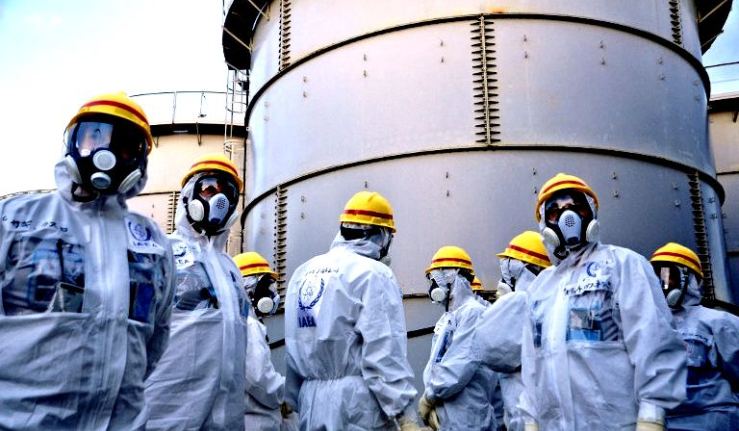
Radioactive ‘mass murder': nuclear industry keeps Fukushima impact in secret, worst to come
Radiation is a rather tricky enemy. You cannot see it, you cannot smell it yet it’s harmful for our ecosystem, our markets and our bodies. The Fukushima nuclear power plant disaster is still making headlines but no one knows the full truth about the ultimate impact of this accident. We should prepare for the worst case scenario, writes American democracy activist Harvey Wasserman in his article “50 Reasons We Should Fear the Worst from Fukushima”.
Click on Image to Enlarge
Impact of Fukushima a serious problem and deserves serious discussion and action however it is being kept out of the public eye thanks to Japan’s censorship and a global corporate media blackout, writes Mr. Wasserman in the first of his two part series at EcoWatch. The “see no evil, pay no damages” mindset dates back from the Bombing of Hiroshima.
Nuclear industry is a big business which doesn't want anyone to know what is happening at Fukushima in specific and whole “nuclear” cycle as a whole, underlines the activist.
The impacts of radiation emissions on human and ecological health are unknown primarily because the nuclear industry has resolutely refused to study them.