Chuck Spinney: The Afgan Misadventure in One Paragraph

03 Economy, 04 Inter-State Conflict, 05 Civil War, 07 Other Atrocities, 08 Wild Cards, 10 Security, 11 Society, Budgets & Funding, Corruption, Cultural Intelligence, Government, IO Deeds of War, IO Impotency, Military, Officers Call, Power Behind-the-Scenes/Special Interests, Secrecy & Politics of Secrecy, Strategy, Waste (materials, food, etc)
Chuck Spinney

First, the paragraph:

“The enterprise has proved to be a model of how not to go about such things, breaking all the rules of grand strategy: getting in without having any idea of how to get out; almost wilful misdiagnosis of the challenges; changing objectives, and no coherent or consistent plan; mission creep on an heroic scale; disunity of political and military command, also on an heroic scale; diversion of attention and resources [to Iraq] at a critical stage in the adventure; poor choice of local allies, who rapidly became more of a problem than a solution; unwillingness to co-opt the neighbours into the project, and thus address the mission-critical problem of external sanctuary and support; military advice, long on institutional self-interest, but woefully short on serious objective analysis of the problems of pacifying a broken country with largely non-existent institutions of government and security; weak political leadership, notably in subjecting to proper scrutiny militarily heavy approaches, and in explaining to the increasingly, and now decisively, sceptical domestic press and public the benefits of expending so much treasure and blood.”

Sir Sherard Cowper-Coles
British ambassador in Kabul and as special envoy to Afghanistan and Pakistan

The Afghan misadventure

By Lionel Barber, Financial Times, 22/07/11

Phi Beta Iota:  A full reading of “The Afghan misadventure” by Lionel Barber is highly recommended.  The ends with several lessons not understood in Washington, and a marvelous description of NATO as a “tethered goat.”  He also recommends these three books:

Please respect FT.com's ts&cs and copyright policy which allow you to: share links; copy content for personal use; & redistribute limited extracts. Email ftsales.support@ft.com to buy additional rights or use this link to reference the article – http://www.ft.com/cms/s/2/0feac042-b395-11e0-b56c-00144feabdc0.html#ixzz1SxSELLAY

Cables From Kabul: The Inside Story of the West’s Afghanistan Campaign, by Sherard Cowper-Coles, Harper Press, 352 pages

The Wars of Afghanistan: Messianic Terrorism, Tribal Conflicts and the Failures of Great Powers, by Peter Tomsen, PublicAffairs, 912 pages

Dead Men Risen: The Welsh Guards and the Real Story of Britain’s War in Afghanistan, by Toby Harnden, Quercus, 640 pages


John Robb: Resilience 101 – Close the loop…all of them

Advanced Cyber/IO, Blog Wisdom, Communities of Practice, Earth Intelligence, Ethics, Key Players, Policies, Threats
John Robb

RESILIENT PRODUCTION: Close The Loop!

Reslient, local production can reach amazing levels of capacity and efficiency by obsessively closing loops.  How do you close loops?  Simply:

  1. Turn the waste of one production process into the fuel/input required to operate another.
  2. Do that again and again and again until there is nothing left to reuse.
  3. All along the way, find ways to take the good parts out of each process.  It could be food in one.  Heating/cooling in another.  Fresh water in a third.

For example.  Let's say you want to produce vegitables and fish.  If you did it in a disconnected way, you would be hit with expenses (both monetary and time) at each step in the process.  You would need to fertilize the plants.  Feed the fish.  Clean the water.  It gets expensive early.

If you connected the production systems together, by closing the loops, you would have an aquaponics system.  In an aquaponics system, the fish waste feeds bacteria which in turn produces fertilizer for the plants and fresh water for the fish.  The food the plants produce generate excess that feeds the fish.  With a tiny bit of automation and design, the entire thing operates seemlessly.  Loop closed!  The biggest chore is collecting the bounty.

Closing loops can turn problems into opportunties.  Waste into bounty.

Paul Fernhout: Comments on Integrity at Scale

Advanced Cyber/IO, Analysis, Blog Wisdom, Budgets & Funding, Collective Intelligence, Communities of Practice, Counter-Oppression/Counter-Dictatorship Practices, Cultural Intelligence, Earth Intelligence, Ethics, Key Players, Policies, Serious Games, Threats
Paul Fernhout

Just from the topics, it seems like a more coherent version of this stuff I wrote in 2004:  Achieving the Star Trek Society.

“This essay shows how a total of $14000 billion up front and at least another $2085 billion per year can be made available for creative investment in the USA by adopting a post-scarcity worldview. This money can help further fund a virtuous cycle of more creative and more cost saving efforts, as well as better education. It calls for the non-profit sector to help shape a new mythology of wealth and to take the lead in getting the average person as well as decision makers to make the shift in worldview to their own long term benefit. … Let us consider ways to free up money for the non-profit sector (or
reducing working hours) by cutting wasteful government and consumer
spending in these areas with (annual estimate of easy savings):

Continue reading “Paul Fernhout: Comments on Integrity at Scale”

Koko: Hospitals Riskier than Flying…

07 Health, 07 Other Atrocities, 11 Society, Articles & Chapters, Commerce, Commercial Intelligence, Corruption, IO Impotency
Koko the Reflexive

Hospital stays are riskier than flying, says WHO

CTV News.ca  Staff

Date: Friday Jul. 22, 2011 12

EXTRACT

According to Sir Liam Donaldson, the WHO's newly-appointed Envoy for Patient Safety, the chances of dying from a medical error in a hospital anywhere in the world is about 1 in 300. That compares with the risk of dying in a plane crash,  of about 1 in 10 million passengers.

Read full article…

Phi Beta Iota:  this story encapsulates much of what is wrong with modern society, from fog facts (knowns that are not known by most) to corruption.  When combined with the documentation on 50% of every health dollar being waste, and the larger challenge of incoherent uniniformed policy across all ten threats and all twelve core policy domains.

See Also:

Graphic: Information Pathologies

Graphic: Intelligence Maturity Scale


Venessa Miemis: Share or Die–Find Your Tribe and Do

03 Economy, 11 Society, Advanced Cyber/IO, Blog Wisdom, Civil Society, Collective Intelligence, Commerce, Ethics, Gift Intelligence
Venessa Miemis

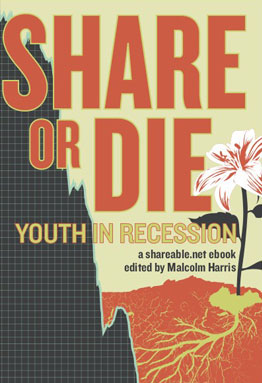
This post is a contribution i made to Shareable magazine’s new ebook – Share or Die. hope you enjoy my story.

Share or Die

It’s October 2010, and I’m reclined in an all expenses paid seat in business class on a flight to Berlin. I’m going there for two weeks to collaborate on a video project with a couple of artists I met online, then flying to Amsterdam to present the video to a room full of bankers at the largest financial services conference on the planet. I’m not a media producer, nor do I work in the financial industry. All I can think to myself is “How the hell did I get here?”

. . . . . . .

Now I see this life as an Epic Adventure, with each of us in control of being the hero of our own personal mission. Here are three big insights I’ve had these past few years that make me confident in this belief:

Your community already exists, and is waiting for you.

Your vision already exists – it is a shared one.

The tools of empowerment already exist, and are ready to be wielded.

The pieces you need really are there, they’re just often hard to recognize. I went through a long phase of utter despair and hopelessness, and had no idea how to move forward. Only after putting myself out there with authenticity and a beginner’s mind did I see I was surrounded by a community of change agents with the heart, the vision, and the capacity to act.

As we all move forward in building the kind of society we want to see and the lives we want to lead, we realize more and more that everything is interconnected and we can go further by connecting, collaborating, and amplifying each other’s efforts than by stubbornly trying to reinvent the wheel.

We’re all in this together. Find your tribe and go change the world.

Read full post….

noble gold