EVENT REPORT: State of the Planet 2010, Columbia Univ, New York City

01 Poverty, 03 Environmental Degradation, 03 India, microfinancing, Mobile, Threats, United Nations-affiliated


Panels and keynotes program schedule
I was told via email from someone involved in the event that a video will be posted online.I will be posting this over a the Earth Institute blog (especially since it has zero comments for the March 25 event) as a challenge to improve the overall framework of the “State of the Planet 2012”.

State of the Planet 2010 Event Report:
Intro
I attended this bi-annual event in 2008. At that time there was not a global webcast that included panelists located in other countries. At the 2010 event, there was a V.I.P. section closer to the ‘stage' that I was not notified about. The V.I.P. section had about 3 times more people than the non V.I.P. section which was odd. Despite it being a V.I.P. section, there was never enough time given to them to ask all the questions via microphone. This is a Jeffrey Sachs event, it's his show. He's the main advisor to Ban Ki-Moon, and friends with the president of Mexico (who keynoted this event), so it seems to be more from his perspective and his friends. Therefore, it was a very narrow-visioned event that should not be entitled “State of the Planet”. People involved with the publication “State of the Future” for over a decade (
www.stateofthefuture.org) were never mentioned, invited, or asked to contribute. Yet, these people have worked with the United Nations for over a decade. Collective intelligence has been written and software is being developed by those involved in the “State of the Future” (Millennium Project), yet Jeffrey Sachs was attributed to the idea of “worldwide brainstorming” for “collective invention”. And unfortunately, there was an obsession at this event on ‘climate change' and carbon. “Industrialization footprint” involves a broader range of hazards and toxins that needs more air time. More ‘fluid' thinking was lacking while an excess of a kind of cloned groupthink was prevalent (or ‘carbon copying' if you will, pun intended). The forum has great potential but as of 2008 & 2010, is too insulated and will not be respected as highly intelligent and strategically effective by a broad range of people (outside of Ivy League Columbia) concerned about serious global issues. On an interesting note, Zbigniew Brzezinski was once a Columbia professor (see Obama video on his Brezinski recognition).
Continue reading “EVENT REPORT: State of the Planet 2010, Columbia Univ, New York City”


Journal: Deep Insights into Failure of US Intelligence

10 Security, Government, Methods & Process

Marcus Aurelius

Dot, Dot, Dot . . .

March 10, 2010

In his new book The Watchers, (Penguin Press, 2010), Shane Harris chronicles what he calls “the rise of America's surveillance state,” a process he's been following since he was a reporter and technology editor at Government Executive from 2001 to 2005.

It's a story with all the elements of a spy thriller: political intrigue, shadowy federal organizations and a compelling cast of characters desperately seeking to prevent the next Sept. 11. At the center is the enigmatic John Poindexter, former national security adviser and architect of the ill-fated Total Information Awareness data collection and analysis effort.

. . . . . . .

What I discovered was that it really was the Beirut attack that shocked the intelligence system in a very similar way to 9/11. You have the Marines in Beirut, ostensibly on this international peacekeeping mission. They're hunkered down at the airport. For various political reasons, they're not allowed to go out very much in public. They are sort of sitting ducks. What happens is in the aftermath of the bombing, the intelligence community finds out there were all these warnings that something bad was about to happen to the Marines at the airport. So you had, in the spring of 1983, more than 100 individual warnings about car bombings fielded by the intelligence community.

Full Interview Online

The Marines were blind, deaf and dumb sitting at the base. And the golden nugget of it all is that NSA intercepted, in the days before the attack, this phone conversation going from a minister in Iran to presumably one of these organizing terrorist groups–directing this group to go and take this spectacular action against the Marines. You add all these up and it looks a lot like 9/11. There's all this information sitting there and it's like, how come nobody's putting it together? And Poindexter is the guy who looks at this and says, “This shouldn't happen and we can take steps to make sure it doesn't happen. There has to be a way to logically approach this problem, systematize the whole process and connect those dots.”

Phi Beta Iota: The US Intelligence Community is badly managed, grotesquely over-funded, and incapable of changing its culture for the simple reason that instead of finding and empowering leaders with new ideas and open minds, we continue to give more money to old leaders, like pouring gasoline on a fire.  We still cannot process 90% of what we collect; we still cannot speak foreign languages; and we still do not play well with others.  The IC is managed by people who know nothing of intelligence–they are essentially staffers who went through the motions of moving money around–and their only real accomplishment is that they have not burned any bridges.  Unfortunately, they have been so busy not burning bridges they have not built anything worthwhile.  The IC is a shell game–move money, move the harem around, repeat the same testimony over and over to Congress again–ultimately the IC is a $75 billion a year tragic farce.

See Also:

Review (Guest): THE WATCHERS–The Rise of America’s Surveillance State

2000 ON INTELLIGENCE: Spies and Secrecy in an Open World

2010: Human Intelligence (HUMINT) Trilogy Updated

Search: The Future of OSINT [is M4IS2-Multinational]

2009 DoD OSINT Leadership and Staff Briefings

Book: INTELLIGENCE FOR EARTH–Final

Journal: Attacks Against the US Government

09 Justice, 11 Society, Collective Intelligence, Cultural Intelligence, Government, Peace Intelligence, Reform
Marcus Aurelius

Timeline: Government Under Attack

By Dawn Lim and Ross Gianfortune dlim@govexec.com March 5, 2010

Thursday evening's shootout between Pentagon police officers and a gunman apparently motivated by anti-government sentiment was the latest in a spate of attacks on federal employees and facilities and serves as a stark reminder that public servants too often find themselves unexpectedly in harm's way. The following timeline reviews major attacks during the past two decades.

Feb. 18, 2010. A small jet is flown into a building housing a federal tax office in Austin, Texas, injuring 13 and killing two. The pilot, Joseph Andrew Stack, was angry with the Internal Revenue Service.

Nov. 5, 2009. An Army psychiatrist goes on a rampage at Fort Hood, Texas, killing 13 people and wounding dozens. The alleged gunman, Maj. Nidal Malik Hasan, was a Muslim who had been in contact with a radical Imam and was about to be deployed overseas.

June 1, 2009. A gunman opens fire on a U.S. military recruiting office in Little Rock, Ark., killing one soldier and wounding another. The suspect, a Muslim convert, opposed the wars in Iraq and Afghanistan, but was not affiliated with a larger terrorist network.

Full Story Online

Phi Beta Iota: The full list is both very incomplete, and hugely misrepresentative.   The list does not include the hanging of census workers, the increased calls for Tyrannicide, the many under-reported bombs and threats across the country, and the growing underground economy that is turning its back on a government many now consider to be an unaffordable burden.   The list also fails to address the nuances between state-sponsored attacks, state-allowed attacks, Islam-oriented attackes, and domestic insurgency such as documented in Harvest Of Rage–Why Oklahoma City Is Only The Beginning and Rage of the Random Actor.  The list also avoids addressing the behavior of the US Government acting “in our name” but far removed from our values as a Republic Of, By, and For We the People, a story told in many books, such as Blood Money–Wasted Billions, Lost Lives, and Corporate Greed in Iraq on top ofSAVAGE CAPITALISM AND THE MYTH OF DEMOCRACY–Latin America in the Third Millennium and Open Veins of Latin America–Five Centuries of the Pillage of a Continent;  and in journal articles such as Why they hate us (II): How many Muslims has the U.S. killed in the past 30 years?.

Continue reading “Journal: Attacks Against the US Government”

Journal: United Nations and Information-Sharing

Communities of Practice, Earth Intelligence, InfoOps (IO), Key Players, Methods & Process, Peace Intelligence, Policies, Technologies, Threats

UPDATED 2014-01-29 to add the following new links:

2012 Robert Steele: Practical Reflections on UN Intelligence + UN RECAP

References: NATO Transformation Process Documents — and Gaps + Peace from Above RECAP

Search: phd topics on the role of intelligence in peace support operation + Peacekeeping RECAP

United Nations @ Phi Beta Iota

Phi Beta Iota: We are detecting a fascinating evolutionary process within the United Nations “system” which is not a system at all, more like an archipelago with a different cat in charge of each island.  Information-sharing is coming into vogue, but more importantly, the United Nations, perhaps stimulated by the report of the United Nations High-Level Panel on Threats, Challenges, and Change, A more secure world: our shared responsibility, appears to finally be realizing that all threats are connected and that poverty is the foundation for all of the other threats thriving–one cannot defeat transnational crime (threat #10) without first addressing poverty (threat #1).

Security Council Calls for Strengthened International, Regional Cooperation to Counter Transnational Organized Crime, in Presidential Statement

With the top United Nations anti-drug official urging concerted global action to “break the vicious circle between insecurity and underdevelopment” being increasingly fuelled by criminal networks, drug smugglers and human traffickers, the Security Council today called on the world body’s Member States to increase international and regional cooperation to tackle transnational organized crime.

The Council invited Secretary-General Ban Ki-moon, who opened today’s meeting, to consider transnational threats as a factor in conflict prevention strategies, conflict analysis, integrated missions’ assessment and planning and to consider including in his reports, as appropriate, analysis on the role played by those threats in situations on the Council’s agenda.  [Phi Beta Iota: Emphasis Added.]

UN Intelligence = World that Works for All

Global gangs exploit blind spots for trafficking: U.N.

UNITED NATIONS (Reuters) – International criminal gangs and traffickers are exploiting large geographic blind spots where radar, satellite or other surveillance is minimal or nonexistent, the U.N. crime and drugs czar said on Wednesday.

Antonio Maria Costa, head of the Vienna-based U.N. Office on Drugs and Crime (UNODC), told members of the 15-nation U.N. Security Council that countries must improve their systems of sharing intelligence to reduce these surveillance gaps.

“We need a change in attitude,” Costa told the council. “It is time to regard information sharing as a way of strengthening sovereignty, not surrendering it.”

Continue reading “Journal: United Nations and Information-Sharing”

Worth A Look: Posted from the Past Including Jack Davis on Leadership in Intelligence Analysis

Analysis, Reform

1993 War and Peace in the Age of Information–Superintendent’s Guest Lecture, Naval Postgraduate School (NPS)

1994 ACCESS: The Theory and Practice of Competitor Intelligence (Journal of the Association for Global Strategic Information, July 1994)

1994 Private Enterprise Intelligence: It’s Potential Contribution to National Security (Canada, 29 October 1994)

1995 Open Sources and the Virtual Intelligence Community (with MC&G Emphasis)

1995 The Global Information Explosion: A Threat to National Security? (National Defense University, 16 May 1995)

1997 VIRTUAL INTELLIGENCE: Conflict Avoidance and Resolution Through Information Peacekeeping (Author’s Final, 1 April 1997)

1998 Open Source Intelligence Overview (Australia)

1999 Relevant Information and All-Source Analysis: The Emerging Revolution

1999 Virtual Intelligence: Conflict Avoidance and Resolution through Information Peacekeeping (Journal of Conflict Resolution, Spring 1999)

2002  Reference: Jack Davis Leadership in Intelligence Analysis (August 2002)

Sherman Kent Occasional Papers by Jack Davis

Improving CIA Analytic Performance: Strategic Warning

Improving CIA Analytic Performance: Analysts and the Policymaking Process

Improving CIA Analytic Performance: DI Analytic Priorities

Sherman Kent and the Profession of Intelligence Analysis

Strategic Warning: If Surprise is Inevitable, What Role for Analysis?

Tensions in Analyst-Policymaker Relations: Opinions, Facts, and Evidence

Sherman Kent’s Final Thoughts on Analyst-Policymaker Relations

Journal: Is US Destabilizing Baluchistan to Take Over Gwadar Port? Is the Terrorist Iran Just Captured a CIA Asset? Is China Going to Sit Still?

04 Inter-State Conflict, 05 Iran, 07 Other Atrocities, 08 Wild Cards, Military, Strategy
Webster Griffin Tarpley

The Battle for Baluchistan: Iran Nabs Top NATO Terrorist with Help from Pakistan

February 25, 2010

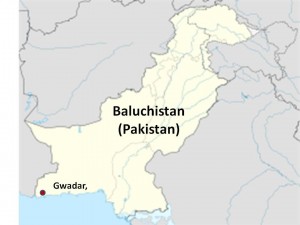
On Tuesday Feb. 23, Iran announced the capture of Abdulmalek Rigi, the boss of the terror organization Jundullah, which works for NATO. The capture of Rigi represents a serious setback for the US-UK strategy of using false flag state-sponsored terrorism against Iran and Pakistan, and ultimately to sabotage China’s geopolitics of oil.

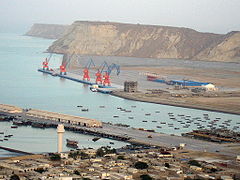
Strategic Port Gwadar

Phi Beta Iota: Dr. Tarpley's complete overview is well worth reading and we also recommend watching the short video of his interview with Russian television.  To the right  is a snapshot of the Port of Gwadar linked to its Wikipedia page–we have felt for some time that the USA is over-extended, out-foxed, and fooling no one, least of all the Chinese.

Strategic Port Gwadar

When US supply ships start going dead in the water from electromagnetic scrambling of their propulsion and navigation systems, we will know that China has had enough of this foolishness.  The days of secure non-attributable false flag operations are OVER.

Journal: Cuba Makes Its Move–Hasta La Vista OAS?

07 Venezuela, 08 Wild Cards, Cultural Intelligence, Government, Strategy
Full Story Online

There is no reason why Latin America and the Caribbean should not have their own body of political consensus

Boys on the Beach

Speech by General of the Army Raúl Castro Ruz, president of the Councils of State and Ministers, at the plenary session of the Summit of Latin America and Caribbean Unity, February 23, 2010

The decision that we have just adopted to create the Community pf Latin American and Caribbean States is of great historical significance.

Cuba considers that the conditions are present to rapidly advance toward the constitution of a purely Latin American and Caribbean regional organization, comprising and representing the 33 independent nations of Latin America and the Caribbean.

Continue reading “Journal: Cuba Makes Its Move–Hasta La Vista OAS?”

noble gold