Jon Stewart skewers the media, and especially the right-wing media, for obviously and deliberately refusing to name Ron Paul or mention his various victories.
Even when the media does remember Ron Paul, it's only to reassure themselves that there's no need to remember Ron Paul.
Phi Beta Iota: The corruption of the media, including CNN and Bloomberg, is despicable. They dishonor the public from whom they derive their public commissions to do business.
Portland Oregon is working on revising zoning regulations regarding urban market farms. Early debate indicates that the protection of traditional approaches to real-estate value (ornamental residences, noise/traffic abatement, etc.) is the priority. Given the scale of the economic crisis that is already upon us, this approach is completely broken. They should be focused on building a simple platform for accelerating a local food economy.
Phi Beta Iota: Portland in particular, and the Pacific Northwest generally, keep popping up as bastions of ethical sanity. The combination of intelligence and integrity visible there is quite heartening.
How does public transportation affect education? What impact does population density have on public health? Is there a connection between CO2 levels and obesity?
Officials in the City of Portland, Ore., have collaborated with IBM to find answers to those and other questions, developing an interactive model that connects the relationships between the city’s core systems that handle the economy, housing, education, public safety, transportation and health care.
Great article, reads like a thriller. The bottom line:
“In the end, Stuxnet’s creators invested years and perhaps hundreds of thousands of dollars in an attack that was derailed by a single rebooting PC, a trio of naive researchers who knew nothing about centrifuges, and a brash-talking German who didn’t even have an internet connection at home.”
Delivery of first-class mail is falling at a staggering rate. Facing insolvency, can the USPS reinvent itself like European services have—or will it implode?
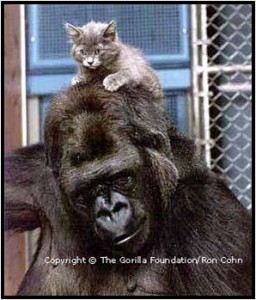
Koko Signs: In debt, taxpayer subsidizing junk mail, zero innovation. A superb seven screen article, an in-depth look at a side of the US Government that is representative of the bloat, waste, and myopia of the rest of government.
Despite budget woes, the military is preparing for a conflict with our biggest rival — and we should be worried
This summer, despite America’s continuing financial crisis, the Pentagon is effectively considering trading two military quagmires for the possibility of a third. Reducing its commitments in Iraq and Afghanistan as it refocuses on Asia, Washington is not so much withdrawing forces from the Persian Gulf as it is redeploying them for a prospective war with its largest creditor, China.
. . . . .
AirSea Battle, developed in the early 1990s and most recently codified in a 2009 Navy-Air Force classified memo, is a vehicle for conforming U.S. military power to address asymmetrical threats in the Western Pacific and the Persian Gulf — code for China and Iran. (This alone raises a crucial point: If the U.S. has had nothing but trouble with asymmetrical warfare for the last 45 years, why should a war with China, or Iran for that matter, be any different?) It complements the 1992 Defense Planning Guidance, a government white paper that precluded the rise of any “peer competitor” that might challenge U.S. dominance worldwide.
. . . . . . .
For the first time since the end of the Cold War, the U.S. government has encountered the practical limits of the 1992 Defense Planning Guidance.
. . . . . .
Here is a noble appeal for Washington to match its commitments with the resources needed to sustain them, the absence of which has fueled the debt crisis that nearly reduced the United States to a mendicant state. Such are the crippling costs of a defense policy that makes global hegemony a mindless imperative.