
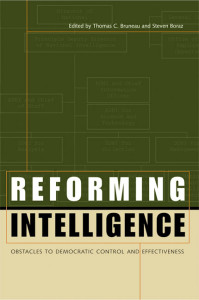
Thomas Bruneau and Steven Boraz (eds.)
These days, it's rare to pick up a newspaper and not see a story related to intelligence. From the investigations of the 9/11 commission, to accusations of illegal wiretapping, to debates on whether it's acceptable to torture prisoners for information, intelligence—both accurate and not—is driving domestic and foreign policy. And yet, in part because of its inherently secretive nature, intelligence has received very little scholarly study. Into this void comes Reforming Intelligence, a timely collection of case studies written by intelligence experts, and sponsored by the Center for Civil-Military Relations (CCMR) at the Naval Postgraduate School, that collectively outline the best practices for intelligence services in the United States and other democratic states.




 When tribalism trumps democracy, January 10, 2014