Berto Jongman: CENTCOM Underground War Room in Amman to Manage US War on Syria

04 Inter-State Conflict, 05 Civil War, 07 Other Atrocities, 08 Wild Cards, DoD, IO Deeds of War
0Shares
Berto Jongman
Berto Jongman

New Centcom underground war room in Amman for US intervention in Syria

DEBKAfile Video August 17, 2013, 1:58 PM

Gen. Martin Dempsey, Chairman of the US Joint Chiefs of Staff, was in Amman this week to inaugurate the Centcom’s Forward Command in Jordan manned by 273 US officers. US media correspondents were permitted to visit the new war room for the first time on condition of non-disclosure of its location and secret facilities. debkafile’s military sources report that the installation is bomb- and missile-proof against a possible Syrian attack. The US Air Force command section is in direct communication with the US, Israeli, Jordanian and Saudi Air Force headquarters ready for an order by President Barack Obama to impose a partial no-fly zone over Syrian air space.

Another section is designed to coordinate operations between US and Jordanian special forces, as well as the units trained in commando combat by US instructors in Jordan.  A closed section houses CIA personnel who control the work of US agents going in and out of Syria and also a communications center.

Continue reading “Berto Jongman: CENTCOM Underground War Room in Amman to Manage US War on Syria”


John Perry Barlow: Electronic Frontier Foundation Calls for New [Congressional] Church Committee to Probe NSA Violations of Constitution, Law, and Regulation

07 Other Atrocities, 09 Justice, 11 Society, Corruption, Director of National Intelligence et al (IC), Government, Idiocy, IO Deeds of War, Law Enforcement, Military
0Shares
John Perry Barlow
John Perry Barlow

Three Illusory “Investigations” of the NSA Spying Are Unable to Succeed

By Mark M. Jaycox

Since the revelations of confirmed National Security Agency spying in June, three different “investigations” have been announced. One by the Privacy and Civil Liberties Oversight Board (PCLOB), another by the Director of National Intelligence, Gen. James Clapper, and the third by the Senate Intelligence Committee, formally called the Senate Select Committee on Intelligence (SSCI).

All three investigations are insufficient, because they are unable to find out the full details needed to stop the government's abuse of Section 215 of the PATRIOT Act and Section 702 of the Foreign Intelligence Surveillance Act. The PCLOB can only request—not require—documents from the NSA and must rely on its goodwill, while the investigation led by Gen. Clapper is led by a man who not only lied to Congress, but also oversees the spying. And the Senate Intelligence Committee—which was originally designed to effectively oversee the intelligence community—has failed time and time again. What's needed is a new, independent, Congressional committee to fully delve into the spying.

The PCLOB: Powerless to Obtain Documents

The PCLOB was created after a recommendation from the 9/11 Commission to ensure civil liberties and privacy were included in the government's surveillance and spying policies and practices.

But it languished. From 2008 until May of this year, the board was without a Chair and unable to hire staff or perform any work. It was only after the June revelations that the President asked the board to begin an investigation into the unconstituional NSA spying. Yet even with the full board constituted, it is unable to fulfill its mission as it has no choice but to base its analysis on a steady diet of carefully crafted statements from the intelligence community.

As we explained, the board must rely on the goodwill of the NSA's director, Gen. Keith Alexander, and Gen. Clapper—two men who have repeatedly said the NSA doesn't collect information on Americans.

Continue reading “John Perry Barlow: Electronic Frontier Foundation Calls for New [Congressional] Church Committee to Probe NSA Violations of Constitution, Law, and Regulation”

David Swanson: 10 Problems with the Latest Excuse for War [Against Syria]

Peace Intelligence
0Shares
David Swanson
David Swanson

10 Problems with the Latest Excuse for War

If you own a television or read a newspaper you've probably heard that we need another war because the Syrian government used chemical weapons.

If you own a computer and know where to look you've probably heard that there isn't actually any evidence for that claim.

Below are 10 reasons why this latest excuse for war is no good EVEN IF TRUE.

1. War is not made legal by such an excuse.  It can't be found in the Kellogg-Briand Pact, the United Nations Charter, or the U.S. Constitution.  It can, however, be found in U.S. war propaganda of the 2002 vintage.  (Who says our government doesn't promote recycling?)

2. The United States itself possesses and uses internationally condemned weapons, including white phosphorus, napalm, cluster bombs, and depleted uranium.  Whether you praise these actions, avoid thinking about them, or join me in condemning them, they are not a legal or moral justification for any foreign nation to bomb us, or to bomb some other nation where the U.S. military is operating.  Killing people to prevent their being killed with the wrong kind of weapons is a policy that must come out of some sort of sickness.  Call it Pre-Traumatic Stress Disorder.

3. An expanded war in Syria could become regional or global with uncontrollable consequences.  Syria, Lebanon, Iran, Russia, China, the United States, the Gulf states, the NATO states . . . does this sound like the sort of conflict we want?  Does it sound like a conflict anyone will survive?  Why in the world risk such a thing?


4. Just creating a “no fly zone” would involve bombing urban areas and unavoidably killing large numbers of people.  This happened in Libya and we looked away.  But it would happen on a much larger scale in Syria, given the locations of the sites to be bombed.  Creating a “no fly zone” is not a matter of making an announcement, but of dropping bombs.

5. Both sides in Syria have used horrible weapons and committed horrible atrocities.  Surely even those who imagine people should be killed to prevent their being killed with different weapons can see the insanity of arming both sides to protect each other side.  Why is it not, then, just as insane to arm one side in a conflict that involves similar abuses by both?

Continue reading “David Swanson: 10 Problems with the Latest Excuse for War [Against Syria]”

Stephen E. Arnold: NSA Cannot Search Its Own Employees’ Emails — Say What?

Government, Ineptitude, IO Impotency, Military
0Shares
Stephen E. Arnold
Stephen E. Arnold

Surveillance Organization Unable to Search Own Employees Email

An article titled NSA Says It Can’t Search Its Own Emails on ProPublica brings up an interesting glitch in the NSA’s surveillance technology. In spite of having the capability to sort through big data with a supercomputer, when it comes to doing a search of NSA’s over 30,000 employees they are at a loss. The article explains,

“There’s no central method to search an email at this time with the way our records are set up, unfortunately,” NSA Freedom of Information Act officer Cindy Blacker told me last week. The system is “a little antiquated and archaic,” she added… It’s actually common for large corporations to do bulk searches of their employees email as part of internal investigations or legal discovery.”

The article also brings up the point that federal agencies often don’t have the funding they need for public records. However, if any agency should have the capability to keep tabs on its employees, it is the agency charged with surveillance of the nation. Lacking that ability limits NSA operatives to searching emails by individuals one at a time instead of searching for keywords or in bulk. This is very interesting in light of recent events, no further comment.

Chelsea Kerwin, August 24, 2013

Sponsored by ArnoldIT.com, developer of Augmentext

SchwartzReport: US Census Findings on Languages in the USA

Cultural Intelligence
0Shares

schwartzreport new14 Language Facts from the U.S. Census Bureau

ARIKA OKRENT – Mental Floss Language is both intimately yours, and part of what links you to a group. The U.S. has always been a melting pot but, I think, we don't fully realize the true dimensions of this reality. This report will help give you a sense of our diversity.

Since 1890, the U.S. Census has asked various questions about the languages people speak. Until 1980, the questions were sometimes confusing and they were directed only to those who didn’t speak any English or were born in a foreign country. With the 1980 census, a three-part question was adopted that applied to everyone, giving a more complete picture of language in the U.S. The first part of the question asks if a person speaks a language other than English at home. If the answer to the first part is yes, the second part asks what the other language is. The third part asks how well the person speaks English: ‘very well,” ‘well,” ‘not well,” or ‘not at all.”

The language questions are now asked every year on the American Community Survey. This month, the Census Bureau released its report on the 2011 survey. Here are 14 interesting facts about language in the U.S.

1. Over 300 languages are spoken in the U.S. For purposes of analysis they are categorized into 39 groups (e.g., Slavic languages besides Russian, Polish, and Serbo-Croatian are under ‘Other Slavic Languages.” Indian languages besides Hindi, Gujarati, and Urdu are under ‘Other Indic Languages.”)

Continue reading “SchwartzReport: US Census Findings on Languages in the USA”

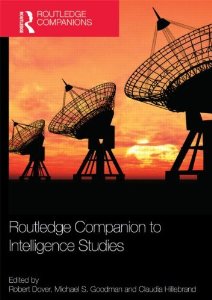
Worth a Look: Routledge Companion to Intelligence Studies — Shipped Today, Pre-Order for 29 August 2013 Fulfillment from Amazon

Advanced Cyber/IO, Collaboration Zones, Worth A Look
0Shares
Amazon Page
Amazon Page

The publisher shipped this book today, it will be released at Amazon from 29 August, but can be pre-ordered from today.

The Routledge Companion to Intelligence Studies provides a broad overview of the growing field of intelligence studies.

Part I: The Evolution of Intelligence Studies

1. The Development of the Field of Intelligence Studies, Loch Johnson

Part II: Abstract Approaches to Intelligence

2. Theories of Intelligence, Michael Warner
3. Cultures of Intelligence, Mark Phythian
4. Philosophy, theory and Intelligence, Jennifer Sims
5. Strategists and Intelligence, Gerald Hughes
6. The Cycle of Intelligence, David Omand
7. The Evolving Craft of Intelligence, Robert David Steele

Part III: Historical Approaches to Intelligence

Continue reading “Worth a Look: Routledge Companion to Intelligence Studies — Shipped Today, Pre-Order for 29 August 2013 Fulfillment from Amazon”

Anthony Judge: Sensing Epiterrestrial Intelligence (SETI)

Extraterrestial Intelligence
0Shares
Anthony Judge
Anthony Judge

Sensing Epiterrestrial Intelligence (SETI)

Embedding of “extraterrestrials” in episystemic dynamics?

Introduction
Indicative prefixes: contrasting “epi” with “extra”
Searching otherwise for “epiterrestrials”
Potential implications of category theory
Implications of category theory for social networking and interrelationships
Dynamic insensitivity of the natural sciences
Phenomenological implications of “fundierung” for “epi-thinking”
Clues to the nature of “epiterrestrials” from usage of the “epi” prefix?
Comparison of “epi” with other potentially indicative prefixes
Potential insights from an “episystemic” perspective
Re-cognizing “supernatural”: superstition as superposition?
Embodiment of extended intelligent identity in time
Correspondences: “epi”, Euler identity, and sexual dynamics?
Re-cognizing “human” in an “epiterrestrial” context
References