Marcus Aurelius: NSA Blocks www.publicintelligence.net

Idiocy, IO Impotency, Military
0Shares
Marcus Aurelius

US Cyber Command (read:  NSA)  has, “for operational reasons,” blocked access to www.publicintelligence.net from DoD computers.  You get a pretty WEBSITE BLOCKED notice.

Block “category” is:  “USCC_WIKILEAKS_BLOCK”
Also contains following blurb:  “This is a DoD enterprise-level protection system intended to reduce risk to DoD users and protect DoD systems from intrusion.  It will block access to high-risk web sites and filter high-risk web content.
As far as I have seen, publicintelligence.net doesn't do any direct collection by cyber means.  I'm fairly sure that they act as an information aggregator and integrator, receiving and posting stuff independently submitted to them by third parties who may or may not have obtained it legally.
Insofar as I have seen, there is little if any of the WIKILEAKS traffic posted on publicintelligence.net.  I don't think I've ever actually seen classified material on that site.
At least this morning, cryptome.org, which is far edgier, was unblocked.
Phi Beta Iota:  This is as silly as the US Air Force telling its people that they will be punished if any of their family members read Wikileaks.  Micro-management–and especially uninformed micro-management, does not scale.
See Also:
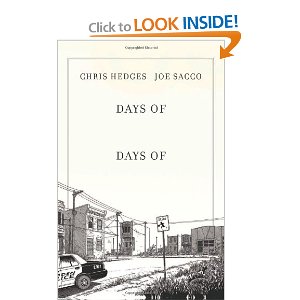
Review (Guest): Days of Destruction, Days of Revolt

5 Star, America (Founders, Current Situation), Atrocities & Genocide, Civil Society, Complexity & Catastrophe, Crime (Corporate), Crime (Government), Culture, Research, Economics, Environment (Problems), Impeachment & Treason, Misinformation & Propaganda, Nature, Diet, Memetics, Design, Peace, Poverty, & Middle Class, Politics, Power (Pathologies & Utilization), Secrecy & Politics of Secrecy, Threats (Emerging & Perennial), True Cost & Toxicity, Voices Lost (Indigenous, Gender, Poor, Marginalized)
0Shares
Amazon Page

The Spread of Sacrifice Zones

By David Swanson

Chris Hedge's and Joe Sacco's new book, Days of Destruction, Days of Revolt, is a treasure. Hedges wrote the plain text. Sacco produced the text-heavy cartoon sections and other illustrations, which even I — not a big fan of cartoon books — found to enrich this book enormously.

Hedges and Sacco visit Pine Ridge, South Dakota, to examine the misery of the Native Americans who remain there. It's nice to think that we've corrected our crimes through political correctness, and yet they continue uninterrupted — unconscionably, intolerably, tragically. Here the human stories are told, and told by those affected and by those resisting and struggling to set things right. Ironically, the victims of the United States' first imperial slaughters are now disproportionately suffering the pain common to veterans of recent U.S. wars. That same pattern of widespread military experience is found in each of three other sections of the book as well, while other communities in this country have virtually no participation in the military.

Hedges and Sacco go to Camden, New Jersey, to examine the world of impoverished and ghettoized African Americans, whose lives have worsened by many measures over the past generation, despite the successes of the civil rights movement. Poor whites and others figure into the story as well, with special attention to those struggling to improve the world, whether on a small or large scale. Michael Doyle's voice is one of those from Camden residents that tell the story of decline and devastation that city has experienced:

Continue reading “Review (Guest): Days of Destruction, Days of Revolt”

Eagle: Israel’s Attack on USS Liberty – The Full Story

07 Other Atrocities, 08 Wild Cards, Officers Call
0Shares
300 Million Talons...

Israel’s Attack on USS Liberty – The Full Story

The lesson of the cold-blooded attack on the USS Liberty was that there is nothing the Zionist state might not do, to its friends as well as its enemies, in order to get its own way.

by Alan Hart

Veterans Today, 8 June 2012

On Thursday 8 June 1967, Israeli air and naval forces attacked America’s most advanced spy ship, the U.S.S. Liberty, killing 34 of its crew and wounding 174.

Forty five years on, thanks to the complicity of the mainstream media, the cover up ordered by President Johnson is still in place.

Read full article.

Continue reading “Eagle: Israel’s Attack on USS Liberty – The Full Story”

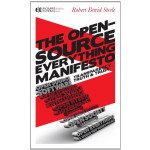
The Open Source Everything Manifesto: Chapter 3 Manifesto Extract I

Manifesto Extracts
0Shares
Amazon Page

Chapter 3 Manifesto Extract I

The circumstances underlying this manifesto are stark and compelling: We are at the end of a five-thousand-year-plus historical process during which human society grew in scale while it abandoned the early indigenous wisdom councils and communical decision-making.  Power was centralized in the hands of increasingly specialized “elites” and “experts” who not only failed to achieve all they promised but used secrecy and the control of information to deceive the public into allowing them to retain power over coummunity resources that they ultimately looted.

. . . . . . . .

The corruption of the commons led to the loss of integrity between and among individuals, organizations, and community.  Artificial paradises made up of objects and possessions were substitute for true community based on authentic hear-to-heart relationships.  Secular corruption is made possible by information asymmetries between those in power and the public.  In the absence of transparency, truth, and trust, wealth is concentrated and waste is rampant.

Book Page at Amazon   .   Book Page at Barnes & Noble   .   Book Page at McNallyRobinson   .   Book Page at North Atlantic Books (Publisher)   .   Book Page at Powell’s Books   .   Book Page at Random House   .   Book Page at Super Book Depot

Event: 14-15 June Rio de Janeiro Unconference on Culture & Sustainability

Cultural Intelligence, Politics
0Shares
Click on Image to Enlarge

Unconference: Culture and Sustainability in Rio+20

ECO 92 and its discussions led to the structuring of sustainable development around three main pillars: the environmental, the economic and the social. But what is the role of culture in this trinity? Is it subsumed within the social field? Is it an additional 4th pillar? Or, Is there a possible new configuration? In Brazil, we have been exploring these themes in several ways.

During Rio+20, the Ministry of Culture will deepen the exploration of these themes by holding the ‘Unconference: Culture and Sustainability in the Rio +20’ on June 14th and 15th in two warehouses in the port area of Rio de Janeiro.

Themes and Curators:

– Creative and Sustainable Cities – Tiao Rocha

– The Development of Culture to Human Scale – Patrick Belloy

– Traditional Knowledge and the Culture of Sustainability – Alfredo Wagner

– Digital Culture and Sustainability – Michel Bauwens

Tom Atlee: The Design Economy – How to Meet the Challenges of the Next Economic Era

Money, Politics
0Shares
Tom Atlee

The concepts of “design” and “association” in this article, related so fundamentally to the creation and contextualization of important information, seems closely related to the idea of open intelligence and the larger meme of open everything.  So, fyi.

The Design Economy: How to Meet the Challenges of the Next Economic Era

Joe Costello, author of the new book Of, By, For: The New Politics of Money, Debt & Democracy, has a message for America: our political economy must be democratically reformed. As we confront a moment of massive historical change, Costello explores, among other things, how electronic information technologies are transforming industrial economies. He explains how the understanding of this shaping process, or design, can help us meet the challenge of the next economic era. Hint: We're going to have to wake up to our power as citizens to get there. 

The following is an excerpt from Of, By, For: The Politics of Money, Debt & Democracyby Joe Costello (SmashWords, 2012).

“The ordinary person senses the greatness of the odds against him even without thought or analysis, and he adapts his attitudes unconsciously. A huge passivity has settled on industrial society. For people carried about in mechanical vehicles, earning their living by waiting on machines, listening much of the waking day to canned music, watching packaged movie entertainment and capsulated news, for such people it would require an exceptional degree of awareness and an especial heroism of effort to be anything but supine consumers of processed goods.” — Marshall McLuhan, The Mechanical Bride: Folklore of Industrial Man

Humanity's great agrarian era produced agrarian government systems, economies, and cultures. Human life and human identity derived overwhelmingly from the processes of farming. The much shorter two-centuries old industrial era redefined life. The processes of production and consumption became the overwhelming dual identities of individuals and our institutions that evolved to foster the processes of unlimited industrial growth. As we move into the design economy, increasingly the most imperative questions will be what are the roles, identities, institutions, and processes of design.

Continue reading “Tom Atlee: The Design Economy – How to Meet the Challenges of the Next Economic Era”