Summary: Today, billions of dollars in aid is delivered by soldiers and private contractors at the behest of the political and military leadership. But this so-called “militarized aid” is ineffective, wasteful, and puts lives at risk.
MICHAEL YOUNG is Regional Director for Asia, Caucasus, and the Middle East at the International Rescue Committee. He has worked in Afghanistan, Bosnia and Herzegovina, Chechnya, and Pakistan.
The purpose of this memorandum is to establish priorities for my strategic objectives through 2012 and pending the concurrence of a new president with a proper staff, 2020. There is no such thing as strategic guidance for one year. This document informs without directing anyone.
Intent
My intent is to establish a baseline of truth–the truth at any cost reduces all other costs–so as to return our Armed Forces to a condition of readiness, responsiveness, and effectiveness in the face of all threats to the Republic, both domestic and foreign. At a minimum this means an Air Force capable of long-haul lift; a Navy capable of distributed littoral operations; an Army able to fight uncomfortable wars while also reinforcing legitimate governments and where appropriate helping insurgents holding the moral high ground to displace despotic regimes. It also means a Marine Corps able to put air-land-sea forces on any spot in 24 hours (platoon landing team), 48 hours (company landing team) and 72 hours (battalion landing team), along with a Coast Guard able to fulfill all of its homeland safety and security missions. Underlying my intent for the Armed Forces is a strategic intent to demand clarity, integrity, and sensibility from the Whole of Government–sustainable legal orders consonant with our public's culture.
Our blood must only be shed when our brains are engaged and all other means–cultural, diplomatic, economic, educational, and political–cannot achieve the objectives that are open, legal, ethical, moral, and validated by both Congress and the public. My intent therefore consists of creating the conditions for getting a grip on reality and being able to deal with reality, with a particular emphasis on assuring that all information necessary to inter-agency effectiveness and multinational engagement is both known to us, and shareable with others.
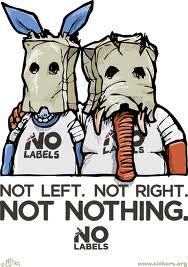
Poor No Labels. A million dollars wasted, all because the donors and the recipients are so out of touch with America they simply don't “get” the fact that the two-party tyranny is a “walking dead man,” and a diversity of voices & values has emerged across America and around the world.
With today's posting, I point to twelve of the lists of books reviews from Book Review Lists (Positive). For each list, I highlight two books from within that list. My intent is to demonstrate that America does not lack for authentic, coherent, integral voices & values — right now it lacks for honest leadership. Labels or No Labels, America has no leaders worth a warm bucket of spit. From wing-nuts to buffoons to frauds, we have no bench. The time has come, in my view, to retire an entire generation of local, state, and national “leaders,” and to make way for the younger generation, the digitally literate generation, for whom secrecy is a connectivity outage to be routed around.
The risk of nuclear terrorism is hyped by some as possible and high consequence (Allison 2006) while others dismiss the strategy as too difficult and too risky for terrorist organizations (Jenkins 2008). However, analysts have no data from which to directly analyze the probability of terrorist acquisition and use. One methodological solution is to extend the range analysis to include analogous cases: private military corporations (PMCs) are one class of non-state actors (NSAs) who may possess the capacity and autonomy to pose a risk of nuclear terrorism for their state masters. I find that the while the technical and military capabilities of PMCs may be greater than those of terrorist organizations with respect to nuclear weapon construction or delivery, they are still be insufficient (and PMCs must also somehow acquire fissile materials). Also, PMCs benefit from agency slack, as demonstrated by Blackwater’s performance in Iraq, but this autonomy does not appear sufficient to carry out an illicit nuclear plot. Therefore, PMCs may be more capable than most terrorist organizations if they sought to acquire nuclear weapons but they are still unlikely to succeed.
Keywords: Nuclear Weapons, Terrorism, Private Military Corporations, Blackwater, Xe
Working Paper Series
Brown, Robert L., Private Military Corporations: A Non-State Actor-Nuclear Terror Nexus? (August 16, 2010). Available at SSRN: http://ssrn.com/abstract=1659785



 Robert David Steele