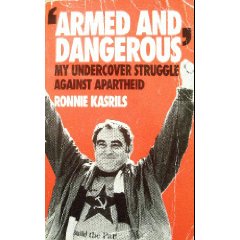
Review: “Armed and Dangerous”–My Undercover Struggle Against Apartheid

5 Star, Atrocities & Genocide, Censorship & Denial of Access, Consciousness & Social IQ, Insurgency & Revolution, Intelligence (Government/Secret)
0Shares

Amazon Page
Amazon Page

5.0 out of 5 stars Undercover in Rebellion, Now Minister for Intelligence,

December 26, 2004
Ronnie Kasrils
I have just spent two days absorbing his book. Some highlights:

1) The big fights, the important fights, take 25 years or more. The transformative fights, the nation-wide or trans-regional transformations, take 25-50 years.

2) When any government seeks to repress discontent by suspending the due process of law, stand by for a revolution.

3) Fighting this revolution, without a friendly country adjacent to South Africa, and with South African mercenaries and forces all too able to strike at will across Africa, was very very hard. Bomb-making, communications, all hard.

4) Camaraderie should not be allowed to undermine operational security and counterintelligence. From day one, misplaced faith and lax checking of backgrounds was very costly, and the ANC was riddled with informers, many of them passed through the US and UK.

5) The Russians, East Germans, and Cubans all provided aid with no strings attached–indeed, the West's excessive propaganda against communism actually inspired interest in communism. This book is one of the best references I have found, as a US intelligence professional, with respect to the good done by the so-called “main enemy” in the specific case of South Africa.

6) I believe the author when he recounts discussions with Russians focusing on the defense nature of their military investments, and their longer-term strategic focus on beating US capitalism in a straight-up economic competition with socialism. I had to think as I worked through this section: if Ronnie Kasrils could have these discussions, how could CIA get it so wrong all those years?

7) Across the entire book is a full range of clandestine technique. These guys knew how to use newspaper ads, codes, changes in times and dates, pre-arranged blind meetings, brush passes, dead drops, the whole nine yards. They lived it–and unlike US spies, who get sent home, if they failed at undercover operations they paid with their lives or spent years–sometimes decades–in prison.

8) The United Kingdom gets high marks for its balanced reception of ANC officers, and Scotland Yard gets the best marks of all.

9) Key elements of the ANC victory, apart for the grotesque self-destructive nature of apartheid, were persistence, propaganda, infrastructure, and training. Their leadership was clever, strategic, and focused. The ANC also understood that politics was as important as tactical and technical training–the moral is to the material as 10:1 and all that good stuff.

10) Training as well as solidarity were well balanced with sports, music, and art.

11) The East Germans taught them how to do Vietnamese tunnels (see my review of the “Tunnels of Cu Chi.”) My first thought was Colombia and drugs–I suspect the Americans have no idea what's under the ground in the Andes.

12) They were not ready for air attacks, especially air attacks streaking in on them from South Africa within other nominally sovereign countries.

13) A major contributor to their eventual success was the over-all trend in the region, with victories in Angola and Zimbabwe chief among the contributing factors.

14) The revolution went through a mutinous and discouraging phase. I was reminded of Bill Moyer's “Doing Democracy” where he quotes Tom Atlee in saying that Stage 5 in any long-term movement toward democracy is inevitably the stage where there is a perception of failure.

15) In the final stages before victory, one of their biggest problems was quality control over incoming recruits and over captured informants and traitors.

16) Chapter 16 is a lovely discussion of their use of open sources of intelligence. He says: “The greatest proportion of intelligence comes from published material. Since South Africa is a modern, industrial country, we were able to acquire information covering almost its entire infrastructure. This included everything from road, rail and power networks to national key points and strategic objectives. Pretoria's predilection for propaganda provided rich pickings from a range of military and police literature.”

17) These guys ran a marvelous early warning system that got citizen conscripts, when called up, to call in to telephone answering machines.

18) They pioneered the integration of maps, telephone books, index cards, and brain power in charting all the unoccupied farms across the country, ultimately plotting routes from the border all the way to Pretoria.

19) When De Klerk legalized the ANC, they were initially taken in and got sloppy with security. The author does a fine job of showing that De Klerk, while bowing to the inevitable in the end, was much more duplicitous and hostile to the ANC after starting the reconciliation process, than most in the West realize.

20) The author (who is now the Minister for Intelligence Services after having been the Deputy Minister of Defense) appears to be skilled at understanding the value of the media, and the importance of detecting and fighting disinformation early on.

21) His chapter on his tenure at the Ministry of Defence could teach us something about transformation and how to accelerate it.

In the end, and over-all, I am left with four impressions:

a) Morality really does matter, as does mass. A mass of people with morality is more powerful than an elite with guns.

b) Torture and murder by minions can be forgiven and understood–it is their political masters who must be held accountable.

c) Women are the best. the most steadfast revolutionaries–and their men could not survive decades of hardship without the steadfast commitment of their companions.

d) South Africa is ready (he quotes Thabo Mbeki) to make its own history.

For myself, I am quite certain that Ronnie Kasrils is going to lead South Africa's intelligence community in a way that no other national intelligence leader could possibly understand: in the service of the people, harnessing and inspiring their collective intelligence, placing intelligence in the service of the people.

This is an exceptional person…the real deal.

Vote on Review
Vote on Review

2004 Pelton (US) Value-added Citizen Blogs, Forums, and Wars

Civil Society, Collective Intelligence, Historic Contributions
0Shares

Robert Young Pelton
Robert Young Pelton

Robert Young Pelton at IOP ’06 17-19 January 2006,

Sheraton Premiere, Tysons Corner, Virginia

notes..? :)))  I like to keep it simple.  My presentation was simply on using value-added nodes to attract and nurture intel providers. Examples were the world of Blogs and forums to generate ground intel

Examples:

www.comebackalive.com a chat site for a wide spectrum of adventurers, mercenaries, jihadis, travelers, students and others. Example was instructions on how to get into Grozny took three days and only about 5 entries to nail it.

www.kathryncramer.com a housewife from New York who did extraordinary reporting on the coup in Equatorial Guinea from her kitchen, while changing diapers

Yahoo forums pmc Group PMC <PMCs@yahoogroups.com> where 600 people register, about two dozen post and around 300 or journos hover to snatch up tidbits from private military contractors.

The information/disinformation battle going on between Keith Idema at www.superpatriots.us/ versus stuporpatriots.blogspot.com/  and Idema's use of proxy bloggers like Caosblog.com to create a sense of false support

Then I talked about America's Most Wanted, reality shows and how the US government could harness this form of value added node (and of course the web) to hunt down criminals like Bin Laden.

Finally I challenged government, intel and big corporations to harness these new forms of intel networks to make the world a smarter, safer place!

RYP

PS thanks for having me, it’s always a pleasure to hang out with the odd and educated!

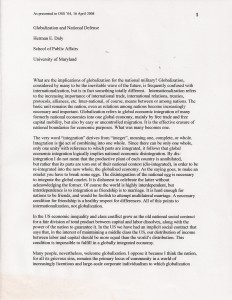
2004 Daly (US) Globalization and National Defense–Implications of the Effective Erasure of National Boundaries in an Era of Ecological Economics

03 Environmental Degradation, Analysis, Commercial Intelligence, Earth Intelligence, Historic Contributions
0Shares
Herman Daly
Herman Daly

GOLDEN CANDLE AWARD:  Dr. Herman E. Daly

OSS '04: To Dr. Herman E. Daly for his early role as a founder of the field of Ecological Economics, including his leadership role in the creation of the journal for this area of ethical study, and his body of work including Steady-State Economics (1977) and the most recent Ecological Economics and the Ecology of Economics (1999).

We discovered Dr. Daly's work when we made the leap from environmental scare mongering to his term, ecological economics.  This great man, who spent most of his years in the University of Maryland system, has received every prize short of the Nobel Prize, and we were among those who urged the Nobel Comittee to recognize Daly and and others rather than the celeberity de jour.  Below is his presentation to OSS '06.  Please search for his books on this website, in the overcall scheme of strategic analytics, Herman Daly is “root.”

Herman Daly
Herman Daly

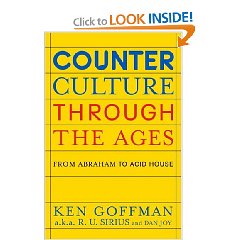
Review: Counterculture Through the Ages–From Abraham to Acid House

5 Star, Change & Innovation, Complexity & Resilience, Consciousness & Social IQ, Culture, Research
0Shares

Amazon Page
Amazon Page

5.0 out of 5 stars From Socrates to Brand, Sterling, and Rheingold: Good Stuff,

December 25, 2004
Ken Goffman a.k.a. R.U. Sirius
I found this book in an airport, and bought it for three reasons: 1) because Bruce Sterling plugged it; 2) because my 15-year old is well on his way to being part of the emerging counter-culture; and 3) because I do believe that “power to the people” is now imminent–not if, but when.

It starts slow, quickly improves by page 50, and as I put down the book I could not help but think, “tour de force.” This is both a work of scholarship and an advanced commentary that puts counter-culture movements across history into a most positive context.

Across the ages, the common currency of any counter-culture is the will to live free of constraints, limiting the impositions of authority. Indeed, it is very hard not to put this book down with an altered appreciation for hippies, war protesters and civil rights activists, for the book makes it clear that they are direct intellectual, cultural, and emotional descendants of both Socrates and the Founding Fathers, especially Thomas Paine and Thomas Jefferson.

From Socrates to Taoism, Zen, Sufis, Troubadours, the Enlightenment, the Americans, Bohemian Paris, and into the 1950's through the 1970's, the author's broad brush review of the history of counter-culture in all its forms is helpful to anyone interested in how the next twenty years might play out.

The bottom line is clear: we need the counter-culture, and it is time for this century's culture hackers–of whom Stewart Brand may be the first–along with the author–to rise from their slumber.

Some side notes:

1) An underlying theme, not fully brought out, is that anything in excess or without balance can be harmful. Absolute dictatorship by religions is as bad as absolute secular dictatorship. Science without humanity, humanity without science.

2) The Jewish religion is favorably treated in this book as perhaps the most counter-cultural and individualistic of the religions. I found this intriguing and was quite interested in some of the specific examples.

3) I disagree with the author's attack on Roger Shattuck's “Forbidden Knowledge: From Prometheus to Pornography,” and would go so far as to say that the two books should be read together, along with “Voltaire's Bastards,” “Consilience,” and a few of the other books on my information society list.

The author concludes somewhat somberly, not at all sure that there is much good ahead. He very rationally notes that before we begin the next big counter-cultural movement we should probably focus on fundamentals first: do we have enough water, energy, food, medicine?

I agree with that, and I agree with John Gage's prediction in 2000, that DoKoMo phones in the hands of pre-teens, and Sony Playstations at $300 with access to the Internet, are irrevocably changing the balance of power. Jonathan Schell is on target in “Unconquerable World: Power, Non-Violence, and the Will of the People,” and both Tom Atlee (“The Tao of Democracy”) and Howard Rheingold (“Smart Mobs”) as well as James Surowiecki (“The Wisdom of the Crowds”) all show us clearly that information is going to out the corrupt and restore balance to our lives. It is not a matter of if, but when. Collective intelligence–public intelligence–is here to stay.

Vote on Review
Vote on Review

2004 Gill (US) Open Wireless Spectrum and Democracy

Civil Society, Collective Intelligence, Historic Contributions, Technologies
0Shares
Jock Gill
Jock Gill

Jock Gill served President Bill Clinton as a communications specialist, and has gone on to reflect deeply on public communications as the inherent foundation of democracy.  As part of that process he has recognized–and taught us and others–that open spectrum as championed by David Weinberger is an inherent “need” for full and open public communications.

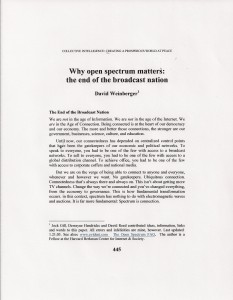
Below are two documents, the first is his presentation notes from OSS '04, and the second is the first page linking to David Weingerger's seminal White Paper that was also published as a chapter in COLLECTIVE INTELLIGENCE: Creating a Prosperous World at Peace.  The Frog leads to the original online; the page on the right to the printable version of the chapter.

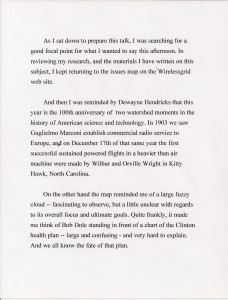
Gill Paper

Open Spectrum Original
Open Spectrum Chapter

2004 Harrison (US) Open Source Intelligence (OSINT) Requirements Management: A U.S. Special Operations Command (USSOCOM) Perspective

Historic Contributions, Methods & Process, Military
0Shares

Ben Harrison
Ben Harrison

PLATINUM LIFETIME AWARD, Mr. Ben Harrison, OSINT Pioneer

Mr. Ben Harrison is a master of both the military bureaucracy, and the global open source intelligence (OSINT) world.  He has been a pioneer in all respects–helping the larger Department of Defense Community understand OSINT; creating innovative solutions for his own Command, the U.S. Special Operations Command; and helping teach otherss about the basics of OSINT.  Within the U.S. Department of Defense, he is the tip of the spear for DoD OSINT.

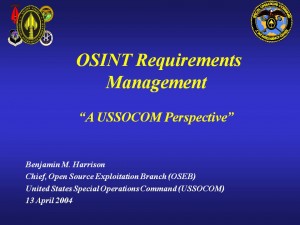
USSOCOM is still the only “full spectrum” Open Source Intelligence (OSINT) shop in the US Government–others do foreign media (in a handful of languages), document exploitation, legal traveler exploitation, but only USSOCOM does full-spectrum Black, Gray, and White OSINT that connects one bullet to one target.  Below is his presentation to OSS '04.

Ben Harrison
Ben Harrison

2004 Kaplan (US) The Saudi Connection: How billions in oil money spawned a global terror network

09 Terrorism, Government, Historic Contributions, Law Enforcement, Media
0Shares
David Kaplan
David Kaplan

GOLDEN CANDLE AWARD: Mr. David Kaplan

OSS '04: To Mr. David Kaplan, for his extraordinary exploitation of legal and ethical sources of information in the pursuit of investigative journalism on behalf of U.S. News & World Report.  His studies of North Korean government corruption and of Saudi Arabian government sponsorship of terrorism, represent the best practices in his field.

Today he is Editorial Director for the Center for Public Integrity, one of our Righeous Sites (click on Cover Photo to go to the Center).   In addition to overseeing the Center’s editorial work, he serves as director of its International Consortium of Investigative Journalists.

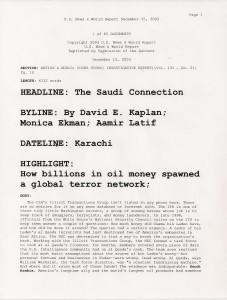
Below is the core story as he told it personally at OSS '04.

David Kaplan
David Kaplan