Issues Balanced judgment Church and state Citizen participation and engagement Cooperation Corporate power Fragmented or disjointed thinking Grassroots mobilization Inclusion Media Mistrust Money in politics National unity Partisanship in politics Spin and distortion The culture of blame and accusation The role of government The spirit of democracy Unscientific or irrational thinking Water Wisdom Women
Skills Community organizer Editor General computer skills Programmer – ColdFusion Programmer – MS SQL Database Special academic training and expertise Team leader Transpartisan politics Writer
Phi Beta Iota: Below the line is an email with several links that has been broadcast by and to what we think of as the “thinking man's kum-ba-ya crowd.” They have not gotten a grip on public intelligence in the public interest yet, they are still crawling around the edges of structured organization. Think of them as raw material for GroupOn. A mix of naivete, scary, and inspiring. Please also note, as Tom Atlee has emphasized, that CITIZENSHIP makes “transpartisanship” a moot if not a counter-productive term. The Coffee Party is seriously over-hyped in the material that follows, but the spirit of the note is authentic and merits respect.
‘Net neutrality' sounds nice, but the Web is working fine now. The new rules will inhibit investment, deter innovation and create a billable-hours bonanza for lawyers.
Tomorrow morning the Federal Communications Commission (FCC) will mark the winter solstice by taking an unprecedented step to expand government's reach into the Internet by attempting to regulate its inner workings. In doing so, the agency will circumvent Congress and disregard a recent court ruling.
Phi Beta Iota: The public is now much more aware that neither of the two political parties can be trusted, and that trust for any given government element, policy, or point of view is contingent on a much deeper examination of bias and motive than many would wish. There are two sides to this issue, irrespective of the competency and good faith of government: on the one side are the corporations, including Google and Verizon, that wish to hijack cyber-space and claim that they own it. This will allow them to charge premium prices for access to high-speed services. On the other are those whose taxes paid for the creation of the Internet in the first place, the US taxpayer–they see the vital importance of open spectrum, open source software, and open source intelligence as the tri-fecta of cyber-freedom. At OSS '92 John Perry Barlow said that the Internet interprets censorship as an outage, and routes around it. Our view is that the corporations will succeed in hijacking cyberspace in the near term, but in the mid-term and beyond OpenBTS and other bottom-up public innovation solutions will restore the noosphere to its rightful owners, the human minds that comprise the World Brain.
What is “transpartisanship”? In its most common usage, “transpartisan” seems to refer to partisans from across the political spectrum coming together in civil conversation.
I love the term, but find myself thinking of it as a transitional phenomenon. A partisan is a strong (even militant) supporter of a party or position. People assume, in this polarized age, that partisans can't talk and work together. Bringing opposing partisans into visibly creative civil conversation flies in the face of that widespread assumption, and thus serves to undermine the primary narrative of polarization. However, it also has a dark side. Bringing people together as partisans instead of as peer citizens may actually reinforce partisanship as a political reality. I want to move beyond that, as I believe that parties and positions interfere with our ability to generate collective wisdom. (See http://co-intelligence.org/CIPol_beyondpositions.html)
Partisanship has a gift to offer to wise democracy. Partisans invest the time and effort to thoroughly articulate the arguments and evidence for their perspective on each issue. The problem with partisanship is that the partisans then use those articulations to fight each other and batter the public. The alternative is to use the gifts of partisans to help the mass of citizens move beyond partisanship.
An obvious way to do that is through citizen deliberative councils like Citizens Juries and Consensus Conferences. (See http://co-intelligence.org/P-CDCs.html) These councils bring together randomly selected citizens who may be Republicans or Democrats or whatever, but who aren't chosen because of that (except perhaps as part of an effort at demographic balance that includes diverse demographic factors like race, gender, etc.). They are not treated in any special way because of their political beliefs; they are simply peer citizens with the other citizens in the council. They are given (a) a charge to come up with something that benefits their whole community or country (a mandate that lifts them above partisanship) and (b) access to briefing materials and experts who represent the full spectrum of opinion on the issue being deliberated. In other words, the range of partisan viewpoints is represented by their diverse information sources and perspectives, rather than focusing on their positionality as partisan participants. This approach reflects the ideal of citizens as people with common problems and hopes engaging in conversations that creatively utilize their diversity to discover something greater and better than they all came in the room with.
I wouldn't call this transpartisan deliberation. I'd call it citizen deliberation.
Shaffer’s book rips the lid off several stories the bureaucrats wanted to suppress: the role of a program named Able Danger in yielding information that could have uncovered the 9/11 plot; Operation Dark Heart, which could have nabbed Al Qaeda’s number two leader; and early indications that Pakistan’s spy agency, the Inter-Services Intelligence, or ISI, actively supported the Taliban. These are the incendiary bombs the censors tried to defuse. And this is the real story of Tony Shaffer’s book.
Phi Beta Iota: The Playboy folks did not do their homework–the destruction of an entire first edition is not unprecendented, it was done by CIA to the first printing (1972) of Col L. Fletcher Prouty's The Secret Team: CIA and Its Allies in Control of the United States and the World (Skyhorse, 2008). While the title is hyped and the good Colonel was not aware of the over-arching financial crime families that the US Government has secretly supported and in some instances actually spawned from scratch, his general point to the public was clear: what is done in our name under the guise of secrecy is often criminal, generally unconstitutional, and almost always very costly in long-term blood, treasure, and spirit over both the short and the long term. What is at issue here is straight-forward: either we have a government that works in the public interest and displays integrity at every level, or we do not. It is not only the political “leaders” who have lost their integrity, but the professional “leaders” as well. Until the truth of this is understood by the majority of the American people, nothing will change.
Post Your Solutions--Town Halls Across the Country
For the past few years, in response to the topics I speak about on my television show and write about on The Huffington Post, people have asked me how they could contribute to help fight for what I call “Truth to Power.” Previously there has been no mechanism to allow people to participate in this, but it is clear that we need to form an Alliance – a formation of like-minded individuals fighting for the same ideals.
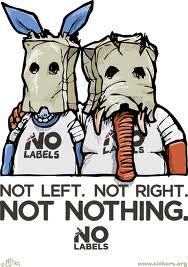
With that, let me invite you to join The Alliance to help us all fight for the truth. It is clear that our country is divided in two – not left and right, but those who wish to change the status quo for better, and those who wish to keep it to protect their interests.
The problem is that the Democratic and Republican parties have lost their focus. Instead of fighting to empower the people, they are now only fighting to keep their own power. Only through the full engagement of the people can we change this.
The state of civil liberties and national security in the United States is alarming.
In the American Empire, the former are routinely crippled or lacerated in the false name of the latter. Trust in government plunges. Dangers are magnified manifold to wound constitutionally venerated freedoms. International terrorist suspects who have never attempted to kill an American are treated as existential threats to U.S sovereignty. Predator drones employed off the battlefield in Afghanistan, Pakistan, or Yemen are spawning more enemies than are killed. Habeas corpus is suspended. Military commissions denuded of due process and which combine judge, jury, and prosecutor in a single branch of government are substituted for independent civilian courts. Time-honored privacy rights are trampled. Torture or first cousin enhanced interrogation techniques are endorsed. Congressman Peter King (R. N.Y.), slated for the chairmanship of the Homeland Security Committee, insists that prosecutions of alleged international terrorists in civilian courts are intolerable because guilty verdicts are not guaranteed. The worst violations are dared by few, willed by more, but tolerated by virtually all.
The nation needs a new birth of freedom dedicated to the proposition that the life of a vassal or serf — even in absolute safety — is not worth living.
At present, procedural safeguards against injustice are jettisoned for the counter-constitutional dogma, “Better that many innocents suffer than that one culprit eludes punishment.” A craving for a risk-free and comfortable existence fuels the nation's war on individual freedom. Acceptance of risk, however, is the lifeblood of a free society. Every human sports DNA capable of anti-social behavior — even the saintly. The United States is headed for the same ruination as Athens for the same reasons penned by historian Edward Gibbon: “In the end, more than they wanted freedom, they wanted security. They wanted a comfortable life, and they lost it all — security, comfort, and freedom. When…the freedom they wished for was freedom from responsibility, then Athens ceased to be free.”
Contrary to longstanding orthodoxies, civil liberties and national security are more aligned than opposed. Scrupulous respect for freedom works hand-in-glove with national security by evoking unbegrudging loyalty among citizens eager to risk that last full measure of devotion to foil opponents and to maintain government of the people, by the people, and for the people. Patriotic soldiers are superior to mercenaries. Hessians were no match for the Minutemen in the American Revolutionary War. A military that fights more for love of country than fear or money will triumph. And love of country is elicited by the government's securing unalienable rights to life, liberty, and the pursuit of happiness.


 Activist




 Bruce Fein