Officer won't sign order for troop indoctrination, asks to be relieved of command over repeal of ‘gay' ban in military
Worldnet.com,Posted: December 24, 2010
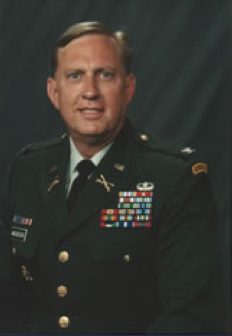
An Army lieutenant colonel has asked to be relieved of command rather than order his troops to go through pro-homosexual indoctrination following the repeal of the policy, which required homosexuals to keep silent about their sexual preference.
This year will see the 10th anniversary of the war in Afghanistan and, according to current plans, the beginning of British troop withdrawal. A decade into the military campaign, there is no longer even discussion of winning. The initial objective to release the country from the despotic grip of the Taliban and prevent its use as a safe haven for al-Qaida was achieved within months. Since then, it has only ever become harder to discern what victory might look like.
There is some clarity on what would count as defeat. If Nato withdrawal leads to the total collapse of Hamid Karzai's government and a return to Taliban rule, there would be no disguising the humiliation to western powers, nor the increased security threat from jihadi terrorism. Not that President Karzai is an attractive ruler. His administration is corrupt and repressive.
Please don't underestimate how powerful this sentence is.
When you say this to a colleague, a new hire, a student or a freelancer, you've established a powerful norm, one that they will be hesitant to challenge.
This might be exactly what you were hoping for, but if your goal is to encourage innovation, you blew it.
Phi Beta Iota: In strategic and force structure studies (neither strategic nor studies) the code is “protect the shooters” when they really mean protect shooter command billets, never mind the shooters themselves or the desperate need for a 10% move from shooters to thinkers.
Summary: The author discusses the intellectual but not the ethical underpinings of the failure of US foreign policy and national security since the first Clinton Administration. He touches on alternative policies such as isolationalism, offshore balancing, selective engagement, global dominance, and then settles on offshore balancing as the way to go: pulling back the Army and Marines from overseas, sharply reducing their budgets, and restoring budget to the Air Force and the Navy.
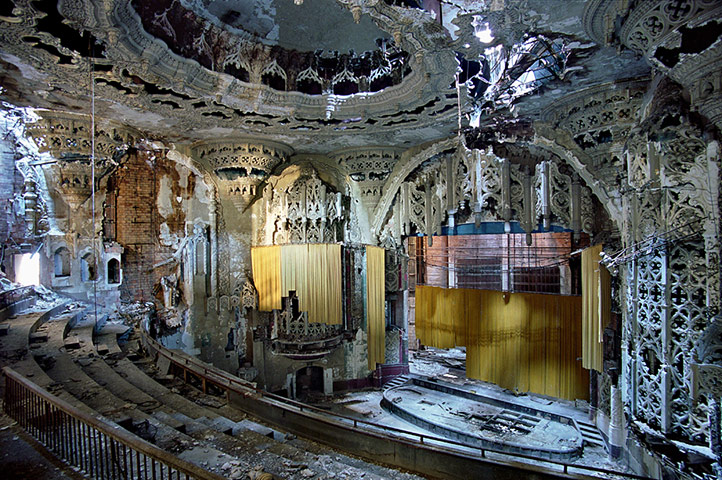
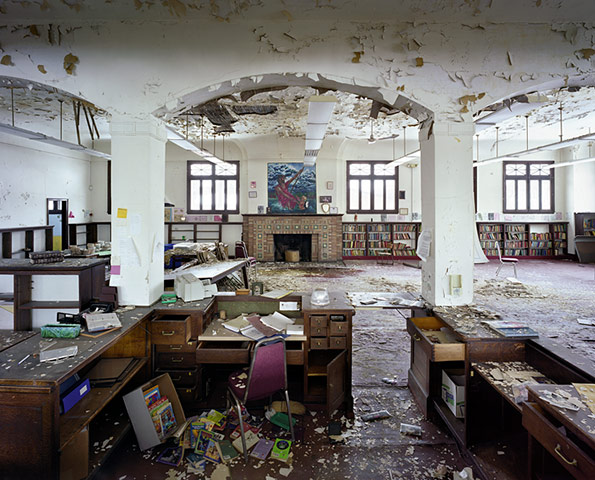
In downtown Detroit, the streets are lined with abandoned hotels and swimming pools, ruined movie houses and schools, all evidence of the motor city's painful decline. The photographs of Yves Marchand and Romain Meffre capture what remains of a once-great city – and hint at the wider story of post-industrial America
. . . . . . .
Click to Enlarge
Cumulatively, the photographs are a powerful and disturbing testament to the glory and the destructive cost of American capitalism: the centre of a once-thriving metropolis in the most powerful nation on earth has become a ghost town of decaying buildings and streets. There is a formal beauty here too, though, reminiscent of Robert Polidori's images of post-hurricane Katrina New Orleans. “It seems like Detroit has just been left to die,” says Marchand, “Many times we would enter huge art deco buildings with once-beautiful chandeliers, ornate columns and extraordinary frescoes, and everything was crumbling and covered in dust, and the sense that you had entered a lost world was almost overwhelming. In a very real way, Detroit is a lost world – or at least a lost city where the magnificence of its past is everywhere evident.”
. . . . . . .
Click to Enlarge
The Ruins of Detroit tells the city's story so far in one starkly beautiful photograph after another, all of which add up to nothing less than an end-of-empire narrative. Or as Sugrue puts it: “The abandoned factories, the eerily vacant schools, the rotting houses, and gutted skyscrapers that Yves Marchand and Romain Meffre chronicle are the artefacts of Detroit's astonishing rise as a global capital of capitalism and its even more extraordinary descent into ruin, a place where the boundaries between the American dream and the American nightmare, between prosperity and poverty, between the permanent and the ephemeral are powerfully and painfully visible. No place epitomises the creative and destructive forces of modernity more than Detroit, past and present.”
Haitians live in a make-shift camp close to the airport. Port au Prince Haiti was rocked by a massive earthquake, Tuesday January 12, devastating the city and leaving thousands dead. Photo Marco Dormino
31 December 2010
FILE – In this Nov. 13, 2010 file photo, an ambulance worker prepares to remove the corpse of a man lying dead in a portable bathroom of a refugee camp in Port-au-Prince, Haiti. In 2010 crisis has piled upon crisis in Haiti. More than 230,000 are believed to have died in the quake, and more than a million remain homeless. A cholera epidemic broke out in the fall, and in its midst a dysfunctional election was held, its results still unclear. Photo: Ramon Espinosa / AP