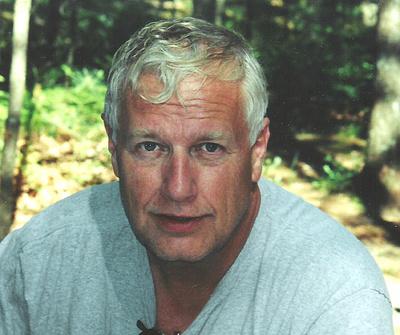
Lord James of Blackheath, House of Lords [VIDEO 11:10] from 2010, now circulating
Breaking news Lord James of Blackheath has spoken in the House of Lords holding evidence of three transactions of 5 Trillion each and a transaction of 750,000 metric tonnes of gold and has called for an investigation.
I think there are three possible conclusions that may come from it. I think there may have been a massive piece of money laundering committed by a major government which ought to know better and that it has effectively undermined the integrity of the British bank the Royal Bank of Scotland, in doing so. The second alternative is that a major American department has an agency that has gone rogue on it because it has been wound up and has created a structure out of which they are seeking to get at least 50 billion Euros as a payoff. And the third possibility is that this is an extraordinarily elaborate fraud which has not been carried out but which has been prepared in order to provide a threat to one government or more if they don't pay them off. So there are three possibilities and this all needs a very urgent review.
My Lords, it starts in April and May of 2009, with the alleged transfer to the United Kingdom, to HSBC of a sum of 5 trillion dollars and seven days later, in comes another 5 trillion dollars to HSBC, and then 3 weeks later another 5 trillion. 5 trillion in each case. Sorry. A total of 15 trillion dollars is alleged to have been passed into the hands of HSBC for onward transit to the Royal Bank of Scotland and we need to look at where this came from and what the history of this money is. And I have been trying to sort out the sequence by which this money has been created and from where it has come from for a long time.
Last week, the BBC news show, Panorama, supposedly told the story of America’s poor.
Moments of the story were right, they certainly picked one or two of those responsible for America’s economic collapse out, although not a single cogent idea was expressed on the show.
Panorama simply doesn’t get it.
They aren’t slow witted, they are simply more of the same, controlled news, taking the focus from the magician and putting it on the pigeon.
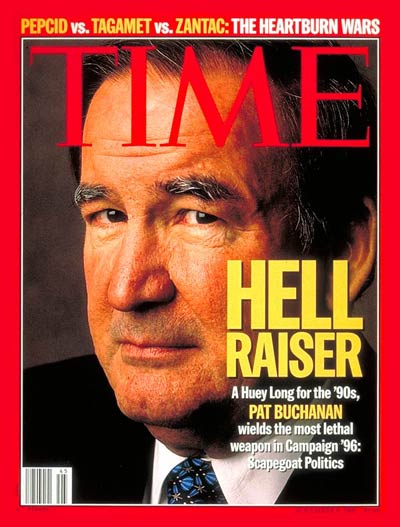
Documented in the 488 pages and 1,500 footnotes of Suicide of a Superpower is my thesis that America is Balkanizing, breaking down along the lines of religion, race, ethnicity, culture and ideology, and that Western peoples are facing demographic death by century's end.
. . . . . .
Let error be tolerated, said Thomas Jefferson, “so long as reason is left free to combat it.” What Foxman and ADL are about in demanding that my voice be silenced is, in the Jeffersonian sense, intrinsically un-American.
Phi Beta Iota: Below the line is the complete essay by Buchanan with points that we find compelling. He is articulate, and however much some may dislike delivery, he represents a point of view — and a demographic — whose silence spells death to the Republic as we know it. What is really at issue here is the legitimacy of the two-party bi-opoly and the various levels of government — they have substituted ideology for intelligence, corruption for integrity. Under such a system, the Constitution has been trashed and the Republic dismembered.
– – – – – – –
My days as a political analyst at MSNBC have come to an end.
After 10 enjoyable years, I am departing, after an incessant clamor from the left that to permit me continued access to the microphones of MSNBC would be an outrage against decency, and dangerous.
In my opinion, one of the most important books written in recent years on the subject of the global arms trade and its corrupting effects is Andrew Feinstein's, The Shadow World, Inside the Global Arms Trade. This voluminous book is mind numbing in its detail, but it is thoroughly sourced and, I believe, it will become a standard reference over time. Anyone trying to understand the dark and dangerous corner of the global economy and its politics must read this book. (To be sure, I am biased because I was a minor source in this book and I consider Andrew a good friend.)
Naturally, the arms makers are not too happy with the Shadow World and want to keep it hidden in the musty stacks of your local library. I am attaching two recent essays to help you determine if this book should be forgotten. They were published on the Lexington Institute' Early Warning Blog. Lexington is funded in large part by defense contractors and is hardly impartial on all matters regarding defense spending, so the first essay is quite expected; the second, however, comes as a surprise, to Lexington's credit.
The first essay is a predictable critique of Andrew's book by Robert Trice, a retired Senior Vice President of Lockheed Martin. Think of his effort as an attempt to move Andrew's book to a forgotten corner in the back room.
To understand the saliency of Trice's effort, consider his career. Robert Trice is a case study in the quintessential pattern of gorging oneself on cash flow pumped out by the Military – Industrial – Congressional Complex's big green spending machine. Holding a PhD in political science, he began his defense career in the Office of the Secretary of Defense in the Pentagon, where he eventually became Director for Technology and Arms Transfer Policy — or in plain english, a resident shill in the Pentagon for promoting international arms sales — the subject painted in not so flattering terms by Feinstein. Trice then moved to Capital Hill and worked as the defense Legislative Assistant to Senator Dale Bumpers (D-AR) for about three years. I met him in this position because Bumpers was interested in the military reform work my colleagues (Pierre Sprey and John Boyd) and I were doing in the Pentagon. But Trice, as Bumpers' advisor, was clearly a reluctant reformer. (Although Bumpers showed initial and enthusiastic interest in our work, nothing came of it.) In the essay below Trice now slings a little mud, saying the three of us are not just wrong but wrongly motivated, because we are “anti-defense.” Soon thereafter, the presumably pro-defense Trice cashed out of Bumpers office to work in the Defense industry, serving first as a Vice President for Business Development at McDonnel Douglas (in plain english this is a marketing job and in the MICC, marketing, or business development, means greasing the skids in Congress and the Pentagon for your firm's tinker toys — which is a good position for a poly sci type, because he couldn't design airplanes at McAir or Lockheed). Trice then moved to Lockheed Martin where his business development portfolio including shaping L-M's new business strategies and operations for the global market, which of course is the subject of Andrew's book. Obviously a person with his background of bottom feeding so successfully in the MICC's money machine, especially in the international arms trade arena, comes to the reviewing table with … shall we say … a certain amount of bias.
The second essay is Andrew Feinstein's polite repost to Trice's bucket of grease. Andrew's background could not be more different than that of Trice. Whereas Trice gorged himself and became a wealthy ‘pillar of the establishment' by slopping in America's defense trough, Andrew put his ass on the line trying to rein in the excesses of that trough's South African equivalent. In the late 1980s, Andrew, a young white South African, joined Nelson Mandella's African National Congress (ANC), because he opposed Apartheid. In 1994, after the fall of Apartheid, he was elected in South Africa's first democratic election to be an ANC member of parliament. But Andrew took his parliamentary oversight responsibilities seriously, and while in parliament, he set up a kind of one man Truman Committee to investigate allegations of ANC corruption in some international weapons deals. And he hit pay dirt, but rather than shutting up when he was pressured by party elders to close down his investigation into a £5bn arms deal that was tainted by allegations of high-level corruption, he resigned in protest from Parliament. His political memoir, After the Party: A Personal and Political Journey Inside the ANC, was published in 2007 and became a bestseller in South Africa.
With the backgrounds of these two protagonists in mind, I urge you to read Trice's critique of Andrew's latest book first (Attachment 1 below) and then Andrew's repost (Attachment 2 below) and judge for yourself who is closer to being a straight shooter — and read The Shadow World.
An article like this poses the question – who is really insane, psychiatrists or the people they treat? When readers finish this article, they may vote for the former.
“In a damning analysis of an upcoming revision of the influential Diagnostic and Statistical Manual of Mental Disorders (DSM), psychologists, psychiatrists and mental health experts said its new categories and “tick-box” diagnosis systems were at best “silly” and at worst “worrying and dangerous.” Some diagnoses – for conditions like “oppositional defiant disorder” and “apathy syndrome” – risk devaluing the seriousness of mental illness and medicalising behaviors most people would consider normal or just mildly eccentric, the experts said. At the other end of the spectrum, the new DSM, due out next year, could give medical diagnoses for serial rapists and sex abusers – under labels like “paraphilic coercive disorder” – and may allow offenders to escape prison by providing what could be seen as an excuse for their behavior, they added.
Hacker group Anonymous on Friday took down the website of the Central Intelligence Agency (CIA), online publication PC Magazine reported.
The website is still offline.
“CIA TANGO DOWN: https://www.cia.gov/ #Anonymous,” the @YourAnonNews feed tweeted.
Anonymous did not make public the attack’s details, but the group’s hackers normally use distributed denial of service (DDoS) attacks to knock their targets offline.
“We are aware of the problems accessing our website, and are working to resolve them,” CIA spokeswoman Jennifer Youngblood said Friday night as quoted by the CNN.
Last month, Anonymous briefly took down the websites of the Department of Justice and the FBI in retaliation for the Megaupload file sharing site’s shutdown.
Phi Beta Iota: The solution was clearly stated in 1994 and again in 2010. Until the US Government gets a grip on “Smart Nation” and “Whole Earth” concepts of security at the code level, migrating to open source software across the board, and reinforcing all the shared nodes, it will continue to be easy to take down individual capabilities. And if all else fails, most systems can be taken down by cutting their obvious external big wires and/or their satellite downlinks, most easily reachable from outside the wire with various means.
Google glasses (or maybe we should call ‘em Google Goggles) will be an interesting AR advance, more science friction happening now, if they do happen. Preview (aka rumor) at 9to5Google.
These glasses, we heard, have a front-facing camera used to gather information and could aid in augmented reality apps. It will also take pictures. The spied prototype has a flash —perhaps for help at night, or maybe it is just a way to take better photos. The camera is extremely small and likely only a few megapixels. Quote from above source below.
According to our source, it communicates directly with the Cloud over IP. Although, the “Google Goggles” could use a phone’s Internet connection, through Wi-Fi or a low power Bluetooth 4.0.
Click on Image to Enlarge
The use-case is augmented reality that would tie into Google’s location services. A user can walk around with information popping up and into display -Terminator-style- based on preferences, location and Google’s information.
Therefore, these things likely connect to the Internet and have GPS. They also likely run a version of Android.
Phi Beta Iota: It is quite fascinating to watch Google make the same mistake as the US secret world, obsessing on collection and meaningless displays while failing to make sense or influence outcomes.