David Swanson: Connecticutt Takes First Step Toward Peace Economy

Civil Society, Commerce, Ethics, Government, Peace Intelligence
David Swanson
David Swanson

Connecticut Advances Conversion from War to Peace Economy

The Connecticut legislature has sent to the governor to sign a bill that would create a commission to develop a plan for, among other things:

“the diversification or conversion of defense-related industries with an emphasis on encouraging environmentally-sustainable and civilian product manufacturing. On or before December 1, 2014, the commission shall submit such report to the Governor and, in accordance with the provisions of section 11-4a, to the joint standing committee of the General Assembly having cognizance of matters relating to commerce.”

The commission “shall Advise the General Assembly and the Department of Economic and Community Development on issues relating to the diversification or conversion of defense-related industries” among other things.

Read the full text.

According to Peace Action, sponsor State Senator Toni N. Harp from New Haven has said,

“The proposed Futures Commission will set up a framework that allows us to convert many of our military related jobs and infrastructure into non-military industries.”

This is a remarkable breakthrough that didn't just come out of nowhere:

“In November 2012, a ballot referendum passed in New Haven that called for moving the money from war to jobs rebuilding our infrastructure and human needs. This referendum won support nearly 6 to 1! This winter in Connecticut, the US Peace Council, No Nukes No War, the City of New Haven Peace Commission with the support of the state AFL-CIO and International Association of Machinists worked to get  SB619 introduced in the state legislature calling for a Futures Commission whose goals is to investigate how to convert the weapons manufacturing industries to producing civilian, green products and retain and develop manufacturing in the state. The Commission that this bill creates will include representatives of labor, peace and environmental organizations.”

Continue reading “David Swanson: Connecticutt Takes First Step Toward Peace Economy”
Chuck Spinney: Hezbollah’s Moment — Historical Force?

04 Inter-State Conflict, 05 Civil War, 06 Genocide, 07 Other Atrocities, 08 Wild Cards, 09 Justice, 10 Security, 10 Transnational Crime, 11 Society, Civil Society, Ethics, Government, Military, Officers Call, Peace Intelligence
Chuck Spinney
Chuck Spinney

The popular perception of Hezbollah as simply an Islamic terrorist organization has been colored by American-Israeli propaganda (particularly wrt to relations with Iran and Syria), sloppy reporting, and a growing sense of Islamophobia in American culture.

Rami Khouri is a prolific Lebanese intellectual who writes widely on the Middle East.  His austere, direct form of writing lays out arguments clearly and concisely.  Like all writers of Middle Eastern affairs, his predictions are often wrong, but unlike most, his fault lines, when they occur, are easily traced.  In short, Khouri is always a good read and well worth following, because even if his arguments turn out to be erroneous, they are a fount of useful information.

Attached below is his fascinating take on Hezbollah.  I reformatted it to highlight his points but have not changed a word or the order of his words.  Some readers find my highlighting distracting, others like it; if you are one of the former, the link below will take you to the original.

Chuck Spinney

Hezbollah’s Moment of Reckoning in Qusayr

22 May 2013

BEIRUT — The most fascinating aspect of the war in Syria this month — and perhaps also the most significant in terms of long-term regional geo-politics — is the direct involvement of Hezbollah, the powerful Lebanese Shiite party and resistance group that is closely allied to Iran and Syria. The significance of Hezbollah’s participation in the battle for the Syrian town of Qusayr comprises several distinct elements:

Continue reading “Chuck Spinney: Hezbollah's Moment — Historical Force?”

Sterling Seagrave: OSINT & Truth Network (Bottom Up) versus Fascist Coven Network (Top Down) — Adds Nordic & BENELUX, Switzerland Evaluations

#OSE Open Source Everything, Collective Intelligence, Communities of Practice, Cultural Intelligence, Earth Intelligence, Ethics, Gift Intelligence, Peace Intelligence
Sterling Seagrave
Sterling Seagrave

Responding to 2013 Robert Steele Answers on OSINT to PhD Student in Denmark

You refer several times to what you call “unethical private sector parties whose only focus is on money in, not intelligence out.” This is what corrupted Truman's initiative. Covens like this go way back in history, but in the US more recently it coalesced around the group that set up the Fed, expanded to include globetrotters like Wild Bill Donovan and the Dulles Brothers. They, in turn, brought in collusion with Meyer Lansky, a merger of Mafia with highest level Masons, and a very powerful group of attorneys (Paul Helliwell, etc), financiers (Averell Harriman, etc), who were vigorously engaged in financing the Bolsheviks, the Nazis, the Fascists, Imperialists, and eventually Neo-Cons.  While financing these groups to put power into dictatorship-of-the-State (everyone else being disposable serfs), they profited from moving heroin and other drugs, and siphoned off all the gold they could to personal offshore caches. In effect, this created a covert government-within-a-government, enabled them to take over mass media, and to use pharmaceuticals to stupefy the general public.  The formal government of the US is now 90% corrupted into what's been called “a parliament of whores”. Huge sums provided to “rescue” Greece, etc., vanish. The coven has brought together as many fascist foreign governments as possible, so in effect it is attempting to set up its “invisible government” as the new global government. In doing so it has subverted the UN, and virtually all global organizations such as the FAO.  This is why OSINT is having such a difficult time, reversing the poisonous current.  The last thing the coven wants is an honest, moral, and open source of truthful information for the public.

How many and which fascist governments?

Continue reading “Sterling Seagrave: OSINT & Truth Network (Bottom Up) versus Fascist Coven Network (Top Down) — Adds Nordic & BENELUX, Switzerland Evaluations”

Tom Atlee: Doing Democracy Differently

Civil Society, Culture, Ethics, Government
Tom Atlee
Tom Atlee

Doing democracy differently

In Is Democracy in Trouble? E.J. Dionne describes major studies suggesting that “Across most of the democratic world, there is an impatience bordering on exhaustion with electoral systems and political classes” because governments don’t follow the will of “the people”.

It would be one thing if governments made wiser decisions than what “the people” want. But they so seldom do. Usually they make decisions that favor special interests regardless of the common good.

It saddens me that this is framed as people losing faith in democracy. I don’t think governments that act this way are good examples of democracy. I’m also not sure that such a system can be fixed within a corrupted democratic process.

There are other ways to do democracy. Most people don’t realize that ancient Athenians – our alleged democratic forebears – were radically in favor of random selection and opposed to voting for representatives. They figured that aristocrats would dominate any electoral system. (Sound familiar?) Aristotle summarized their view, saying “It is accepted as democratic when public offices are allocated by lot [random selection]; and as oligarchic when they are filled by election.”

Although John Adams and James Madison (the first and fourth US Presidents) may not have been aware of the use of random selection in democracy, they did make statements that sound like it. Adams said that a legislature “should be an exact portrait, in miniature, of the people at large, as it should think, feel, reason, and act like them.” And Madison added that “The government ought to possess… the mind or sense of the people at large. The legislature ought to be the most exact transcript of the whole society.”

Continue reading “Tom Atlee: Doing Democracy Differently”

Berto Jongman: EU Loses One Trillion a Year to Tax Evasion — Comment on the Tax Gap, the Information-Sharing Gap, and the Legitimacy Gap

Ethics, Government
Berto Jongman
Berto Jongman

EU tax: Barroso urges full automatic exchange of data

The head of the European Commission has told the European Parliament he wants EU-wide exchange of income data as part of the fight against tax evasion.

Jose Manuel Barroso said he would urge Wednesday's summit of EU leaders to support automatic exchange of people's earnings data between tax authorities.

Tax evasion costs EU states 1tn euros ($1.3tn; £0.85tn) a year, more than was spent on healthcare in 2008.

MEPs are expected to call for a Europe-wide blacklist of tax havens.

Pressure is likely to be put on Switzerland to relax banking secrecy amid anger over revelations about Greek and French politicians holding secret Swiss bank accounts.

The debate comes a day after UK Prime Minister David Cameron urged British overseas territories which operate low-tax regimes to “get their house in order” and sign up to international treaties on tax.

Mr Barroso said he wanted to see the principle of automatic exchange “become the standard at international level as well”.

Read full article.

Continue reading “Berto Jongman: EU Loses One Trillion a Year to Tax Evasion — Comment on the Tax Gap, the Information-Sharing Gap, and the Legitimacy Gap”

Berto Jongman: US Special Operations Command Goal — Prevent Wars, Bottom Up Community Based Resilience — Never Mind Strategic-Level Blunders, Ideology, & Predatory Policies, Drones, Dictators…1.1

Ethics, Military
Berto Jongman
Berto Jongman

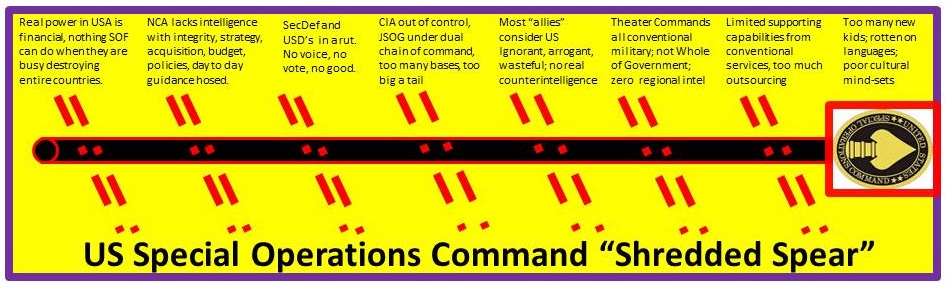
Socom's goal: Pre-empt wars

Tampa is headquarters for the commandos who are gaining a bigger role in military operations around the globe. Military writer Howard Altman travels with them this month in Afghanistan.

By Howard Altman | Tribune Staff

Tampa Tribune,  May 19, 2013

They make small footprints at the edges of the Earth.

Click on Image to Enlarge

Sometimes they hunt and kill. Sometimes they teach rural tribes how to govern and farm.

But after more than 12 years of war, special operations forces are frayed — and in more demand than ever. With the military facing big spending cuts and a new emphasis on places around the globe, U.S. Special Operations Command, headquartered at MacDill Air Force Base, is working to adapt to new realities.

Where will they make footprints next?

“There has been a shift in strategy away from war to defensive tactics,” said Stuart Bradin, an Army colonel helping bring a new global special operations network to life.

Click on Image to Enlarge

“The primary pieces are a pivot to Asia while keeping a very strong eye and focus on the Middle East, as well. We are going to go out in small footprints and work with key partners to ensure that small regional issues don't become major theater operations. We can't afford that in blood or treasure.”

The new network has a name, “Global SOF Network,” and a theme, “you can't surge trust,” and it's the vision of Socom commander Adm. William McRaven.

Full story and PBI comment below the line.

Continue reading “Berto Jongman: US Special Operations Command Goal — Prevent Wars, Bottom Up Community Based Resilience — Never Mind Strategic-Level Blunders, Ideology, & Predatory Policies, Drones, Dictators…1.1”

Stephen E. Arnold: Google Implants — You Will Buy What We Are Paid to Tell You to Buy….

07 Other Atrocities, Commerce, Commercial Intelligence, Corporations, Cyberscams, malware, spam, Ethics, IO Impotency, Power Behind-the-Scenes/Special Interests
Stephen E. Arnold
Stephen E. Arnold

Google Implants By 2030?

From Marketplace Tech comes an interesting article on Google Glass and the projections into the future in regards to similar projects. The article, “Google’s Ray Kurzweil on the Computers that will Live in our Brains,” discusses how everything Google puts its hands on is changing how we search, retrieve and interact with information. As in nearly all articles these days discussing Google Glass Ray Kurzweil, the director of engineering at Google, leads the conversation.

Kurzweil posits that we will eventually move beyond devices that simply allow us to look at the world through a keyhole. Instead, he forecasts that people will be online all the time. He projects that devices post-Glass will ultimately be the size of blood cells able to be sent inside the brain and connect to the cloud around the mid-2030’s.

The article tells us more:

“In Kurzweil’s vision, these advances don’t simply bring computers closer to our biological systems. Machines become more like us. ‘Your personality, your skills are contained in information in your neocortex, and it is information,’ Kurzweil says. ‘These technologies will be a million times more powerful in 20 years and we will be able to manipulate the information inside your brain.’ As that data locked up inside our brain becomes searchable, inimitable human qualities suddenly become easier to emulate. Kurzweil denies that the searching and backup up of the brain itself is a bloodless pursuit, depleted of human emotion.”

Artificial intelligence and the melding of biology and machine is increasingly discussed in the media in reference to Google Glass. Will Glass evolve to Google impants? The bigger question is touched upon in this particular article: is it altruistic intentions or advertising that is driving this kind of technology?

Megan Feil, May 20, 2013

Sponsored by ArnoldIT.com, developer of Beyond Search