

The truth at any cost lowers all other costs — curated by former US spy Robert David Steele.

Real News, Real Journalism: Decades Late
May 17, 2014
Not much to say. New York Times. Going nowhere. Internal hassles. Here’s the scoop, which I assume is sort of accurate. Enjoy this internal report. Innovation.
Stephen E Arnold, May 17, 2014
Continue reading “Stephen E. Arnold: NYT Innovation Report — And They STILL Don't Get it”

American Vets May Become American Guerrillas When the SHTF in the USA

Interesting concept, although I'm not sure how practical it is.
Towards a Cyber Leader Course Modeled on Army Ranger School
By Gregory Conti, Michael Weigand, Ed Skoudis, David Raymond, Thomas Cook and Todd Arnold
Small Wars Journal | Apr 18 2014 – 11:31am
Since 1950, the U.S. Army Ranger School has garnered a well-earned reputation as one of the most demanding military schools in the world. Graduates have served with distinction in special operations units including the Ranger Regiment and Special Operations Command as well as line units throughout the Army. With the emergence of cyberspace as an operational domain and the critical shortage of technically and operationally competent cyber[i] leaders, the time has come to create a U.S. Army Cyber Leader Course of equal intensity, reputation, and similar duration,[ii] but focused on cyber operations (see Figure 1). This article presents a model for the creation of such a school, one that goes far beyond just a tough classroom experience by using tactical close-access missions as a core component. What we propose is unique, demanding, immersive, and fills a necessary gap in Army cyber leader development. This article is a condensed form of a more detailed analysis and description of the proposed Army Cyber Leader Course.
PDF (14 Pages): Army Cyber Leader Course Concept SWJ
Continue reading “Marcus Aurelius: CYBER School Modeled on RANGER School? But What Is Cyber?”

Neutrality not...
Hundreds protest outside FCC net neutrality hearing
One activist calls FCC's proposal “a nail in the coffin” for American innovation.
WASHINGTON, DC—As the Federal Communications Commission was considering new net neutrality rules, hundreds of protesters gathered outside the meeting Thursday morning to protest FCC Chairman Tom Wheeler's proposal.
Advocacy organizations like Free Press argued that Wheeler's proposal, discussed in greater detail in this post, “has the potential to stop the flow of a free and open Internet.”
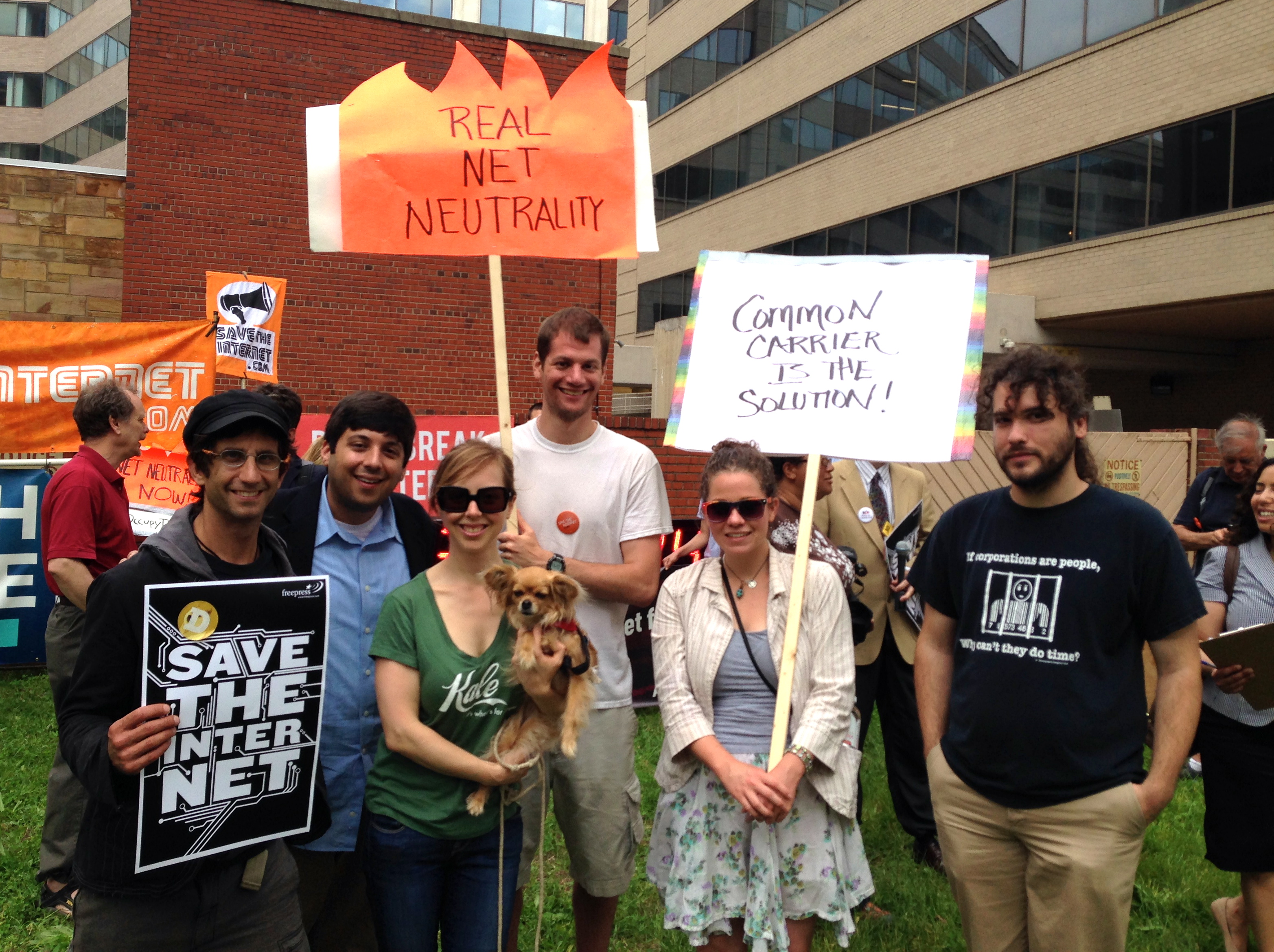
Others at the rally, like Scott Beiban, a Philadelphia-based artist and technologist, told us, “As an artist making use of innovations like cryptocurrency, I find net neutrality to be a very important issue. If the FCC allows companies like Comcast and Time Warner to dictate the means by which information flows, it will be a nail in the coffin for American innovation.”
“We work at a technology company for schools and nonprofits,” Vanessa Holub and Elizabeth Rose, of Baltimore-based information technology services company Civilization Systems, told us. “Our clients can't afford to have a two-tiered system. Independent news agencies and poor school kids would feel the brunt of this attack.”
Those wanting to express their arguments against (or support for) the FCC proposal can submit comments to the FCC by going here and clicking on the link to the left of the words, “Protecting and Promoting the Open Internet.”

Huh?
The U.S. Intelligence Community's Kodak Moment
The game is changing rapidly. Can Washington's intelligence community keep up?
Josh Kerbel
National Interest, 15 May 2014
Josh Kerbel is the Chief Analytic Methodologist at the Defense Intelligence Agency. He writes often and openly on the intersection of government (especially intelligence) and globalization. The views expressed in this article are his alone and do not imply endorsement by the Defense Intelligence Agency, the Department of Defense or the US Government.
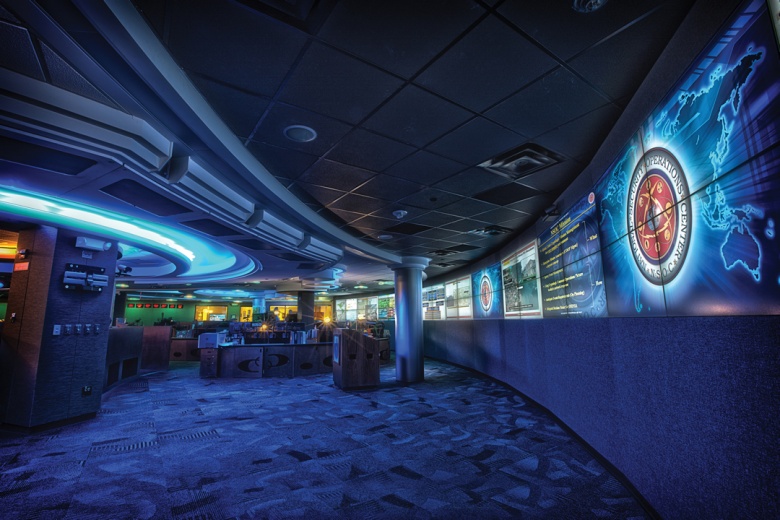
In 2012, the once-mighty Eastman-Kodak company declared bankruptcy. It was an event that should have reverberated strongly with the United States Intelligence Community (IC)—and not just due to the obvious connection between imaging and spying. Rather, it should have resonated because in Kodak the IC could have glimpsed a reflection of itself: an organization so captivated by its past that it was too slow in changing along with its environment.
To understand the IC’s similar captivation and lethargy—to remain focused on classified collection in an era of increasingly ubiquitous, useful and unclassified data—one must first understand the type of problem around which the modern IC business model remains designed: the Soviet Union. The Soviet Union was fundamentally a collection problem. That is to say, it was a closed system (i.e., a discrete entity) with clear edges and a hierarchical governance structure. Given that nature, knowing what was happening in the Soviet Union required the use of classified means of collection—most of which the IC alone possessed.

ARMY VIEWS EMERGING INTELLIGENCE TECHNOLOGIES
“Emerging Intelligence Technologies” is the theme of the latest issue of the U.S. Army's Military Intelligence Professional Bulletin (MIPB), January-March 2014.
“Rapid technology developments in response to urgent wartime requirements have brought the intelligence community (IC) some tremendous new capabilities. Advancement in the areas of biometrics, battlefield forensics, miniaturization, SIGINT terminal guidance, DCGS-A, and distributed processing have been vital to the success of Military Intelligence (MI) and the Army,” wrote Maj. Gen. Robert P. Ashley.
“This issue of MIPB looks at several of these capabilities and their integration into our formations.”
The new Bulletin was obtained under the Freedom of Information Act.
Continue reading “Steven Aftergood: Army Views Emerging Intelligence Technologies – Killer Quotes!”
