NIGHTWATCH Extract: China Wages Peace with Railroads Across Pakistan and Into Afghanistan

02 China, 03 India, 08 Wild Cards, Commercial Intelligence, Peace Intelligence

India: Minister of State for Defense M. M. Pallam Raju on 7 July said India is concerned about China's plans to build a rail link with Pakistan through the Karakoram mountain range, The Times of India reported. He said India is planning to take countermeasures against the proposed link.

Comment: This is one of four strategically significant rail projects in Asia. All are important in the UN master plan for Asian railroads, but several stand out.

The first is the Chinese project to build a railroad line in Afghanistan that runs southward from the Oxus River to China's Aynak Copper Mine in Logar Province. This is one of the largest, if not the largest, copper deposit in the world. Eventually it could become the leading edge of mineral extraction projects that could transform Afghanistan a generation from now, if security conditions permit.

The second project is the Iranian railroad to Herat, in western Afghanistan. This is moving ahead slowly, but follows a hard road already built by the Iranians. It will tie relatively quiet Herat and western Afghanistan to the economic market area of Mashhad, Iran's second largest city, when completed.

The third rail project with strategic significance is in North Korea, which has two sub-projects that can complete the link of Europe by rail to Japan. Completion of these long delayed spurs depend on whether whoever runs anything in North Korea ever gets a sound grip on their own economic best interests and permit upgrades to the Chinese and to the Russian spurs that run across the Demilitarized Zone and link to the South Korean rail systems that terminate at Pusan. A ferry ride across the Tsushima Strait links to Japan railroads and Tokyo. London to Tokyo by rail is in sight, if the North Koreans would only decide to become prosperous.

The latest project is that announced for Pakistan. In the 1971 general war with India, only Chinese truck convoys through the Karakoram Mountains via the Khunjerab Pass kept Pakistan in the war for the two weeks it actually fought before suing for peace and losing East Pakistan.

The Khunjerab Pass is the highest elevation paved international border at 15,400 ft above sea level. The railroad would presumably follow the Karakoram Highway, which is the highest paved road in the world.

A rail link through those mountains and that pass would link Xinjiang, China, to Karachi and Gwadar – the Chinese built port in southwestern Pakistan on the Indian Ocean — via the Pakistani rail system. The throughput capacity would be exponentially larger than that achievable by truck convoys.

This railroad will create a new market system. No wonder India is concerned, economically and militarily. Pakistan really would become an extension of the new Chinese economic empire. All China needs to do is to complete railroads through Burma and link the Afghanistan line to Iran and it will have an Asian rail empire, within a generation, all the way to the English Channel without using the Trans-Siberian.

NIGHTWATCH HOME

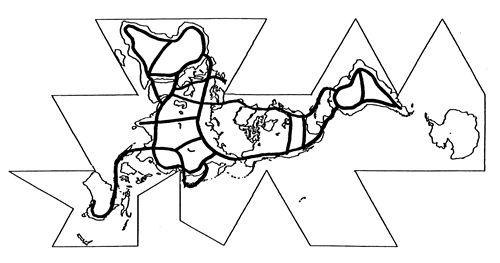
Phi Beta Iota: This is the kind of strategic analysis rooted in solid intellect that should characterize the entire US Intelligence Community, not one lone individual.  Three big things appear to be looming on the horizon:  free cellular around the planet, monetizing the transactions instead of the connections; low-cost rail (and eventually the Buckminster Fuller electrical grid) girding the globe; and finally, the up-ending of capitalism to focus on the needs–and wealth-creating capabilities–of the five billion poor.  No one in Washington, London, Paris, Bonn, or Toyko–or even New Delhi and Jakarta where they have the most to gain–is thinking about this.  That is a crime against humanity, a moral and intellectual atrocity so horrendous as to call into question the legitimacy of every government.
Profiling Hackers (or Attackers?)…Further Blurring of lines Between Crime & Hacking

10 Transnational Crime, Cyberscams, malware, spam, Hacking
The Hackers Profiling Project (HPP)

The project aims to improve the response to ICT crime and the transnational organised crime groups that may be involved in it, by outlining the criminal profiles of the different types of hackers, with particular emphasis on their possible involvement in transnational organised crime activities and cyber-terrorism. Through a better understanding of hackers, HPP will facilitate the prevention and countering of ICT crimes and will improve the operational methods that may lead to the identification of computer intruders.
||

85 page overview

This book is an attempt to apply the behavioural science of Criminal Profiling to the hacking realm. Its main objective is to provide a new means of investigation in order to deal with issues related to cybercrime. But there is a lot more to discover…

Computer networks are commonly thought of as unfathomable and invisible, beyond our grasp; a hacker is someone who can still see the joins and this is what makes him interesting though remaining a complex, original and controversial personality.

Aware of the lack of information, which prevents people from adequately understanding the phenomenon of hacking and its many related aspects, the authors' desire is to provide more insight into this realm by telling interesting anecdotes as well as describing bizarre characters that practice hacking and cracking as an art, following different but established ethical models. Providing an in-depth exploration of the hacking realm, focusing on the relation between technology and crime, the authors reveal hidden aspects and many interesting details answering questions like: Who are real hackers? What life does a hacker lead when not on line? Is it possible to determine a hacker's profile on the basis of his behaviour or types of intrusion?

Event Report: 30 Jun-1 July, NYC – ICSR Peace and Security Summit

01 Poverty, 03 India, 04 Indonesia, 05 Civil War, 05 Iran, 08 Wild Cards, 09 Terrorism, 10 Security, 10 Transnational Crime, 12 Water, Academia, Civil Society, Collective Intelligence, Corruption, Cultural Intelligence, Government, History, Law Enforcement, Methods & Process, Military, Non-Governmental, Peace Intelligence, Policy, Strategy, Technologies
Event link

Peace and Security Summit Event Report/Notes

+ Host: London-based International Centre for the Study of Radicalization and Political Violence

+ Partners, Affiliates, Financial Support: National Defense Univ, Rena & Sami David, The Rockefeller Foundation, Public Safety Canada, Center on Global Counterterrorism Cooperation, Centre for Policy Research, New Dehli, Dept of War Studies , King's College London, Inst for Strategic Threat Analysis & Response, Univ of Penn, International Inst for Counter-Terrorism, Interdisciplinary Center Herzliya, Pakistan Inst for Peace Studies, Regional Centre on Conflict Prevention, Jordan Inst of Diplomacy

> Overall, disappointing but reviewing these notes shows there are some good nuggets to take + connect.

BIGGEST SURPRISE = NOT ONE MENTION ABOUT FINANCING OF TERRORISM

Continue reading “Event Report: 30 Jun-1 July, NYC – ICSR Peace and Security Summit”

Where We Are Winning – Where We Are Losing: Futurologists Publish Annual Report on Major World Problems and Opportunities

01 Poverty, 03 Economy, 03 Environmental Degradation, 04 Education, 05 Energy, 06 Family, 11 Society, 12 Water, Academia, Civil Society, Collective Intelligence, Commerce, Corruption, Government, Key Players, Non-Governmental, Peace Intelligence

Millennium Project / State of the Future web portal

Where We Are Winning – Where We Are Losing:

Futurologists Publish Annual Report on Major World Problems and Opportunities

Berlin 7th July 2010 – Can civilization implement solutions fast enough to keep ahead of the looming challenges? The Millennium Project, a global independent think tank of futurologists, and thought leaders, today published its 14th report on global perspectives in Germany and around the world. Until two years ago the report showed a positive trend in the so-called “State of the Future Index” (SOFI). Triggered by the financial and economic crises and the failure of the climate conference in Copenhagen, the current SOFI shows that the prospects of success in solving some major global challenges have become somewhat clouded.

What the authors see as lacking the most, according to Jerome Glenn,
Director of the Millennium Project, are a serried of serious global
strategies to be implemented by governments, companies, NGOs, UN
institutions and other international bodies.” The world is in a race between
implementing ever-increasing ways to improve the human condition and the
seemingly ever-increasing complexity and scale of global problems. After 14
years of research into the future within the framework of the Millennium
Project it is increasingly clear that the world has the necessary capacity
to cope with its problems. However, it remains unclear whether humankind
will make the right decisions on the scale necessary to meet the global
challenges appropriately”, said Glenn.

Among the regular sections in the ninety page ‘State of the Future' report
are the annually updated analyses of the fifteen key global challenges, as
well as the publication of the State of the Future Index (SOFI). The index
identifies areas in which there has been either an improvement or
deterioration during the past 20 years and creates projections for these
scenarios over the coming decade. All relevant and recognised studies by the
UN or World Bank are distilled as part of these projections.

On individual results of the State of the Future Index:

Where We Are Winning
Continue reading “Where We Are Winning – Where We Are Losing: Futurologists Publish Annual Report on Major World Problems and Opportunities”

Journal: Multi-Polarity Here to Stay….

08 Wild Cards
Chuck Spinney Recommends

Very good summary of Turkey's emerging regional influence. CS

Turkey, America, and Empire’s Twilight

by Conn Hallinan, Antiwar.com,  July 06, 2010

When U.S. forces found themselves beset by a growing insurgency in Iraq following their lightning overthrow of Saddam Hussein, the most obvious parallel that came to mind was Vietnam: an occupying army, far from home, besieged by a shadowy foe. But Patrick Cockburn, the Independent‘s ace Middle East reporter, suggested that the escalating chaos was more like the Boer War than the conflict in Southeast Asia.

It was a parallel that was lost on most Americans, very few of whom know anything about the short, savage, turn-of-the-century war between Dutch settlers and the British Empire in South Africa.

But the analogy explains a great deal about the growing influence of a country like Turkey, and why Washington, despite its military power and economic clout, can no longer dominate regional and global politics.

FULL STORY ONLINE

Event: 12-13 Oct 2010, Wash D.C, Naked Intelligence

Commerce, Commercial Intelligence, Government, Law Enforcement
Event link

Naked Intelligence 2010

TUESDAY, OCTOBER 12, 2010


Keynote Address
Dr. Jerry Lucas, President TeleStrategies, Inc
Jed Grant, Founding Partner, Sandstone
Chuck Cohen, Cohen Training and Consulting

Corporate Intelligence
Tyler Drumheller, Chief Operations Officer, DMC Worldwide

Continue reading “Event: 12-13 Oct 2010, Wash D.C, Naked Intelligence”

Who’s Who in Earth Intelligence: Stuart Umpleby

Alpha Q-U, Earth Intelligence

Stuart Anspach Umpleby (born March 5, 1944) is an American cybernetician and a professor in the Department of Management and Director of the Research Program in Social and Organizational Learning in the School of Business at the George Washington University.

He is a past president of the American Society for Cybernetics (ASC). In 2007 Stuart Umpleby was awarded The Wiener Gold Medal of the American Society for Cybernetics for outstanding lifelong contributions to both cybernetics and the ASC.  In 2010 he was elected an Academician in the International Academy of Systems and Cybernetic Sciences, an honor society created by the International Federation for Systems Research.

Among several other major interests, he has been a pioneering explorer of the potential for academic globalization.  See especially:

Transforming the Global University System into a Resource for Social Improvement (2003)

A Global University for A Global Village (2007)

Academic Globalization: The Growth of International Collaboration in Education and Research (2007)

Academic Globalization: Results of a Participatory Strategic Planning Exercise (2007)

Adopting Service Learning in Universities around the World (2008)

Wikipedia

Home Page

Service Learning

noble gold