Afghanistan: US Defense Secretary Panetta had talks with Afghan President Hamid Karzai at the Pentagon on Thursday. Panetta told the media the two countries were “at the last chapter” in their effort to rebuild Afghanistan's institutions and security. Panetta said, “We've come a long way towards a shared goal of establishing a nation that you and we can be proud of, one that never again becomes a safe haven for terrorism.”
Comment: Panetta was playing to the gallery… or the mainstream American media. The situation in Afghanistan is not so rosy that anyone should be proud or thumping his or her chest or doing a victory lap.
Japan-China: Bloomberg has published an excellent report that describes the economic consequences of Japan's dispute with China over ownership of the Senkaku Islands. No other news outlet has published a comparably insightful and detailed account.
The first point the journalists made is that trade relations between China and Japan multiply the costs of a territorial dispute. Japan's trade with China is valued at more than $300 billion per year, which is potentially at risk.
A Chinese boycott of Japanese imports would hurt China but might already have resulted in a reduction of GDP, according to Bloomberg citing JPMorgan Chase, because of reduced Chinese purchases of Japanese goods.
Ripple effects in China from boycotts of Japanese manufactures put at risk the jobs of millions of Chinese who work in Japanese industries in China. Japanese auto sales declined. Air travel cancellations increased in both countries. One Japanese department store retailer closed 60 of 169 stores because of anti-Japanese vandalism and threats.
Comment: The key point is that global economic integration magnifies the consequences of international disputes. Interdependency means both sides seriously suffer economically, although security incidents result in no casualties. Japan might have sustained a .5 per cent decline in GDP in the last quarter of 2012, essentially because of Chinese hostile, nationalistic responses to the islands dispute.
Both sides got hurt, but China can absorb the consequences more than Japan.
Another key point is that the dispute shows how the Chinese fight in every kind of battle space – at sea, in the air, on the land, in cyber space, in international political space and in economic space. Total warfare means total to the Chinese. They are experimenting with that in the Senkakus dispute.
Apart from death and taxes, one other thing has also appeared inevitable, at least for the past two decades: Iran will acquire a nuclear weapons capability.
Yet, despite all the near frantic demands for sanctions, clandestine action, sabotage, and outright military strikes to prevent Iran’s presumed inexorable march towards that capability, one thing keeps getting overlooked: Iran has not managed to develop a nuclear weapon.
How is that possible? As states go, Iran has a reasonably well-developed scientific and industrial infrastructure, an educated workforce capable of working with advanced technologies, and lots of money. If Pakistan, starting from a much lower level, could develop nuclear weapons, why hasn’t Iran?
SUMMARY: Around the world, criminal organizations and governments are fusing to an unprecedented degree, blurring the distinction between national interests and what suits the gangsters. Mafia states enjoy the unhealthy advantages of their hybrid status: they're as nimble as gangs and as well protected as governments, and thus more dangerous than either.
MOISES NAIM is a Senior Associate at the Carnegie Endowment for International Peace and the author of Illicit: How Smugglers, Traffickers, and Copycats Are Hijacking the Global Economy.
The global economic crisis has been a boon for transnational criminals. Thanks to the weak economy, cash-rich criminal organizations can acquire financially distressed but potentially valuable companies at bargain prices. Fiscal austerity is forcing governments everywhere to cut the budgets of law enforcement agencies and court systems. Millions of people have been laid off and are thus more easily tempted to break the law. Large numbers of unemployed experts in finance, accounting, information technology, law, and logistics have boosted the supply of world-class talent available to criminal cartels. Meanwhile, philanthropists all over the world have curtailed their giving, creating funding shortfalls in the arts, education, health care, and other areas, which criminals are all too happy to fill in exchange for political access, social legitimacy, and popular support. International criminals could hardly ask for a more favorable business environment. Their activities are typically high margin and cash-based, which means they often enjoy a high degree of liquidity — not a bad position to be in during a global credit crunch.
But emboldened adversaries and dwindling resources are not the only problems confronting police departments, prosecutors, and judges. In recent years, a new threat has emerged: the mafia state. Across the globe, criminals have penetrated governments to an unprecedented degree. The reverse has also happened: rather than stamping out powerful gangs, some governments have instead taken over their illegal operations. In mafia states, government officials enrich themselves and their families and friends while exploiting the money, muscle, political influence, and global connections of criminal syndicates to cement and expand their own power. Indeed, top positions in some of the world's most profitable illicit enterprises are no longer filled only by professional criminals; they now include senior government officials, legislators, spy chiefs, heads of police departments, military officers, and, in some extreme cases, even heads of state or their family members.
Drone strikes in Pakistan are now at their lowest level in five years, as Islamabad protests almost every attack. The CIA also appears to have abandoned ‘signature strikes’ on suspected militants fitting certain patterns of behaviour – at least for the present. Almost all attacks in recent months have been against named al Qaeda and other militant leaders.
As drone strikes fell in Pakistan they rose steeply in Yemen, as US forces aided a major military campaign to oust al Qaeda and other Islamists from southern cities. A parallel CIA targeted killing programme killed numerous alleged militants, many of them named individuals. Yet US officials took more than three months to confirm that American planes or drones had killed 12 civilians.
. . . . . . . .
One reason for a decline in Pakistani strikes may have been growing hostility. Some 74% of polled citizens said they viewed the US as an enemy, and uniquely Pakistan bucked a global trend to register as the only nation favouring Mitt Romney for president. In contrast, the American public appears to staunchly support covert drones – in one poll 83% of respondents were in favour of the strikes.
The British High Court was called on in April to look into US covert drone strikes and possible British co-operation, which some lawyers in the UK insist is illegal. Days before the end of the year the High Court declined to investigate. After years of inactivity, US and Pakistani courts also began to consider legal questions surrounding the campaign.
The London Times reported that members of the twenty-four person Politburo and senior party officials are reading and actively discussing Jeremy Rifkin’s New York Times bestselling book, The Third Industrial Revolution, on the eve of the National Party Congress on November 8th that will usher in the new leadership of China– see attached article from the November 3rd edition of The London Times
According to The Times of London, the Chinese leadership is taking up Rifkin’s vision of linking internet technology with renewable energies, to prepare China for a dramatic shift into a sustainable post-carbon Third Industrial Revolution economy in the 21st century. The Third Industrial Revolution has been the number one bestselling economics book in China for more than four months.
Inclusive global governance is one of the on-going efforts of the developing countries in this fast changing and complicated world. This is a process that started in the 1960s and will continue for many years to come.
I. Current Roles of the Developing Countries in Global Governance. Among all the roles, the following three stand out prominently. (1) They are the promoters of the UN centrality and democratization of international relations. Actually they are evolutionary reformers of the existent mechanisms. (2) They are invigorators of new mechanisms to cope with new challenges of our times, both institutionally and conceptually. A case in point is their role of G-20 by pursuing consultation and cooperation with the developed countries during the ongoing financial crisis and economic difficulties. (3) They are initiators of mechanisms of developing/emerging powers, such as the BRICS. The forming of BRICS reflects the shifting distribution of powers and upgrading of the developing countries.

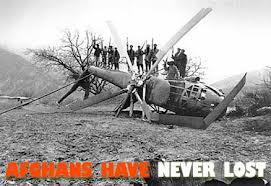 Afghanistan: US Defense Secretary Panetta had talks with Afghan President Hamid Karzai at the Pentagon on Thursday. Panetta told the media the two countries were “at the last chapter” in their effort to rebuild Afghanistan's institutions and security. Panetta said, “We've come a long way towards a shared goal of establishing a nation that you and we can be proud of, one that never again becomes a safe haven for terrorism.”