NEW YORK – The wars in Iraq and Afghanistan are winding down, Osama bin Laden is dead, and the federal government is deeply in debt. This spells the end of what was a golden decade for the defense industry.
In the decade since the Sept. 11 attacks, the annual defense budget has more than doubled to $700 billion and annual defense industry profits have nearly quadrupled, approaching $25 billion last year.
Now defense spending is poised to retreat, and so are industry profits.
How does public transportation affect education? What impact does population density have on public health? Is there a connection between CO2 levels and obesity?
Officials in the City of Portland, Ore., have collaborated with IBM to find answers to those and other questions, developing an interactive model that connects the relationships between the city’s core systems that handle the economy, housing, education, public safety, transportation and health care.
Delivery of first-class mail is falling at a staggering rate. Facing insolvency, can the USPS reinvent itself like European services have—or will it implode?
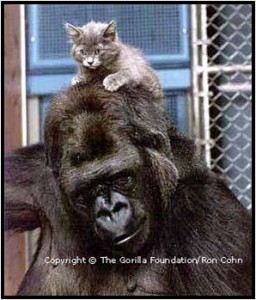
Koko Signs: In debt, taxpayer subsidizing junk mail, zero innovation. A superb seven screen article, an in-depth look at a side of the US Government that is representative of the bloat, waste, and myopia of the rest of government.
Despite budget woes, the military is preparing for a conflict with our biggest rival — and we should be worried
This summer, despite America’s continuing financial crisis, the Pentagon is effectively considering trading two military quagmires for the possibility of a third. Reducing its commitments in Iraq and Afghanistan as it refocuses on Asia, Washington is not so much withdrawing forces from the Persian Gulf as it is redeploying them for a prospective war with its largest creditor, China.
. . . . .
AirSea Battle, developed in the early 1990s and most recently codified in a 2009 Navy-Air Force classified memo, is a vehicle for conforming U.S. military power to address asymmetrical threats in the Western Pacific and the Persian Gulf — code for China and Iran. (This alone raises a crucial point: If the U.S. has had nothing but trouble with asymmetrical warfare for the last 45 years, why should a war with China, or Iran for that matter, be any different?) It complements the 1992 Defense Planning Guidance, a government white paper that precluded the rise of any “peer competitor” that might challenge U.S. dominance worldwide.
. . . . . . .
For the first time since the end of the Cold War, the U.S. government has encountered the practical limits of the 1992 Defense Planning Guidance.
. . . . . .
Here is a noble appeal for Washington to match its commitments with the resources needed to sustain them, the absence of which has fueled the debt crisis that nearly reduced the United States to a mendicant state. Such are the crippling costs of a defense policy that makes global hegemony a mindless imperative.
The Tsunami or the Earthquake Preceding the Tsunami?????
Below is another pathbreaking report in Counterpunch on the Fukushima question. Fukushima may be off the front pages, but the catastrophe is still generating serious questions with profound ramifications. In a few days, I will forward another blaster will showing how the some of these ramifications this catastrophe reaching into the good ole USA. In the meantime, I urge you to read this report.
Chuck Spinney
Nice, France
The Fukushima Daiichi Reactors Were in Meltdown After the Earthquake, But Before the Tsnumami Hit
It is one of the mysteries of Japan’s ongoing nuclear crisis: How much damage did the March 11 earthquake do to the Fukushima Daiichi reactors before the tsunami hit? The stakes are high: If the quake structurally compromised the plant and the safety of its nuclear fuel, then every other similar reactor in Japan will have to be reviewed and possibly shut down. With virtually all of Japan’s 54 reactors either offline (35) or scheduled for shutdown by next April, the issue of structural safety looms over the decision to restart every one in the months and years after.
. . . . . .
Problems with the fractured, deteriorating, poorly repaired pipes and the cooling system had been pointed out for years. In 2002, whistleblower allegations that TEPCO had deliberately falsified safety records came to light and the company was forced to shut down all of its reactors and inspect them, including the Fukushima Daiichi Power Plant. Sugaoka Kei, a General Electric on-site inspector first notified Japan’s nuclear watchdog, Nuclear Industrial Safety Agency (NISA) in June of 2000. The government of Japan took two years to address the problem, then colluded in covering it up — and gave the name of the whistleblower to TEPCO.
Synchronized action is a powerful form of resistance against repressive regimes. Even if the action itself is harmless, like walking, meditation or worship, the public synchrony of that action by a number of individuals can threaten an authoritarian state. To be sure, synchronized public action demonstrates independency which may undermine state propaganda, reverse information cascades and thus the shared perception that the regime is both in control and unchallenged.