45 Social Entrepreneurs Showcase at “Unreasonable Finalist Marketplace”

01 Agriculture, 01 Poverty, 02 Infectious Disease, 03 Economy, 03 Environmental Degradation, 04 Education, 05 Energy, 07 Health, 11 Society, 12 Water, Academia, Budgets & Funding, Civil Society, Commerce, Gift Intelligence, microfinancing, Technologies
Explore the projects

http://marketplace.unreasonableinstitute.org

January 20, 2011

The Unreasonable Institute Empowers the Public to Choose the Next Wave of High-Impact Social Entrepreneurs

Global donations will determine which entrepreneurs gain admission to esteemed mentorship program

BOULDER, Colo.–(BUSINESS WIRE)–Starting Jan. 20, 45 social entrepreneurs will showcase their ventures in an online platform called the Unreasonable Finalist Marketplace (http://marketplace.unreasonableinstitute.org/). For 50 days, people from around the world are invited to vote with their wallets on the most viable ventures. The first 25 of the 45 finalists to raise $8,000 in the Marketplace will earn access to the highly acclaimed six-week mentorship program at the Unreasonable Institute. At the Institute, these social entrepreneurs undergo rigorous training sessions, including personal and entrepreneurial skill development, intensive workshops and hands-on guidance from leading thought leaders, innovators, entrepreneurs and investors.

The 45 finalists were selected from more than 300 applicants in 60 countries. Each applicant had to present a financially self-sustaining venture that has the ability to scale to serve the needs of at least 1 million people and demonstrates customer validation through sales or pilots. The finalists this year include a Chinese engineer with a prototype for waterless composting toilets; a 2010 CNN Hero from Kenya who has distributed over 10,000 solar lanterns; and an American inventor with a water purification system that can roll up to the size of a ruler.

Continue reading “45 Social Entrepreneurs Showcase at “Unreasonable Finalist Marketplace””

Citizen Satellites (1 kilogram)

04 Education, Academia, Civil Society, Earth Intelligence, Government, Military, Technologies
source article

Citizen Satellites

Tiny, standardized spacecraft are making orbital experiments affordable to even the smallest research groups

By Alex Soojung-Kim Pang and Bob Twiggs | February 9, 2011 (latest issue)

Ever since Sputnik kicked off the age of space satellites more than fifty years ago, big institutions have dominated the skies. Almost all the many thousands of satellites that have taken their place in Earth orbit were the result of huge projects funded by governments and corporations. For decades each generation of satellites has been more complicated and expensive than its predecessor, taken longer to design, and required an infrastructure of expensive launch facilities, global monitoring stations, mission specialists and research centers.

In recent years, however, improvements in electronics, solar power and other technologies have made it possible to shrink satellites dramatically. A new type of satellite, called CubeSat, drastically simplifies and standardizes the design of small spacecraft and brings costs down to less than $100,000 to develop, launch and operate a single satellite—a tiny fraction of the typical mission budget of NASA or the European Space Agency.
(full article requires subscription)
Comment: the article mentions the idea of “printing” low-cost materials as well.

Related:
+ Crowdfunding for a Satellite to Widen Net Access to Help Benefactors to Help Themselves

+ Brooklyn Space Program (weather balloon + iPhone + camera recording most of the flight into space and back)

Mobile Diagnosis of 340 Diseases Using SMS

02 Infectious Disease, 07 Health, Mobile

Get diagnosed by SMS

Patients will be able to access a telemedicine system for medical advice

Jan 23, 2011 11:29 PM | By KEVIN SHALVEY


Imagine you're a two-day trip away from the nearest doctor and are starting to experience flu-like symptoms, but you're unsure if it's malaria, swine flu or merely a common cold.

Why not just SMS a doctor and be diagnosed over the phone?

By March, you'll be able to do just that.

Telemedicine, as long-distance diagnosing, teaching and monitoring is known, will soon be introduced across the country, said executives of MTN and Sanlam, who have teamed up to develop and launch the technology.

“What it means is that a number of services can be offered through the mobile phone,” said MTN corporate affairs executive Rich Mkhondo yesterday. “You would be able to speak to a health professional qualified to diagnose.”

Sanlam Health CEO Grant Newton said the two companies have spent more than 10 years developing a series of questions that patients will answer by SMS or on the phone, which will enable doctors to diagnose 340 diseases.

Continue reading “Mobile Diagnosis of 340 Diseases Using SMS”

The State Against Blacks

06 Family
Amazon Page

‘The welfare state has done to black Americans what slavery couldn't do. . . . And that is to destroy the black family.'

Even in the antebellum era, when slaves often weren't permitted to wed, most black children lived with a biological mother and father. During Reconstruction and up until the 1940s, 75% to 85% of black children lived in two-parent families. Today, more than 70% of black children are born to single women. “The welfare state has done to black Americans what slavery couldn't do, what Jim Crow couldn't do, what the harshest racism couldn't do,” Mr. Williams says. “And that is to destroy the black family.”

Read complete article….

Are Undergraduates Learning Anything?

04 Education

Amazon Page

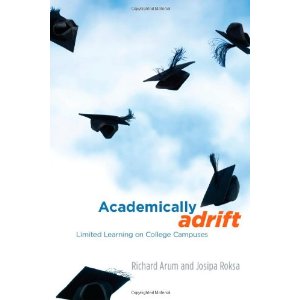
Drawing on survey responses, transcript data, and results from the Collegiate Learning Assessment (a standardized test taken by students in their first semester and at the end of their second year), Richard Arum and Josipa Roksa concluded that a significant percentage of undergraduates are failing to develop the broad-based skills and knowledge they should be expected to master. Here is an excerpt from Academically Adrift: Limited Learning on College Campuses (University of Chicago Press), their new book based on those findings.

“With regard to the quality of research, we tend to evaluate faculty the way the Michelin guide evaluates restaurants,” Lee Shulman, former president of the Carnegie Foundation for the Advancement of Teaching, recently noted. “We ask, ‘How high is the quality of this cuisine relative to the genre of food? How excellent is it?' With regard to teaching, the evaluation is done more in the style of the Board of Health. The question is, ‘Is it safe to eat here?'” Our research suggests that for many students currently enrolled in higher education, the answer is: not particularly. Growing numbers of students are sent to college at increasingly higher costs, but for a large proportion of them the gains in critical thinking, complex reasoning, and written communication are either exceedingly small or empirically nonexistent. At least 45 percent of students in our sample did not demonstrate any statistically significant improvement in Collegiate Learning Assessment [CLA] performance during the first two years of college. [Further study has indicated that 36 percent of students did not show any significant improvement over four years.]

Read full article….

Transnational Crime: Camorra & New Twin Towers

01 Poverty, 03 Economy, 03 Environmental Degradation, 04 Education, 06 Family, 07 Health, 07 Other Atrocities, 10 Security, 10 Transnational Crime, 11 Society, 9/11 research, Money, Banks & Concentrated Wealth, Power Behind-the-Scenes/Special Interests, Research resources, Videos/Movies/Documentaries
NY Daily News article

There is obviously a lot of news about the recent FBI mafia bust. The NY Daily News has mentioned Massive FBI Mafia bust: Organized crime still has firm grip on unions, even at Ground Zero (1/21/11)

Related: Investigative journalist Roberto Saviano's book Gomorrah: A Personal Journey into the Violent International Empire of Naples' Organized Crime System (about the pervasive crime syndicate Camorra) was made into a movie. NPR reviewed the movie and repeated what was mentioned at the movie's end “Their members have killed more than 4,000 people in 30 years. They are also shareholders in the reconstruction of the Twin Towers.”
||
|
Related:

+ European webzine cafebabel.com interviewed Roberto Saviano (Claims Comorra most associated with Spain; cocaine is Europe's “white oil”)
+ Documentario BBC “The Italian Patient” Parte 1 (Roberto Saviano appears/interview at 3:45 while in hiding)
+ Roberto Saviano interview (his security situation, the need to change economic system, the political system needs the mafia, alliances between legal and criminal entrepreneurs, compromised ‘free press,' and “before the bullets there is slander”)
+ Curse Of The Camorra (YouTube, Journeyman Pictures, 22min video)
+ Roberto Saviano interview on BBC2's The Culture Show (Obituary: “YOU CAN'T IGNORE THIS”)
+ Al Jazeera report on Roberto Saviano and the Camorra
+ Mafia Take Down – USA (at 15:35, mention of NYC construction mob influence; Sammy Gravano confessing to killing 19 people yet getting only 5 years in prison & later witness protection in Arizona)
+ The Victorious Mafia (Journeyman Pictures, 1998, 23min doc, lacks translation)
+ Scampia Camorra Napoli Ground Zero (YouTube clips of arrests, murders, etc with music)
+ Transnational crime category at PhiBetaIota

noble gold