In October 2011, 16-year-old Tariq Aziz attended a gathering in Islamabad where he was taught how to use a video camera so he could document the drones that were constantly circling over his Pakistani village, terrorizing and killing his family and neighbors. Two days later, when Aziz was driving with his 12-year-old cousin to a village near his home in Waziristan to pick up his aunt, his car was struck by a Hellfire missile. With the push of a button by a pilot at a US base thousands of miles away, both boys were instantly vaporized — only a few chunks of flesh remained.
Afterwards, the US government refused to acknowledge the boys' deaths or explain why they were targeted. Why should they? This is a covert program where no one is held accountable for their actions.
The main architect of this drone policy that has killed hundreds, if not thousands, of innocents, including 176 children in Pakistan alone, is President Obama's counterterrorism chief and his pick for the next director of the CIA: John Brennan.
SUMMARY: Around the world, criminal organizations and governments are fusing to an unprecedented degree, blurring the distinction between national interests and what suits the gangsters. Mafia states enjoy the unhealthy advantages of their hybrid status: they're as nimble as gangs and as well protected as governments, and thus more dangerous than either.
MOISES NAIM is a Senior Associate at the Carnegie Endowment for International Peace and the author of Illicit: How Smugglers, Traffickers, and Copycats Are Hijacking the Global Economy.
The global economic crisis has been a boon for transnational criminals. Thanks to the weak economy, cash-rich criminal organizations can acquire financially distressed but potentially valuable companies at bargain prices. Fiscal austerity is forcing governments everywhere to cut the budgets of law enforcement agencies and court systems. Millions of people have been laid off and are thus more easily tempted to break the law. Large numbers of unemployed experts in finance, accounting, information technology, law, and logistics have boosted the supply of world-class talent available to criminal cartels. Meanwhile, philanthropists all over the world have curtailed their giving, creating funding shortfalls in the arts, education, health care, and other areas, which criminals are all too happy to fill in exchange for political access, social legitimacy, and popular support. International criminals could hardly ask for a more favorable business environment. Their activities are typically high margin and cash-based, which means they often enjoy a high degree of liquidity — not a bad position to be in during a global credit crunch.
But emboldened adversaries and dwindling resources are not the only problems confronting police departments, prosecutors, and judges. In recent years, a new threat has emerged: the mafia state. Across the globe, criminals have penetrated governments to an unprecedented degree. The reverse has also happened: rather than stamping out powerful gangs, some governments have instead taken over their illegal operations. In mafia states, government officials enrich themselves and their families and friends while exploiting the money, muscle, political influence, and global connections of criminal syndicates to cement and expand their own power. Indeed, top positions in some of the world's most profitable illicit enterprises are no longer filled only by professional criminals; they now include senior government officials, legislators, spy chiefs, heads of police departments, military officers, and, in some extreme cases, even heads of state or their family members.
Drone strikes in Pakistan are now at their lowest level in five years, as Islamabad protests almost every attack. The CIA also appears to have abandoned ‘signature strikes’ on suspected militants fitting certain patterns of behaviour – at least for the present. Almost all attacks in recent months have been against named al Qaeda and other militant leaders.
As drone strikes fell in Pakistan they rose steeply in Yemen, as US forces aided a major military campaign to oust al Qaeda and other Islamists from southern cities. A parallel CIA targeted killing programme killed numerous alleged militants, many of them named individuals. Yet US officials took more than three months to confirm that American planes or drones had killed 12 civilians.
. . . . . . . .
One reason for a decline in Pakistani strikes may have been growing hostility. Some 74% of polled citizens said they viewed the US as an enemy, and uniquely Pakistan bucked a global trend to register as the only nation favouring Mitt Romney for president. In contrast, the American public appears to staunchly support covert drones – in one poll 83% of respondents were in favour of the strikes.
The British High Court was called on in April to look into US covert drone strikes and possible British co-operation, which some lawyers in the UK insist is illegal. Days before the end of the year the High Court declined to investigate. After years of inactivity, US and Pakistani courts also began to consider legal questions surrounding the campaign.
It never occurred to me, when I lost the first bureaucratic battle on Open Source Intelligence (OSINT) in 1992, that my innate sense of integrity [do the right thing] would lead me to resign from the Marine Corps civil service in 1993 as a very young GM-14, and spend not five, not ten, but twenty years wandering in the wilderness helping over 66 governments and over 7,500 mid-career officers get a grip on sources and methods the traditional secret services refused to consider and the traditional consumers of intelligence did not know how to do. Of all my student bodies, the USA was the worst, remaining ignorant at the leadership level, helpless at the follower level–butts in seats, no brain required. Hence, as we approach a historic turning point, the possibility that we might have a Secretary of State and a Secretary of Defense that can actually get a grip on reality together, I thought it might be useful to offer up three things I have learned during my 20-year walk-about:
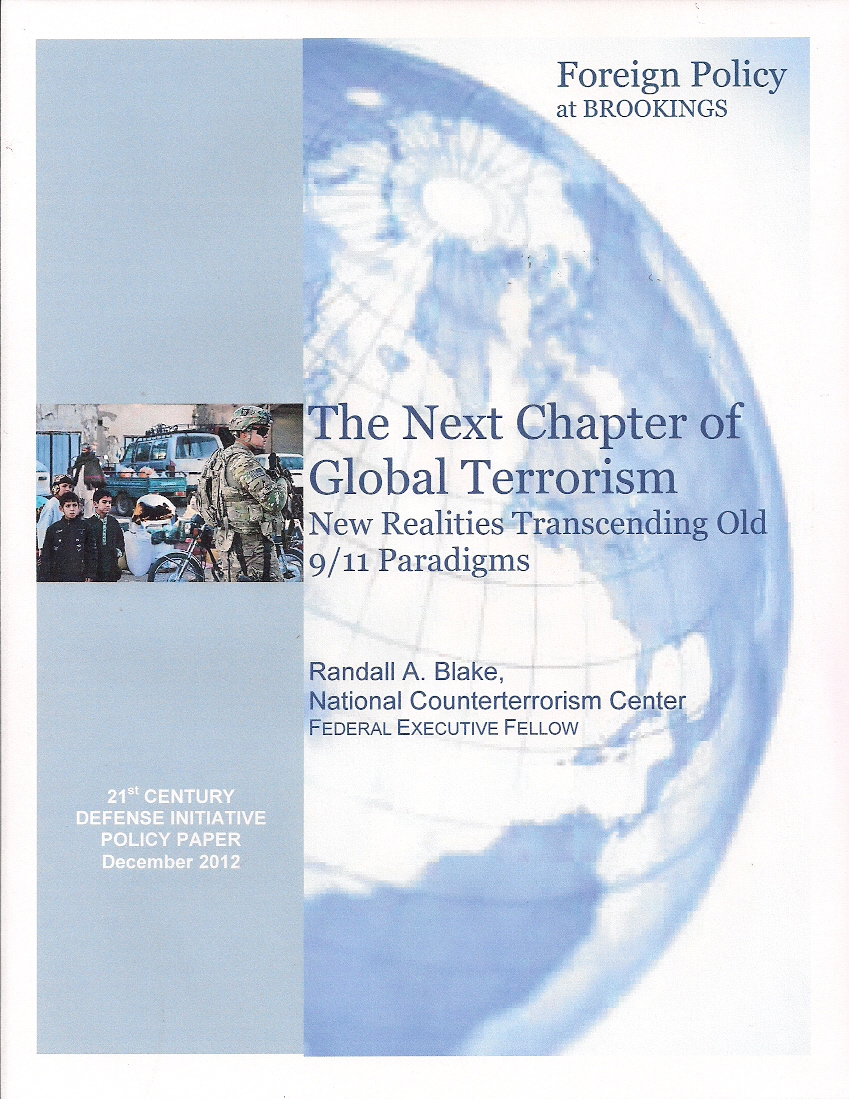
As the United States resets in the wake of previous security challenges and assesses future dangers, the risks posed by strategic hybrid threats deserve increased contemplation and deliberation. This article presents a new theoretical framework for addressing such, defining them as the product of principal-agent relationships in which intentions and capabilities are forged into novel hazards. Using Iran, the availability of likely proxies (notably Hizballah), and U.S. vulnerabilities to computer network attacks, the authors construct illustrative examples of how hybrid threats could threaten both the national security and national interests of the United States. They also offer a model (based on the concept of a war council) with which response efforts on the part of public and private sector actors at the local, state, and Federal levels of governance could be organized and managed.
In light of evidence that a cover-up is underway concerning the Sandy Hook school massacre, I’m reposting the following article by Michael Kelley of the Business Insider, first published on Tuesday 7th August 2012. Readers of my firsttwo articles on the Sandy Hook massacre will recognize alarming similarities between the two events.
Notice at the end of Kelley’s article that Holmes’ court records were sealed. What I conclude from this is that the evidence collected by police directly contradicts the lone gunman narrative. This would mean that here too a cover-up has taken place, the logical reason for which is that it was done to protect the real perpetrators.