This extraordinary resource is the personal initiative of Jeffrey S Harley,SMDC/ARSTRAT G39, Deputy, Information Operations. As received, each new newsletter is posted to the Archives at the above permanent URL:
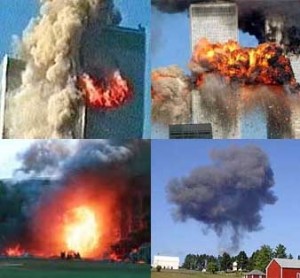
Phi Beta Iota: a 59 page memorandum is rocketing around the Internet, entitled Collateral Damage: U.S. Covert Operations and the Terrorist Attacks on September 11, 2001. Read the report, which includes very specific details and charts with head and shoulder photos. This material is substantiated not just by the sources cited in the endnotes, but by many other sources such as those reviewed at 9-11 Truth Books & DVDs (23) and (indirectly) at Empire, Sorrows, Hubris, Blowback (145).
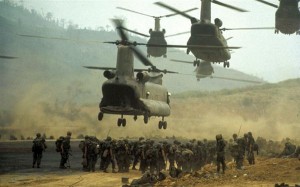
Unraveling the mysteries of Vietnam may prevent us from repeating its mistakes
By Evan Thomas and John Barry
Stanley Karnow is the author of Vietnam: A History, generally regarded as the standard popular account of the Vietnam War. This past summer, Karnow, 84, picked up the phone to hear the voice of an old friend, Ambassador Richard Holbrooke. The two men had first met when Holbrooke was a young Foreign Service officer in Vietnam in the mid-1960s and Karnow was a reporter covering the war. Holbrooke, who is now the U.S. special representative for Afghanistan and Pakistan, was calling from Kabul. The two friends chatted for a while, then Holbrooke said, “Let me pass you to General McChrystal.” Gen. Stanley McChrystal, the commander of U.S. and allied forces in Afghanistan, came on the line. His question was simple but pregnant: “Is there anything we learned in Vietnam that we can apply to Afghanistan?” Karnow's reply was just as simple: “The main thing I learned is that we never should have been there in the first place.” [Emphasis added]
Phi Beta Iota: The Counterterrorism Center (CTC) at West Point has been doing extraordinary work of very high value to the U.S. Central Command, with an emphasis on understanding.
Click on the title for the three-page article by itself, and on the journal name for the full issue containing the article.
The author opens with the four kinds of jihad (heart, mind, tongue, sword), and the lists the seven historically-driven politically-defined jihads of the sword, and closes with a discussion. Over three pages, this is first class thinking.
Impacts of Climate Change: A System Vulnerability Approach (2007)
By Nils Gilman, Peter Schwartz, Doug Randall
Over the past two decades, and especially in the last few years, climate change has become one of the most heavily researched subjects in science. Yet climate change impact studies remain at the low end of usefulness for policymakers and others; they are not predictive enough to be actionable because the exact nature of the events that will jar the planet in the near- and long-term future—the wheres, whens, and hows of climate change—remains both unknown and unknowable. This paper offers policymakers an alternative approach to thinking about climate change and its impacts. Instead of starting with climate change and working out toward impacts, we focus on systems that are already generally vulnerable first, and then consider what the geophysics of climate change may do to them. This approach has two benefits. First, it limits the number of logical steps necessary for thinking about the impacts of climate change, enabling more confident insights and conclusions. Second, it cuts across analytic stovepipes and gives regional specialists a framework for thinking about what climate change will mean for their particular areas, based on expertise they already have. Download PDF
In recent years, a serious academic discussion about the al-Qaeda (or AQC – al Qaeda Central) organization has been underway, once that has also found its way into the popular media. It has focused on whether AQC has ceased functioning as an active organization and turned into an icon only, and whether its role as leader of the global jihad has been assumed by a mass movement run by a network of people, groups, and organizations whose members have undergone a process of self-radicalization. A response to this question may be found in an analysis of the activities of al-Qaeda and its affiliates, but also depends on understanding the concept of struggle according to al-Qaeda and its relationship with its affiliates.
The Elephant in the Room: A war of ideas within Islam
Backward views hold sway in much of the Muslim world. And yet there is hope.
By Rick Santorum Thu, Nov. 5, 2009
The students, one man and two women, wore Western-style clothes and spoke English with little or no accent. They disputed my description of Islam as it's practiced in the Middle East, maintaining that al-Qaeda's version of Islam in no way reflects the Islam that is practiced around the world.
So I asked them a question: Should apostates – Muslims who convert to another religion – be subject to execution?
One of the women quickly said no. She insisted that she was free to leave Islam if she wanted to, and that she knew other people who had done so without a problem – in the United States.
I said I wasn't talking about her and others' freedom of religion in this country. What if they lived in a Muslim-majority country?
Silence. Eventually, the young man blurted out, “That's different.”