Google Code wants to become a bigger source forge by Julie BortGoogle Code hosts more than 250,000 open source projects but until last week, only allowed projects that used a limited number of licenses. But on Friday, Google announced it would leave the license discrimination to the folks that do it best, the Open Source Initiative. It will now accept into its forge projects covered by any OSI license. Open source licenses are abundant because a developer that creates something has the right to choose the conditions on a project when sharing it. Phil… 2
Ever since Oracle got its hands on MySQL via the Sun acquisition, many in the open source community have been hoping for a new open source database champion to emerge, notes Alan Shimel. With the release of version 9.0, it looks like PostgreSQL is stepping into the void. Some say PostgreSQL is the world's most advanced open source database. Alan Shimel interviews two of the projects leading contributors. They discuss many of the latest, greatest features in 9.0.
Maker Faire Africa is a celebration of African ingenuity, innovation and creation. Here you will find the Makers who showed their work at the 2010 event in Nairobi Kenya. Work ranges from time saving devices for agriculture to alternative energy sources from design with recycled objects to social media applications for mobile phones. Per maker you will find a short synopsis of their work, their contacts details plus a possibliity to collaborate with them.
|
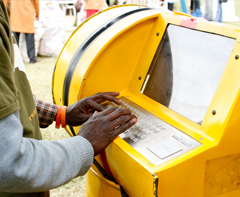
"Digital Tank" (kiosk)
Terra Weikel from Uganda came with briliant idea on how to improve the digitalization of rural Uganda, and they concluded that the best material would be to use a drum which is readily available. They then converted it into a digital tank (kiosk). He was here to create awareness of the digital drum and inspire its use in other African Villages! To inspire for a better Africa, in terms of digitalization.
|
|
|
|
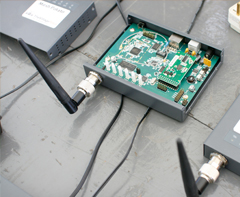
"Village Telco"
The Village Telco is an initiative to build low-cost community telephone network hardware and software that can be set up in minutes anywhere in the world. No mobile phone towers or land lines are required. He was here to create awareness of the product and it entrepreneurial sense! To inspire for a better Africa, in terms of Tele-communication.
MalwareIntelligence is a site dedicated to the investigation of crimes committed using the Internet as the main channel of attack. Also, anything that involves maneuvering and criminal activities in this area, covering a wide spectrum in the field of computer criminology.
The mission is to work in a completely disinterested in the continuous improvement in prevention to security incidents that allow for timely contingency threats.
Thus MalwareIntelligence behind is a group of professionals in research, intelligence and information security, which fuse the various processes involved in these disciplines to offer exclusive content, quality and high value for the resolution of computer crime.
MalwareIntelligence currently has two divisions:
MalwareDisasters is devoted to analyzing malicious code from a purely involved in intelligence processes. The content expressed in this division refers mainly to activities “visual” of malware.
SecurityIntelligence channels information on information security, also from the standpoint of intelligence processes, resulting in a high-value content to understand the need to merge Intelligence in Information Security.
Thanks to Alexander Heid's talk at the Next Hope called “Modern CrimeWare Tools and Techniques: An Analysis of Underground Resources” – Download Audio: 16kbps or 64kbps
Radical management: what to do when your customer is the government
One constraint on implementing radical management is that the customer is on a different path altogether. A frequent example is where your customer is a government bureaucracy. You are aspiring to delight your client, and your client is saying, “Don’t bother with me such questions. Just deliver what the specifications ask for.”
. . . . . .
…realistically, most government organizations are not even trying to practice radical management. One way of understanding how they function is to recognize that organizations operate at three levels, using a schema proposed by Ranjay Gulati in Reorganize For Resilience: Putting Customers At The Center Of Your Business(Boston: Harvard Business Press, 2009)
Level 1: “You take what we make.”
Level 2: “We believe that our offerings will be useful to you.”
Level 3: “We seek to understand and solve your problems with our offerings”
While radical management is operating at level 3, most government organizations are still stranded at level 1. They are paying scant attention to their stakeholders. Often they have not even taken any decision as to who their primary stakeholders are. As a result, no one really knows what the purpose of the organization is. The managers in such organizations typically follow rules and procedures, rather than systematically consider: how could we deliver more value sooner? These organizations are the quintessential bureaucracy, and the management is quintessentially Dilbertian.
Phi Beta Iota: The government is full of good people trapped in a bad system. We've decided that in addition to educating the five billion poor one cell call at a time, we have to give government employees an easy to use cell tether to a World Brain that helps them evolve the consciousness of government from the bottom up.
America's Ruling Class — And the Perils of Revolution
By Angelo M. Codevilla from the July 2010 – August 2010 issue of American Spectator
EXTRACT 1: They [the bi-opoly two parties] think, look, and act as a class.
EXTRACT 2: The two classes have less in common culturally, dislike each other more, and embody ways of life more different from one another than did the 19th century's Northerners and Southerners — nearly all of whom, as Lincoln reminded them, “prayed to the same God.” By contrast, while most Americans pray to the God “who created and doth sustain us,” our ruling class prays to itself as “saviors of the planet” and improvers of humanity. Our classes' clash is over “whose country” America is, over what way of life will prevail, over who is to defer to whom about what. The gravity of such divisions points us, as it did Lincoln, to Mark's Gospel: “if a house be divided against itself, that house cannot stand.”


 Maker Faire Africa is a celebration of African ingenuity, innovation and creation. Here you will find the Makers who showed their work at the 2010 event in Nairobi Kenya. Work ranges from time saving devices for agriculture to alternative energy sources from design with recycled objects to social media applications for mobile phones. Per maker you will find a short synopsis of their work, their contacts details plus a possibliity to collaborate with them.