Edit of 27 Jan 07: I've just watched the author on C-SPAN Book Channel, and am very impressed by his focus on demanding that all scientists reveal their data or be cut off from public funding. I realize some have voted against this review because they misunderstand the author as saying that environmental skeptics are correct. That is not the case. He is in fact calling for complete transparency and open exchanges of information, and I find that quite compelling.
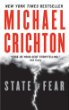
This is one of the few fiction books that I read and review, but I certainly endorse it and value it as a very fine means of educating the public with respect to both the absence of good reliable hard science on the entire issue of the environment, and as a primer on what can be done by man to either destroy the planent by staging events that leverage the underlying vulnerability, or to do constructive research and global remediation.
Many of the reviewers have reacted viscerally to this book, or not read it all the way through to include the author's superb non-fiction series of statements about the environment and the science or non-science of the environment, and the author's final statement on why the politicization of science is bad. I recommend the books (and/or my reviews) of the books on the Republican War on Sciencee and on Climate Change.
The author is to be commended for integrating truthful real-world footnotes with the fictional text. This is a book that is educational and meritorious. It could and should be both a movie and a serious game for change. While the author suggests that much of the fear-mongering about the environment is just that, he does help us understand that making the case for remediation and conservation now must be based on the most rigorous study possible.
I would be quite pleased if the author chose to create a series keyed to the ten threats identified by the United Nations High-Level Threat Panel. Apart from Environmental Degradation (threat #3), the others are Poverty, Infectuous Disease, Inter-State Conflict, Civil War, Genocide, Other Atrocities, Proliferation, Terrorism, and Transnational Crime.
I give this book five stars instead of four, which I would normally assign, because the shortfalls in the book, most especially a lack of context, notes, and additional detail, are out-weighed by the timeliness, relevance, utility, and able original presentation.
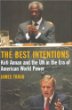
This is an important book for our time. Indeed, I put it down thinking that the author has presented us with a meal of worms–and only those visible at the top of the planter box–but when you are starving–when there is no other viable alternative for peacekeeping–worms can be appetizing.
Before I present some details that made it to my fly-leaf notes, a few “big points” that stayed with me:
1) UN is a grotesque failure in many many ways, but also the closest thing we have to a viable global enterprise, hence, a good starting point for all its flaws.
2) Not addressed at all in the book, spoken of only in passing, the rather important point that most UN agencies are not at all subordinate to nor responsive to the Secretary General and his Secretariat.
3) The UN suffers from two major impediments: first, that the contributing or Member nations do not really want it to be effective, and ham-string it, particularly the Security Council members, although the author is vitriolic on China and Russia vetoing votes, while strangely silent on the US and its constant veto; and second, that personal relations built over decades far out-weight actual job titles and responsibilities, and can be blamed for many things including the Oil for Food corruption nightmare.
4) The author gently explores three major alternatives to the current situation:
4a) the division of the UN into a global body for mobilizing resources and consensus; and a separate global police or gendarme force. I would note, with a genuflection toward Oakley et all in “Policing the New World Disorder,” that this needs to be standing force or at least an earmarked force, ideally led by the Dutch, which trains together and has inter-operable concepts, doctrines, and equipment. See also the edited work, “Peacekeeping Intelligence: Emerging Concepts for the Future.”
4b) a Democracies body, one that purportedly brings together democracies and ends the domination of the UN by third-rate third-world countries, many managed by dictators and corrupt leaders who loot their commonwealths far more aggressively than Wall Street loots America and the rest of the world. This fails when one realizes that most democracies really are not…
4c) Regional networks that bring to bear regional concerns and resources in the context of the varied global agencies. This has some real possibilities, especially if information is shared broadly to provide a “ground truth” that is undeniable. I am reminded of J. F. Rischard's excellent recommendations in High Noon 20 Global Problems, 20 Years to Solve Them
There is a useful history of key Secretary Generals, one that makes the point that Dag Hammarskjöld was an anomaly, and Annan, for all his flaws, may be one of the few to rise to the Hammarskjöld level of effectiveness..
The author provides a useful history of UN ineffectiveness and UN successes. I certainly recommend that this book be read in tandem with William Shawcross's Deliver Us from Evil: Peacekeepers, Warlords and a World of Endless Conflict Interestingly, Shawcross and US diplomat Holbrooke were the only two personal guests at the Nobel Peace Prize award ceremony.
This book is severely lacking in two ways:
1) It really does not communicate the complexity of the over-all UN archipelago of fiefdoms, most of which are not responsive to the Secretary General, nor does it adequately describe the many problems for the UN created by Third World and other blocs. In this book, China, Russia, and to a much lesser extent than it merits, the US, are the evil doers.
2) It completely misses the role that multinational, multiagency, multidisciplinary, multidomain information sharing, what the Swedes call M4IS, can play in bringing disparate groups to the table. The word “intelligence” does not appear in the index nor as far as I can tell, in the book itself. Overall the book focuses excessively on the Oil for Food scandal, and on Darfur, correctly making the point that Darfur was anticipated, that the Member nations chose to pay lip service to the problem through UN “deliberations,” but the book fails to point out that Darfur is one of 17 genocides on-going, and it fails to put the Secretary General's mission in the larger context of what I call the [ten threats, twelve policies, and eight challengers]. See The New Craft of Intelligence: Personal, Public, & Political–Citizen's Action Handbook for Fighting Terrorism, Genocide, Disease, Toxic Bombs, & Corruption for large context.
The author concludes that the US invasion and occupation of Iraq have weakened the UN; and that most of the world does not see terrorism as a threat. Indeed, since this was written, the High-Level Threat Panel places terrorism as ninth on a list of ten high-level threats.
Throughout the book the role of the US as the 900 lb bully is the subtle and sometimes not so subtle sub-text. My own view, formed by my actual experience as well as my broad reading in non-fiction, is that the US, for all its good, is also the single most negative force on the planet, simply because it persists in virtual colonialism, unilateral militarism inclusive of 750 secret and not secret bases world-wide, and its tolerance for predatory immoral capitalism that has created a class war in which US financial and corporate elites bribe foreign elites, and they both destroy their own middle classes while looting all relatively defenseless economies. See the books Confessions of an Economic Hit Man; The Soul of Capitalism: Opening Paths to a Moral Economy; and Rogue Nation: American Unilateralism and the Failure of Good Intentions.
There is PLENTY of money to address the ten high-level threats with twelve intelligent inter-related policies that help the eight challengers avoid American mistakes that today produce a third of the waste on the planet while consuming a third of the energy. What we need now, in support of our new Secretary General, is a commitment to implement ALL of the Brahimi Report recommendations, inclusive of a Director of Global Intelligence (Decision-Support), perhaps sponsored by the UN Foundation, so that every Member nation, and every non-governmental organization, might operate in a transparent, accountable, sensible context. See Peacekeeping Intelligence: Emerging Concepts for the Future and my essays on “Virtual Intelligence” and on “Information Peacekeeping: The Purest Form of War.”
Beginnng of US Truth and Reconciliation with Rest of World,
November 27, 2006
Christopher Hitchens
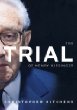
This extraordinary book is the “first word” about Henry Kissinger's culpability for war crimes that may yet see him hanged (highly unlikely but worth mentioning for “awakening” value); but it also brings together a number of themes discussed in more detail by other authors, and I want to start with those before detailing the author's superb and very studied denunciation of Henry Kissinger, a denunciation all the more timely as Donald Rumsfeld is charged with war crimes where a US general officer is testifying against him.
First off, there is the matter of the end of sovereign immunity. This trend could be perceived when the United Nations established that human rights and human security were sufficient to warrant INTERVENTION, and is detailed in the most amazing intellectual and legal review of Philip Allott of Cambridge, in his book HEALTH OF NATIONS: Society and Law Beyond the State, in which he explicitly calls for the overturning of the Treaty of Westphalia, and the re-examination of borders carved by the colonial powers and against hundreds of years of tribal distinction.
Then there is the matter of government integrity. It is now undeniably established that the US Government and the Executive in particular, lies to Congress and the public as a matter of routine. These lies tend to be exposed in the ten-fifteen year time frame (some sooner, as with CIA and other whistle-blowers four years into the war on Iraq), but at the twenty five year mark, there is a clear “explosion” of illumination. Robert Parry, LOST HISTORY: Contras, Cocaine, the Press, & Project Truth” is one book in this vein; while Larry Beinhart's FOG FACTS: Searching for Truth in the Land of Spin addresses a different aspect.
Finally, one has the general matter of whether the US as a Nation is represented overseas as America the Good, which most US citizens would like to believe, or America the war-mongering, predatory, immoral “rogue nation.” The books documenting the latter are legion, from Derek Leebaert's THE FIFTY YEAR WOUND to Chalmers Johnson SORROWS OF EMPIRE to my fellow moderate Republican Clyde Prestowitz's ROGUE NATION: American Unilateralism and the Failure of Good Intentions. On the corporate side, one has many many books, among which John Perkins, Confessions of an Economic Hit Man, and William Greider's THE SOUL OF CAPITALISM: Opening Paths to a Moral Economy, stand out.
My point is that this author's crucification of Henry Kissinger on the basis of documented facts, in a historical context, is NOT a “hit job” or by any stretch of the imagination anything less than a sensible legal document that is a precursor to Kissinger inevitably being brought to justice.
Now to the specifics. The author focuses on the manner in which Kissinger specifically helped Nixon undermine the Paris peace discussions that could have brought Hubert Humphrey to office, with the result that fully 20,000 additional Americans were killed in Vietnam, and hundreds of thousands of Vietnamese, over the next four years. Henry Kissinger stands indicted–personally indicted–for the totally unnecessary and immoral death of 20,000 US and 100,000+ others (closer to millions, actually, but how many life sentences can he receive…)
The author:
1) focuses on the manner in which Kissinger explicitly supported specific dictators in their genocidal endeavors, violating the U.S. Constitution and a variety of laws both domestic and international.
2) excels at discussing details, such as the indiscriminate nature of B-52 bombings, and points out that we put twice as much tonnage of bombs on Vietnam as were fired during our entire World War II campaign.
3) lays out the manner in which Kissinger managed “two track” policies in which the State Department and the Ambassador were kept in the dark, and covert illegal operations were carried out by the CIA and the defense attaches. Chile, Indonesia, and Greece are featured.
4) is careful to note that in this book he is covering only four specific major documentable aspects of Kissinger's high crimes–he lists many others that do not make the cut but are equally reprehensible, such as the betrayal of the Kurds, the support for apartheid in South Africa, the Central American games, and the tortured regime of the Shah of Iran
5) suggests hat Kissinger pioneered US sponsored–state sponsored–terrorism in the modern era; he also pioneered rendition, that nasty little word that means “kidnap people so they can be tortured by others”.
The author does not prove nor claim that Kissinger profited from his public position, but draws out compelling relationships between Kissinger, his private gain, and his political interventions. Much information remains to be revealed, I have no doubt that it will reveal Kissinger to be a world-class criminal guilty of betraying the American public and helping many dictators abuse their own populations.
The author closes with a concise legal summary that I suspect is as good a description as one can achieve of Kissinger's living nightmare. This book inspires, this book justifies, this book DEMANDS a truth and reconciliation commission to investigate both what has been done against Americans by their own government “in our name,” and what has been done against the publics of the world, again “in our name.”
I will close with three snippets.
The author suggests that now that international law has turned a corner, Kissinger must shudder with every dictator's arrest, fearful of what their testimony will disclose.
The author quotes General Taylor, reflecting on Vietnam in 1971, as saying that in comparison with the accusations and judgments of the Nuremberg trials, the White House and the senior generals serving in Vietnam clearly qualified for similar accusations and judgments.
Finally, the author suggests that Kissinger is not in fact an example of power as the ultimate aphrodisiac, but rather of power as the ultimate pornography. Norman Cousins, in The Pathology of Power, would certainly agree.
I concur with this author, and suggest that he has been too kind. America cannot afford any more pathological monsters in the White House. It's time we returned to America the good.
Although the author draws most heavily on his own broadcast remarks, and does not provide an annotated bibliography for further study, Amazon reviews by many others could serve to this end–just search for the topic and read the reviews of the book for a broader study.
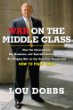
Lou Dobbs may well have swung the 2006 election with his series on Broken Government and Jack Cafferty's robust commentaries, and thank God he did.
The book ends with key documents–the Declaration of Independence, the Constitution, the Bill of Rights, and the Constitutional Amendments.
Summing it all up: take back the power by voting and demanding that Washington represent the people instead of corporations; fair trade not free trade; end illegal immigration (and I would add, demand English as a common language); self-insure as a Nation with respect to health care.
Lou Dobbs would have my vote if he ever ran for President. Now if we can just get him to add a 15 minute “national intelligence review” to the CNN line-up or web site….all the topics he deals with are right on target, but missing is the larger picture: America faces ten high-level global threats, America has no strategy and no coherent policies across twelve policy areas from Agriculture and Debt to Security and Water, and America has no plan for helping the eight challengers (Brazil through Venezuela) avoid our enormous mistakes, mistakes the planet cannot afford (we consume one third of the energy and create one third of the waste if not more).
Of all the books I have read, this is the one that I hope everyone buys, reads, and discusses before the 2008 primaries and general election.
There is also hope. Jim Turner, #2 Naderite, tells me he is seeing signals that 100 million Americans who opted ou8t of partisan politics and jumped back in with both feet in 2008. Below are the books that those people are reading:
There are many more. I have gotten fed up with Amazon's refusing to provide a means for reviewers to sort their reviews, so I am posting, at Earth Intelligence Network, a sortable searchable Word table that covers all of my reading across the ten threats, twelve policies, eight challengers, and other areas. This will dramatically improve the efficiency for anyone seeking to leverage the free reviews that I offer for any given topic. We need to come back angry, non-violent, and INFORMED. Amazon, for all its flaws, is the People's Schoolhouse, and a big part of why public intelligence is a reality, not an oxymoron like “central intelligence.”
If I were to recommend one other book, it would be Naomi Klein's No Logo: No Space, No Choice, No Jobs which discusses how individual citizens can track the abusive practices and behavior of corporations, and the multitude of individuals can punish them through simple boycotts of their products.
There is no question in my mind but that We the People will take back the power, this book, and Lou Dobbs' book, represent the end of an era of unquestioned repression and abuse of America's middle class and blue-collar labor force, and the beginning of a revolution that the banks and corporations will NOT be able to squelch.
I generally only read non-fiction, but increasingly in the past fifteen years I have found that fiction of a particular type can be stunningly effective as a truth serum. Winn Schartau's TERMINAL COMPROMISE in the 1990's, about an electronic Pearl Harbar ultimately found to have been set in motion by the National Security Agency, is one such book. This is another.
For a NON-FICTION preview of what the Neo-Cons *thought* they were going to be able to do (out of touch with reality as they are), buy this book and ALSO buy (or at least read my review of) “Endgame: The Blueprint for Victory in the War on Terror” by Thomas McInerney and Paul Vallely. These two seriously overweight generals, in retirement, and well prior to the elective war on Iraq, laid it all out–Iraq, then Iran, then Syria, then Egypt and Jordan, all by force of arms. They are NUTS, but they are also very very representative of the kind of ignorant lunacy that is accepted currency–indeed a qualification for appointment–in the Bush-Cheney regime. With Goldman Sachs in charge of the U.S. Treasury, and Paul Wolfowitz, a proven immoral liar in charge of the World Bank, do not think for a minute that Rumsfeld's being replaced by a more gracious clone (Bob Gates, who is NOT an intelligence professional, but rather a White House staff professional), is going to change anything.
Wild Fire is on target. I used tobelieve that the Kennedy's were both assassinated for planning to interfere with the extreme right, and especially the Wall Street extreme right that is close to Israel.
EDIT of 10 Dec 07: With the publication of Someone Would Have Talked: The Assassination of President John F. Kennedy and the Conspiracy to Mislead History we must acknowledge that the Warren Commission was indeed a cover-up, but that Cuban exiles trained by CIA (a form of extreme right, but not from Texas) did the assassination. CIA and the Secret Service knew it was going to happen, Bobby Kennedy informed JFK, and the latter very foolishly chose to ignore the warning.
The author might just as easily have included a pre-emptive attack on Iranian nuclear plants by Israel, something that many expert observers expect will happen before December 2006 unless the Congress makes it clear that ALL financial support for Israel will be cut off, ALL military assistance for Israel will be cut off, if they do this. You can be certain that the extreme right is egging Israel on and promising American complacency in the face of such an attack.
This book, like the movie Enemy of the State [Blu-ray] is most helpful to those who wish to understand what Norman Cousins tells us in The Pathology of Power – A Challenge to Human Freedom and Safety Absolute power really does corrupt–where the author does not venture, and perhaps he will honor us with these thoughts in the next book, is that the U.S. Government–both Republican and Democratic–is nothing more than “the best of the servant class.” Behind the U.S. Government are a select handful of bankers and a select inter-locking group of corporate boards that are more than happy to harvest profit from the hapless individuals who continue to believe that America is a democracy and that capitalism as practiced today is moral. Not so.
Fiction of this caliber is often a pre-cursor to a “coming out” of non-fiction, such as one can see in the growing 9-11 Truth movement, and the emergent demand by select Senators for complete transparency in government funding. I strongly recommend this book as an eye-opener. It is very very real.
I know Michael O'Hanlon, whom I consider to be one of the most insightful and honest policy analysts in America–his one line in “A Half Penny on the Federal Dollar” pointing out that the single best investment in foreign assistance is in the education of women, is a benchmark for all that ails US foreign policy–we simply do not know how to wage peace. He's the best. I do not know Kurt Campbell, but I respect the Center for Strategic and International Studies (CSIS). I give this book five stars instead of four because of the caliber of the authors and the terribly difficult task they took on. The book is, however, *very* incomplete.
The authors are strongest on the politics of national security–there is nothing wrong with the substance where they address it, but I will end with my observation on how incomplete the book it.
The book can be summed up–and questioned–on the basis of its eight chapter headings–the book's focus is in capital letters, my alternative focus in lower case:
NATIONAL SECURITY AS PRIMARY ELECTORAL ISSUE–not so, electoral reform and the integrity and legitimacy of government is the primary issue
MYTH OF REPUBLICAN SUPERIORITY–quite so, but what about Peter Peterson's view in “Running on Empty,” to wit, BOTH political parties are inept and two sides of the same coin–they represent corporations, not the people.
MANAGING THE MILITARY–is not enough. Must manage ways and means, must manage the inter-agency matrix (Cheney ignores the policy bureaucracy, and the only agency actually fighting in Iraq is the military–everyone else is going through the motions).
HOMELAND SECURITY–TAKING IT TO THE NEXT LEVEL–physical security is not enough, even if private sector is willing to cooperate. The next level is about immigration control, tracking non-citizens, revoking citizenship as appropriate for those who do not adopt our values, tracking sermons by hostile imans, and rejecting visitors who are not bonded by their home government.
WINNING THE LONG WAR–strong on understanding next generation, weak on how to actually stabilize and reconstruct the world. The authors are too focused on terrorism, which is a tactic, not an enemy, and while they boldly propose approaches to stabilizing the Islamic nations, with a positive emphasis on education, they do not address the fundamentals of virtual colonialism, unilateral militarism, and predatory immoral “bandit” capitalism–our greatest enemy is within, not without.
THE REAL TRIPLE THREAT; ENERGY & SECURITY, GLOBAL CLIMATE CHANGE, AND TERRORIST FINANCING. Simplistic, conventional wisdom. Sure, we have to have energy independence, start doing real-time science and climate stabilization (changes that used to take 10,000 years now take three), and focus on terrorism financing, but these are a *fraction* of the national security challenge, and out of context, they are not realistically achievable.
COPING WITH CHINA–all well and good, but what about Brazil, India, Indonesia, Iran, Russia, Venezuela, and Wild Cards such as Turkey and South Africa?
PROLIFERATION–fine on the bio-chem and nuclear weapons, what about small arms, the real weapons of mass destruction that make the 17 genocides real (I am sick and tired of hearing about Darfur in isolation–it is ONE of 17 genocides now on-going).
Most useful to me was the authors' knowledgeable identification of four competing Democratic constituencies focused on national security: the “hard power” elite; the “soft power” globalists; the “modest power” Democrats seeking a partial pull back; and the labor-environmental Democrats profoundly troubled by global capitalism (which I and William Greider and Clyde Prestowitz among others have found to be pathologically predatory and our own worst enemy in terms of long-term global stability).
In short, this is a book that is excellent in its narrow focus–getting the Democrats some traction in the national security arena, growing beyond Iraq, and setting the stage for an expanded dialog.
Now here is what is NOT in this book:
1) The ten high-level threats identified by the United Nations High-Level Threat Panel, Dr. LtGen Brent Scowcroft participating, and taken *together*: poverty, infectious disease, environmental degradation, inter-state conflict, civil war, genocide, other atrocities (kidnapping starlets for Saudi debauchery, kidnapping others for body parts), proliferation, terrorism, and transnational crime.
2) The twelve policies that must be balanced in a transpartisan fashion: Agriculture, Diplomacy, Economy, Education, Energy, Family, Health,Immigration, Justice, Security, Social Security, and Water–using scarce water to produce subsidized agriculture or to flush heavy tar oil is nuts–but no one is managing the country across the board; and finally
3) The eight challengers or challenges that *must* be enlightened and assisted in avoiding our mistakes while we also learn from them: Brazil, China, India, Indonesia, Iran, Russia, Venezuela, and Wild Cards.
One final note: Jock Gill, who served President Clinton as a communications specialist, taught me this: we have to abandon the war metaphor–war on drugs, war on poverty, war on terrorism. IT DOES NOT WORK! I would add that we have to abandon the secrecy practice as well. In my view, the next government must be a Coalition Government because neither the Republicans nor the Democrats can govern competently without the common sense of the Libertarians, Greens, Reforms, Independents, and others; and the next government must redirect half the secret intelligence budget toward national and global education free in all languages, and half the heavy-metal military budget toward waging peace in all possible forms, to include using residual capabilities in abandoned DoD communications satellites to provide free Internet connectivity to Africa and Latin America.
O'Hanlon and Campbell are as good as it gets inside the beltway. I praise them as being the first step in a long march back to sanity, but only the first step. We cannot proceed nor succeed without them, but they need a dirty dozen iconoclastic outsiders to actually get us to an AFFORDABLE implementable Grand Srategy for a sustainable prosperous peaceful future going out seven generations.