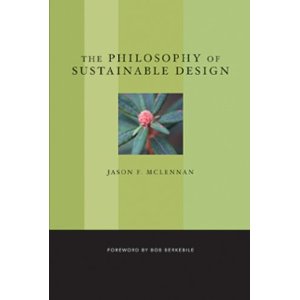
Review: The Philosophy of Sustainable Design

5 Star, Change & Innovation, Complexity & Catastrophe, Consciousness & Social IQ, Decision-Making & Decision-Support, Nature, Diet, Memetics, Design, Strategy, Survival & Sustainment, Values, Ethics, Sustainable Evolution

Amazon Page

Can Be Considered “Ref A” or the Prime Directive, March 9, 2008

Jason F. McLennan

I came late to bioneering, after I was inspired by Herman Daly's Ecological Economics: Principles And Applications, Brian Czech's Shoveling Fuel for a Runaway Train: Errant Economists, Shameful Spenders, and a Plan to Stop them All; and everything by Paul Hawkin, but especially The Ecology of Commerce.

I have had an interest in the intersection of global science, sustainable political and social and economic orders, and the vulnerability of the nation-state in the face of growing complexity for some time, and many of my other reviews focus on these literatures, as well as the literatures of collective intelligence, global assemlages, wealth of networks, localized resilience, and so on.

I make mention of that broader literature to add emphasis to my view that this book is one of the most extraordinary I have ever encountered. I made a mistake when I first got it months ago and put it sight unseen into my “hard and dense, save for intercontinental trip.” This book is not hard, not dense, and it is both easy to read and intellectually elegant. I can easily see this book as the single mandatory first year or summer pre-reading at any level–undergraduate or graduate–along with contextual books such as:
High Noon 20 Global Problems, 20 Years to Solve Them
Plan B 3.0: Mobilizing to Save Civilization, Third Edition
The Future of Life
The leadership of civilization building: Administrative and civilization theory, symbolic dialogue, and citizen skills for the 21st century and
Collective Intelligence: Creating a Prosperous World at Peace

The sixteen chapters and five appendices are elegant–concise, clear key points, short, just the right mix of photos (including color in a center spread) figures, and text.

The publisher has been criminally remiss in failing to load the varied items that Amazon allows, such as the table of contents. I am increasingly disenchanted with publishers and of the view that Amazon should get into the book publishing business, sending digital copies to FedExKinko's, helping authors self publish (full disclosure: BOTH Fred Smith at FedEx and Jeff Bezos at Amazon blew me off–these guys are simply not serious about innovation).

Preface: Philosophical Beginnings
Chapter 1: The Philosophy of Sustainable Design
Chapter 2: The Evolution of Sustainable Design
Chapter 3: The Principles of Sustainable Design (Biomimicry)
Chapter 4: The Principles of Sustainable Design (Human Vitality)
Chapter 5: The Principles of Sustainable Design (Ecosystem/Bioregional)
Chapter 6: The Principles of Sustainable Design (Seven Generations)
Chapter 7: The Principles of Sustainable Design (Energy/True Cost)
Chapter 8: The Principles of Sustainable Design (Holistic Thinking)
Chapter 9: The Technologies and Components of Sustainable Design
Chapter 10: Shades of Green–Levels of Sustainability
Chapter 11: Productivity and Well-Being
Chapter 12: Greening Your Organization
Chapter 13: Green Economics
Chapter 14: The Sustainable Design Process–Holistic Thinking
Chapter 15: The Aesthetics of Sustainable Design
Chapter 16: The Future of Architecture
Appendix A: The Green Warrior Reading List
Appendix B: Who's Who in Green Design
Appendix C: The Phases of Green Design
Appendix D: The Elements of Green Design Methodology
Appendix F: The Principles of Sustainable Design–Summary

I put this book down with several thoughts:

1) Enormously impressed with the University of Oregon in Eugene, to the point of trying to get my oldest to take his computer and creative skills there.

2) Profoundly delighted with the deep philosophical underpinning that one finds throughout the book, without pretense or pomposity.

3) The one appendix I would have liked to see that is not there is the one entitles: Green to Gold–Bottom-Line Dollar Savings Over Time, and then a whole range of the elements of sustainable design by climate zone.

This is an extremely satisfying book to read. My last throught: it's time to write the Operating Manual for Spaceship Earth. Read more about this at Earth Intelligence Network. This book by Jason McLennan is a perfect model for what the larger systems book should strive to be.

See also the literatures under panarchy, resilience, sustainability.

Vote and/or Comment on Review

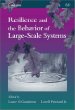
Review: Resilience and the Behavior of Large-Scale Systems

5 Star, Complexity & Resilience

ResilienceSuperb, Dated, Needs Reissuance, March 8, 2008

Lance H. Gunderson

I would normally take away one star for failing to recognize Herman Daly's contribution to Ecological Economics and Paul Hawkin's contributions to the ecology of commerce (and most especially “true cost” as an essential metric) but realizing that I came late to this book (it was published in 2002), and respecting the extraordinary value herein, I left it at five stars.

The book should be reprinted after a proper literature search (I grow tired of citation cabals, these folks–20 contributors–need to get out more) and a simple capstone Executive Summary added for the busy policy-maker. The Literature Cited should be consolidated into a single annotated and much expanded syntopical bibliography.

Most importantly, the book was inspired by the Beijer International Institution for Ecological Economics realizing that resilience is the key unifying concept for both ecological and social systems; and that there was a need for demonstrated concepts of ecological resilikence including an understanding of alternative stable states and disturbances.

The book is fully satisfactory and my take-away is that all of the contributors, overseen by the likes of Lester Brown, Medard Gabel, Herman Daly, and Paul Hawkin, are part of the solution and must be fully integrated in the creation of the EarthGame that will one day deliver real-time science and near-real-time stable state options.

It is very well-organized, and the authors are all uniformly competent at presenting the obligatory case studies from which they draw their conclusions.

Theory, metaphors, models, stability disturbances, resilience, are all discussed at length. Stessors are multiplicative not additive. [A better summation is found in Charle's Perrows Normal Accidents: Living with High-Risk Technologies, to wit:

+ Simple systems have single points of failure easy to diagnose and correct

+ Complex systems have multiple points of failure that interact in unpredictable ways and are very hard to fix

+ We have created constellation of complex systems interacting in ways we simply do NOT understand, and therefore we are subject to cataclymic unanticipated break-downs almost impossible to fix.

The book ends with an excellent summary, of value in and of itself, with these key points discussed:

+ Pathology of constancy versus visibility of variability.

+ Diversity & stability versus diversity & resilience

+ Short versus long term sustainability

+ Vulnerability increased as sources of novelty are edliminated and cross-scale functional replication is reduces.

Last two key thoughts:

+ We can increase novelty (I added the word in my own mind, “artificially”

+ Resilience occurs at multiple scales.

This book is recommended for use in undergraduate and graduate instruction, and if the original sponsor cared to fund an update, I have some specific suggestions that would make a new book much more valuable to connecting true costs, real-time science, and digital gaming as well as digically orchestrated independent action (imagine a range of gifts table online, specific down to the district level, with needs from $10 to $100 million, that all foundations, corporations, non-governmental organizations, and individuals (80% of the giving) could use to “opt-in” and turn micro-boxes of need “green.”)

I have over 70 lists including one focused on environmental degradation (high level threat to humanity) so I will end with links to just ten books, but there are many many more.

See also:
A More Secure World: Our Shared Responsibility–Report of the Secretary-General's High-level Panel on Threats, Challenges and Change
The Battle for the Soul of Capitalism
Ecological Economics: Principles And Applications
The Ecology of Commerce
The True Cost of Low Prices: The Violence of Globalization
The Three Trillion Dollar War: The True Cost of the Iraq Conflict
The Blue Death: Disease, Disaster, and the Water We Drink
Pandora's Poison: Chlorine, Health, and a New Environmental Strategy
Blue Frontier : Saving America's Living Seas

See also books I have written, edited, or published. They are also free online but the Amazon versions are much more exciting to engage.

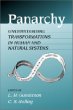
Review: Panarchy–Understanding Transformations in Human and Natural Systems

4 Star, Change & Innovation, Complexity & Resilience, Democracy, Stabilization & Reconstruction, Survival & Sustainment, Values, Ethics, Sustainable Evolution

PanarchyMixed Feelings–Mix of Brilliance and Gobbly-Gook, March 8, 2008

Lance H. Gunderson

On balance, Resilience and the Behavior of Large-Scale Systems (Scientific Committee on Problems of the Environment (SCOPE) Series) is the better book but this one is the thicker heavier more math-laden pretender–the problem is they have their own citation cabal, and while the bibliography is much broader and deeper than the above recommended book, there are too many gaps and an excessive reliance on obscure formulas that I have learned over time tend to be smoke for “I don't really know but if I did, this is the formula.

Also published in 2002, also with 20 contributors, this book lost me on the math. As someone who watched political science self-destruct in the 1970's when “comparative statistics” replaced field work, foreign language competency, and actual historical and cultural understanding, and a real-world intelligence professional, I'd listen to these folks, but I would never, ever let them actually manage the totality.

The book is the outcome of a three year effort, the Resilience Network as they called themselves, and there are some definite gems in this book, but it is a rough beginning. Among other things, it tries to model simplicity instead of complexity, and continue to miss the important of true cost transparency as the product and service end-user point of sale level, and real-time science that cannot be manipulated by any one country or organization (Exxon did NOT make $40 billion in profit this year–that is a fraction of the externalized costs, roughly $12 against the future for every $3 paid at the pump–that level of public intelligence in the public interest in missing from this book).

Page 7, “Observation: In every example of crisis and regional development we have studied, both the natural system and the economic components can be explained by a small set of variables and critical processes.” This rang all of my alarm bells. If I did not have total respect for what the authors and funders are trying to do, that sentence alone would have put this book firmly into my idiocy pile.

I just do not see in this book the kind of understanding of the ten high-level threats to humanity interaction with one another, such as can be seen free online or bought via Amazon, A More Secure World: Our Shared Responsibility–Report of the Secretary-General's High-level Panel on Threats, Challenges and Change, nor do these distinguished practitioners of their own little “club” see the strategic coherence of identifying ten core policies from Agriculture to Water that must be harmonized at every budget level, nor the irrelevance of anything we do unless we can persuade the ten demographic challengers with an EarthGame online that delivers real-time science and near-real-time cost-benefit analysis.

I find several of the authors to be a bit too cavalier in their dismissal of the contributions of economists, ecologists, and others.

Theories of change and next cycles are useful. Concepts of cascading change and collapsing panarchies are good. Log number of people in Figure 4.1 is very good.

In discussing adaptive response to change these learned scholars appear to have no clue of what is possible in delivering neighborhood level granularity of data for online social deliberation and models for gaming. There are early light references to deliberative democracy, but right now these folks have models in search of data in search of players. I did like the discussion of the larger model for levels of discourse, but WikiCalc and EarthGame are a decade ahead of this book's contents (which I hasten to add, was started in 1998 and published in 2002).

Table 11-1 on page 310 was so useful I list its row descriptors here, Factors and Adaptation and Possible Effect on Resilience (the latter not replicated here.

Factors:
Biota
Diversity-spacial
Diversity-production strategies
Energy sources
External resources
Mental models
Population structure
Savings
Scale
Technology

This is no where near the 10-12-8 model at Earth Intelligence Network, but I see real value here, and the need for a cross-fertilization. The fatal flaw in this book is that they confuse the failure of expertise with the failure of democracy–if we can achieve electoral reform and eliminate the corruption inherent in most governments, and certainly that of the US government which is broken and “running on empty” while every incumbent sells their constituents out to their party or special interests, it would be possible to connect data, change detection, alternative scenario depiction, and deliberative democracy at the zip code level.

Gilberto Gallopin, Planning for Resilience, is alone worth the price of the book, in combination with above and the closing summary, which is also a real value. My final note: too much gobbly-gook (to which I would add, “and no clue how intelligence-policy-budget connections are made and broken.

The key to eradicating the ten high level threats to humanity, among which environmental degradation is number three after poverty and infectious disease, is not better science–it is better democracy, participatory democracy, combined with moral capitalism. Below are a few titles to help make this point.

These 20 contributors are all part of a future solution, but they cannot be allowed to drive the bus.

See also (apart from my many lists):
Running On Empty: How The Democratic and Republican Parties Are Bankrupting Our Future and What Americans Can Do About It
Breach of Trust: How Washington Turns Outsiders into Insiders
Vice: Dick Cheney and the Hijacking of the American Presidency
The Battle for the Soul of Capitalism
Green to Gold: How Smart Companies Use Environmental Strategy to Innovate, Create Value, and Build Competitive Advantage
The Philosophy of Sustainable Design
The New Craft of Intelligence: Personal, Public, & Political–Citizen's Action Handbook for Fighting Terrorism, Genocide, Disease, Toxic Bombs, & Corruption
Collective Intelligence: Creating a Prosperous World at Peace

Review: Reconciliation–Islam, Democracy, and the West

5 Star, Biography & Memoirs, Politics, Religion & Politics of Religion, Truth & Reconciliation

BhuttoBeautiful powerful voice, mind, soul, and face,  March 7, 2008

Benazir Bhutto

The book opens with the author's detailing of the many ways in which the government refused to protect her, to include the banning of armored vests, cell phone jammers, etc. While I consider her foolish to have not used modern technology to reach more people safely, she died a martyr's death and this book ably represents her legacy.

This is an elegant, articulate, easy to read, carefully documented overview of the history, geography, culture, and disturbances that have defined the billion Muslims of today.

The author completely avoids any confrontation with Saudi Arabia, the regime that I hold responsible, along with Egypt, then followed by all those as discussed in the following three books:

Web of Deceit: The History of Western Complicity in Iraq, from Churchill to Kennedy to George W. Bush
The Looming Tower: Al Qaeda and the Road to 9/11 (Vintage)
Breaking the Real Axis of Evil: How to Oust the World's Last Dictators by 2025

I share with the author the diplomatically stated view that Western colonialism, followed by Western support of dictators against democracy, set the world back fifty years. In reinforcement of this point, but focused on the unnecessary Cold War, see The Fifty-Year Wound: How America's Cold War Victory Has Shaped Our World and The Sorrows of Empire: Militarism, Secrecy, and the End of the Republic (The American Empire Project).

It is in this context that the author finds it reasonable for many Muslims to welcome, not the attacks on the US, but the new-found US recognition of vulnerability. Of course this Administration is oblivious, and we have wasted blood, treasure, and spirit, but the fact of the matter is clear the titles of these two books:

The Unconquerable World: Power, Nonviolence, and the Will of the People
A Power Governments Cannot Suppress

Overall the book is replete with quotations from the Quran, fully three quarters of the end-notes. This is one of the most thoughtful, methodical accounts I have ever seen of the history, geography, and misdirection of the entire Muslim world, more often than not at the hands of the West or secular dictators it installed and supported.

An essential part of the book is the refutation of the Saudi Arabian rejection of tolerance and the terrorist confusion of jihad as struggle with jihad as unjust war killing civilians.

The last half of the book is a catalog of countries I am going to list because I was surprised by the range–these are countries where a combination of colonialism run amok, and indigenous secular and clerics vying for power.

Afghanistan
Algeria
Argentina
Bangladesh
Comoros
Congo
Egypt
Greece
Guatemala
Iraq
Lebanon
Libya
Morocco
Pakistan
Persian Gulf
Tunisia

Having provided a magnificent tour of the horizon, she then devotes a very deep chapter to Pakistan's history. She concludes the chapter concerned about Taliban incursions deep into Pakistan, but cited Iqbal, “Tyranny cannot long endure.”

Next the book gently slams Sam Huntington's “clash of civilization” into the ground, breaks every rib with a different contrasting scholar, and most admiringly, with pointers to Pippa Norris, Ronald Inglehard, Stephen Walt, and Richard Rubenstein.

Finally, the author concludes with what must now be regarded as her death-bed wishes for the future of Pakistan, of Islam, and of modernization. She considers modernization to be exclusive of extremism, and I for one, reflecting on the specific figures from Medard Gabel, E. O. Wilson, and Lester Brown, am happy to assert that for one third of what we spend on war, we could create heaven on earth. Combine that with the trillion a year that corporations and dictators loot through corruption, and the $500 billion of more than foundations squander willy nilly for lack of a strategic spending plan, and you get into real money.

She prays for more community responsibility and charity, for education and women's rights. And transparency of military budgets, for better election monitoring, for a Reconciliation Corps (see the superb book by USN Captain Doug Johnston, Faith-Based Diplomacy: Trumping Realpolitik

Her final two wishes are for the Gulf States to jump-start the Muslim renaissance, and for a Palestinian state (to which I would add, and the restoration of Lebanon as the Tibet or Paris of the Middle East).

There are so many other books I would like to tie to this one. Here are the two I have left within Amazon limits:
The Fortune at the Bottom of the Pyramid: Eradicating Poverty Through Profits (Wharton School Publishing Paperbacks)
Collective Intelligence: Creating a Prosperous World at Peace

Two years ago, after reading Prahalad's book, I realized my dstiny was to be intelligence officer to the five billion poor. Today an Indian Brigadier pointed out to me that three of the five are split between China and India. That will guide my next year or two.

See all my other reviews and lists for a free graduate survey of reality and what is to be done to move away from the war and scarcity frame of reference to a prosperous world at peace frame of reference (at one third the cost in blood, treasure, and spirit).

[Additional extraneous observations dropped into comment.]

For this reason I end with the three things I would like to the USA to agree to in the near future:

1) Funding from ASD SOLIC for five positions necessary to establish the Office of the Assistant Secretary General for Decision Support, reporting to the Undersecretary for Safety and Security. We get all the raw information, we give back decision support that can be shared and is not secret.

2) Conversion of the rapidly vacating Coalition Coordination Center into a Multinational Decision Support with access to all information in all languages all the time THAT IS NOT SECRET to serve as provider of reach back strategic, operational, tactical, and technical intelligence to all stabilization & reconstruction, humanitarian assistance, and disaster relief operations.

3) Use of the MDSC to create a global range of gifts table covering the ten high-level threats to humanity and the twelve core policies (learn more at Earth Intelligence Network), such that the UN can call an annual givers conference and publicise $1 trillion a year in needs from $10 to $100 million, all online and accessible for both individuals (80$ of the giving) and organizations.

India now understands that a call center and a virtual network using Telelanguage.com, registering 100 million volunteers covering 183 languages and able to teach the five billion poor “one cell call at a time,” is the fastest way to create stabilizing wealth.

This is the BEGINNING of a new history one powered by public intelligence, itself comprised of collective, peace, and commercial intelligence, and in phase two, gift, cultural, and Earth intelligence.

I put down this book well satisfied with the Swedish concept as taught to me in Stockholm: Multinational Multiagency, Multidisciplinary, Multidomain Information Sharing (M4IS) and Multinational Decision Support. We are going to answer this great lady's prayers, for the best of reasons, to give all of our children seven generations of hope into the future.

Review: A Letter to America

5 Star, Democracy, Electoral Reform USA, Politics
Boren
Amazon Page

Elegant essay with embedded references, March 6, 2008

David Boren

Edit of 14 Mar 08: FRAUD ALERT. I like and admire David Boren, but I am now fed up with his sanctimoneous appearances calling for “bi-partisanship” while failing to recognize all the other parties that have been–with malice aforthought–shut out of the political process. “Bipartisanship” is CODE for”save the two-party spoils systme.” ENOUGH. Anyone who cannot explain the difference between Transpartisanship and Bipartisanship is a FRAUD.

This is an elegant intelligent book of reflection, but I have to say up front that is misses the core point: the need to end the strangle-hold of the two parties that dismissed the League of Women Voters from the presidential debate process because they had the temerity to want to ask questions not provided in advance, and to include third, fourth and fifth parties. I know many people will be reading this book, and perhaps also this review, and the mere existence of the book as a focal point for dialog is worthy of five stars.

There are eight specific electoral reforms that could be easily passed, four in time to impact on November 2008, the others for impact in 2010. The fact is–and I saw this demonstrated in Oklahoma where I went to see for myself how Michael Bloomberg fared. He was, in my view, made to look the fool because no one there knew the difference between bipartisanship (code for keeping the the two party spoils system alive) and transpartisanship, which buries the two party mafiosos and restores sovereignty to the people.

I funded the Earth Intelligence Network at the same time that Jim Turner, Ralph Nader's first hire, created the Transpartisan Policy Institute. We identified the top experts on the ten high-level threats, and we have devised tranpartisan answers to 52 tough questions not a single candidate can answer coherently today. In my view, there is still a need for an independent transpartisan team to run for the full range of positions, and demonstrating in advance of election they can balance the budget.

This book deserves five stars, but it is futile unless Senators McCain, Obama, and Clinton will sponsor the simple eight point Electoral Reform Act, and we discuss openly the degree to which Dick Cheney, Donald Rumsfeld, Paul Wolfowitz and Dough Feith are impeachable for their role in telling 935 explicitly documented lies, and in the case of Cheney, 25 explicitly identified high crimes betraying the public trust.

Here are ten other books I commend to anyone concerned about our future.
Vice: Dick Cheney and the Hijacking of the American Presidency
Running On Empty: How The Democratic and Republican Parties Are Bankrupting Our Future and What Americans Can Do About It
The Soul of Capitalism: Opening Paths to a Moral Economy
The Battle for the Soul of Capitalism
The Shock Doctrine: The Rise of Disaster Capitalism
Fog Facts: Searching for Truth in the Land of Spin
Web of Deceit: The History of Western Complicity in Iraq, from Churchill to Kennedy to George W. Bush
The Sorrows of Empire: Militarism, Secrecy, and the End of the Republic (The American Empire Project)
The Unconquerable World: Power, Nonviolence, and the Will of the People
Collective Intelligence: Creating a Prosperous World at Peace

I will end on a positive note: there is no lack of money–for one third of what we spent on war this year, we could have begun the rapid eradication of the ten high-level threats to humanity, and catalyzed the creation of new wealth everywhere.

Bipartisanship is NOT the right answer. Electoral reform and Transpartisanship, such as represented so ably by Reuniting America, is the best possible path to restoring America the Beautiful.

Vote on Review

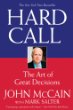
Review: Hard Call–The Art of Great Decisions

4 Star, Biography & Memoirs, Decision-Making & Decision-Support, Politics

Hard callFormula Book with Limited Sources, March 6, 2008

John McCain

Edit of 10 November 2008 to lament the betrayal of John McCain.

The election is over. Obama fooled most of the people, and the Democrats out-frauded the Republicans with at least $300 million in illegal campaign contributions and double voting between New York and Florida and varied other states. McCain did himself in, allowing Bush staffers to destroy any attempt to address the substance of governance, and less the staffer that helped create the first speech by Governor Palin, Vice Presidential Operations was staffed by inept has-beens from spin-land, none of them with any deep knowledge about governance.

Sadly Obama, himself a talented individual, has been bought and paid for by Wall Street, and his transition team is totally committed to keeping the two party spoils system alive. He is, in short, a fraud. I am deleting fivce of the HOPE books below, and herewith provide five books that should give any citizen pause–Obama will be Cheney lite, seeking to pursue Abraham Lincoln's treasonous expansion of Executive powers with the active connivance of a treasonous Congress unfit to represent the United STATES of America.

Obama – The Postmodern Coup
Running on Empty: How the Democratic and Republican Parties Are Bankrupting Our Future and What Americans Can Do About It
Vice: Dick Cheney and the Hijacking of the American Presidency
Election 2008: Lipstick on the Pig (Substance of Governance; Legitimate Grievances; Candidates on the Issues; Balanced Budget 101; Call to Arms: Fund We Not Them; Annotated Bibliography)
Constitutional History of Secession

Bernie's review is great and I have voted for it. I am going to stop buying formula books that combine a politician's name with a staffer's library browsing. I was especially distressed to not find the world “intelligence” or its commercial equivalent, decision-support. There is nothing wrong with the content, but as someone who writes and reads broadly about intelligence and decision support under conditions of ambiguity, this book could not hold my attention.

Five books that ignore the criminal parties and focus on We the People:
Blessed Unrest: How the Largest Movement in the World Came into Being and Why No One Saw It Coming
The Tao of Democracy: Using Co-Intelligence to Create a World That Works for All
The Cultural Creatives: How 50 Million People Are Changing the World
Society's Breakthrough!: Releasing Essential Wisdom and Virtue in All the People
Collective Intelligence: Creating a Prosperous World at Peace

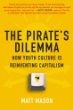
Review: The Pirate’s Dilemma–How Youth Culture Is Reinventing Capitalism

6 Star Top 10%, Capitalism (Good & Bad), Complexity & Resilience, Culture, DVD - Light, Education (General), Future, Intelligence (Collective & Quantum), Values, Ethics, Sustainable Evolution

Pirate Dilemma

Beyond Five Stars–Moving, Relevant, Powerful

March 1, 2008

Matt Mason

I read a lot. Non-fiction. This is one of the most important and inspiring books I have read in some time. It is especially meaningful to me because my oldest of three sons is a pirate who refuses to waste my money on college “credentialing” and has told me point blank there is nothing he cannot learn on his own.

While I have been totally “open” since I published E3i in the Whole Earth Review (Fall 1992) and was called a lunatic by the spy world, and I have given a Gnomedex keytone on “Open Everything,” this book–I am shaking my head trying to find the right words–has been an inspiration to me.

Bottom line: the pyramidal structure, the Weberian bureaucracy model that characterizes all governments and corporations, is DEAD. The circule model, the open network model, is kicking serious butt.

This author has in my view demonstrated world-class scholarship, given us gifted writing, and developed a story line that I can only call DAZZELING. This is an important story we all need to understand.

Here are my flyleaf notes:

+ Pirates are rocking the boat.

+ Information Age has hit puberty.”

+ Citing Mark Ecko, a graffiti artist whose brand is now worth $1 billion: “The pirate has become the producer.”

+ Punk capitalism.”

+ Punk Plus equals creative destruction at hurricane force.

+ Purpose is everything.

+ Citing Shane Smith: In America there is no anti-status quo media–it's all the same four big companies…there is no voice.

+ Punk and green are converging on substance and style.

+ Citing Richard Florida, “Rise of the creative class”

+ 3d printing is here now, 3d product download is on the horizon (I envision FedEx Kinko's as a “one of” production facility, but the dumb ass at FedEx CEO blew me off when I proposed that he print books to lower their carbon footprint).

+ USA was founded on the basis of piracy of European technologies.

+ Three core punk ideas are 1) do it yourself; 2) resist authority; 3) combine altruism with self-interest.

+ Canal Street moves faster than Wall Street.”

+ Pirate radio as musical petri dishes creating new spaces.

+ “Today a new generation is demanding more choice.”

+ Net neutrality matters (FYI, Google has a programmable search engine that will let you see only what others pay to let you see. Google is now totally EVIL.

+ Lawsuits are a sign of corporate wekaness.

+ Monsanto is totally evil, and these morons have filed patents claiming they own all the pigs on the planet. Hard to believe. Time to close them down.

+ INSIGHT HALFWAY THROUGH THE BOOK: Punk and integral consciousness, pirates and creative commons, are converging.

+ 3 pirate hyabits: 1) look outside the market; 2) create a vehicle; 3) harness your audience.

+ Remix is HUGE.

+ Graffiti is explained brilliantly by this author.

+ Open Source is going physical, e.g. open source beer.

+ File sharing boosts sales and extends range of for-sale music.

+ Free education online (and my own idea, one cell call at a time) is the ultimate positive sharing experience.

+ 1.5 billion youth around the world waiting to explode in creativity or destruction–I ask myself, what are we doing to help them go creative?

+ Four pillar s of community: 1) Altruism, 2) Reputation; 3) Experience; 4) Pay them (revenue sharing with customers).

+ Authenticity is huge.

+ Weaker boundaries = stronger foundations.”

+ Hip hop as “sustainable sell-out,” a “powerful form of collective action.”

+UN Secretary Gen3eral Kofi Annan recognized hip hop as an international language.

+ Flash mobs

+ Create a virus and feed it: 1) Audeince makes the rules, 2) Avoid limelight, speak only to the audience; 3) Feed the virus; 4) Let it die.

Conclusion: our youth have a new world view, empowered by global information technology, and they are the pinnacle of incredibly efficient networks.

I am just totally blown away by this book. The author has written a manifesto of enormous import.

See also:

Smart Mobs: The Next Social Revolution
Global Brain: The Evolution of Mass Mind from the Big Bang to the 21st Century
The Tao of Democracy: Using Co-Intelligence to Create a World That Works for All
The World Cafe: Shaping Our Futures Through Conversations That Matter
Society's Breakthrough!: Releasing Essential Wisdom and Virtue in All the People
One from Many: VISA and the Rise of Chaordic Organization
Here Comes Everybody: The Power of Organizing Without Organizations
Collective Intelligence: Creating a Prosperous World at Peace
The Big Switch: Rewiring the World, from Edison to Google
Access Denied: The Practice and Policy of Global Internet Filtering (Information Revolution and Global Politics)

I have a number of books on Amazon, should you wish to know more, I would be glad to have you examine them.

noble gold