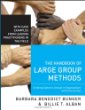
Review: The Handbook of Large Group Methods–Creating Systemic Change in Organizations and Communities

5 Star, Change & Innovation, Democracy

Larrge GroupSomething May Be Missing, But World-Class Original Merits Appreciation, March 19, 2008

Barbara Benedict Bunker

I agree with the reviewer who notes that something may be missing (other slices of large group imagination and so on) but what I see in this book is a 5 star original updating the first original work. I am also impressed by the manner in which the author-editors have engaged a total of 49 collaborators.

Despite its size this is an easy to read and appreciate book, and in my own limited experience within this literature, stands in a class by itself.

Key Point: Must recognize and engage ALL stakeholders, including those that may be “external” to “the system” but are either inputs or outputs or victims, etc.

Key Point: This literature has developed from the 1960's focus on the social psychology of organizations, to the social psychology of networks.

Key Point: Many Small Groups = a Large System (susceptible to whole systems methods) = Future Search and Shaping.

Key Point: Real time strategic change is now known as whole-scale change (I am reminded of Kirkpatrick Sale's seminal work, Human Scale

Five methods for planning the future:
+ Search Conference
+ Future Search
+ Whole-Scale Change
+ ICAA Strategic Planning Process
+ Appreciative Inquiry

This book was published before Jim Rough's pioneering work at the Center for Wise Democracy or Tom Atlee's Co-Intelligence Institute. See:
Society's Breakthrough!: Releasing Essential Wisdom and Virtue in All the People
The Tao of Democracy: Using Co-Intelligence to Create a World That Works for All

Large Group Methods (LGM) is very ably presented by the authors and collaborators as being ideal for working with diverse groups that have different cultures, structures, and priorities. I am reminded that we live in a world dominated by pyramidal organizations that still believe in top-down elite “command and control,” and this book is therefore a revolutionary handbook for enabling bottom-up sense-making and localized social resilience.

Key point: whereas the first book focused on methods, this book focuses on challenges, the challenges rather than the methods are driving the practices.

Here are my fly-leaf notes. Some books I read to learn in depth, others I read to learn what I do not know and persuade myself the authors are essential future consultants. This is such a book. In my lifetime I cannot learn what these 49 collaborators articulate so capably.

WIDELY-DISPERSED ORGANIZATIONS
+ Defining and holding the vision
+ Tolerance for Ambiguity
+ Relationship-building

WHOLE-SYSTEM ENGAGEMENT WITH COLLABORATIVE TECHNOLOGY
+ 10% technology, 90% human interaction
+ Higher quality goals and strategies result
+ Faster decision making
+ Rapid global stakeholder alignment
+ Enhanced organizational readiness for implementation
+ New model for governance as well as participation

ORGANIZATIONS IN CRISIS
+ Focus
+ Timeline
+ Openness
+ Involvement
+ Preferences stimulate engagement
+ Seek coherence
– Directional
– Relational
– Task
– Contextual

POLARIZED AND POLITICIZED ENVIRONMENTS
+ LSG methods are more respectful of differences
+ Trust & Transformation
+ Multiple competing interests accomodated
+ Clearing the air
+ Working with tensions
+ Seven Principles
– Focus on common ground
– Rationalize conflict
– Manage conflict
– Expand individuals' view of the situation (beyond egotistic)
– Acknowledge history of group conflict and feelings
– Manage public airing of differences
– Reduce hierarchy as much as possible

COMMUNITIES WITH DIVERSE INTEREST GROUPS
+ Different from organizations, less structured, more ambiguous
+ Need sponsorship and sustainability of effort
+ Need representative planning groups from across the community
+ Skilled facilitators are essential
+ Conclude by recognizing, recording, and tracking commitments

WORKING CROSS-CULTURALLY
+ Be aware of what you do not know
+ Relationship-oriented, NOT “USA Work Before Pleasure”
+ Respect desire to maintain distance and privacy
+ Pace of decisions can be very slow
+ Respect desire to be part of a collective voice instead of an individual on the spot
+ Four Worlds
– North = intellect
– South = feeling
– East = intuition
– West = pragmatic
+ Conversations are for:
– Relationships
– Possibilities
– Action

EMBEDDING NEW PATTERNS
+ Patience
+ Respect self-organizing tendencies
+ Keep it simple

The resource section contains three additional contributions. The middle one, on graphics, captured my attention.

GRAPHICS:
+ Engage participants
+ Focus and ground energy of group
+ Provide space where participants feel heard
+ Bridge cultures
+ Surface unheard voices
+ Provide summative and integrative function
+ Provide continuity and enhance sustainability

I have personally witnessed the effectiveness of graphics at Nexus for Change and Bioneers. It is a hugely impressive technique for eliciting, capturing, and visualizing the disparate contribution of many individual minds. Those who are able to execute this function are gifted.

My eye was also caught by Covision's fast feedback cycle (bottom to top):
+ Ambivalence
+ Awareness
+ Understanding
+ MUTUAL Understanding
+ Alignment
+ Buy In
+ Commitment

The book ends with a reading list (part of what persuaded me it is better to engage these talents than try to replicate their knowledge), short bios of the very impressive collection of 49 collaborators, and a first-class index.

This is an important book. See also:
The Change Handbook: The Definitive Resource on Today's Best Methods for Engaging Whole Systems
The World Cafe: Shaping Our Futures Through Conversations That Matter
How to Change the World: Social Entrepreneurs and the Power of New Ideas, Updated Edition
The Cultural Creatives: How 50 Million People Are Changing the World
One from Many: VISA and the Rise of Chaordic Organization
Collective Intelligence: Creating a Prosperous World at Peace

I am limited to ten links. See also Group Genius, Five Minds, Smart Mobs, Wisdom of the Crowds, Wealth of Networks, Revolutionary Wealth, Infinite Wealth, Wealth of Knowledge, Army of Davids, etc.
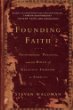

Review: Founding Faith–Providence, Politics, and the Birth of Religious Freedom in America

5 Star, America (Founders, Current Situation), Culture, Research, Democracy, Religion & Politics of Religion

Founding FaithExtraordinary–Elegant in Concise Inisights and a Holistic Appraisal, March 18, 2008

Steven Waldman

This is a very special book. The author has done an utterly superb job of original research and elegant concise representation of the nuances in belief, practice, and circumstances with respect to the matter of religion as confronted by the Founding Fathers, and especially Ben Franklin, John Adams, George Washington, Thomas Jefferson, and James Madison.

We learn early on that freedom of religion was originally designed to apply only at the federal level–only later, when the North pushed through the Fourteenth amendment, did this get grandfathered upon the states.

We learn throughout the book that the original evangelicals wanted separation of the church and state, and made common cause with the rationalists, both groups believing that individual liberty and freedom of personal conscience were the core values.

Midway through the book we are confronted by the author with the reality that the diversity of faiths existent today in the USA render meaningless and unachievable any thought of America being a Christian or even a Protestant nation–pluralism rules.

Religion was appreciated by the Founding Fathers for its generally good impact on civic morals. George Washington especially, in the Continental Army, demanded religious tolerance, authorized chaplains, encouraged officers and men to attend religious services, and generally communicated a sense that the American Revolution was a “holy war” with God standing firmly with the colonies against England and the Church of England.

The author provides concise but no less shocking accounts of the early religious wars in America, with torture and execution and jail being imposed on Quakers and Baptists, Protestants against Jews and Catholics.

We learn that both Jefferson and Franklin doubted divinity but respected Jesus for his moral code.

Adams considered Catholics the “whore of Babylon” and this resonates with more than one modern US evangelical who has endorsed John McCain.

We larn that the Great Awakening and the revivals spawned a general practice of questioning authority.

The author draws a clear connection between political liberty and religious freedom–the two were intertwined from the beginning of the revolutionary impulse.

George Washington was spiritual but not theological.

There are many gifted turns of phrase throughout the book. One that stayed with me: Jefferson saw God not as devine, but as a “brilliant wise reformer offering a benevolent code of morals.”

Madison held a dispassionate faith in contrast to the others. He also felt that one should err on the side of separation.

From page 192 the author lists and discuonts four liberal and four conservative falacies. Buy the book.

The conclusion is as elegant as the rest of the book: Separation is the root condition for nurturing the fullest possible religious diversity and vitality.

I put this book down with an intellectual, spiritual, and civic “WOW” in mind. Truly an extraordinary work, a very important work, a lovely piece of scholarship that is meaningful to every American and every immigrant would would be an American citizen.

Other books that are faith-related that I recommend:
God's Politics LP
The Left Hand of God: Taking Back Our Country from the Religious Right
Faith-Based Diplomacy: Trumping Realpolitik
The Complete Conversations with God (Boxed Set)
American Fascists: The Christian Right and the War On America
Tempting Faith: An Inside Story of Political Seduction
Dogs of God: Columbus, the Inquisition, and the Defeat of the Moors

DVDs I recommend:
Gandhi (Widescreen Two-Disc Special Edition)
Bonhoeffer
Tibet – Cry of the Snow Lion

Review: Sign of the Cross

4 Star, Crime (Organized, Transnational), Fiction, Religion & Politics of Religion
Amazon Page

Really great with disappointing ending, March 16, 2008

Chris Kuzneski

I agree with the thrust of the other reviewers, to wit, there is a lot of cleverness in this book, but ultimately it disappoints at the very end (GREAT book, the last page is a flop).

However, as I was desperate for a read at Fort Bragg this past week, and I read the book all the way through, it merits both a review and a passing comment.

First, the author has done his homework and also provides an epilog that points at several books I link to below. That raised him from three to four stars in my estimation. This was a great book right up to the end when it wimped out with a one-paragraph flop of a conclusion.

Second, I am persuaded that religions as now organized are a form of organized crime, and that we would all do better going with unitarian communitarian approaches in which we deal direct with God on a personal basis, and direct with one another on a community basis. With a handful of exceptions (Rabbi Lerner, Archbishop Tutu) most church “officials are in my view santimonious frauds, and any fictional book that helps portray that is inherently useful.

The author himself recommends the following books:
Holy Blood, Holy Grail Illustrated Edition: The Secret History of Jesus, the Shocking Legacy of the Grail
The Templar Revelation: Secret Guardians of the True Identity of Christ
Rosslyn: Guardian of the Secrets of the Holy Grail
Jesus and the Lost Goddess: The Secret Teachings of the Original Christians

Curiously, he does not mention The Da Vinci Code or the Gospel of St. Thomas (not a book, search for it).

I also recommend:
Founding Faith: Providence, Politics, and the Birth of Religious Freedom in America
The Left Hand of God: Taking Back Our Country from the Religious Right
American Fascists: The Christian Right and the War On America
DVD Gandhi (Widescreen Two-Disc Special Edition)

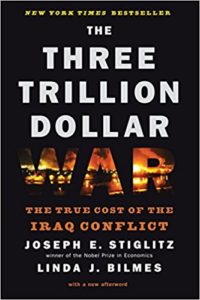
Review: The Three Trillion Dollar War–The True Cost of the Iraq Conflict

6 Star Top 10%, Congress (Failure, Reform), Corruption, Economics, Executive (Partisan Failure, Reform), Impeachment & Treason, Iraq, Peace, Poverty, & Middle Class, Politics, Priorities, Values, Ethics, Sustainable Evolution, War & Face of Battle
Amazon Page

March 15, 2008

Joseph Stiglitz and Linda Bilmes

This is one of those very rare endeavors that is a tour d'force on multiple fronts, and easy to read and understand to boot.

It is a down-to-earth, capably documented indictment of the Bush-Cheney Administration's malicious or delusional–take your pick–march to war on false premises.

As a policy “speaking truth to power” book; as an economic treatise, as an academic contribution to the public debate, and as a civic duty, this book is extraordinary.

Highlights that sparked my enthusiasm:

1) Does what no one else has done, properly calculates and projects the core cost of war–and the core neglect of the Bush-Cheney Administration in justifying, excusing, and concealing the true cost of war: it fully examines the costs of caring for returning veterans (which some may recall, return at a rate of 16 to 1 instead of the older 6 to 1 ratio of surviving wounded to dead on the battlefield).

2) Opens with a superb concise overview of the trade-off costs–what the cost of war could have bought in terms of education, infrastructure, housing, waging peace, etcetera. I am particularly taken with the authors' observation that the cost of 10 days of this war, $5 billion, is what we give to the entire continent of Africa in a year of assistance.

3) Fully examines how costs exploded–personnel costs, fuel costs, and costs of replacing equipment. The authors do NOT address two important factors:

+ Military Construction under this Administration has boomed. Every Command and base has received scores of new buildings, a complete face lift, EXCEPT for the WWII-era huts where those on the way to Iraq and Afghanistan are made to suffer for three months before they actually go to war.

+ The Services chose not to sacrifice ANY of their big programs, and this is a major reason why the cost of the war is off the charts–we are paying for BOTH three wars (AF, IQ, GWOT) AND the “business as usual” military acquisition program which is so totally broken that it is virtually impossible to “buy a ship” with any degree of economy or efficiency.

4) The authors excel at illuminating the faulty accounting, the subversion of the budget process, and they offer ten steps to correction that I will not list here, but are alone worth the price of the book. What they do not tell us is:

+ Congress rolled over and played dead, abdicating its Article 1 responsibilities–the Republicans as footsoldiers, the Democrats as doormats.

+ The Office of Management and Budget (OMB) has not done the “M” since the 1970's and is largely worthless today as a “trade-off manager” for the President.

5) I am blown away by the clear manner in which the authors' show the skyrocketing true cost up from a sliver of the “original estimate” out to a previously unimaginable 2.7 trillion (cost to US only, not rest of world). The interest cost in particular is mind-boggling.

6) They note that the costs the government does NOT pay include:

+ Loss of life and work potential for the private sector
+ Cost of seriously injured to society
+ Mental health costs and consequences
+ Quality of life impairment (I weep for the multiple amputees)
+ Family costs
+ Social costs
+ Homefront National Guard shortfalls needed for Katrina etc.

7) The authors go on to discuss the costs to other countries and to the globe, beginning with the refugees and the Iraqi economy. They do NOT mention what all US Army officers know, which is that Saddam Hussein ordered all the nuclear and chemical materials dumped into the river, and the mutations, deaths, and lost agricultural productivity downstream have yet to be calculated.

8) They touch on three delusions that John McCain and others use to demand that we “stay the course” and this also merits purchase of the book. I was in Viet-Nam from 1963-1967, and I well remember exactly the same baloney being put forth then. We ought to apologize to the Iraqi people, and instead of occupying the place, give them the billions they need to restructure after our devastating occupation.

They conclude the book with 18 recommended reforms, each very wise, and these I will list–the amplification provided by the authors in the book is stellar.

1. Wars should not be funded through “emergency” supplementals.
2. War funding should be linked to strategy reviews (and guys like Shinseki should kick morons like Wolfowitz down the steps of Capitol Hill when they contradict real experts and lie to Congress and the public)
3. Executive should create a comprehensive set of military accounts that include all Cabinet agency expenditures linked to any given war.
4. DoD should be required to present clean, auditable financial statements to Congress, for which SecDef and the CFO should be accountable (let us not forget that Rumsfeld was being grilled on the Hill on 10 September about the missing $2.3 trillion, and the missile that hit the Pentagon rather conveniently destroyed the computers containing the needed accounting information)
5. Executive and CBO should provide regular estimates of the micro- and macroeconomic costs of a military engagement (over time).
6. [simplified] Congress must be notified by any information controls that undermine the normal bureaucratic checks and balances on the flow of information.
7. [simplified] Congress should reduce [or forbid] reliance on contractors in wartime, and explicitly not allow their use for “security services, while ensuring all hidden costs (e.g. government insurance) are fully disclosed.
8. Neither the Guard nor the Reserve should be allowed to be used for more than one year unless it can be demonstrated the size of the active force cannot be increased.
9. [simplified] Current taxpayers should pay the cost of any war in their lifetime via a war surtax [rather than imposing debt on future generations]

These next reforms address the care of returning veterans:

10. Shift burden of proof for eligibility from veterans to government
11. Veteran's health care should be an entitlement, not for adjudication
12. Veteran's Benefit Trust Fund should be set up and “locked”
13. Guard and Reserve fighting overseas should be eligible for all applicable active duty entitlements commensurate with their active duty.
14. New office of advocacy should be established to represent veterans
15. Simplify the disability benefits claims process.
16. Restore medical benefits to Priority Group 8 (400,000 left out in the cold)
17. Harmonize the transition from military to veteran status so that it is truly seamless
18. Increase education benefits for veterans.

I put this book down totally impressed. Completely irrespective of one's political persuasion, strategic sagacity, or fiscal views, this book is a tri-fecta–a perfect objective combination of wise policy, sound economics, and moral civic representation.

BRAVO!

I also recommend:
DVD Why We Fight
DVD The Fog of War: Lessons from the Life of Robert S. McNamara
Wilson's Ghost: Reducing the Risk of Conflict, Killing, and Catastrophe in the 21st Century
A More Secure World: Our Shared Responsibility–Report of the Secretary-General's High-level Panel on Threats, Challenges and Change
The Unconquerable World: Power, Nonviolence, and the Will of the People
The Sorrows of Empire: Militarism, Secrecy, and the End of the Republic (The American Empire Project)
The Landscape of History: How Historians Map the Past
Fog Facts: Searching for Truth in the Land of Spin
Web of Deceit: The History of Western Complicity in Iraq, from Churchill to Kennedy to George W. Bush

Afterthought: David Walker, Comptroller General, has resigned from his 15-year appointment after failing to find adult attention within Congress when he briefed them this summer to the effect that the USA is “insolvent.” His word. Our government is broken beyond anyone's wildest imagination. [Note: Mr. Walker is now running the Peter G. Peterson Foundation, with the objective of providing to the public the factual budget information that Congress is ignoring, concealing, or manipulating. As Mr. Walker says, the public is now ahead of the politicians in its understanding, and all that remains is to flush all the incumbents down the toilet in 2008.

Review: Chasing the Flame–Sergio Vieira de Mello and the Fight to Save the World

4 Star, Asymmetric, Cyber, Hacking, Odd War, Atrocities & Genocide, Civil Society, Diplomacy, Disaster Relief, Insurgency & Revolution, Peace, Poverty, & Middle Class, United Nations & NGOs

Chasing FlamePrimary Research Well Done, Lacks Synthesis

Samantha Power

Book loses one star–perhaps unfairly–for not integrating secondary sources and using the *combination* of this extraordinary biography and the Brahimi Report and other core documents, to illuminate why the UN desperately needs a United Nations Open-Source Decision-Support Information Network (UNODIN).

+ Sergio Vieira de Mello (henceforth SVM) spent forty-years as a UN gad-fly, and his resume of tens of short assignments interspersed with a handful of 2-3 year assignments is a testimony to all that is wrong–not with him, but rather–with UN recruitment, training, continuity of operations, and lack of decision support.

+ The book opens with the observation that Paul Bremer (the ultimate US dilettante who set us back five to ten years while losing tens of billions of dollars) refused most of SVM's suggestions, especially on setting timelines (the same ideas General Garner adopted before he was fired by Dick Cheney and replaced with Bremer). We are told his last words were “Oh shit” and I somehow doubt that.

+ Vague mandates were a constant problem (see Peacekeeping Intelligence: Emerging Concepts for the Future for a full discussion of why the Brahimi Report still needs to be implemented, so the mandate can be informed, the force configured based on ground truth, etc.)

+ UN got into “governing” for the first time in Kosovo, and was completely ill-equipped for the task.

+ SVM reflected with the author that the world was too big to ignore but too complex to manage quickly or cheaply. Later in the book he is cited as recognizing that the UN is so dysfunctional that governments work around it (while foundations beg for effective focal points for their giving totaling $500B a year), but that governments are not prone to support long term interests in eradicating the ten high level threats as lain out in A More Secure World: Our Shared Responsibility–Report of the Secretary-General's High-level Panel on Threats, Challenges and Change

+ SVM was an impressive scholar. He finished first out of 198 at the Sorbonne in Philosophy. He did a Masters in moral philosophy (a tautological redundancy I would have thought) and then a doctoral in two levels, one in 1974 and one in 1985. It was here that he understood that governments are not adept at preventing crises nor as rebuilding failed societies.

– First level doctorate: “The Role of Philosophy in Contemporary History,” with key line “Not only has history ceased to feed philosophy, but philosophy no longer feeds history.”

– Second “Etat” doctorate: “Civitas Maxima; Origins, Foundations, and Philosophical and Practical Significance of the Supranational Concept.” Those wishing to learn more about the failure of the nation-state and the mistakes of Westphalia can begin with The Health of Nations: Society and Law beyond the State with Web of Deceit: The History of Western Complicity in Iraq, from Churchill to Kennedy to George W. Bush as the aperitif, and Betrayal of Trust: The Collapse of Global Public Health as the strong finish.

+ He composed his speeches on hotel note pads, observing that if he could not fit his argument to a hotel pad, he probably did not know what he was trying to say.

+ At this point I have a note, overall a very good use of biography to offer a “sense” of the UN, but lacking in synthesis, recommendations, or secondary sources.

+ Early in the book and throughout, one senses that Lebanon is the UN's modern birthplace, and where it has been permanently hospitalized if not euthanized.

+ SVM is quoted as saying that constructive change required “a synthesis of utopia and realism.” I urge the reader to visit Earth Intelligence Network to see this being implemented.

+ Pages 87-89 provide a marvelous condemnation of satellite surveillance as a panacea. SPOT Image which does ten meter or 1:50,000 multispectral imagery, identified land “suitable for resettlement.” Actual ground inspection failed the satellite findings, which did not see the land mines or the malarial mosquitoes.

+ SVM valued local staff, actively cultivated their inputs regardless of rank or function, and he is described as having a keen eye for symbolism.

+ We learn from this book that UN “teams” are assembled in an ad hoc fashion reflecting the whims and past good relations of the ubber boss, and I for one recognized what chaos and discontinuity this represents for all elements of the UN System.

+ We learn that when the UN arrives the cost of everything skyrockets, not least because UN employees get $140 a day, which in the specific instance of Cambodia or Kosovo, I forget, was the average ANNUAL income for any given person. I point to William Shawcross's unforgettable Deliver Us from Evil: Peacekeepers, Warlords and a World of Endless Conflict. Read my review of that book to see the relevance.

+ SVM proves clever in one instance, suggesting that smugglers not only be hired to get around a blockage against blankets, but that they be given dignity in the form of a UN consultant certificate. From many such accounts the author excels at painting a portrait of a complex and very intelligence UN official.

+ It is at this point that I check the index to discover that neither the word “information” nor the word “intelligence” nor the compound word “decision-support” appear.

+ The author cites SVM as saying that he was fed up with American bullying–I can certainly understand that–and that the hardest part of peacekeeping was internal peacekeeping (within the UN's dysfunctional family).

+ It is here I note: “At every turn: ‘We don't know; ‘We don't have the information; ‘We are too few to certify….'”

+ Then I see the golden nugget, on page 219, in his words: “We are so remarkably ill-informed. We go into a place, we have no intelligence, we don't understand the politics, and we can't identify the points of leverage. See the PKI book cited above, and also the forthcoming book, PEACE INTELLIGENCE: Assuring a Good Life for All, with a Foreword by MajGen Patrick Cammaert, who with this book and a decade of effort, got many at the UN to understand that Brahimi had it exactly right: intelligence is decision support using legal ethical open sources, and it has nothing to do with espionage. The raw book is at OSS.Net/Peace, just add the www. at the beginning.

+ The book continues with many vignettes where the UN elements are uninformed, therefore they do poor planning (lousy mandates, crummy force structures, no tactical combat charts for landing zones, etc) and hence they are often over-whelmed.

+ SVM saw a need for and proposed that the UN address the constant law enforcement gap by maintaining a roster of pre-trained and available multinational police, judges, lawyers, and prosecutors. See Policing the New World Disorder: Peace Operations and Public Security, my review includes notice of the fact that most UN “police,” e.g. those from Nigeria, can neither read nor drive.

+ We learn that SVM was acutely aware of how the UN's reputation for competence plummeted in the 1990's and how he learned in East Timor was that Legitimacy was Performance Based. As a side note, when East Timor went down I led one of 40 different efforts to answer the same three questions: 1) where are the bodies; 2) where can we land; and 3) who is is coming when, and what are they bringing. That was when I realized the need for a Multinational Decision-Support Center. On legitimacy, see The Search for Security: A U.S. Grand Strategy for the Twenty-First Century

+ The book comes to a close with several useful notes.

– Law and order gap a constant recurring theme.

– SVR saw Iraq as a peer nation meriting respect rather than patronizing from the US

– Excellent discussion of the days leading up to the attack on the UN headquarters; to the dismissal by the US of all UN requests for information or security, and the realization, too late after the attack on the Jordanian embassy, that the UN HQ was a “soft target.”

– KUDOS to LtCol John Curran, whose foresight and rehearsal to include identification of all relevant helicopter med-evac landing zones, ensured that no one died for lack of very rapid medical evacuation. I certainly hope the UN put him for a Legion of Merit, at the very least.

The Epilogue is bland.

+ UN is a broken system.

+ SVM said “the future is to be invented.”

+ Legitimacy matters

+ Spoilers must be engaged

+ Fearful people must be made more secure

+ Dignity is cornerstone of order

+ Outsiders must bring humility and patience.

Two other books (see also my many lists):
High Noon 20 Global Problems, 20 Years to Solve Them
Plan B 3.0: Mobilizing to Save Civilization, Third Edition

Review: Declaring Independence–The Beginning of the End of the Two-Party System

4 Star, Electoral Reform USA

Declaring IndependenceBest Available Primer for Third Party, March 9, 2008

Douglas Schoen

Edit of 1 July 2008 to change transpartisan to non-partisan, add flyleaf notes from second reading, and delete observations found wanting by Amazon visitors.

This is without question a very important book, a companion to both Spoiling for a Fight: Third-Party Politics in America and Running On Empty: How The Democratic and Republican Parties Are Bankrupting Our Future and What Americans Can Do About It. After a second reading, I now see this book as a primer in a class of its own and understand the author's background with greater appreciation.

One important comment: Both candidates are “keep the `bi-partisan' spoils system” alive candidates. They are of, by, and for the elites, and they are both out of touch with global reality such as depicted in A More Secure World: Our Shared Responsibility–Report of the Secretary-General's High-level Panel on Threats, Challenges and Change. Barack Obama is a Manchurian candidate, a Trilateral Commission “House Negro” (as his own pastors of color have put it); see Obama – The Postmodern Coup: Making of a Manchurian Candidate for details.

Following my fly-leaf notes are a few observations, cut in half from my earlier review.

+ 75% of American voters are dissatisfied with the way things are going and generally do not trust either the political parties or the federal government–misery is at an all time high as is distrust
+ Voters “crave” real solutions
+ The time is right for a third party ticket, and the NYC race of Mayor Bloomberg in 2005 is the model
+ 3 out of 5 voters dislike BOTH parties
+ 61% feel they are not living the American dream
+ Being “on message” does not cut it–interaction and authentic tough focus on issues is demanded
+ Non-partisan solutions, with common sense, addressing tough problems, are demanded
+ Democracy in a crisis because the system itself lacks credibility (both political and federal)
+ Governor Schwarzenegger is on the right track
+ Half of all registered voters thing a 3rd party is a good idea
+ Restless & Anxious Moderates (RAM) are the swing vote
+ Fiscla discipline with a balanced budget, and being in touch with voter values, essential
+ Top two reasons people are Independents are both ANTI-PARTY: vote issues and candidate, not party
+ Parties are polarized, people are not
+ Need new fresh blood, open minds
+ 3rd parties are *not* odd man out, have a rich history
+ Ballot access is critical, needs 800,000 signatures
+ If not already done for the following states by today (1 July 2008), they are off the books: Colorado, Massachusetts, Oregon, Maine, Pennsylovania, Delaware (because of registration deadlines)
+ Internet blogging, YouTube, and texting (as well as ads to cell phones) have changed the dynamic
+ Democratic dirty tricks against Nader detailed (I am personally aghast–like Rove on McCain)
+ Nonpartisan Citizens Union could be a group to watch (see also Reuniting America)
+ Citing David Colarusso to Newsweek: “Web 2.0 has the potential to actually compel candidates to be genuine (page 141)
+ Independent must craft authentic grassroots citizen-based movement, field candidates for governor
+ Colin Powell is strongest candidate (author may not know Mrs. Powell has demanded, and received, a promise never to run), followed by Mike Bloomberg (I favor Powell back as Secretary of State, with his integrity this time)
+ Win or lose, a solid Independent candidacy will be able to influence the debate as well as the election (in the Electoral College, or in the House of Representatives) and lead a body of opinion thereafter.

FACT: Dick Cheney hijacked the White House and no one is willing to hold him accountable. BOTH the Democratic floormats and the Republican foot soldiers should be run out of office. I have no wish to impeach Dick Cheney. He simply needs to be removed from office and never again allowed to betray the public trust.

Sidenote:
REFS:
Vice: Dick Cheney and the Hijacking of the American Presidency
The One Percent Doctrine: Deep Inside America's Pursuit of Its Enemies Since 9/11

FACT: Congress abdicated its Article 1 responsibilities, a sin for which Al Gore especially culpable in failing to support the McKinney House resolution to re-do Florida. Every one of these folks merits an independent challenge.

REFS:
The Broken Branch: How Congress Is Failing America and How to Get It Back on Track (Institutions of American Democracy)
Breach of Trust: How Washington Turns Outsiders into Insiders
…and…
Society's Breakthrough!: Releasing Essential Wisdom and Virtue in All the People
The Tao of Democracy: Using Co-Intelligence to Create a World That Works for All

In my view, Mike Bloomberg is the only truly credible independent, see my review of his own book, Bloomberg by Bloomberg. If I had one minute with Mike Bloomberg, this is what I would say:

1) Win or lose, you can *be* the catalyst for creating an “open books” alternative government at all levels

2) $20 each from 25 million Americans buys our government back, make it a subscription and we can migrate the new system to the rest of the world

3) A nonpartisan coalition sunshine cabinet, each person leading thousands of citizen wisdom councils focused on each Cabinet's respective areas of concern, will change the debate and inform America overnight

4) A balanced budget online, where everyone can debate and then see aggregated differences by zip code and party affiliation (anonymous otherwise) will enable strong leadership.

That's it. All we need is a really rich guy willing to stake the new system (Perot did not), be authentic, and LISTEN.Declaring Independence

Review: Biocapital–The Constitution of Postgenomic Life

5 Star, Capitalism (Good & Bad), Change & Innovation, Country/Regional, Economics, Environment (Solutions), Nature, Diet, Memetics, Design, Survival & Sustainment, Values, Ethics, Sustainable Evolution

Amazon Page

Kaushik Sunder Rajan

5 of 5 stars.Ā  Treasure Trove that Ends with USA-India Axis of Good

March 9, 2008

I've been struggling with this book, published in 2006, for months. Today I realized I could combine my notes with a handful of key index entries to create a more useful synthesis. I end with ten other books I have reviewed that augment this one.

My first impression of the book was soured by the absence of any mention of green chemistry, ecological economics, or ecology of commerce. I've known about citation analysis clusters since 1970, but I grow increasingly frustrated by the fragmentation of knowledge and the constantly growing barriers between schools of thought within political-legal, socio-economic, ideo-cultural, techno-demographic, and natural-geographic.

An important early distinction is between industrial-cost for profit capitalism and commercial speculative capitalism. Toward the end of the book I finally encountered the author's emphasis on national priorities, and I for one condemn all seeds that do not reproduce naturally. In agriculture, economy, energy, health, my bottom line is that anything that retards the eradication of hunger, poverty, sustainment, or individual and social health gains, is inherent against the laws of God and man.

Early notes include:

+ Information science plays huge role in genomics. I am reminded of the convergence in the 1990's among cognitive and information science, nano-technology, bio-technology, and earth science. I have a later note, “life sciences becoming information sciences.”

+ Although E. O. Wilson is not cited, the author is on a clear convergence in taking about how valuation is a vital aspect of getting it right. I think of India as IT rich and farm poor–they are allowing the aquifers to drop a meter a year because farmers can sell a tanker-full of water for $4, which is insane, and 2,000 farmers a year commit suicide in the face of drought and debt. Valuation is a critical national function.

+ This work falls within a new category of reading that I have been increasingly impressed by, “ethnographic,” or the study of localities and particularities to map global system that is not generic, homogenized, or blurred..

+ As the author does not cite Paul Hawken or Herman Daly, I draw the distinction between the author's focus on “natural capitalism” as of the privatization of biocapital and the patenting of gnomes, and the purer definition, of natural capitalism as one that understands the true costs over the lifetime of the materials being used including water (4000 liters of water Bangladesh cannot afford to export in a designer cotton shirt), and that makes the case for going green to create gold.

+ The author views biocapital as a combination of circuits of land, labor, and value; and biopolitics.

+ Life sciences are being “overdetermined” by speculative capitalism. I agree, and apart from India's symbiotic relationship with the US, I would like to see India develop a special relationship with Cuba and with the global academic community to take patents away from speculators and carpet bagging profiteers with no morality.

+ Technoscience changing laws (I am reminded that Google is now a suprnational entity that no government understands or regulates, something similar is happening in technoscience where Recombinant DNA technology is undermining the future of life.

+ Political economy is an epistemology.

+ Life, labor, & language–biology, political economy, philology central to the knowledge of and management of humanity.

+ VERY IMPORTANT: Game requires playing in FUTURE in order to stimulate and guide present. Visit Earth Intelligence Network to read about Medard Gabel's EarthGame that for $2M a year can offer this up across the ten threats, twelve policies, and eight challengers, with embedded budgets of all organizations (governments, corporations, international and non-governmental, and charitable foundations).

+ Market valuation buries ethics, defines “allowable” ethics. Author touches, and I really respect this, on the moral value of information. Later on in the book the author cites Michael Fischer on “ethical plateaus.”

+ The author addresses the “social lives” of biological materials and biological information (note: I violently oppose Google's biomedical information initiative–we may as well become their zombies). In this vein, “ownership” of any of the bio-information constrains seamless sharing, enhancement, and I would add privacy. [Easy answer: CISCO AON on individual recyclable server-routers so individuals control all the information–medical, financial, etc. at their point of creation.] If CISCO will not do this, then India needs to.

+ Useful detailed discussion of conflicts & costs of privatized information versus information as a public good. The author makes case for blurring of lines and avoidance of either/or binary approach. I've already solved this: information in the aggregate should be public, while individual instances are private. Simple example: average spare parts costs can be derived from the aggregate while protecting the individual prices paid by any one of the contributors. AON, not Google, is the key.

+ The author emphasizes that the genome data demands robust detailed medical history to be valued. He contrasts India bio-ethics versus US. Sidenote: computational ethics are just as crucial.

+ I like, very much, the India public sector laboratories. I firmly believe that all health and education should be free, a public good similar to public safety.

+ Biocapital is complicated by context, distance, culture, financial, and technical variances among the competing parties.

+ I credit the author with this but I may have drawn it out: if we now see the value of collective intelligence, why are we having so much trouble seeing the value of collective intellectual property (the Creative Commons not-with-standing)?

+ Biopolitics centers of life (citing Foucault), accounting for and taking care of the population at large are central.

+ Political ecologies at all levels, gifting versus indebtedness, unions as a factor. UNIONS as a major factor. Vision fundamental. Direct links among ideology, capital, and locality.

+ Excluded populations (e.g. HIV not eligible…) can cause them to be consumed populations.

This is a deep complicated book hard for the lay reader (which I am), so to do it justice, I am resorting for the first time to a short list of key terms from the index that more represent the content:

belief systems
bioethical issues
biopolitics
biotechnology industry
capitalism, biocapital as new phase
diseases and illnesses
drug development marketplace
economic issues, multiple forms of currency
ethnographic research
genomics bioethics and industry
global market terrains
hype, capitalism
information ownership
intellectual property
life sciences
market value and non-market value
patient-in-waiting
populations, classification of
production issues
promissory biocapitalist futures
public domain issues
research issues
social issues
speed issues
temporality issues
therapeutic development
value access to
vision, commercial value

This is a pretty spectacular book, and someone did a great job across the board in presenting it.

Other books I would recommend:
Ecological Economics: Principles And Applications
The Ecology of Commerce
The Future of Life
Plan B 3.0: Mobilizing to Save Civilization, Third Edition
The leadership of civilization building: Administrative and civilization theory, symbolic dialogue, and citizen skills for the 21st century
How to Change the World: Social Entrepreneurs and the Power of New Ideas, Updated Edition
The Wealth of Networks: How Social Production Transforms Markets and Freedom
Society's Breakthrough!: Releasing Essential Wisdom and Virtue in All the People
Collective Intelligence: Creating a Prosperous World at Peace

Vote and/or Comment on Review
noble gold