So many good reviews, just adding my perspecitve and recommendaitions
September 9, 2007
Liam Neeson
Of the hundreds of DVD's that I own, this is the only one that has a deep moral legitimacy and a deep moral message. There are many other DVDs about good people like Gandhi, good efforts like Peace One Day, about herorism and so on, but this one DVD is my most treasured and the one that I watch at least twice a year.
2. Terrorism has been the logical asymmetric response of the poor and down-trodden since time immemorial. The author points out the hypocrisy of Israel, which was founded on the basis of terrorism against the people, claiming that terrorism targets non-combatants, while we ignore the fact that the US Air Force bombs entire villages of non-combatants without a second thought.
3. Class war produces the conditions that spawn successful revolutions, which the author is careful to define as those revolutions that have or can acquire popular support. The corruption at the top, and the poverty at the bottom, eventually collide.
4. Guns are the least important tool of the guerrilla (and all of the guns are provided by the occupying power or the illegitimate military). Guerilla operations are a state of mind, a spreading awareness of the possibilities of ultimate invincibility, firmly founded in root legitimacy.
5. The author points out the two fallacies to avoid, both heavily characteristic of current US operations in Iraq:
a. Revolutions and insurgency are NOT a conspiracy, e.g. Iran may be aiding the insurgency in Iraq, but at root the insurgency is home grown and will continue until the US is driven out.
6. The author is a gifted writer. He points out that conventional armies are burdened by a dependence on bases and “things” (vehicles, weapons systems) while the guerilla is “liberated” by their poverty, able to move past roadblocks by simply walking in the jungle 100 meters to the left or right. Conventional forces focus on patrols and real estate. The guerilla focuses on the message and the public.
7. The guerilla is a voice, a message. The fact that the guerilla exists means that the political process has FAILOED. The primary asset the guerilla has is not a weapon, but their relationship with the community of people within which they survive.
8. The author believes that in the era of globalization, the laboring class has been empowered but does not fully realize its power to carry out a legal general strike, to demand labor unions, to not consume products whose “true cost” is onerous.
9. The guerilla is militarily weak but politically strong and economically dangerous. I continue to marvel at the idiocy of Dick Cheney in seeking to capture Iraq's oil and intimidate Iran (Persia) while ignoring the fact that ten oil pumping stations in Nigeria, Saudi Arabia, and Venezuela, if blown up, can take oil to $200 a barrel overnight.
10. Three conditions are cited as being necessary for a revolution:
a. No other alternative.
b. Cause is compelling.
c. Possibility of success.
11. A general strike by the public can follow an armed insurrection, or stand on its own as a clear signal to the government that it has lost its legitimacy and authority. I cannot help but feel that the United States of America is today badly in need of a legal ethical general strike by the public that continues until Dick Cheney resigns from office and Congress declares an end to our unilateral militarism around the world.
12. The essence of guerilla warfare is to take the profit out of oppression and occupation (colonialism, corruption by corporations) with a clever strategy that is clearly and publicly enunciated, and popular as well.
13. Time, space, and will favor the people over any occupying force. Occupiers lose twice:
a. Their presence provokes anger in the people.
b. They supply the insurgents with all the arms, ammunition, food, and other supplies needed (this is one of two dirty little secrets of the US occupation of Iraq; the other is that we have returned 75,000 of our honorable men and women to America as multiple amputees who are not being well served by the Veteran's Administration).
14. US *talks* about hearts and minds but *spends* only on death and destruction. We are still not serious about global stabilization & reconstruction, humanitarian assistance & disaster relief.
As I put the book down on the flight back from Tampa, I thought to myself that this author is completely correct in pointing out that terrorism is of, by, and for the indigenous people, and it is neither deviant nor apart from the fabric of the society it seeks to save. The author also points out that terrorism is vastly less costly than conventional war in every sense of the word: dead, wounded, collateral damage, destruction of infrastructure, and financial as well as moral cost. The author makes it quite clear that the USA is in *denial* when if fails to understand that an insurgency is a civil war, not a conspiracy or communist or terrorist inspired “conspiracy.”
The latter half of the book provides a series of truly absorbing and sensible “lessons learned:”
1. Algeria taught us that urban areas can be occupied and dominated by torture, but at a cost so huge that the occupying government is weakened politically and economically. Cheney remains in denial on this point.
2. The three “failures” of indigenous revolution in the short term:
a. Philippines, government combined social work with amnesty and land grants that took away the basis for revolution among the Huks.
b. Malaysia, the insurgents lacked a rural base with its own food production capability, and could be isolated.
c. Greece, the guerillas lost contact with the public and lost militarily by engaging conventionally.
The author cites Sun Tzu in pointing out that there is nothing “modern” about terrorism or warfare. It is all based on deception and competing claims to legitimacy. He lists six conditions for a successful revolution in his conclusion:
1. Valid popular grievances
2. Sharp social divisions (or ethnic)
3. Unsound or stagnant economy
4. Oppressive or illegitimate government
5. Moral leadership within the guerilla movement
6. A foundation on the truth rather than lies
For the 27 secessionist movements in America, the author notes as have others that anytime an empire is engaged in a far-off debilitating military campaign, internal secessions are easier to accomplish.
In my view, the USA is clearly vulnerable to precision sabotage of the kind that Peter Black, Winn Schwartau, and I discussion in the early 1990's. We were ignored, and today our infrastructure is ten times to a hundred times more likely to collapse from its own decrepitude that from “enemy” action. The two “mainstream” political parties are so corrupt they have run American into the ground (Cf. Running on Empty: How the Democratic and Republican Parties Are Bankrupting Our Future and What Americans Can Do About It
I may never be Director of National Intelligence, since I am predisposed to tell the truth, the whole truth, and that is best gotten with the 96% of the information that the secret world refuses to notice. However, if I were, we would have three objectives and three objectives only:
1. Terminating all dictators through buy out plans they cannot refuse.
2. Ending all corruption by any government, organization, or individual.
3. Providing free connectivity and free on demand education in all languages to all people, with hundreds of millions of volunteer tutors able to education the five billion poor “one cell call at a time.”
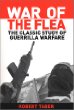
I normally shy away from the platitudes and punditry of self-help and business “rules, tools, & tips”, but I saw this book in the uniform sales shop that serves the US Special Operations Command,right next to War of the Flea: The Classic Study of Guerrilla Warfare, and I could not resist.
This little volume will join The Astonished Universe, a French-English side by side poetry book that celebrates life, in my travel briefcase.
I write this sitting by the window of an old estate in Provance, France, while attending a retreat with four others active in the Collective Intelligence movement. I bought it primarily because it was on sale in the bookstore that serves the U.S. Special Operations Command.
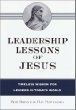
Written by a sports writer and producer in partnership with a pastor, it provides the reader with 52 segments, each consisting of a quotation from scripture, and then a two page double-spaced discussion. I found this book over-all to be thoughtful and practical and not at all “preachy.”
The authors immediately drew me in, non-practicing believer that I am, by stating up front that this little guide was a means of discovering and/or reintroducing Jesus to your life. That did it for me, I'm ready.
The book opens with an emphasis on truth as the most important element of both faith and performance, then surprised me by emphasizing that how a leader is perceived is something the leader can never hear too much of.
The authors are at one with Peter Drucker is saying that the best lives are those in which the person is deeply enmeshed in a “calling” and striving to please and serve God while being faithful to their own talents and visions, accountable to others, but never subservient to others.
They distinguish between management, which pays people to follow orders, and leadership, which inspires others to work selflessly in harmony with others. They emphasize that leadership is personal, not at all removed or elitist. One segment stresses the importance of breaking bread with those you seek to lead. At this retreat that I am on, the food–vegetarian and the basics–bread, oil, fruit–is being treated as a spiritual celebration in its own right, so I would add that it is not just breaking bread, but doing so in communion with the Earth that gave us the food, and with one another who seek to save the Earth for future generations.
Among the many bullets that I noted:
* Leaders are disciplined in time management
* Leaders use prayer as reflection
* Leaders are teachers, and can teach under all circumstances including hostile
* Enduring leaders are compassionate
* Diversity is good for team building
* Core values are enduring, but in practice adaptation is essential
* Speak to the masses but nurture an inner core of future leaders
* Understand the importance of strategic withdrawals and pauses
* Setting for major announcements or intense dialogs are important–airport hotels are pedestrian, retreats with memorable environments enhance and nurture the intentions and goals
* Chapter 23 was special for me, after 20 years of dealing with opponents who refused to acknowledge the importance of open sources of information that could be shared: the chapter tells us that visionaries *will* be considered lunatic, even within their own families. This is precisely what happened to me in 1992 when I published an article in Whole Earth Review on the need to create a new national intelligence paradigm that was ethical, ecological, evolutionary, and based on open sources of information instead of stolen secrets. The chapter tells us that the price of leadership (whether direct, of men, or indirect, of ideas) is the willingness to bear with persistent pain and rejection in the face of disbelief and constant attack.
* In a separate chapter, the authors tell us that many will know *of* the leader, but very few will really know who the leader truly is.
* Expect to be unappreciated, but avoid sharing too much too soon.
* Know when to move on, and prepare your successors, encouraging them to move into the world “two by two” so they can reinforce one another and learn from one another.
The book ends with the observation that to be strong is to be in faith, and that in praising God, we should be all we can be within his larger framework.
There are many other lessons and anecdotes in this volume, and I recommend it highly.
Military Honor and Cultural Understanding in Face of Political Treachery
September 7, 2007
Gene Hackman
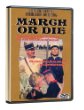
This is one of the movies I turn to when I am in dispair over the nakedly amoral and utterly treasonous behavior of Dick Cheney. Gene Hackman excels in this movie made very early in his career, as an honorable Foreign Legion officer whose men respect him, an officer given what today we would recognize as an illegal order, to go into Morocco and steal antiquities.
The end result is that the mission unites the Arab tribes, something no Arab leader could every have done on their own. I am reminded of how the lies and misbehavior of the Cheney-Bush Administration have united the Islamic tribes while emboldening transnational criminal gangs and indigenous poor who now see that the global class war, corruption, dictators that we love (42 out of 44 anyway), are all imperial, evil, and not at all worthy of public support.
Nobel-Level Introduction, Can Be Read at Advanced Level
September 6, 2007
Manfred Stansfield
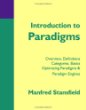
In my view, this is a Nobel Peace Prize level of reflection that demands broad digestion. This is USEFUL.
I was immediately impressed by the early portion of the book, at which point I went to the back and reviewed the bibliography, which is an impressive mix of philosophical, scientific, documented conspiracy, and systems thinking.
The author takes the trouble to describe his bouncing around different school systems, which is a completely credible way of explaining how he came early on to understand that most teachers are teaching belief rather than reality.
The book provides an easily-read clear-cut solution for eradicating the ten high-level threats identified by the United Nations (LtGen Dr. Brent Scowcroft representing the USA). This book is a perfect complement to [Collapse of Complex Societies]. I am especially taken with how the author shows paradigms in all their relevance to the human condition and to optimizing society.
There are 23 figures, all of them helpful to the architects of the EarthGame(tm) who wish to focus on reality including the charting of belief systems as they differ from reality.
The author teaches us that paradigms, and the ability to think in paradigmatic terms, are essential to:
The purpose of paradigms is to help human manipulate (sic) the environment. The author states and only one in ten thousand understands what a paradigm is, and laments the reality that when a paradigm in power (e.g. the neoconservative paradigm) does not parallel reality, humanity suffers in catastrophic terms.
The author points out that the prevailing Machiavellian paradigm of exploiting people continues to displace the more appropriate non-violent collaborative community paradigms of Gandhi, Martin Luther King, and Nelson Mandela.
His list of failing paradigms is extraordinary; in the comments section I provide a link to my own Op-Ed on this matter written before I bought this book. He specifies:
* Education
* Employment
* National Debt
* Environment
* Food Supply
* Sick Care
* Exclusive versus Inclusive Society
* Failure of the Communist Model (allows immoral capitalism to avoid social costs)
* Event manipulation, disinformation, and cover-up.
Separately the author discusses the failure of the US financial paradigm of debt, arms subsidies, and foreign adventurism that are all unaffordable and unsustainable. The Comptroller General of the USA agrees with him, and recently informed Congress that the USA is officially “insolvent.” I am NOT making this up.
The author describes paradigms as essential sense-making, pattern detecting, anomaly isolating frames of reference, and tells us there are four categories:
1) Action
2) Communication
3) Information
4) Societal
Paradigms, the author tells us, consist of factors and relationships and are best maintained by:
1) Optimizing the Truth Quotient
2) Keeping it current
3) Eliminating bias
4) Retiring & replacing as needed
Only paradigmatic thinking (along with reading, writing, mathematics, and ethics) should be taught. People need to learn how to take a “360° look” at any issue, and to recognize competing paradigms and belief systems.
The author tells us that today's real battle is not over or between paradigms, but among the larger existential challenges to Humanity:
1) Truth versus Deception
2) Survival versus Extinction
3) Enlightenment versus Exploitation
4) Living the Dream versus the Nightmare of Subsistence
5) Doing Your Thing versus Doing Someone Else's Thing
Human integrate four distinct forms of knowing and doing:
1) Body
2) Mind
3) Spirit
4) Emotion
Perceptions are biases by
1) Dimensionality
2) Paradigm filters
3) Perceptors
4) Vested interests
Efficacy is the only proof of a paradigm. The following are NOT “proof” of a paradigm: authority, legislation, logic, conviction, eloquence, poetry, rhetoric, polemics, magic tricks, ridicule, ad hominum attacks, cartoons, art, theatrics, hysteria, religion, terrorism, extortion, monopoly, fanaticism, science, law suits, nor mathematics.
Four primary paradigms that are in competition but can also be blended:
1) Authoritarian
2) Scientist
3) Empiricist (engineer that “does”)
4) New Age
The author states that children have a right to be taught the truth and be taught unbiased paradigms.
The author ends on an optimistic note, but states that at this time more information is being withheld (unlawfully) from citizens, than is available to citizens. Quite right.
He ends by defining how to optimize society, suggesting that only four basic skills are needed: reading & writing; mathematics; computer & communications technology end-user skill; and the ability to recognize & evaluate paradigms. He lists 12 occupational categories of importance to a society:
1) Food producer
2) Shelter builder
3) Species reproducer/maintainer
4) Dimensionality increaser
5) Paradigm teacher
6) Environmental preserver
7) Artifact builder
8) External societal defender
9) Internal societal greaser
10) Trader
11) Entertainer
12) Personal fixer (in his view, an honest society with open books and proper health care would eliminate the need for most doctors, lawyers, and accountants).
This is a very serious book by a very serious intellect. It could have “break-out” consequences as we move forward with the EarthGame(tm) and I certainly commend the book to anyone seeking to reflect on how we can displace all the liars and thieves that we have elected or allowed to run corporations that are publicly traded.
State Terrorism Vastly Worse, Individual Terrorism Logical
September 6, 2007
Matthew Carr
This is a superb book that should be read in conjunction with Dying to Win: The Strategic Logic of Suicide Terrorism. Terrorism is nothing more nor less than individual and small group asymmetric violence that breaks the state's monopoly on violence.
THe author is to be commended for stating in blunt and ably-documented terms that terrorism is a logical asymmetric response and it is not senseless nor cowardly but rather coherent and calculated.
I share the author's view that most Western analysts of terrorism are witness, uninformed, and devoid of historical, cultural, or contextual analytic skills and knowledge. Most on the right, including the Zionists, push their ideological beliefs rather than the empirical evidence. As the author notes, Israel has genocided the Palestinians and out-terrorized their opponents time and again (while also attacking the USS Liberty, a war crime that will never be forgotten by our men and women in uniform).
The author ends by calling the US Government, essential, a persistent liar, with hollow propaganda and specious claims that–in combination with the destruction of civil liberties–do vastly more damage to the national fabric than any small band of terrorists might. As one reviewer notes, what 19 alleged terrorists have done is nothing compared to the state terror that Bush-Cheney have unleashed on Iraq, Iran, around the world in secret renditions and secret torture, and of course here at home, where a “state of fear” and grotesque abuses of executive privilege are used to avoid justice and liberty for all, reducing both dignity and accountability.
I've read one other book that led me to conclude that I had to read this one, both in relation to what is now known about the Warren Commission Report. I consider these important because precisely the same kind of cover-up happened with the 9-11 Commission, and I strongly believe that Dick Cheney should be impeached and then indicted along with Rudy Gulliani and Larry Silverstein and Donald Rumsfeld for the murder of thousands by controlled demolitions and a missile into the Pentagon that destroyed all the computers needed to understand the missing 2.3 trillion that Donald Rumsfeld was being grilled on by Congresswoman McKinney on 10 September.
This is a phenomenal piece of work that makes superb use of social network analysis (who knows who) to connect the dots.
The bottom line: Kennedy was killed by Cuban exiles who set Oswald up as a patsy. Oswald was at his usual lunchroom place in the library where he had reason to be, and the Chief of Police of Dallas is on record as saying they could never connect Oswald to either the window from which the shots were a llegedly fired, or the gun that was claimed to be the assassination weapon. The first officer to enter the building minutes after the shooting placed Osxwald at his usual place in the lunchroom, and Oswald tested negative for gunpowder residue.
Oswald was impersonated in Mexico City, including a staged call to the KGB specialist in assassination, and other trails were left with the intent of proving that Castro had Kennedy assassinated, and hoping to both punish Kennedy for the Bay of Pigs betrayal and for cracking down on Cuban exile missions at the same time that he was authorizing 13 sabotage missions to Cuba.
The evidence is compelling. Robert Kennedy was worried about Castro retaliating against him and his brother. It is now clear that CIA training of Cubans to assassinate Castro was in fact turned against Kennedy.
Three CIA employees are featured: David Philipps who specialized in the big lie; E. Howard Hunt, and David Morales, Operations Chief of JMWAVE under Ted Shackley.
The conspiracy to point the finger at Castro failed, but the true assasins were allowed to go undiscovered because Lyndon Johnson and the Presidents physician began am immediate cover-up, as did the FBI, CIA, and the Secret Service.
The book is compelling in demonstrating that ample warnings had been received by the Secret Service, to the point that the President was personally briefed by Bobby Kennedy, but JFK went ot his death on his own volition–he blew off the warnings.
The cover-ups by the three agencies bear a stricking resemblance to the cover-up of the Oklahmoa City bombing, where unexploded thermite bombs were found on some pillars, and the “loner” theory simply does not stand up. Similarly, Cheney, Gulliani, and Silverstein pre-arranged for the scooping and dumping of the evidence of controlled demolitions from 9-11, and Rumsfeld covered up the fact that a missile, not an airplane was targetted on the Pentagon by our own treasoous officers willing to obey an illegal order and murder their own for the Zionist-NeoCon cause, while also destroying the computers holding evidence of where the “lost 2.3 trillion dollars had gone.
The exiles boasted privately of having been promised additional new funding by the mafia, including the Jewish mafia with casino interests in Cuba, provided they took care of Kennedy and incited an invasion of Cuba.
It is not clear from the book if other US leaders sanctioned the killing. I am inclined to think not. Hoover had all the blackmail material he needed to keep his job. Johnson does not come into the picture until after t he fact, when it became clear that if Bobby Baker talked, Johnson would go to jail for blatant contacts with organized crime and for blatant use of his office to obtain bribes from military-industrial corporations.
In this book Ruby is a patsy paid to murder Oswald when Oswald is arrested and unable to make the theater meeting where he would probably have been subdued and transported to Cuba or Mexico to die under circumstances incriminating Castro. Ruby was probably told he would be freed or pardoned, and money was his primary motivation.
A series of key witnesses who were willing to talk were murdered, and Johnson personally immunized FBI agent Regis Kennedy, Oswald's handler, to keep him from talking.
Admiral Burkley, JFK's personal physician, handicapped and stopped most of the atopsy process, and concealed and manipulated evidence to support the lone gunman theory. The Navy hospital staff received a gag order similar to the one given the crew of the USS Liberty after they were deliberatedly attacked by Israel and many of them murdered by our so-called ally.
There are several take-away bottom lines relevant to today, as Dick Cheney seeks to attack Iran in the same illegal way he ordered the attack on Iraq using lies and his secret authority:
1) We cannot trust our elected politicians. They lie to us.
2) We cannot trust the FBI, CIA, or Secret Service. They lie to us.
3) We cannot trust government commissions, neither executive nor legislative, they are exercises in deception and lie to us.
The author is meticulous is documenting the long list of unsung heros whose personal research has over time brought out the truth. Similarly, I am quite certain that within five years Cheney, all the neocons, Gulliani, and Silverstein will be meticulously impeached and indicted and covicted in the public eye. They may escape to Dubai, but the truth will be known.
The book documents Johnson's offer of a $1 million bribe to Bobby Baker to keep quiet and allow the investigation to go down the path that Johnson orchestrated, of a Warren Commission brow-beaten into validating an FBI conclusion that was known to be false by all conceerned.
The books comes with great note and appendices. The author has made superb use of telephone records, diaries, and known social and professional connections. The only thing I missed from this was a two page diagram of the network as it is described.
The book is also exceptional for clearly identifying additional paths for further investigation.
I put the book down with the strong feeling that We the People need to reject every sitting member of Congress and every current candidate for President. We need to elect a transpartisan Executive team with a Cabinet announced beforehand that also publishes a balanced sustainable budget before election day, and we need to demand that every piece of legilsation henceforth be published in full one week prior to its being voted on, with no secret earmarks. The military-industrial complex is not our enemy–they are simply doing what they have been incentivized to do. Our enemy is the complete corruption of the Democratic and Republican parties, the complete corruption of our election system, and the lack of transparency on how all taxpayer funds are spent. We can fix this. A good start would be the redirection of half the Pentagon budget toward waging peace, ending our ties with all 42 of the dictators Dick Cheney embraces with such fervor, and the elimination of two thirds of all existing secret programs, using the funds instead to stand up a Multinational Information Sharing Activity that supports stabilization, reconstruction, and peacekeeping everywhere, and completely free connectivity for the five billion poor to a global network of 100 million volunteer tutors who can teach the five billion “one cell call at a time.”

 So many good reviews, just adding my perspecitve and recommendaitions