Review: Nudge–Improving Decisions About Health, Wealth, and Happiness

5 Star, Communications, Decision-Making & Decision-Support

NudgeInnovative, Helpful, Relevant: Opening Shot in Science of Choice, March 26, 2008

Richard H. Thaler

This is one of several books on decision-making and choice I have ordered, the first to arrive. I had no idea when I ordered it, based on the title, that the first author was Distinguished Professor of Behavioral Science and Economics as well as the Director of the Center for Decision Research at the University of Chicago, and the second author was Cass Sunstein, one of three lawyers I would not automatically sentence to exile.

I really liked this book. It can be read fast or slow. I went fast, if one accepts the authors' propositions at face value, the details are not as necessary. These guys are heavy hitters with a very serious case to present. Although I did not see references to predecessors in this area, such as Herb Simon's “satisficing,” the one word I remember from my MPA finished in 1987, the bibliography and notes are excellent and I have the feeling the authors and their research assistants have been thorough with the recent literature (last 15 years).

The book opens with a compelling example: a cafeteria manager discovers that she can seriously influence students by how the food is placed, arranged, and displayed, moving an entire student body toward healthier choices (or not).

The authors term such a person a “choice architect” and say that like physical architecture, there is no such thing as a “neutral” choice. They go on to discuss the emerging science of choice. I love this, in part because I just published a book, Collective Intelligence: Creating a Prosperous World at Peace (free online at Earth Intelligence Network) intended to force acceptance of Collective Intelligence as a sub-discipline within Cognitive Science. We succeeded.

The authors coined the term NUDGE from the ardiously broken down:
iNcentives
Understand mapping
Defaults matter
Give Feedback
Expect Error
Structure complex choices

Corney, but no worse than my own United Nations Open-Source Decision-Support Information Network (UNODIN). This is an important book, and the last one, “structure complex choices,” is in my view the critical one because we are in an era when our politically-elected leaders know nothing of the real world and are surrounded by advisors that are hacks who are terrified of anyone with a brain gaining access to “their” candidate. No one now running for President of the USA is qualified to date, for this very reason. Not one of them can appoint a transpartisan cabinet, produce a balanced budget, name the ten threats to humanity, list the twelve core policies from agriculture to water, or explain why we have less than six years to create a sustainable model that we can present to Brazil, China, India, Indonesia, Iran, Russia, Venezuela, and Wild Cards like the Congo, which is as big as the USA.

Leadership must be redefined, and I believe that the authors have put together a capstone book that is richly qualified to join books such as The leadership of civilization building: Administrative and civilization theory, symbolic dialogue, and citizen skills for the 21st century and Leadership and the New Science: Discovering Order in a Chaotic World and the oldie but goodie by Harlan Cleveland, still a best in class offering, The Knowledge Executive.

The authors distinguish between Automatic Mind and Reflective Mind, and I cannot help but tie this to the truly elegant essay The Future of the Internet–And How to Stop It in which the urgency of preserving generative freedom to innovate at the edge of the network is retained. I see such a convergence among all the books I am reading, and am reminded now of Kevin Kelly's unigue Out of Control: The New Biology of Machines, Social Systems, & the Economic World. The problem we face is that government and all other organizations are pyramidal, secretive, selfish, and generally corrupt–and busy trying to “lock down” the appliances, one reason I will never buy an iPhone or an XBox.

The authors explore hor people are so unrealistically optemistic about their own capabilities (and I would add, unnecessarily suspect of the other, one reason I recommend to one and all Derek Leebaert's The Fifty-Year Wound: How America's Cold War Victory Has Shaped Our World.

I agree with their discussion of the bias toward the status quo and truly appreciated their discussion of social influences (herd mentality). This is different from wisdom of the crowds, smart mobs, etc.

They have four chapters on money (savings, investing, credit, and social security), and the bottom line for all four is this: 1) it is possible to structure complex choices so people have freedom but err on the side of wisdom; and b) defaults matter.

In the section on health they discuss prescriptions, organ donation, and the environment. Here I would simply note that we know how to cut Medicare prescription costs to 1% of their existing and projected costs, but Congress is both gutless and totally lacking in ethics. I will also note that in another book I reviewed recently, the Chinese have discovered that they are losing TEN PERCENT of the Gross Domestic Product to envrionmentally-related loss of work productivity. This is serious!

In the section on Freedom their “libertarian paternalism” shows itself in full force as they discuss school choice, doctors, and marriage. I will not be critical here, other than to note that reforming education is NOT about school choice, it is about changing the entire model to throw out rote learning in neat little rows and testing of memorized regugitation. See Pedagogy of Freedom: Ethics, Democracy, and Civic Courage (Critical Perspectives Series) and Teaching to Transgress: Education as the Practice of Freedom, among others.

They end with a dozen “example” nudges that I will not list here, in part because I do like this book, it is an easy read, and it is worthy of your time and money. Do not expect a scholarly tome with lots of pretentious mathematics. This is a good book for real people, and all the more valuable because the science of choice, like services sciences and collective intelligence as a cognitive-socio-economic ideo-cultural techno-demographic force, is going to make a very positive contribution to how we self-organize and how we respond to those who would be Epoch B leaders rather than dictators that take We the People for granted.

Buy this book–it might not improve your own decisions, but it will assuredly help you think about what to look for in a leader.

See also:
The World Cafe: Shaping Our Futures Through Conversations That Matter
Review: R & D Collaboration on Trial–The Microelectronics and Computer Technology Corporation

3 Star, Information Technology

R&DExcellent in its Time, Overtaken by Time & Technology & Mindset, March 25, 2008

David V. Gibson

I have been toying with the need for a national skunkworks to create a complete open source software suite of analytic tools including open source multi-lingual and multi-media data ingestion and sense-making, and so I bought this book in part because the Microelectronics and Computer Corporation (MCC) was the “big deal” in the last quarter century of the 20th Century.

Bottom line: don't bother. The bulk of the book, while very detailed and certainly a worthy effort of reporting and sense-making, does not really apply to today's circumstances, when three big things are different:

1) Changes to the Earth and the marketplace are at light speed

2) Technology is no longer a top-down massive investment challenge

3) Social entrepreneurs, triple-bottom lines, and blended value propositions are the norm for those who seek to invent the future.

I can see now–in hind-sight, that the MIT Media Lab was the better venture, and still sets a gold standard for others to consider.

The final chapter of this book, entitled “Lessons Learned,” I found only two gems in that chapter:

1) Despite all the challenges of heterogeneous collaboration, benefits do emerge, and they are often unexpected and not part of the original concept of operations.

2) The challenge for the US is not technology invention, but technology application.

I was serving in the Office of Information Technology (OIT) of the Central Intelligence Agency (CIA) in the late 1990's, and I well remember the Japanese Fifth Generation Project that inspired fear among U.S. electronic companies (never mind all the great Japanese espionage against us at the same time). I well remember all the expectation of machine learning, artificial intelligence, and so on. And I know for a fact that today, fully 26 years after CIA's Office of Scientific and Weapons Research (OSWR) identified the eighteen functionalities needed for a desktop analytic toolkit called CATALYST (Computer Aided Tools for the Analysis of Science & Technology)–see the image above–the U.S. Intelligence Community, despite a $60 billion annual budget, still has total crap on its desktops; its vaunted Intelink system is a “crapshoot” in the words of its own managers; it cannot access the 96% of the information that is openly available in 183 languages it does not speak; and there is no one place (I am NOT making this up) where all of the information from across all of the disciplines can come together and be made sense of.

I conclude, from this book and my life experience, that LINUX is the right model, and we need to do more in open source hardware, and refuse to buy into proprietary black boxes. I am interested in helping to find funding for anyone that can build an Application Oriented Network (AON) router-server that can provide AON functionality at the hand-held or laptop or desktop point of creation; that can be updated without having to throw away the plastic container; and that is completely open source. CISCO CEO refuses to do this. Anyone else?

A few other books that come to mind in relation to this one….
Media Lab, The – Inventing The Future At MIT
The Second Self: Computers and the Human Spirit, Twentieth Anniversary Edition
Hackers: Heroes of the Computer Revolution
The Hacker Crackdown: Law And Disorder On The Electronic Frontier
Out of Control: The New Biology of Machines, Social Systems, & the Economic World
Silicon Snake Oil: Second Thoughts on the Information Highway
Building a Knowledge-Driven Organization
Competing On Internet Time: Lessons From Netscape And Its Battle With Microsoft
The Age of Missing Information
In the Absence of the Sacred: The Failure of Technology and the Survival of the Indian Nations

I won't list books by Strassmann, Drucker, or Steele, but I will offer three final thoughts as I put this book away:

1. Strassmann: most firms' investments in information technology return a NEGATIVE return on investment;

2. Drucker: we've spent the last 50 years focusing on the T in IT, we need to spend the next 50 focused on the I–one reason I do not think Google will succeed, just as NSA has not succeeded in 50 years; and

3. Steele citing Bamford: the ultimate computing machine, no larger than a small ball, powered by a tiny battery, capable of doing petaflops of calculations against unstructured data, remains “the human brain.”

Vote on Review

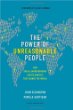
Review: The Power of Unreasonable People–How Social Entrepreneurs Create Markets That Change the World

5 Star, Change & Innovation, Environment (Solutions), Information Society, Intelligence (Collective & Quantum)
Unreasonable People
Amazon Page

Remarkable, Inspiring, Instructive, a Total “Wow”, March 25, 2008

John Elkington

I became very enthusiastic about the term “social entrepreneurship” when I made the transition from reading about collective intelligence and citizen wisdom councils and wealth of networks, to understanding that there was a form of energy I first encountered in How to Change the World: Social Entrepreneurs and the Power of New Ideas, Updated Edition.

This book is remarkable, all the more so for being the third in the series that started with Cannibals with Forks in 1997 that introduced the term “triple bottom line” (financial, social, environmental); and in 2001, The Chrysalis Economy: How Citizen CEOs and Corporations Can Fuse Values and Value Creation, anticipating the period of creative destruction coming from 2000-2030.

I like this book very much, in part because after 20 years of thinking of myself as a reformist beating his head against the idiot secret world, I now realize I am a social entrepreneur who has turned his back on secrets and is focused on creating public intelligence in the public interest.

The authors made me smile with their early explanation that most social entrepreneurs can be so unreasonable as to be called lunatic. This is precisely what happened to me when I published “E3i: Ethics, Ecology, Evolution, and Intelligence” in the Fall 1992 edition of the Whole Earth Review–for having the temerity to suggest that we should emphasize open sources of information instead of spying, and sharing instead of hoarding, I was told that Sandra Cruzman, the top woman at CIA at the time, said “this confirms Steele's place on the lunatic fringe.” So forgive me for this sidebar, but this book speaks to me in very personal as well as socially meaningful terms, it resonates with me, and I strongly recommend it to anyone who wants to think about ways of doing good while doing well enough.

I always look for whether authors are respecting those that came before or have made adjacent contributions, and on that score this book is completely satisfactory. It is also blessed by the authors' broad range of examples, carefully selected from what is clearly a universe they know better than anyone else.

Citing George Bernard Shaw, they explain early on that “unreasonable people” are seen so for their seeking to abandon outmoded thoughts, mindsets, or practices. Amen, brother!

This is not a feel-good book in intent, although it achieves that effect. It is a serious book that methodically reviews new business models, leadership styles, and thinking about value creation. It held my total attention over two evenings of reading.

The authors offer esteem to social entrepreneurs with the observation that corporations are noticing and hiring such individuals for three reasons:

1. They see the future sooner than the average cubicle resident
2. They help retain talent by making the business challenging
3. They bring love and fun into the office environment

The authors caution that social entrepreneurs fail more often than not, but they persist and ultimately find means of making a difference while making a living.

They suggest that immature markets are best explored by non-profits while noting that hybrids with blended values are the most interesting forms.

Page 5 is suitable for scaling up and framing for the office. The ten characteristics of social entrepreneurs (severely abbreviated here):

1. Shrug off ideology and discipline
2. Focus on practical solutions
3. Innvoate
4. Do social value creation and SHARE
5. Jump in without waiting for back-up
6. Have unwavering beliefs in innate capacity of others
7. Dogged determination
8. Passion for change
9. Have a great deal to teach change makers in other sectors
0. Healthy impatience (don't do well in bureaucracies)

They tell the reader that confusion is a normal circumstance for social entrepreneurs, whom they define as those that take “direct action that generates a paradigm shift” while attacking an “unsatisfactory equilibrium.”

They see a deep and lasting need for social entrepreneurs because coming decades will require unprecedented levels of system change (I add, and will have unprecedented and often unanticipated disasters, many turning into catastrophes for lack of planning, preparation, or responsiveness)

The authors tell us that the best of the charitable foundations are shifting from plain grant-making to sequential investments and deeper continuing relations with those being funded. At the same time they tell us that corporation and private equity firms are beginning to notice the value options in this space. [I think to myself, this is great, just at a time when corporations are also understanding green to gold, sustainable design, ecology of commerce, and true cost accounting.]

I am totally impressed with one page that describes how China has developed new green accounting methods and now realizes that environmentally-related work loss is no less than 10% of their newly-understood green Gross Domestic Product (GDP).

They provide a fine overview of new measures of merit including the double bottom line, the triple bottom line, the Social Return on Investment (SROI), and the “blended value proposition.”

On page 20 I see a quote worth posting: social entrepreneurs “bring together natural, social, human, intellectual, and cultural forms of capital.”

LEVERAGE is a key concept for these authors, and one I take very serioiusly as they describe how small investments can leverage indigenous capabilities (such as hard work from people who are poor but not stupid), philanthropic and other support, business partnerships, and income from previously untapped markets (at the Base of the Pyramid, like my Seattle friends they are clearly not comfortable with C. K. Prahalad's choice of title in The Fortune at the Bottom of the Pyramid: Eradicating Poverty Through Profits (Wharton School Publishing Paperbacks).

The middle section of the book discusses three models and examples of each:

1. The leveraged non-profit, which is hard to scale, dependent on hand-outs, focuses on public goods and being a change catalyst

2. The hybrid non-profit that combines non-profit and revenue generating activities, with a focus on outcome generation, empowering the people at the base, community-centric, focused on low cost long term, and on driving the market or pulling more traditional providers into the market.

3. The social business, which focuses on both social and financial returns, scales much more easily because it can assume both debt and equity. We learn that Whole Foods is an example, that it drove the organic market and leverages voluntary cooperation among many networks. Another example combines sustainable organic agriculture, rural employment of the uneducated but willing, price security for farmers, and transparent information.

I want to emphasize the latter: transparent information. I have been persuaded by numerous books on the wealth of knowledge as well as my own 30+ years as an intelligence professional that shared information and transparent decision support is a wealth creation process that scales fast and inexpensively.

The authors go on to discuss ten markets that lend themselves to social entrepreneurship, and I will list them with tiny examples–the book is absolutely a gem that merits buying a reading from end to end.

1. Demographic: condoms, aging, disadvantages
2. Financial: child knowledge of finances, simple technologies, helping poor self-organize for leverage
3. Nutritiional: duck rice, food bank, food waste elevated to tasty and nutritious near zero cost consumables
4. Resources: energy, energy, energy (I would add water, and throw a respectful salute the the George Mason University professor born in Bangladesh who created a virtually free means of removing arsenic from water using a combination of charcoal and steel filings (from the ships torn apart there, see The Outlaw Sea : A World of Freedom, Chaos, and Crime
5. Environment: educatae, plant trees
6. Health: high volume low cost (or free), cateract cures, telephone centers to help poor remotely
7. Gender (best ROI ever is on educating women, see A Half Penny on the Federal Dollar: The Future of Development Aid)
8. Educational: end rote learning, cross-pollinate, barefoot college that trains doctors and engineers narrowly and without years of credentialing (my own idea is call centers to education “one cell call at a time,” I would love to see India do this sooner than later)
9. Digital: embrace and empower poor as citizens
0. Security: redefine as jobs for everyone rather than high-end military

The last third of the book covers

1. helping those at the base of the pyramid with access (e.g. curing neglected diseases); price (slash to 10%); and quality (e.g. $100 laptops).

2. Democratizing technology (four clusters: basic building blocks, motorcycles and free neutral air in and out of disaster zones; media and media technology; and genetics and biology.

3. Changing the rules of the game (search for my “New Rules for the New Craft of Intelligence” free on the Internet). They emphasize transparency; accountability; certification; land reform; emission trading; and value & valuation.

4. Scaling solutions, with examples covering true costs, clean toilets for tens of millions, and General Electric's commitment to 17 clean technoloogies, sustainability attracting the best and the brightest of the social entrepreneurs.

5. Lessons for leaders (below does not do the section justice–buy the book and read the whole thing):

– Focus on scalable entrepreneurial solutions
– Tackle apparently insolvable problems
– Be prepared to fail–but learn from failures
– Experiment with new business models
– Close the pay gap
– Join forces
– Seed tomorrow's markets
– Fuel growing expectations
– Help democratize technology
– Work to change the system
– Figure out how to scale and replicate
– Within reason, cultivate the art of being unreasonable

I put the book down extremely pleased with the content and the presentation. This is a very serious book for serious people, not just social entrepreneurs, but Second and Third World policy makers, bankers, investors, international and non-governmental leaders, and so on.

As I see it, social networks and collaboration among what I call the “ten tribes” (government, military, law enforcement, academia, business, media, non-governmental, labor, religion, and civil society) are in their very infancy. The Internet has not been matched by easily available information sharing and decision support tools (DARPA STRONG ANGEL and TOOZL is a start), and governments persist is wasting tens of billions waging war and stealing secrets, instead of waging peace and nurturing open sources of information in 183 languages.

This book continued the inspiration that I have been getting from others, and here I list a few others including the first book from Earth Intelligence Network (free at the website):

Improper behavior
Radical man
Society's Breakthrough!: Releasing Essential Wisdom and Virtue in All the People
Collective Intelligence: Creating a Prosperous World at Peace.

Vote on Review

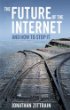
Review: The Future of the Internet–And How to Stop It

5 Star, Future, Information Society, Information Technology

Future InternetSuperb, Engrossing, Useful, Relevant, Alarming, March 25, 2008

Jonathan Zittrain

I ordered this book on the strength of the title, and on receiving it, discovered that the author is the Professor of Internet Governance and Regulation at Oxford University, and co-founder of the Berkman Center for Internet & Society at the Harvard Law School (they hate it when we just say “Harvard”–must be a culture thing). So right off I know this is at least as serious a book as I hoped for.

The book is instructive without being tedious, alarming without being hysterical. It is balanced, informed, and most relevant to all of us.

The entire book focuses on the transformation of the Internet from one in which the innovation could be done at the edges, with generative innovation that built on the provided software or hardware, to one in which we are allowed to buy tethered appliances like iPhone or X-Box that are “locked down.”

Even PCs are being locked down today, and with this and other examples the author has my total attention.

He suggests that the end point matters, and that the confrontation between flexibility and openness, versus security and perfect reliability (and later, perfect enforcement) is one that requires more creative thinking rather than knee jerk mandates one way or the other.

He notes that historically IBM tried to bundle everything, and they were forced by anti-trust to unbundle, just as AT&T was, as Microsoft was, and as Google will be if the USG Government ever gets either honest or informed–either will do. Look for my book review of “Google 2.0: The Calculating Predator” to understand this suprnational unsupervised threat to multiple sectors, never mind privacy and copyright.

In a nutshell, he frames the challenge as that of modularity within which the end-user can innovate, versus walled gardens that are locked down.

In passing the author vindicates both Morris, and the manner in which justice was applied. Morris intended to count the computers on the Internet, and screwed up the code. The judge intended to punish him but not end his promising career. All good.

The author discusses what Vint Cerf and others have, the degree to which bots have taken over tens of millions of computers, using broadband connections left on at all times to create a subrosa network that does evil.

On page 63, three important principles from the author on generativity:

1. Our information technology ecosystem functions best with generative technology (i.e. NOT with locked down appliances hard-wired to a center)

2. Generativity instigates a pattern both within and beyond the technological layers of the information technology ecosystem (i.e. content collaboration and social collaboration and value-added)

3. Proponents of generative systems ignore the drawbacks attendant to generativity success at their peril.

This is followed by a great discussion of features of a generative system as they would be hoped for by the author:

– Leverage
– Adaptability
– Base of mastery
– Accessibility
– Transferability

He cites benefits of a generative system as including:

– Non-profit social innovation
– Disruptive innovation
– Broad participation
– Generative systems from generative building blocks
– Recursion (of value) to content and then to society

The scary chapter in the book–the author is elegant but one needs little help to imagine the worst–discusses how tethered appliances enable “perfect enforcement” to include GPS devices turned on remotely to serve as audio surveillance on demand, and so on.

Turning to solutions, the author distinguishes between flexibility needed at the content level (he is laudatory about Wikipedia) and the technology layer. He discusses one possible solution, a Green-Red split system in which the Green system is locked down and totally reliable, and the Red system is open to innovation but also treated with caution.

He calls for better easier security tools for group and individual use, but as one who could never ever find a coder willing to document their code, and as one completely fed up with the pig code that comes out of Microsoft and Norton–pig in the sense of way too much crap and way too big a footprint–I fear that only an open source conversion experience will do. I note with interest a chart that shows that Sun Open Systems are the LAST to plug security holes, Not good.

The author suggests a “least harm” protocol.

He calls for a very large conversation among end-users, coders, manufacturers, regulators, and so on, and what I hear him saying is that the “system of systems” is on auto-pilot, the government is out of brakes (or brains, I would add), and if we don't all do a collective “STOP, We Want to Discuss This,” we are destined to suffer the same fate as the sheep at Virginia Polytechnic who stood still while a moron killed 20+ of them–stood still while he reloaded. Had the sheep “rushed and crushed,” no more than one or at most two would have died. I am harsh here, because information technology can either be our cage or our liberation, and the author is very well qualified to present the case for concern.

I learn for the first time on page 174 of the National Science Foundation's FIND initiative, and that alone is worth the price of the book.

Turning to protections, the author discusses data portability, network neutrality and generativity (I can assure all readers, Google is neither neutral nor generative), Application Program Interface (API) neutrality; privacy, individual liability versus technical mandates, and collective character (digital shunning combined with reputation bankruptcy and a clean sheet fresh start).

He discusses privacy 2.0 and problems such as code, patent, and content thickets. I like very much his reminding us that the Constitution provides for anonymity to encourage unpopular opinions. He naturally discusses data genealogy (what I call data provenance, like an art work), and reputation.

In passing, I love the brutal critique by Gene Spaford of the $100 laptop. He likens its projected impact–exposing millions to the bright side while not fixing their poverty, water, and disease–to subsidizing pet rats for every household just prior to the Black Death plague. My friend Lee Felsenstein is an equally virulent opponent of the $100 laptop, for different reasons. Me personally, I think the cell phone (but not the iPhone) is the only way to educate 5 billion people fast and with day to day relevance to their needs.

I put the book down feeling pensive, and wondering why CISCO CEO John Chambers, who has been asked in writing via Federal Express three times, continues to refuse to create a router-server that is both recyclable (or even better, updatable remotely without having to flip boxes) and that will provide data at rest encryption and Application Oriented Network (AON) features at the point of creation–in other words, every creator can control the privacy, content routing, access, sharing, and so on, and by implementing something like Grub Search on the same box, we can put paid to programmable search engines patented by Google that will only show you what the highest bidder has paid to “allow” you to see, and to the Googleplex, which “confiscates” everything it touches and then claims to “own” it–including your medical records.

This is a great and important book, if you care about the global role of the Internet is creating wealth and consequently peace.

Ten other books that come to mind as equally important:
The Future of Ideas: The Fate of the Commons in a Connected World
Voltaire's Bastards: The Dictatorship of Reason in the West
Manufacturing Consent
Fog Facts: Searching for Truth in the Land of Spin
Managing Privacy: Information Technology and Corporate America
Who Owns Information?
Silicon Snake Oil: Second Thoughts on the Information Highway
In the Absence of the Sacred: The Failure of Technology and the Survival of the Indian Nations
The Tao of Democracy: Using Co-Intelligence to Create a World That Works for All
Collective Intelligence: Creating a Prosperous World at Peace

My bottom line: as we all press toward localized resilience in community, I for one would be happy to shun all tethered appliances and rely solely on collective human intelligence in community. I really like the work of Naomi Klein (No Log, Disaster Capitalism) and Paul Hawken (Blessed Unrest, Natural Capital, Ecology of Commerce). We are all long overdue for a massive boycott of all that is not in our interest, and we can start by evaluating the true costs of fuel, long-distance food and clothing, and perverted uses of water that we are running out of.

Peace.

Vote on Review

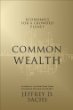
Review: Common Wealth–Economics for a Crowded Planet

4 Star, Economics, Environment (Solutions)

CommonwealthDisappointing, March 24, 2008

Jeffrey D. Sachs

I wrote a rave review on the author's earlier book, The End of Poverty: Economic Possibilities for Our Time and eagerly anticipated this book. It has been a real disappointment. Only the foreword by E.O. Wilson kept me from setting it aside entirely.

As someone who reads broadly and sees with increasing dismay the insularity of citation cabals, somewhat arthritic communities of practice, and a tendency to ignore diverse perspectives, I was immediately annoyed by this book's failure to respect Lester Brown, Herman Daly, Paul Hawkin, C. K. Prahalad, and J. F. Rischard, to name but a few. The author does not appear to have read the High Level Threat Panel Report of the United Nations, and his over-all presentation, while accurate and erudite, is also dense, narrow, and of dubious implementability.

This is a book of, by, and for economic geeks. It is not a book for normal people. Below, in descending order of priority, are better books for the general reader, which is to say, equal or better coverage, easier to understand, with better over-all structure. Medard Gabel's book “Seven Billion Billionaires” is not out yet, so I point to his lead article and post his brilliant cost image above.
Where to find 4 billion new customers: expanding the world's marketplace; Smart companies looking for new growth opportunities should consider broadening … consultant.: An article from: The Futurist
High Noon 20 Global Problems, 20 Years to Solve Them
The Future of Life
A More Secure World: Our Shared Responsibility–Report of the Secretary-General's High-level Panel on Threats, Challenges and Change
2007 State of the Future
Plan B 3.0: Mobilizing to Save Civilization, Third Edition

If you are steeped in the literature and care deeply about the details, then this book is an absolutely essential reference, and for that reason receives four stars.

The author opens with “Humanity shares a common fate on a crowded planet.” Early on he says that sustainable energy could be achieved for 1% of world income. He believes Asia will be the economic center of gravity in the future (assuming this includes India, I agree).

He identifies six key factors for the near future:
1. Convergence
2. More people, higher incomes
3. Asian Century
4. Urban Century
5. Environmental Challenges
6. Poorest Billion

He loses one star, apart from failing to honor the real pioneers including Herman Daly, father of Ecological Economics: Principles And Applications, for overly general platitudes about global collaboration, technology, saving Darfur as if anything he lists was possible, and generally neglecting so many factors and metrics as to leave me wondering where the book was going.

He does well in itemizing the importance of the anthropocene, which tends to be neglected by many, listing impacts on land, water, carbon, nitrogen, plants, birds, and fisheries. The loss of amphibians and pollinators (e.g. bees) is noted.

He lists seven climate change impacts:
1. Rising ocean levels
2. Habitat destruction
3. Increased disease transmission
4. Changes in agricultural productivity
5. Changes in water availability
6. Increased natural hazards
7. Changes in ocean chemistry

These are all important, but I am distressed to see no reference to Blue Frontier, Blue Death, or Water: The Fate of Our Most Precious Resource. This confirms my unease–this is a brilliant man with a great deal of influence who is out of touch with a number of very significant observers whose intellectual contributions cannot be ignored in a work such as this.

Coming back to Darfur, one recommendation he makes with which I totally agree, is the value of introducing cell phones and cell towers to the high-risk areas. I wrote to the CEOs of both Nokia and Motorola about such an initiative a year ago, and never received a response. They do not seem to appreciate the reality that cell phones, like razors, should be given away, and the transactions monetized instead (“sell the shave, not the razor”).

He makes five points about the US that are certainly serious, but as one who has read Joe Nye, Jonathan Schell, Chalmers Johnson, Noam Chomsky, Ralph Peters, and so many others, I see the following five points as the equivalent of a teen-age driver lecturing on highway safety:
1. Limits of military power (see Nye's Paradox of American Power)
2. Wars of identity (see Peter's Wars of Blood and Faith)
3. Drivers of violence (see UN High Level Threat Panel above)
4. Foreign Assistance (see O'Hanlon, Half Penny on the Dollar)
5. Real Security (proliferation, environment, failed states–ho hum)

The chapter on global problem solving was entirely reasonable, and I worry that I am communicating too harsh a sense of the book. If you are a geek and have time on your hands, by all means buy this book. Otherwise, read my reviews of all the others, and then buy Rischard's book and spend time at the Earth Intelligence Network (all free).

He says the public sector should
1. Fund basic science (never mind the Republican war on science)
2. Promote early stage technologies (never mind Monsanto's seeds of death or the Transylvanian Dracula patent system designed to retard human progress by locking up new stuff so the legacy stuff can continue to sell)
3. Create a global policy framework for solutions (see Earth Intelligence Network and the ten threats, twelve policies, and eight challengers, see especially the EarthGame(TM) as devised by Medard Gabel who helped Buckminster Fuller create the original analog World Game)
4. Finance the scale-up of successful innovations and technologies (huh?)

No mention of the public sector's most important role in creating a social environment that is stable, orderly, and healthy, so that citizens can be educated and gainfully employed while exporting goodness.

He suggests the private sector has two core responsibilities besides making a profit (at our expense, see comment below on true costs):
1. Investing in R&D, often with public funding
2. Implementing large-scale technological solutions in partnership with the public sector

Hmmm. No mention of Green to Gold, Sustainable Design, Services Science, identification of “true cost” for all products and services, etc. There is an entire planet of literature relevant to this books purpose that does not appear here. I respect the author and his accomplishments, but at this point in the book I am exasperated.

The not-for-profit sector has five key roles, per the author:
1. Public advocacy (perhaps public education would be a better term)
2. Social entrepreneurship and problem solving (good)
3. Seed funding of solutions (but not willy nilly–has anyone heard of the concept of a creating a Global Range of Gifts Table for each of the ten threats across each of the twelve policies, with amounts from $10 to $100 million, such that individuals–80% of the giving–can select items directly, and Civil Affairs and NGO individuals all over the world can “call in” peace targets to the Table?)
4. Accountability of government and the private sector (see the Peter G. Peterson Foundation and what David Walker will be doing there–that is a first-class endeavor)
5. Scientific research, notably in academic institutions (where we should be emphasizing very low cost licensing to the governments of India, South Africa and others, and burying the profiteering pharmaceuticals and the predatory seed companies).

The author follows the above with a global funding architecture that is not persuasive and that would not satisfy my colleagues from the Office of Management and Budget.

The book ends with a limp, suggesting eight steps individuals can take:
1. Learn
2. Travel
3. Join
4. Community (face to face)
5. Social Networks (online)
6. Workplace
7. Live personally (Gandhi: be the change you want to see in the world.)

My bottom line: this book is not ready for prime time. It is dense, disappointing, and it will never be read nor understood by the kinds of people–less E.O. Wilson and George Soros–that have real power over the $1 trillion in charitable giving, the $1 trillion in spending on war instead of peace, or the $1 trillion in corporate and government and other foreign assistance.

I challenge the author to post a one page summary suitable for a President, and a one-page spending plan that addresses the ten threats and twelve policies that I list below for the convenience of the Amazon shopper:

TEN THREATS (LtGen Dr. Brent Scowcroft and others on High Level Threat Panel of the United Nations–in order of priority)
01 Poverty
02 Infectious Disease
03 Environmental Degradation (includes climate change and warming)
04 Inter-State Conflict (we spend $1.3 trillion on waging war)
05 Civil War (often occasioned by corruption and our support for 42 of the 44 dictators on the planet–see Breaking the Real Axis of Evil: How to Oust the World's Last Dictators by 2025
06 Genocide
07 Other Atrocities (kidnapping for body parts; kidnapping dumb cute girls from Connecticut that go to “movie auditions” alone)
08 Proliferation (no mention of small arms, the real weapon of mass destruction: the USA sells five times more weapons to the rest of the world than the UK, three times more than Russia–and the worst proliferators of nuclear, biological and chemical are the five permanent members of the UN Security Council. Reality check, anyone?)
09 Terrorism (a law enforcement problem, not even close to the casualties from automobile accidents in the US alone)
10 Transnational crime ($2 trillion against the US $7 trillion, and getting worse–they have better intelligence, encryption, computers, and wages than any government force)

The twelve policies, based on an EIN study of the last 5 presidential election “mandate for change books”:
01 Agriculture
02 Diplomacy
03 Economy
04 Education
05 Energy
06 Family
07 Health
08 Immigration
09 Justice
10 Security
11 Society
12 Water

Last but not least, the author, who is without question one of the very highest experts in his narrow chosen domain, appears out of touch with the literatures on collective intelligence and on the wealth of networks. I will mention only one book (there are others, including one now free at EIN on COLLECTIVE INTELLIGENCE: Creating a Prosperous World at Peace). See my favorite, Yochai Benckler's The Wealth of Networks: How Social Production Transforms Markets and Freedom.

I am going to end with a harsh thought: As much as I admire Columbia University, as much as I see the possibilities for the United Nations, what I sense in this book is that the author is deeply entrenched in a pyramidal systems of systems, and is still in the “command and control” top-down elites rule mode. Common Wealth is not going to be orchestrated by the New York mandarins–it is going to be created by We the People, using Open Money, boycotting all products and services whose true costs are externalized (e.g. Exxon did not make $40 billion in profit–they externalized $12 in costs to the earth for EACH gallon of gas they sold–one will not find that fact in this author's book–he might not be invited back to the high table).

See for instance (Amazon limits me to ten links, sorry):
Infinite Wealth by Barry Carter (the first real visionary)
Wealth of Networks by Tom Stewart
Revolutionary Wealth by Alvin and Heidi Toffler
Group Genius by Keith Sawyer
Wikinomics by Don Tapscott

Then there is the sustainability and ecological economics literature:
Seven Tomorrows by Paul Hawkins
Green to Gold by by Daniel Esty and Andrew Williams
Natural Capitalism by Paul Hawkins
Ecology of Commerce by Paul Hawkins
Capitalism 3.0 by Peter Barnes
The Philosophy of Sustainable Design by Jason McClellan
and so on….

Argh. Annoying. I expected so MUCH more. I expect some negative votes. There are those that simply cannot stand to be told they have missed a big part of the diversity answer. As we used to say in Viet-Nam, “Sorry 'bout that.” It takes ALL of us, SHARING and creating COLLECTIVE INTELLIGENCE from the BOTTOM UP, to create Common Wealth. This book is certainly accurate as far as it goes, well-intentioned, but looking through the wrong end of the telescope.

Vote on Review

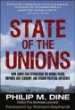
Review: State of the Unions–How Labor Can Strengthen the Middle Class, Improve Our Economy, and Regain Political Influence

5 Star, Capitalism (Good & Bad), Civil Society, Democracy, Future
State Unions
Amazon Page

Possibly the Most Important Book to America's Future, March 23, 2008

Philip Dine

I chanced upon this book at an airport bookstore, and after a long flight and several more hours at home with it, have put it down with an enormous sense of the righteous and epochal importance of this work. I have not trimmed my review to 1000 words because of the importance of this book, and the removal of the 1000 word limit from Amazon's current guidelines. This is IMPORTANT!

In the introduction to the book, Congressman Gephardt laments that union membership is down to 8% from 35%, for two reasons: good employers whose workers do not feel the need to unionize, and intimidation by bad employers who will stop at nothing to squelch any attempt to unionize.

He emphasizes the direct relationship between the health of the unions and the health of America's economy and its linch-pin middle class.

He is most provocative in suggesting that unions can and should displace employers as the providers of life-long benefits.

He concludes the introduction by lamenting the reality that employers pursue micro-profits instead of macro-benefits, and points out that in the absence of rules of law and fair trade, globalization will inevitably push the USA to labor conditions akin to those of the lowest common denominator–a return to sweatshops, no benefits, and despair across the land.

The book itself is phenomenal. The author, a very rare journalist who not only cares about labor issues but has also won the trust of labor leaders, has written what is in my mind the single most important book relevant to how every American should perceive the 2008 election. No candidate is serious about labor at this time. Our job is to change that, and to help labor, notably the AFL-CIO and the International Association of Fire Fighters (IAFF), change that by putting labor issues in the forefront of the economic discussion. John McCain, featured in the DVD Why We Fight, condones the impoverishment of regions to stimulate enlistments in the military-industrial complex of which he is a tacit leader. Hillary Clinton does not now and never will understand the working class–she set the standard for “bitch in residence” in the White House, according to my secret service colleagues, and she is as elitist and arrogant as it gets. Barack Obama remains surrounded by advisors who do not have a clue about Generation Y, collective intelligence, or how to create a holistic strategy that can address the ten threats with the twelve policies while helping the eight challengers avoid our self-induced The Fifty-Year Wound: How America's Cold War Victory Has Shaped Our World, the loss of the The Battle for the Soul of Capitalism and the rise of the two political parties that are a form of organized crime and Running On Empty: How The Democratic and Republican Parties Are Bankrupting Our Future and What Americans Can Do About It. It is in this context that I am simply blown away by extremely balanced, well-told, important review by a journalist uniquely qualified to provide us with a book-length review of where labor has failed, where labor shows promise, and how labor is America's bottom line: as he concludes the book, Labor defines who we are as a people.

+ Labor has unraveled, which harms America and its economy because Labor is historically the only force apart from honest religions and selected civil society elements that truly represents the moral imperatives of both social value and economic value. Decades of progress have been rolled back by Bush I, Clinton, and Bush II. Clinton in particular sold out Labor with NAFTA and the ease with which he allowed corporations to export entire programs to sweatshop countries at the same time that he reduced barriers to the dumping of both cheap and unsafe toys and other products whose “true cost” has not been properly calculated or presented.

+ Middle class, professionals, and women are going bankrupt, along with skilled blue collar workers, because the balance of power among labor, business, and government is gone–business rules.

+ 53% of Americans favor unionization.

+ Reagan's dismissal of the air traffic controllers was the signal act that destroyed decades of labor progress, and unleashed illegal, unethical, and unconscionable business repression of unions.

+ Service jobs are difficult to unionize because of high turnover, transient elements, low pay, high proportion of immigrants that can be intimidates, PLUS a lack of government penalties against business violators.

+ The above, combined with the government's enthusiastic support for exporting jobs, and poor labor leadership, have creating a sucking chest wound in the American economy. It could yet be fatal.

+ The author excels at recounting labor successes that have not been covered by the mainstream media, and he manages to do this in a way that is inspiring, objective, and not at all preachy or pontifical.

+ I am deeply moved by his account of how the IAFF, two lights down from my own office, used five methods to win Iowa for John Kerry:

– Turned out the residents (each bringing five citizens to caucuses)
– Used local presence EVERYWHERE to carry caucuses ignored by the other candidates
– Able to use local knowledge to recruit those whose candidates failed to pass the viability test
– Never gave up in darkest of times
– High public credibility and visibility

+ I am reminded that “Change to Win” started in 2005, John Kerry and his boffo haircut just could not communicate the need properly.

+ The author explains how Kerry earned fire fighter love and respect in his turning around mid-way to Asia to come back to a major fire that killed numerous fire fighters in his state, and then worked aggressively to pass fire fighter equipment and safety laws.

+ There is no other union that has a firehouse, fire trucks, uniformed personnel that are unarmed, and is able to sponsor chili feeds at the firehouses while handing out leaflets in uniform on every street corner, doing retail politics to all non-union voters.

+ Having set the stage with successes, the author then moves into a very important middle ground in which he anticipates the continued decline of labor (and of the American economy) unless labor can reassert its influence on the national agenda.

+ He is critical of labor for focusing only on “get out the vote” and not on putting its issues–all of which have moral authority–into the national dialog.

+ He points out that labor spent close to $100 million in the 2004 election across 32 states, and was a key factor in the democrats taking back both Houses of Congress.

+ He is forceful in discussing how the Republicans have made “cultural values” a smokescreen within which individuals vote for candidates that are inherently bad for the public wallet and public benefits. I have a note, “religion and ‘values' have trumped facts and consequences.”

+ He damns both parties: the Republicans for trying to eliminate minimum wage rights in the aftermath of Katrina, and the Democrats for taking labor for granted.

+ He says that the debate has not taken place regarding:

– deindustrialization of America
– dumping of unsafe and cheap products into our marketplace
– local impact of globalization (and of course Wal-Mart as a cancer)
– toll on families of reduced benefits

+ He is articulate in pointing out that labor must work at two levels:

– at a national level, constant forceful attention to legislation, regulation, and the filling of oversight posts
– locally on compliance and alerts

+ The author slams the Democrats for barely winning on the basis of Republican mistakes, while being completely lacking in any strategy, message, or coherent program of their own.

+ He is devastatingly effective in evaluating the failure of labor leaders to communicate to the public that wages are at the lowest point in history as a percentage of the Gross Domestic Product (GDP) while profits are at the highest point ever in history as a percentage of the GDP.

+ He is eloquent in pointing out that most Americans have forgotten (or never learned) that strong labor equates to the greatest prosperity for the greatest number.

+ He recommends these two books as antecedent works:

Hostile Takeover: How Big Money and Corruption Conquered Our Government–And How We Take It Back
What's the Matter with Kansas? : How Conservatives Won the Heart of America

I would add The Working Poor: Invisible in America and Off the Books: The Underground Economy of the Urban Poor

+ He documents how labor has failed to impact on trade agreements, the migrations of good jobs with benefits to overseas sweatshops, and the loss of entire segments of community economics.

+ The author describes a wide range of illegal and unethical business practices that repress unionization, while also describing the ineptness of the government, with the National Labor Review Board taking an average of 889 days to make a ruling–that is almost three years and in my mind is an ATROCITY.

+ Illegal firings that we know of amounted to 31,358 in 2005. Business enjoys a “culture of impunity” fueled by loopholes, ease of long delays, and feeble enforcement.

+ Labor hurt itself with its own repression in earlier decades of dissent, and its compulsion to demand strict obedience for a unified front (at the same time that businesses had similar practices)

+ The author believes that the country hungers for a renaissance of labor and its community-oriented values and benefits. I hope so, but right now, not a single candidate has a clue how to jump into this with both feet, a heart, and a brain.

+ I am totally inspired by this author, and have a note to myself: firefighters, cops, teachers, ambulance drivers and nurses: public servants driving public policy and benefits.

+ The author is sympathetic but very critical of labor's refusal to engage with most journalists, and he provides a superb overview of how badly labor deals with media and how badly media ignores labor issues that are fundamental.

+ He is most impressive in giving modern labor a relatively clean “bill of health” with most mafia connections and most strong-arm bosses now giving way to the empowerment of individual union members, open elections, and greater accountability.

+ He calls on labor to humanize, regionalize, and think big.

+ Labor should tell the story of its role in East European democratization and carry that creative role to the Second World.

+ Labor should compare and publicize the grotesque profits and compensation packages of industry, with those of the workers on whose backs those profits are unjustly earned.

I put this book down with a sense of wonder, a hard-eyed sense of the possibilities, and a very strong conviction that this author and this book have nailed the future of America as a Republic: Labor can be the king-maker at the national and state levels in 2008, and I pray that Labor will first learn the difference between transpartisan and bi-partisan (code for preserving the two party spoils system, something both McCain and Clinton absolutely want).

In that vein, I imagined a month national “open house” across police stations, fire stations, hospitals, and schools, in which Video-Teleconferencing was used to sponsor a national town-hall meeting to consider the ten threats and twelve policies, to elect a People's Cabinet, and perhaps funded by the Peter G. Peterson Foundation under the leadership of David Walker (former Comptroller General who told Congress USA is insolvent and quit when they would not act responsibly), a Public Budget Office capable of producing a balanced budget by 4 July 2008, and demanding that each candidate do the same (both appoint a Cabinet and produce a balanced budget for online examination before November 2008).

The author, in my opinion, is long overdue for recognition and promotion as the voice of labor, serving a new virtual Labor Congress that sets aside the fiefdoms and irrationality of the labor archipelago, and speaks to America with one voice and one practical agenda to restore America the Beautiful.

See also:
Society's Breakthrough!: Releasing Essential Wisdom and Virtue in All the People
Collective Intelligence: Creating a Prosperous World at Peace

Vote on Review

Review: Daydream Believers–How a Few Grand Ideas Wrecked American Power

5 Star, Congress (Failure, Reform), Corruption, Diplomacy, Empire, Sorrows, Hubris, Blowback, Executive (Partisan Failure, Reform), Impeachment & Treason, Insurgency & Revolution, Intelligence (Government/Secret), Iraq, Politics, Power (Pathologies & Utilization), Religion & Politics of Religion, War & Face of Battle

Daydream BelieversTogether with a Few Other Books, All You Need to Know, March 21, 2008

Fred Kaplan

The author is kinder to the protagonists than they merit.

I give the author high marks for making the case early on in the book that the world did NOT change after 9-11, and that what really happened was that the coincidence of neo-conservative back-stabbing and Bush's well-intentioned evangelical village idiot view of freedom and democracy.

The author does a fine job of reviewing how after 9-11 we were faced with two choices, the first, going for empire (“we make our own reality”) or revitalizing alliances. The neocons in their ignorance called for regime changes, but the author fails us here by not understanding that both political parties love 42 of the 44 dictators, those that “our” dictators.

The author has many gifted turns of phrase. One talks about how their “vision” turned into a “dream” that then met “reality” and was instantly converted into a “nightmare.”

The author adds to our knowledge of how Rumsfeld empowered Andy Marshall, and how the inner circle quickly grew enamored of the delusion that they could achieve total situational awareness with total accuracy in a system of systems no intelligent person would ever believe in.

The author highlights two major intelligence failures that contributed to the policy bubble:

1. Soviet Union was way behind the US during the Cold War, not ahead.
2. Soviet economy was vastly worse and more vulnerable that CIA ever understood.

The author helps us understand that the 1989 collapse of the Berlin War created a furor over the “peace dividend” and the “end of history” that were mistaken, but sufficient to bury with noise any concerns about Bin Laden and Saudi Arabian spread of virulent anti-Shi'ite Wahabibism from 1988 onwards.

By 1997 Marshall and Andy Krepinevich were staking everything on Unmanned Aerial Vehicles (UAV), high speed communications and computing (still not real today), and precision munitions.

The author provides a super discussion of Col John Warden's “five rings” in priority order: 1) leadership and C4I; 2) infrastructure; 3) transportation; 4) population (again, war crimes); and finally, 5) the enemy. The author is brutal in scoring the campaign designed by Col Warden a complete failure. It…did…not…work (in Gulf I).

I cannot summarize everything, so a few highlights:

+ Taliban quickly learned how to defeat US overhead (satellite) surveillance–remember, we do not do “no-notice” air breather imagery any more, except for easily detected UAVs, with mud as well as cover and concealment. .

+ Excellent account of the influence on Rumsfeld of George Tenet's failure to satisfy him during a missile defense review. It became obvious to all that the U.S. Intelligence Community a) no longer had a very high level of technical mastery on the topic; and b) was so fragmented as to make the varied analytic elements deaf, dumb, and blind–not sharing with each other, using contradictory data sets, the list goes on.

Page 187 is the page to read if you are just browsing in the bookstore:

Summarizing 2007: “Not so much a return to realism as a retreat to randomness.” Also: “Grand vision was shattered by reality. Policies were devised piecemeal; actions were scattershot, aimless.” And: “put forth ideas without strategies; policies without process; wishes without means.” Devastating.

So many other notes. Here are a tiny handful:

+ Speechwriter Michael Gersen connected with Bush on an evangelical level, wrote major speeches, in the case of a foreign policy speech, without actually consulting any adult practitioners.

+ Joseph Korbel was both Madeline Albright's father and Condi Rice's educational mentor–talk about a non-partisan losing streak!

+ American Enterprise Institute and Richard Perl used Natan (Anatoly) Sharansky to impress Cheney and subvert Bush by reframing the Israeli genocide against the Palestinians as the first 21st Century war between terrorism (the hapless Palestinians) and democracy (the Israeli's).

+ He credits Eliot Abrams with devising the unique linkage between American Jews whose numbers and influence have been declining, and the Evangelical Christians whose influence peaked with Bush-Cheney.

+ He slams General Tommy Franks for providing assurances and making promises he could not keep with respect to settling and stabilizing the towns by-passed or over-run by the US Army.

+ The author is misleading in his account of the Saudi-Powell discussions on how an election would lead to radical Islamics in charge (as opposed to despotic, perverted spendthrifts).

+ Rumsfeld Lite going into Iraq meant that a quarter million tons of ordnance was looted by insurgents, which is what cost us four years time. General Shinseki is vindicated.

+ For the first time I learn of a planned Truth and Reconciliation Commission.

+ The author introduces Ahmed Chalabi but does not fully understand this man's crimes as well as his special relationship with Iran. Iran used him to get the USA to depose the Taliban and Sadaam Hussein, , and to lure the entire US military into a quagmire.

+ Department of State, Mr. White in particular, got it right every time.

+ Legitimacy and stability must come before elections.

+ Hezbollah win in Lebanon dealt a crushing blow to the Bush delusions.

+ Bush refused to deal with Syria and Iran throughout. I am reminded of how Civil Affairs was told in the first five years of the war to blow off the tribal leaders and imams, and only now are they being allowed to get it right.

+ Useful account of three failed Public Diplomacy tenures (Charlotte Beers, Margaret Tutwiler, Karen Hughes (who waited six months so her son could leave for college–so much for the importance of that job….)

+ USA sent $230 million in aid to Lebanon, while Iran poured in $1 billion via Hezbollah (meanwhile, the Chinese do the same everywhere else).

Page 191 is glorious: Bush's strategies were “based on fantasies, faith, and a willful indifference toward those affected by their consequences.”

Page 192: the real divide is “between the realists and the fantasists.”

The author quite properly slams the Democrats for not having an original idea, plan, program, bill, budget, or moral thought.

He ends by suggesting that multinational consensus is still the true litmus test for the sensibility and sustainability of any endeavor.

On this note, I conclude that five stars are right where this book should be. Incomplete, but original and provocative. Bravo.

Other recommendations:
Breaking the Real Axis of Evil: How to Oust the World's Last Dictators by 2025
Web of Deceit: The History of Western Complicity in Iraq, from Churchill to Kennedy to George W. Bush
Legacy of Ashes: The History of the CIA
The Sorrows of Empire: Militarism, Secrecy, and the End of the Republic (The American Empire Project)
DVD Why We Fight
Vice: Dick Cheney and the Hijacking of the American Presidency
The Price of Loyalty : George W. Bush, the White House, and the Education of Paul O'Neill
Fiasco: The American Military Adventure in Iraq
Rumsfeld: His Rise, Fall, and Catastrophic Legacy

Vote on Review
noble gold