Creating a Sustainable and Desirable Future : Insights from 45 Global Thought Leaders
Robert Costanza, Ida Kubiszewski (eds)
The major challenge for the current generation of mankind is to develop a shared vision of a future that is both desirable to the vast majority of humanity and ecologically sustainable. Creating a Sustainable and Desirable Future offers a broad, critical discussion on what such a future should or can be, with global perspectives written by some of the world's leading thinkers, including: Wendell Berry, Van Jones, Frances Moore Lappe, Peggy Liu, Hunter Lovins, Gus Speth, Bill McKibben, and many more.
In ‘Dynamics Among Nations’, Professor Hilton Root convincingly challenges the propositions of the liberal international consensus and re-frames the prevailing conceptualisation of development by introducing complexity thinking to the fields of political economy and international relations.
I highly recommend this intellectually stimulating and excellently written book to decision makers, researchers and students – as well as to anyone who is interested in gaining an advanced and well-informed understanding of the complex realities of development and global policy.
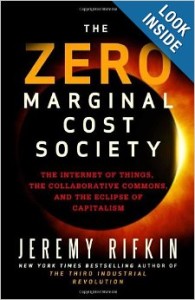
3.0 out of 5 starsNever Mind the Total Cost Terminal Society, April 13, 2014
Books like this would make me crazy if I took them seriously. This is a fad book for shallow minds that have no clue about holistic analytics, true cost economics, or anything remotely resembling the humanities (which is to say, the preservation of the good from one generation to the next). This book is the singularity cult on crack. Buy the book, by all means, to understand how seriously stupid is now in vogue.
There are some clever (which is to say, fad of the day) observations in this book but they vary from wrong (MOOCs have a 4% completion rate and are absolutely useless to 90% or more of the five billion poor who do not have the time to do MOOCs) to incomplete — who crowd sources against corruption and waste? Part of the answer is in this book, but no more than 20%. I've raised the book from one to three stars on a second pass, but I am still irritated.
The one place where Rifkin and I are 100% in harmony is on free energy…but he pulls his punches. Free energy is here now but the “system” is intent on keeping energy expensive and the 99% in rentier status. To truly understand the alternative energies now in hand, there is no book available, but if you search for Sepp Hasslberger @ Phi Beta Iota you will be on the bleeding edge of intelligence with integrity on this one topic that is so vital to all of us.
Marginal Cost is the cost at scale after all the FIXED COSTS (little things like water, fuel, child labor, tax avoidance, imposed disease) have been “accounted for.” The problem with Rifkin's book, which would be a great riff at a late night show where everyone is smashed beyond cognition, is that it discounts reality by 99%. This book is the epitome of what Dr. Russell Ackoff would call “doing the wrong things righter instead of the right thing.
“The Capitalists will sell us the rope with which we will hang them.” –Vladimir Ilyich Lenin (1870-1924) First Leader of the Soviet Union
Marginal cost is the term used in the science of economics and business to refer to the increase in total production costs resulting from producing one additional unit of the item. Zero marginal cost describes a situation where an additional unit can be produced without any increase in the total cost of production. Producing another unit of a good can have zero marginal costs when that good is non-rivalrous, meaning that it is possible for one person to consume the good without diminishing the ability of others to simultaneously consume it as well. –Wise Geek.com
Barbara Honegger's presentation titled “Behind the Smoke Curtain” in Seattle's Town Hall Theater, January 12, 2013, on what happened and what didn't happen at the Pentagon on September 11, 2001.
Phi Beta Iota: A text overview, “9-11 for Novices,” by Dr. Stuart Jeanne Bramball, is a helpful introduction to this very long video. This video has been validated by the various leaders of the major 9/11 truth movements.
Phi Beta Iota: The primary problem we have with such lists is that they short-change intelligence with integrity. Still today intelligence is a tiny fraction of the course of instruction at any Command & Staff or War College. War — and the cost of war — are not understood by our own officers, or they would demand ethical intelligent whole of government strategy, policy, acquisition, and operations.
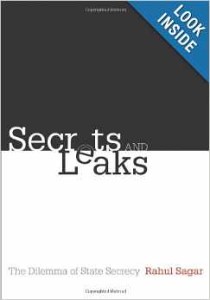
5.0 out of 5 starsHighlights from Steven Aftergood's Review at Lawfare, April 9, 2014
I tried to prevail on Steven Aftergood to repost his rave review at Lawfare here but for various reasons that was not possible. I've looked at this book but Steven is vastly superior to me in his contextual appraisal so below I offer both a fast means of finding Stevens review and three highlights in Steven's words, with some additional Amazon links and my own conclusions based on 40 years as an intelligence professional and 20 years as a proponent for intelligence reform.
Find the full review online by searching for three words together not in quotes: Lawfare Aftergood Sagar
Three Highlights:
QUOTE: Sagar makes a fresh, original and provocative contribution to the field. Our problems with secrecy, he says, are not simply attributable to official venality or mismanagement (or to the Espionage Act or the Manhattan Project) but instead are rooted in our constitutional structure. And leaks of classified information are not necessarily a lamentable deviation from good government but are — within certain limits — an essential safeguard that should be defended and encouraged.
QUOTE: Only leaks, he argues, have the potential to overcome the otherwise unresolved tensions over disclosure of national security information that are the legacy of our constitutional design.
QUOTE: In the end, following a detailed and critically nuanced discussion, Sagar concludes that leakers can be morally justified in making an unauthorized disclosure of classified information in violation of the law if the disclosure meets the following five conditions: