SchwartzReport: Joseph Stiglitz: Stupid Politics = Bad Economics

03 Economy, Corruption, Government, Idiocy, Ineptitude
0Shares
Stephan A. Schwartz
Stephan A. Schwartz

Joseph Stiglitz and Paul Krugman for the past 15 years have been notable for the accuracy and insight of the comments they make about our economy. When you think about Representative Paul Ryan on the right, and Stiglitz and Krugman on the social progressive side you realize that there is no real comparison to be made. Rightwing economic theory is nonsense and, wherever it is in force failure and crisis follow. Here is Stiglitz' latest.

Why Stupid Politics Is the Cause of Our Economic Problems

Continue reading “SchwartzReport: Joseph Stiglitz: Stupid Politics = Bad Economics”

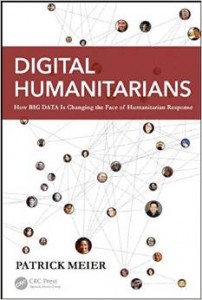
Review: Digital Humanitarians – How Big Data is Changing the Face of the Humanitarian Response

5 Star, Best Practices in Management, Civil Affairs, Complexity & Resilience, Environment (Solutions), Geography & Mapping, Humanitarian Assistance, Information Operations, Intelligence (Public), Stabilization & Reconstruction, Survival & Sustainment, Values, Ethics, Sustainable Evolution, Voices Lost (Indigenous, Gender, Poor, Marginalized)
0Shares
Amazon Page
Amazon Page

Patrick Meier

5.0 out of 5 stars World-Changing Book Documenting Intersection of Humans, Technology, and Policy-Ethics, February 2, 2015

This is a hugely important work, one that responds to the critical needs outlined by Micah Sifry in The Big Disconnect: Why The Internet Hasn't Transformed Politics (Yet) and others such as myself writing these past 25 years on the need to reform the pathologically dysfunctional US secret intelligence community that is in constant betrayal of the public trust.

Digital Humanitarians are BURYING the secret world. For all the bru-ha-ha over NSA's mass surveillance and the $100 billion a year we spend doing largely technical spying (yet only processing 1% of what we waste money on in collection), there are two huge facts that this book, FOR THE FIRST TIME, documents:

Continue reading “Review: Digital Humanitarians – How Big Data is Changing the Face of the Humanitarian Response”

Seeking Eagle Scout Candidates in Fairfax

03 Environmental Degradation, Civil Society, Earth Intelligence, Ethics
0Shares
Click on Image to Enlarge

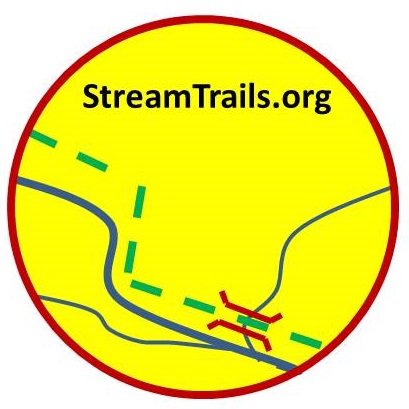
TrailkeepersĀ  is a new program being piloted by a new non-profit (StreamTrails.org) in Fairfax County. It brings together Scouts, hikers, cyclists, and horseback riders to elevate the stream trails, now a neglected asset, to co-equal status with the more formal trails where taxpayer dollars fund manpower, equipment, and improvement. The core concept is simple: those using the stream trails nominate needed bridges, obstacles, heavy litter (rubber tires, for example); Scouts (and others) do the volunteer work; and the Park Authority, which is in the middle of a Needs Assessment, changes its policies to respect citizen needs while providing the necessary oversight for insurance, legal, and safety in the public interest (underĀ  the old policies, footbridges built by citizens are an encroachment subject to destruction at taxpayer expense).

Continue reading “Seeking Eagle Scout Candidates in Fairfax”

Yoda: Army Open-Sources Security Software

Software
0Shares
Got Crowd? BE the Force!

The Army Just Open-Sourced Its Security SoftwareĀ 

The U.S. Army is open-sourcing a code it uses to analyze cyberattacks. For the past five years, whenever a Department of Defense network has been compromised, the Army has used the Dshell framework to do forensic analysis on the attacks. This move is meant to encourage developers to add custom modules that'll help the Army understand what happens when they get attacked. Since cyberattacks that happen to the government are often similar to the ones that happen elsewhere, letting non-government people give their input is a way to expand the Army's knowledge of the kind of attacks that go down.

Review (Guest): The End of Intelligence

2 Star, Intelligence (Government/Secret)
0Shares
Amazon Page
Amazon Page

David Tucker

2 Stars Half-Baked Intelligence

The author of this book, David Tucker, appears to be one of those folks whose careers have often put them on the fringes of the U.S. Intelligence Community (IC), but who have only superficially been involved in any aspect of intelligence production. Tucker compounds this deficiency by an unwillingness to either research or reflect seriously on his chosen subject. The goal of this book presumably is to demonstrate the dynamic relationships between intelligence, the power of nation states, and the so-called information age. Because Tucker is unwilling to really think through what he means by these terms, the book utterly fails to achieve this goal.

Continue reading “Review (Guest): The End of Intelligence”

Stephen E. Arnold: Time as Analytic Factor — Recorded Future, Google, and CyberOSINT

Advanced Cyber/IO, IO Impotency
0Shares
Stephen E. Arnold
Stephen E. Arnold

Recorded Future: Google and Cyber OSINT

EXTRACT: CyberOSINT relies on automated collection, analysis, and report generation. In order to make sense of data and information crunched by an NGIA system, time is a really key metatag item. To figure out time, a system has to understand: 1) The date and time stamp; 2) Versioning (previous, current, and future document, data items, and fact iterations); 3) Times and dates contained in a structured data table; 4) Times and dates embedded in content objects themselves; for example, a reference to ā€œlast weekā€ or in some cases, optical character recognition of the data on a surveillance tape image. Learn more.

See Also: Reference: $499 Saves Millions — Stephen E. Arnold CyberOSINT Survey of Next Generation Information Access (NGIA) – Foreword by Robert Steele