People power goes techie, ousts Tunisian dictator
Philippine Daily Inquirer First Posted 01:25:00 01/16/2011
Seeds of protest
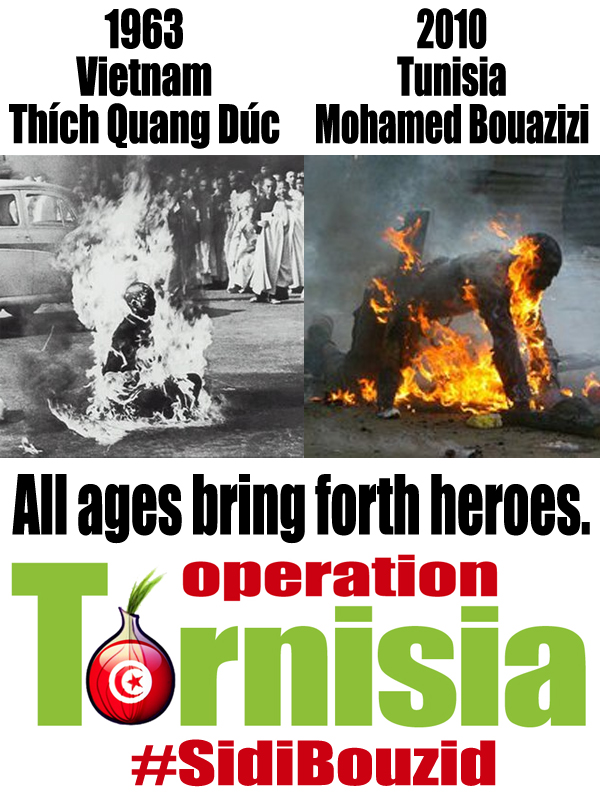
The antigovernment protests began a month ago when a college-educated street vendor named Mohamed Bouazizi in the small town of Sidi Bouzid burned himself to death in despair at the frustration and joblessness confronting many educated young people here. But the protests he inspired quickly evolved from bread-and-butter issues to demands for an assault on the perceived corruption and self-enrichment of the ruling family.
The protesters, led at first by unemployed college graduates like Bouazizi and later joined by workers and young professionals, found grist for the complaints in leaked cables from the US Embassy in Tunisia, released by WikiLeaks, which detailed the self-dealing and excess of the president’s family. And the protesters relied heavily on social media websites like Facebook and Twitter to circulate videos of each demonstration and issue calls for the next one.
Known for tackling the most pressing issues that face our world, the Worldwatch Institute has dedicated the 2011 edition of its flagship report to a compelling look at the global food crisis, with particular emphasis on what innovators globally can do to help solve a worldwide problem. State of the World 2011 not only introduces us to the latest agro-ecological innovations and their global applicability but also gives broader insights into issues including poverty, international politics, and even gender equity.
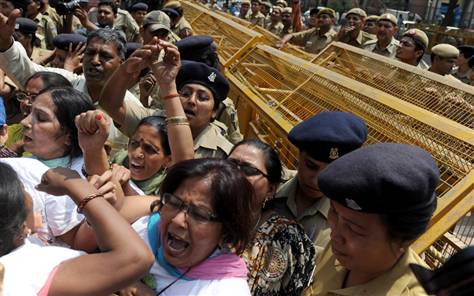
Activists from India's main opposition Bharatiya Janata Party (BJP) women's wing shout slogans against the Congress-led government during a protest against an increase in milk, vegetables and food prices in New Delhi on April 1, 2010. The BJP activists protested against the price hikes of essential commodities. Food inflation is still at 17 percent according to official figures.
Global food chain stretched to the limit
Soaring prices spark fears of social unrest in developing world
Strained by rising demand and battered by bad weather, the global food supply chain is stretched to the limit, sending prices soaring and sparking concerns about a repeat of food riots last seen three years ago.
Signs of the strain can be found from Australia to Argentina, Canada to Russia
Phi Beta Iota: Absent a radical break-through in energy that enables water desalination and purification, the combined collapse of the global financial system and the global food system could mark the beginning of a quarter century of “tribulation.”
Steve Johnson in an animated conversation (literally) derived from the juices flowing through his book, Where Good Ideas Come From: The Natural History of Innovation. Ideas grow from slow hunches in collision with each other, and depend on great nurturing ground: coffee houses, salons, etc. I love his conclusion: “Chance favors the connected mind.”
Phi Beta Iota: Simply extraordinary. Worth watching (4:07) more than once.
It's a good think Ike is dead… else he would realize his nightmare survived. Chuck
Newsday January 13, 2011 Pg. 34
The Military-Industrial-Congressional Complex
Eisenhower warned against the influence of arms production, but did we listen?
By Bob Keeler
EXTRACT: Now, the deficit has caused some unexpected voices to say, ever so softly, that everything is on the table – including defense cuts. Last week, Gates talked about plans to slow the defense budget's growth by $78 billion over five years. That dainty nibble is a start, but we need big bites. A group called the Sustainable Defense Task Force has laid out ways to cut $1 trillion in 10 years. That's better.


 . Ideas grow from slow hunches in collision with each other, and depend on great nurturing ground: coffee houses, salons, etc. I love his conclusion: “Chance favors the connected mind.”