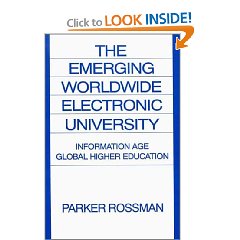
This book is available immediately from WHSmith. I recommend it without reservation, it is in my top dozen books on the World Brain – Global Brain -Global Mind – Collective Intellgence reading area.
Amazon seems to be deleting a lot of reviews from top reviewers, which I find quite annoying. Indeed, Amazon has become so unreliable, on top of being unresponsive to years of requests for simple changes (e.g. being able to access all reviews by a specific reviewer against a specific search such as “World Brain” that I finally created Phi Beta Iota the Public Intelligence Blog, where you can access all reviews in each each of 98 reading categories, all leading back to Amazon, but not dependent on Amazon.
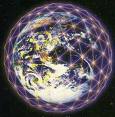
This book is extraordinary in that is directly connects information to DNA and makes an absolutely fascinating case for how every single atom on the planet is an information element, and all of the atoms in the whole are the Global Mind.
There are no notes, and normally this would set me off, but I found the personal reflections of this author so utterly extraordinary that I can not find fault on this point.
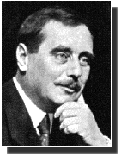
The whole human memory can be, and probably in a short time will be, made accessible to every individual. And what is also of very great importance in this uncertain world where destruction becomes continually more frequent and unpredictable, is this, that photography affords now every facility for multiplying duplicates of this – which we may call? – this new all-human cerebrum. It need not be concentrated in any one single place. It need not be vulnerable as a human head or a human heart is vulnerable. It can be reproduced exactly and fully, in Peru, China, Iceland, Central Africa, or wherever else seems to afford an insurance against danger and interruption. It can have at once, the concentration of a craniate animal and the diffused vitality of an amoeba.
The Original Surveyor of Distance Education and Virtual Learning
January 23, 2010
G. Parker Rossman
My original review of this book seems to have vanished into thin air here at Amazon.
G. Parker Rossman and his book came into my life just after I started the international conference on “National Security & National Competitiveness: Open Source Solutions,” and both the book and the World Brain discussion group that he co-founded were extremely influencial in my recognition that the ultimate outcome for a re-appreciation of open sources instead of secret sources was a global networked “world brain.”
From my point of view, he was the first serious scholar to comprehensively begin documenting what could be learned online, and the first–at a time when fewer than 10% of those who could afford a computer were actually online–to really begin outlining the possibilities for both distance education and virtual learning.
It was as a direct result of his influence through this book that Gottfried Mayer-Kress spoke to the conference in 1997 on the topic of the World Brain, and that was when the entire modern Open Source Intelligence movement took a decisive turn away from helping the US Government get a grip on reality, and toward connecting and empowering all multinational sources of information for the good of all.
I have listed both this author and Gottfried Mayer-Kress in the World Brain line-up that runs from H. G. Wells through Vannavar Bush to today's proponents for Collective Intelligence, the World Brain, and a Global Game in which we all play ourselves and all of us have access to “true cost” information in all languages all the time.
Here are ten other books I recommend with this one, I have reviewed and summarized all of them:
After reading this report by my good friend Werther, I would urge you to compare Werther's analysis to the “inside the beltway,” K Street analyses published in today's Washington Post — then decide which you like better.
By Werther (Pseudonym) Electric Politics January 22, 2010
The Supreme Court's wholesale rejection of a century of statutes regulating corporate contributions to political campaigns is a breath of fresh air in a hypocrisy-ridden political process. It certainly ought to sweep away the tendency of timid rationalizers to deny the existence of corporate domination and control of every aspect of governance in the United States — a fact which should have already been made abundantly clear by the terms of the bank bailout and the health care travesty.
It is not inconceivable, using the Court's logic, that antitrust laws could be thrown out as well. Since natural persons have freedom of association, why should not artificial persons have a similar freedom of association? The Court has in fact created a species of Nietzschean Übermensch: a non-human human endowed with the strength of many people and theoretically immortal.
Now that our Supreme Court, with the assistance of a little medieval alchemy, has ruled that property can be transmuted into persons, is it conceivable that it could do the opposite? Before one dismisses the thought, the executive branch, with the connivance of lower federal courts, has already been busy establishing the precedent that persons held at Guantanamo prison and other facilities can be converted into the property of the United States Government, to be held indefinitely.
CLETA MITCHELL : The Supreme Court has correctly eliminated a constitutionally flawed system that allowed media corporations (e.g., The Washington Post Co.) to freely disseminate their opinions about candidates using corporate treasury funds, while denying that constitutional privilege to Susie's Flower Shop Inc
ROBERT LENHARD: The balance of power in political contests has shifted dramatically away from candidates running for office and toward corporations and unions seeking to advance their policy agendas.
KENNETH GROSS: Contrary to popular reports, the sky is not falling.
ANNA BURGER: There can be no doubt: The voice of everyday working Americans in the political process will be muted.
BEN GINSBERG: The voices of candidates and political parties just got much quieter.
MARK ELIAS: While few individuals exercise their right to fund multimillion-dollar advertising campaigns, we should expect that corporations will eagerly do so. Given corporate wealth and the legislative stakes, in many elections corporations will dominate paid campaign communications — leaving candidates and political parties as secondary actors.
KAREN FINNEY: At the very moment Americans' mistrust of big corporations, big government and large institutions has reached a fever pitch, the Supreme Court moved to replace a government of, for and by the people with a government that can be bought and paid for by just about any major corporation — from Exxon to Russian-owned Lukoil to China's CPC Corp.
U.S. District Judge Vaughn Walker’s decision was a major blow to the two suits testing warrantless eavesdropping and executive branch powers implemented following the 2001 terror attacks. The San Francisco judge said the courts are not available to the public to mount that challenge.
“A citizen may not gain standing by claiming a right to have the government follow the law,” (.pdf) Walker ruled late Thursday.
Cindy Cohn, the legal director of the Electronic Frontier Foundation that brought one of the cases, said the decision means “when you’re trying to stop the government from doing something illegal, and if the government does it to enough people, the courts can’t fix it.”
The greatest human achievement is the subordination of government to law. This was an English achievement that required eight centuries of struggle, beginning in the ninth century when King Alfred the Great codified the common law, moving forward with the Magna Carta in the thirteenth century and culminating with the Glorious Revolution in the late seventeenth century.
The success of this long struggle made law a shield of the people. As an English colony, America inherited this unique achievement that made English speaking peoples the most free in the world.
As Lawrence Stratton and I show in our book, The Tyranny of Good Intentions (2000), the protective features of law in the U.S. were eroded in the twentieth century by prosecutorial abuse and by setting aside law in order to better pursue criminals. By the time of our second edition (2008), law as a shield of the people no longer existed. Respect for the Constitution and rule of law had given way to executive branch claims that during time of war government is not constrained by law or Constitution.
This country needs to get a grip. We need a slap in the face, a splash of cold water.
On Saturday, 57-year-old Jules Paul Bouloute opened an emergency exit inside the American Airlines terminal at Kennedy airport. Alarms blared and sirens flashed. Bouloute later told police that he'd opened the door by accident.
Which is what you'd assume. Sure, the exit was clearly marked, but it happens all the time, does it not?
All of Terminal 8 was evacuated for more than two hours. Police then swept through the building with dogs and SWAT teams (because, you see, a terrorist wouldn't quietly drop an explosive device into a trash barrel; he would first set off alarms, in order to…?). Before being allowed back in, thousands of travelers were forced to undergo rescreening at the Transportation Security Administration checkpoints, giving guards a chance to snag any butter knives or 4-ounce shampoo bottles they might have missed the first time. Inbound planes were stranded on the tarmac and departures were delayed for several hours.
Pakistan-Afghanistan-Turkey: For the record. A senior Pakistani official said Turks are playing a role behind the scenes in mending relations between Afghanistan and Pakistan, Reuters reported. The official said that the Turks are among those working on negotiations with some Taliban elements and that there is “a lot happening behind the scenes that people don't know about.”

 Extraordinary Book