Aid Data (Beta) fr AidData.org | Tracking Development Finance

01 Poverty, 02 Diplomacy, 02 Infectious Disease, 03 Economy, 04 Education, 06 Family, 07 Health, 11 Society, 12 Water, International Aid, Research resources
website link

AidData attempts to capture the universe of development finance and foreign aid, increase the value of data by providing more descriptive information about development activities, provide data in an accessible format, and strengthen efforts to improve donor and recipient strategic planning and coordination. The PLAID Project — the predecessor to AidData — benefits from significant support given by the Bill & Melinda Gates Foundation, the Hewlett Foundation, Richard and Judy Finch, and the National Science Foundation. PLAID is a partnership of the College of William and Mary and Brigham Young University. Its successor, AidData, is a merger of PLAID and the Development Gateway's Accessible Information on Development Activities (AiDA) Additionally, our work would not be possible without the institutional support of the College of William and Mary, Brigham Young University, and the Development Gateway Foundation.

The AidData team is committed to building an easy-to-use, comprehensive, and timely resource describing the universe of development finance project-by-project, including all grants and loans committed by all major bilateral and multilateral aid donors. We currently have the most comprehensive database on development finance, but have plenty of additional work to do. Better data will help increase aid targeting and coordination, and it will enable better measurement and evaluation of aid effectiveness. AidData is currently developing a publicly-accessible interface that will enable researchers, field workers, and policy makers interested in development finance to access detailed project level data in order to increase transparency, accountability, and effectiveness.

Journal: Towards the Eighteenth Brumaire of General David Petraeus?

02 China, 05 Iran, 08 Wild Cards, Cultural Intelligence, Military
Webster Griffin Tarpley

Webster G. Tarpley  TARPLEY.net June 23, 2010

Prodded doubtless by forces above and behind the Oval Office, Obama has ousted General McChrystal in favor of General Petraeus, who now combines the post of CENTCOM theater commander with that of NATO commander in Afghanistan. This is a move deriving from the inherent fecklessness and incompetence of the Obama administration, especially from the imperialist point of view. Recent events have highlighted Obama’s total lack of executive ability, leaving him weakened as he faced the bizarre flap about some barrack-room gripes by McChrystal’s staff collected by a correspondent from Rolling Stone magazine. Because of Obama’s weakness, he felt obliged to react to the scuttlebutt peddled by Rolling Stone, when a stronger president could have dismissed it or ignored it. As Fletcher Pratt once wrote, Abraham Lincoln was capable of laughing an attempted coup d’état out of existence with an off-color joke. Obama is far too weak for that.

As for General McChrystal, he was critically weakened and made vulnerable to ouster by the total failure of his counterinsurgency strategy, with the Marja offensive faltering and the Kandahar offensive indefinitely delayed, even as NATO losses rise exponentially, President Karzai turns towards Tehran and Beijing, and many of the NATO coalition partners prepare to defect.

One effect of the sacking of McChrystal is likely to be the accelerated breakup of the US-led Afghan invasion coalition, which was already in bad shape before this incident. The Netherlands and Canada are leaving, the British and the Poles want to join them, and the Turks can hardly be enthusiastic. Who else will join them in the race for the exit door? NATO Secretary General Rasmussen, anticipating such a result, spoke out yesterday in favor of keeping McChrystal, who works for him as well as for Obama. More countries may now announce their departure even before the November NATO summit in Lisbon, Portugal.

Another of McChrystal’s bosses, Afghan President Karzai, also made clear that he wanted McChrystal to stay. He will now use Obama’s flaunting of his wishes to accelerate his own playing of the China card in economic policy and the Iranian card in cultural and religious affairs. Afghanistan is likely to slip into the Chinese orbit.

FULL STORY ONLINE

NSA To Monitor Critical Computer Networks Looking For Imperfect Citizens

Civil Society, Commerce, Computer/online security, Corporations, Cyberscams, malware, spam, Government, Secrecy & Politics of Secrecy
article link

(IEEE Spectrum) By: Robert Charette // Thu, July 08, 2010

There is a story in the Wall Street Journal about a new, $100+ million, classified program being run out of the National Security Agency (NSA) that will monitor critical commercial and government infrastructure systems such as electricity grids, nuclear power plants, air traffic control systems and the like in order to detect cyber attacks.

Dubbed “Perfect Citizen,” the NSA hopes the program will hep it fill in what the WSJ calls the “big, glaring holes” in knowledge about exactly how massive, coordinated cyber attacks might negatively affect the US.

The Journal story goes on to quote from an internal email from US defense contractor Raytheon, the program's prime contractor, as saying:

“The overall purpose of the [program] is our Government…feel[s] that they need to insure the Public Sector is doing all they can to secure Infrastructure critical to our National Security.”

“Perfect Citizen is Big Brother.”

Full article here

NIGHTWATCH Extract: China Wages Peace with Railroads Across Pakistan and Into Afghanistan

02 China, 03 India, 08 Wild Cards, Commercial Intelligence, Peace Intelligence

India: Minister of State for Defense M. M. Pallam Raju on 7 July said India is concerned about China's plans to build a rail link with Pakistan through the Karakoram mountain range, The Times of India reported. He said India is planning to take countermeasures against the proposed link.

Comment: This is one of four strategically significant rail projects in Asia. All are important in the UN master plan for Asian railroads, but several stand out.

The first is the Chinese project to build a railroad line in Afghanistan that runs southward from the Oxus River to China's Aynak Copper Mine in Logar Province. This is one of the largest, if not the largest, copper deposit in the world. Eventually it could become the leading edge of mineral extraction projects that could transform Afghanistan a generation from now, if security conditions permit.

The second project is the Iranian railroad to Herat, in western Afghanistan. This is moving ahead slowly, but follows a hard road already built by the Iranians. It will tie relatively quiet Herat and western Afghanistan to the economic market area of Mashhad, Iran's second largest city, when completed.

The third rail project with strategic significance is in North Korea, which has two sub-projects that can complete the link of Europe by rail to Japan. Completion of these long delayed spurs depend on whether whoever runs anything in North Korea ever gets a sound grip on their own economic best interests and permit upgrades to the Chinese and to the Russian spurs that run across the Demilitarized Zone and link to the South Korean rail systems that terminate at Pusan. A ferry ride across the Tsushima Strait links to Japan railroads and Tokyo. London to Tokyo by rail is in sight, if the North Koreans would only decide to become prosperous.

The latest project is that announced for Pakistan. In the 1971 general war with India, only Chinese truck convoys through the Karakoram Mountains via the Khunjerab Pass kept Pakistan in the war for the two weeks it actually fought before suing for peace and losing East Pakistan.

The Khunjerab Pass is the highest elevation paved international border at 15,400 ft above sea level. The railroad would presumably follow the Karakoram Highway, which is the highest paved road in the world.

A rail link through those mountains and that pass would link Xinjiang, China, to Karachi and Gwadar – the Chinese built port in southwestern Pakistan on the Indian Ocean — via the Pakistani rail system. The throughput capacity would be exponentially larger than that achievable by truck convoys.

This railroad will create a new market system. No wonder India is concerned, economically and militarily. Pakistan really would become an extension of the new Chinese economic empire. All China needs to do is to complete railroads through Burma and link the Afghanistan line to Iran and it will have an Asian rail empire, within a generation, all the way to the English Channel without using the Trans-Siberian.

NIGHTWATCH HOME

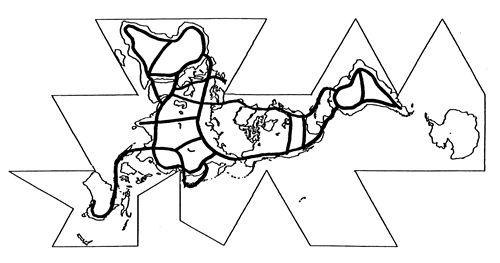
Phi Beta Iota: This is the kind of strategic analysis rooted in solid intellect that should characterize the entire US Intelligence Community, not one lone individual.  Three big things appear to be looming on the horizon:  free cellular around the planet, monetizing the transactions instead of the connections; low-cost rail (and eventually the Buckminster Fuller electrical grid) girding the globe; and finally, the up-ending of capitalism to focus on the needs–and wealth-creating capabilities–of the five billion poor.  No one in Washington, London, Paris, Bonn, or Toyko–or even New Delhi and Jakarta where they have the most to gain–is thinking about this.  That is a crime against humanity, a moral and intellectual atrocity so horrendous as to call into question the legitimacy of every government.

Review: When to Speak Up and When to Shut Up

5 Star, Best Practices in Management, Consciousness & Social IQ, Democracy, Public Administration

5.0 out of 5 stars Christian Social IQ Book with Moral Foundation
July 7, 2010
Michael Sedler

This was a very intriguing book and I am going to have to read it more than once. I bought it thinking it was a social IQ book, kind of an intelligent person's conversational etiquette. It is far more than that, very Christian but also very practical for anyone. If I were to give away two small books as traveling companions for anyone, this would be one, Leadership Lessons of Jesus: A Timeless Model for Today's Leaders, which was sold in the Special Operations bookstores when LtGen Jerry Boykin was deputy for intelligence in the Pentagon, see his biography, Never Surrender: A Soldier's Journey to the Crossroads of Faith and Freedom.

Where this book impacted on me to the extent any book can influence the habits of a 57-year old, was in really making crystal clear the value of questions instead of statements as a conversational contribution. I kept thinking Socratic, and also thinking of my colleagues in the war colleges who must learn to teach future generals who do not want to be told anything, but can be challenged to think more broadly.

The author distinguishes between questioning (bad) and asking questions (good), and this I noted down:

QUESTIONING
1. Persisting
2. Complaining
3. Challenging
4. Debating and disputing
5. Making accusations
6. Taking up an offensive

ASKING QUESTIONS
1. Prepare
2. Timing
3. Get to the point
4. Recognize authority
5. Ask for more information if not clear
6. Avoid becoming defensive
7. Avoid trying to justify self
8. Thank for time

Two quotes I especially liked:

“The enticement to be secretive, and to withhold information is a battle for many of us.”

“Dishonesty,trickery, deceit, lying–each may be justified in our own minds. We rationalize and develop our own sense of morality in order to protect ourselves. Unfortunately a web of deceit usually ends up creating more problems than originally existed.”

Continue reading “Review: When to Speak Up and When to Shut Up”

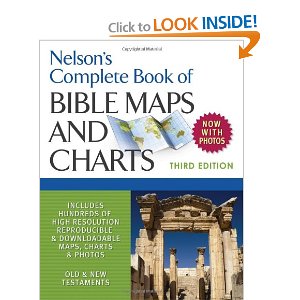
Review: Nelson’s Complete Book of Bible Maps and Charts

6 Star Top 10%, Atlases & State of the World, History, Religion & Politics of Religion
Amazon Page

5.0 out of 5 stars Above Five Stars–Sets a Standard

July 7, 2010

I needed books to read on a flight out of Dallas, which is now a totally Christian airport. This book, and When to Speak Up and When To Shut Up were the best options for a non-fiction fanatic.

My first note is “PHENOMENAL. Overview, charts with key ideas, photos, maps, a Gold Standard.” This is an extraordinary reference in every sense of the word, and I consider the price to be at cost or gift levels, particularly with the full color nature of all the charts and maps.

I am NOT one of the “the only book I read and need is the Bible” crowd. Certainly they already know of this book and love it. For me, this book represents the very art and science of perfection in opening the Bible and its meaning to those that are NOT steeped in the arcane passages or that have NOT memorized passages over time.

As an intelligence officer, I found myself studying the maps and ultimately noting the following:

Continue reading “Review: Nelson's Complete Book of Bible Maps and Charts”