Karl Marx, Libertarians, & OWS: End STATE Power RECAP

03 Economy, 07 Other Atrocities, 09 Justice, 10 Security, 11 Society, Book Lists, Civil Society, Commerce, Commercial Intelligence, Counter-Oppression/Counter-Dictatorship Practices, Cultural Intelligence, Ethics, Government
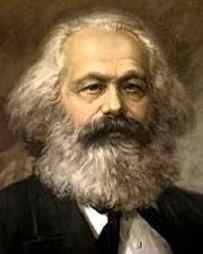
Karl Marx

Phi Beta Iota:  Keep an open mind. This is deeply serious and directly relevant to understanding the convergence of the honest right, the honest left, and OccupyWallStreet.

Don DeBar (aligned with Cynthia McKinney) sends:

Zinoviev on Lenin and the (1905) Petrograd Soviet

What Lenin meant to convey was that the Soviets were not the ordinary class organisation, whose purpose, according to the Mensheviks and Social-Revolutionists, was to fight only for the economic demands of the working class within the framework of bourgeois society. In his opinion such Soviets would be doomed in advance. In fact, no Soviets were needed for such a purpose. In his view, the Soviets were organisations for the seizure of state power, and for transforming the workers into the ruling class. That is why he again and again told the Petrograd workers in the course of 1916: ‘Ask yourselves a thousand times whether you are prepared, whether you are strong enough; measure your cloth nine times before you cut. To organise Soviets means to declare a war to a finish, to declare civil war upon the bourgeoisie, to begin the proletarian revolution.’

The OWS formations carry such potential, albeit (likewise) in an embryonic state. Their internal democratic structures are the key to this, and that is the part that should be replicated. As assemblies of people are constituted among more and more communities (and the accomplishment of this is extremely important to insuring that the internal democracy of each group is replicated in the aggregation of all such groups, in whatever form that ultimately takes, should it develop that far), both the possibility of coordinate mass action and the potentiality of an alternative political structure that represents all segments of the population emerges. The lesson from Lenin as applied to OWS is to recognize both the positive and negative potential that it represents and to both engage it and shape it to fit the needs of all communities. In the United States in particular, given the historically dominant role of racism in the social order, that means ensuring that the construct that is springing into existence before our eyes is made to become responsive to the direction of the traditionally oppressed communities, particularly communities of color.

Assuming that the most important task is to address the racist nature of this society and to prevent this from being replicated in whatever emerges from the present activities, it would seem that, as the best defense is a good offense, the oppressed communities here (and elsewhere, as this is becoming a global phenomenon) must organize as never before, and in a way that is compatible – in form and substance – with the present model, and which will thus insure that the voices and self-determined interests of these communities will find full expression.

See Also:

Nafee Mosaddeq Ahmed,  A User's Guide to the Crisis of Civilisation: And How to Save It

Thomas DiLorenzo,  The Real Lincoln: A New Look at Abraham Lincoln, His Agenda, and an Unnecessary War 

Charles Eisenstein, Sacred Economics – Money, Gift, and Society in the Age of Transition

Robert Higgs,  Against Leviathan: Government Power and a Free Society

Hans-Herman Hoppe, Democracy: The God that Failed: The Economics and Politics of Monarchy, Democracy, and Natural Order 

Mike Huckabee, Simple Government

Jörg Guido Hülsmann,  Mises: The Last Knight of Liberalism

Ron Paul, Liberty Defined–50 Essential Issues That Affect Our Freedom

Daniel Pinchbeck, Ken Jordan, et al, What Comes After Money?  Essays from Reality Sandwich on Transforming Currency and Community

Justin Raimondo, An Enemy of the State–The Life of Murray N. Rothbard

Murray Rothbard,  A History of Money and Banking in the United States: The Colonial Era to World War II

Robert Scheer, The Great American Stickup: How Reagan Republicans and Clinton Democrats Enriched Wall Street While Mugging Main Street

1992 E3i: Ethics, Ecology, Evolution, & intelligence (Full Text Online for Google Translate))

2008 Paradigms of Failure ELECTION 2008 – Lipstick on the Pig (Full Text Online for Google Translate)

2008 The Substance of Governance ELECTION 2008 Lipstick on the Pig (Full Text Online for Google Translate)

2008 Legitimate Grievances (US Citizens versus US Government) ELECTION 2008 – Lipstick on the Pig (Full Text Online for Google Translate)

2011: Commercial Intelligence and Competitive Strategy in International Markets – Context and Challenge Inteligencia Empresarial y Estrategia Competitiva en Mercados Internacional – Contexto y Desafio

John Robb: Economic Reality & Political Treason

Robert Steele: Citizen in Search of Integrity (Full Text Online for Google Translate)

Robert Steele: Electoral Reform in a Box (DIY Kit)

Robert Steele: OccupyWallStreet Message and Method

Robert Steele on Russia TV: Occupy Wall Street, Electoral Reform, and Possible Need for a Nation-Wide General Strike to Force Matter by 4 July 2012

Reference: Steele at Huffington Post on Books

Vatican, Ethics, & Truth I (Full Text Online for Google Translate)

Vatican, Ethics, & Truth II (Full Text Online for Google Translate)

What’s Wrong with America? Let Me List the Books….

More from Dan DeBar:  My thinking on this is not fully developed, but, if you can spare 58 minutes and suffer some of the fits-and-starts of my thought process in the process, I did go into some depth in this video –  – which starts off a bit slow, but eventually gets across a good picture of my thinking on the matter.  As I felt I got deflected somewhat by the host from my main point – that of the centrality of the issue of racism to any solution of the problems being articulated by, or serving as the catalyst for, the OWS “movement” – I fleshed that out a bit more in this video.

Paul Krassner: The Yippies and the Occupiers

Cultural Intelligence
Paul Krassner

The Yippies and the Occupiers

By Paul Krassner

As a co-founder of the Yippies (Youth International Party) known for demonstrating against the Vietnam War at the 1968 Democratic convention in Chicago–I find myself comparing and contrasting the Yippies and the Occupy Wall Street protesters.

We had to perform stunts to get media coverage of our cause, so a group of us went to the Stock Market, upstairs to the balcony, and threw $200 worth of singles onto the floor below, watching the gang of manic brokers suddenly morph from yelling “Pork Bellies” into “Diving for Dollars.” Then we held a press conference outside, explaining the connection between capitalism and the war.

Now, a particular placard, “Wall Street Is War Street,” gives me a sense of continuity. Another anonymous Occupier spokesperson carried a poster with a touch of dark humor: “I am an immigrant. I came here to take your job. But you don¹t have one.”

By the sheer power of numbers without the necessity of stunts, the Occupiers have broadened public awareness about the economic injustice perpetuated by corporations without compassion conspiring with government corruption resulting in immeasurable suffering.

Continue reading “Paul Krassner: The Yippies and the Occupiers”

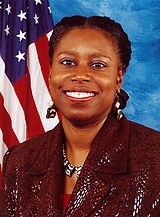
Cynthia McKinney: Fourth of Four Installments on Libya

04 Inter-State Conflict, 05 Civil War, 07 Other Atrocities, Corruption, Counter-Oppression/Counter-Dictatorship Practices, Earth Intelligence, Government, Military, Peace Intelligence, White Papers
Cynthia McKinney

Fourth of Four Installments on Libya

Once again, Mahdi Darius Nazemroaya peels away the veneer of legitimacy and deception enveloping the U.S./NATO genocide currently taking place in Libya. In his first article, Nazemroaya makes it clear that there never was any evidence given to the United Nations or the International Criminal Court to warrant or justify United Nations Resolutions 1970 and 1973 or current U.S./NATO operations inside Libya.

In his second article detailing this very sad story, Nazemroaya exposes the relationships between the major Libyan protagonists/NATO collaborators and the U.S. Congress-funded National Endowment for Democracy. Incredibly, when leading Members of Congress publicly proclaimed repeatedly that they did not know who the Libyan “rebel” NATO collaborators were, select so-called rebel leaders were political intimates with stakeholders at the National Endowment for Democracy.  Nazemroaya also exposes that, despite its Global War on Terror, the U.S. government actually financed Libyan terrorists and criminals wanted by INTERPOL.

In his third installment, Nazemroaya removes the U.S./NATO fig leaf that attempts to cover the cynical machinations of the pro-Israel Lobby and its objective of balkanizing African and Asian states, especially those whose populations are largely Muslim.  Nazemroaya makes the essential point: “An attempt to separate the merging point of an Arab and African identity is underway.” The Voice of America has exposed the psychological aspects of its brutal intervention and hints at the mindset of the U.S./NATO Libyan pawns; several stories suggest that the “new” Libya will turn more toward its Arab identity than its African identity. While Muammar Qaddafi drove home to all Libyans that Libya, as its geography dictates, is an African country, Nazemroaya shows how this fact is not a policy objective shared by the US, NATO, Israel, or their Libyan allies.

Finally, in this last of the four-part series, Nazemroaya shows the ultimate perfidy of the U.S./NATO Libyan allies, especially Mahmoud Jibril, in the pre-emptive strike against the Jamahirya Wealth Redistribution Project.  The Libyan people are now fighting the world's most powerful militaries to save their Jamahirya.  No matter how many times NATO-inspired media lie to their publics, the lies will never become the truth.  Hauntingly, Nazemroaya ends by telling us that the Libyan National Transitional Council has already recognized the Syrian Transitional Council as the legitimate government of Syria.  Meanwhile, Dr. Ayman al-Zawahiri, now reputed to be the leader of Al Qaeda and reportedly rewarded with U.S. citizenship after fighting for the CIA in Bosnia, just called for the people of Algeria to oust their President.  President Obama's policy of flying drones and dropping bombs over Africa, and invading the Continent with US troops, means that any country that resists an AFRICOM base, as Colonel Qaddafi's wife tells us he did, or expects to exercise its right of self-determination, can expect the kind of treatment we are witnessing now in Libya.  We, in the US, must resist these policies for ourselves and and on behalf of  the Africans who deserve better than this from the United States of America.

Cynthia McKinney, 25 October 2011

4 of 4:  Who Was Muammar Qaddafi? Libya's Wealth Redistribution Project by Mahdi Darius Nazemroaya – 2011-10-27.  In 2008, Qaddafi announced his plans for a Wealth Redistribution Program. Washington was intent upon undermining this project through military intervention and regime change.

3 of 4:  Beating the Drums of a Broader US-NATO Middle East War – by Mahdi Darius Nazemroaya – 2011-10-24

2 of 4:  Israel and Libya: Preparing Africa for the “Clash of Civilizations” – by Mahdi Darius Nazemroaya – 2011-10-11. “An attempt to separate the merging point of an Arab and African identity is underway.”

1 of 4:  America's Conquest of Africa: The Roles of France and Israel – by Mahdi Darius Nazemroaya, Julien Teil – 2011-10-06. Terrorists not only fight for Washington on the ground, they also act as frontmen for regime change through so-called human rights organizations that promote democracy. Introduction by Cynthia McKinney

DefDog: Elizabeth Warren Spooks the Extreme Right

03 Economy, Civil Society, Cultural Intelligence, Ethics, Government
DefDog

Warren Takes Credit for Occupy Wall Street

Samuel Jacobs

The Daily Beast, Oct 24, 2011

The Harvard professor has spooked the right. As she begins her high-profile Senate campaign against GOP star Scott Brown in Massachusetts, the consumer advocate tells Samuel P. Jacobs how she created ‘much of the intellectual foundation' for the Occupy Wall Street movement. She also talks about her past life as a Republican and the challenges of being a woman on the campaign trail—and says she's no ‘guileless Marxist.'

Read full story.

Phi Beta Iota:  The implied claim is a real stretch.  Ethics has been around for a very long time, as has populism.  The Internet is new.  An awakening engaged and modestly enraged public is new.  At best Warren is – like most of us – a modest catalyst for convergence.

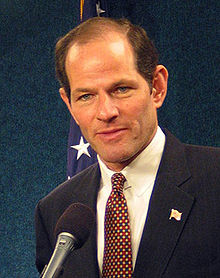
Eliot Spitzer: Conversation on Democracy & Occupy

Civil Society, Cultural Intelligence, Government, Methods & Process
Eliot Spitzer

The Coffee Summit

Eliot Spitzer talks capitalism with one of the 99 percent

New York Magazine,21 October 2011

Last week, New York’s Mattathias Schwartz invited Occupy Wall Street protester Manissa Maharawal, a CUNY graduate student in anthropology, to discuss the movement and its impact over coffee with former New York governor and attorney general Eliot Spitzer. An extended transcript of their conversation is below.

FOUR EXTRACTS:

MM: Oh, okay. So we’re in the same system. As I was saying, one of the reasons this movement has been without demands is because without demands we can shift. The moment you have a list of demands, you have politicians take all of those demands and explain to you why they aren’t going to work.

ES: But in order to turn this into something other than a visceral cry of despair, you need to figure out how to confront the actual problems and issues. You need to think about all of this more rigorously. If you’re down in Zuccotti Park six months from now, having made it through a cold winter, I’m not sure whether you would deem that success. Trust me, the media won’t be paying as much attention six months from now if it’s just the same couple hundred people, right?

. . . . .

Continue reading “Eliot Spitzer: Conversation on Democracy & Occupy”

noble gold