Believe it or not….NATO appears to be attentive to and leveraging the “intellectual capital” outside the confines of its Member state intelligence services.
Robert Rowley, 48, supervisor of a Dairy Queen in Arizona, said he has already seen results from his Twitter activism. He was among the first to notice fuel tankers slipping past NATO warships and docking at ports controlled by Col. Gadhafi, which led to NATO interdictions.
He also wonders whether his tweets might be connected to the bombing of a Gadhafi communications centre in Tripoli. Combing through satellite images, he noticed that a property listed as a commercial warehouse had a yard containing what appeared to be military vehicles. He published his observations; 10 hours later, the spot was hit by a NATO air strike.
“I’m 5,000 miles away,” he said, in an interview before his shift at the ice-cream parlour. “It’s a very weird feeling.”
Goodbye two-Party system? Discontent is building to open up the political process
NEW YORK NEWSDAY THE SUNDAY SPECIAL
October 31, 2010
Name a problem — poverty, war, out-of-control spending. The political parties offer themselves as the solution to all of the above, and more. We respond by voting for first one party, then the other, then back again. We want to let the world know we are unhappy, but we haven’t yet developed the creative capacity to rearrange the world around us.
This seemingly eternal passivity is the mother’s milk of political partyism. No wonder the Republicans and Democrats and their auxiliaries — the tea parties, the unions, the media — must whip us into a frenzy. Whether we are Foxites, MSNBCists, bloggers or bored stiff, we’re now implored daily to get out to vote. Why? Not because voting develops our capacity to move the country forward. But because we must put one, or the other, or both, political parties in power — even though separately and together, they brought us to this anxious and crummy place.
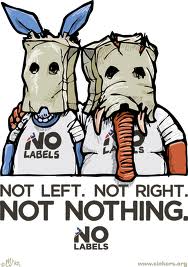
Phi Beta Iota: Jacqueline Salit is a force in America, and she has access to Michael Bloomberg. They both made a mistake in spending money on apparatchiks who created the NO LABELS “movement” that would be a monstrocity but for the fact that it is so pathetically “wag the puppy” one can only laugh. She herself is authentic, and there is no denying the fact that 43% or more voters now consider themselves Independent, and over 83% told an informal Wall Street Journal poll they are ready to vote for a third party President. All that is missing now is a Presidential candidate from a third party that can make Seven Promises to America.
UPDATED 20 June 2011 after talking to Cynthia McKinney. Changes 7th promise to subsume End of Empire to Start of Green Non-Zero World that works for all.
Over the course of the past decade, as I have turned to non-fiction reading and reflections on integrity and intelligence, I have come to realize just how corrupt the US Government is at the political level, and how compliant the good people are that are trapped within a very bad system.
Below are the 7 promises I would demand of anyone who aspires to be President of the United States of America. I know of no one else who can credibly commit to these 7 promises.
Another misstep by the IC…..Zawahiri has ties to the Muslim Brotherhood, the same group that has brought you the “Arab Spring”, Washington's perception of a move toward democracy…..
Zawahiri's goal has always been to overtake AQ (hence the belief he was responsible for Azam's death) and make it a weapon of the Islamic Jihad. If true, and the Arab Spring is tied to the Brotherhood, then giving up UBL is another step of the ladder. He was no longer needed.
Now that Ayman Zawahiri has assumed leadership of al-Qaeda, it is important to end the widespread perception that he is a dour intellectual who is disconnected from young, would-be jihadists. The fact is, Zawahiri is a wily, dangerous and imposing leader who should be considered no less of a threat — and perhaps even more so — than his predecessor.
Ron Shaich, the founder and chairman of Panera Bread, has sculpted his company into one of the most successful small restaurant chains in the country. He's also done something no other chain has done before.
By creating a unique, pay-what-you-can model at three “Panera Cares” cafes around the country — and more are coming soon — he has proven an idea that seems revolutionary for a large corporation, but is actually very simple: trust people; they'll often surprise you.
. . . . . . .
“It worked,” Ron said. “20 percent would leave more than the suggested donation, 60 percent would leave the suggested amount, and 20 percent would leave less.”
Each week, on a Friday, Alexander Cockburn publishes a weekly diary in the weekend edition of Counterpunch, which he co-edits with Jeffrey St. Claire. Last week’s diary included a particularly important entry that expands on earlier CP essay analyzing the possibility of increased infant deaths in the western US resulting from the poisons spewed out by the multiple meltdowns in the Fukushima nuclear power facility in Japan.
Cockburn enlisted Pierre Sprey, a recognized expert in the proper use of nonparametric statistics to extract unbiased information out limited but important data samples, to examine the data/analysis in the original CP essay and to expand or critique the analysis, if possible. (caveat: Pierre is a close friend of mine)
Attached below is Cockburn’s summary of Pierre’s findings … it makes for very important reading for two reasons: it is a good discussion of the limits implicit in in quality statistical analysis, and it is a sobering discussion of a danger that has receded from the public consciousness.
Last weekend on this site we ran a piece by Dr. Janet Sherman and Joseph Mangano, reviewing some recent figures from the Center for Disease Control: here's how they interpreted the data in the context of the disaster at Fukushima on March 11, 2011:
“The recent CDC Morbidity and Mortality Weekly Report indicates that eight cities in the northwest U.S. (Boise ID, Seattle WA, Portland OR, plus the northern California cities of Santa Cruz, Sacramento, San Francisco, San Jose, and Berkeley) reported the following data on deaths among those younger than one year of age:
“4 weeks ending March 19, 2011 – 37 deaths (avg. 9.25 per week)
10 weeks ending May 28, 2011 – 125 deaths (avg.12.50 per week).
“This amounts to an increase of 35 per cent (the total for the entire U.S. rose about 2.3 per cent ), and is statistically significant. Of further significance is that those dates include the four weeks before and the ten weeks after the Fukushima Nuclear Power Plant disaster…