Security and stability in the 21st century have little to do with traditional power politics, military conflict between states, and issues of grand strategy. Instead they revolve around the disruptive consequences of globalization, declining governance, inequality, urbanization, and nonstate violent actors. The author explores the implications of these issues for the United States. He proposes a rejection of “stateocentric” assumptions and an embrace of the notion of the New Middle Ages characterized, among other things, by competing structures, fragmented authority, and the rise of “no-go” zones. He also suggests that the world could tip into a New Dark Age. He identifies three major options for the United States in responding to such a development. The author argues that for interventions to have any chance of success the United States will have to move to a trans-agency approach. But even this might not be sufficient to stanch the chaos and prevent the continuing decline of the Westphalian state.
On March 13, 2007, I handed over the keys to my house, put my possessions in storage and headed out to travel around the world with nothing but a backpack, my laptop and a camera.
Three and a half years and 70 countries later, I've gotten the equivalent of a Ph.D in general knowledge about the people and places of Planet Earth.
Here are some of the things I've learned:
1) People are generally good
2) The media lies
3) The world is boring
4) People don't hate Americans
5) Americans aren't as ignorant as you might think
6) Americans don't travel
7) The rest of the world isn't full of germs
8 ) You don't need a lot stuff
9) Traveling doesn't have to be expensive
10) Culture matters
12) Everyone is proud of where they are from
13) America and Canada share a common culture
14) Most people have a deep desire to travel around the world
15) You can find the internet almost everywhere
16) In developing countries, government is usually the problem
17) English is becoming universal
18) Modernization is not Westernization
19) We view other nations by a different set of criteria than we view ourselves
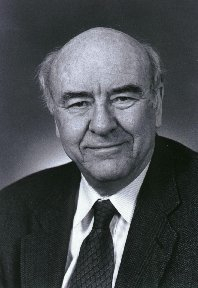
He has been elected President of the Systems, Man, and Cybernetics Society of the Institute of Electrical and Electronics Engineers, and of the International Society for the Systems Sciences (formerly called the Society for General Systems Research). He served as Editor of the IEEE Transactions on Systems, Man, and Cybernetics from 1968 to 1971, and as founding Editor-in-Chief of the Pergamon journal Systems Research, during the period 1981-1990. Warfield is a member of the Academic Committee of the International Encyclopedia of Systems and Cybernetics.
He is a Life Fellow of the Institute of Electrical and Electronics Engineers, and holds that organization's Centennial Medal. He is a member of the Association for Integrative Studies.
In 2006 John N. Warfield was awarded the Joseph G. Wohl Award for Career Achievement at the 2006 annual meeting of the IEEE Systems, Man, and Cybernetics Society. This is the highest award given by the society, and is not awarded every year. He was awarded for his contributions to systems engineering concepts, methodology, design, education and management. Warfield was also awarded the IEEE Third Millennium Medal.
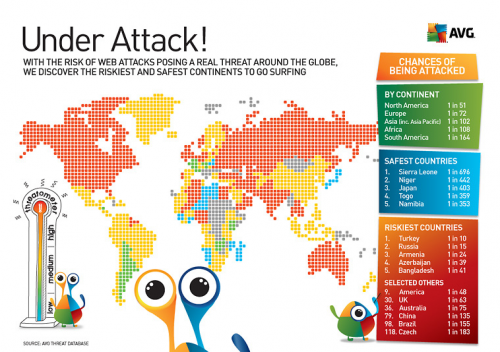
Here’s an interesting study by AVG on internet security, asking “Where in the World are you most likely to be hit by a malicious computer attack or virus?”.
Apparently, and surprisingly to me, the answer is “not Africa” or South America.
“During the last week of July, AVG researchers compiled a list of virus and malware attacks by country picked up by AVG security software. This means we have compiled data from over 127 million computers in 144 countries to determine the incidence rates of virus attacks by country.”
Dirk Singer, of AVG sent over the list of African countries, here they are country-by-country. As you can see, sub-saharan Africa is compatively ‘safe’ compared to other areas of the World. Your chances of being attacked while surfing the web in each country are:
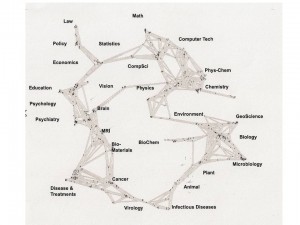
Phi Beta Iota: Most serious analysts now understand Citation Analytics 101. It's time to move to Citation Analytics 202, and there is no better way to introduce the art of the possible than by pointing to Kevin W. Boyack, Katy Borner, and Richard Klavans (2007), “Mapping the Structure and Evolution of Chemistry Research (11th International Conference of Scientometrics and Infometrics, pp. 112-123.
Full Article with Color GraphicsGraphic as Printable Single Page PPT
There are several take-aways from this article, which is more or less the “coming out” of the Klavens-inspired infometrics field now that he has won his law-suit and has unchallenged access to all Institute of Scientific Information (ISI) access [this was one of the sources we used to win the Burundi Exercise before the Aspin-Brown Commission in 1995].
While senior Pentagon officials resort to bluster in hopes of preventing the WikiLeaks website from posting any more secret Afghan war documents on the Internet, security experts say there is a lot the U.S. military could have done to prevent the classified documents from being leaked in the first place.
Steps range from the sophisticated — installing automated monitoring systems on classified networks — to the mundane — disabling CD burners and USB ports on network computers.
“The technology is available” to protect highly sensitive information, said Tom Conway, director of federal business development at computer security giant McAfee. “The Defense Department doesn’t have it, but it is commercially available. We’ve got some major commercial clients using it.”
Full Article Below the Line (Not Easily Available on Internet); Lengthy Comment Follows Article