For the past week, a secret meeting of 57 finance ministers aimed at setting up a new international financial system took place in a large ship on international waters near Europe, according to White Dragon Society representatives who were there.
The meeting, hosted by Switzerland, deliberately excluded representatives from the U.S. Federal Reserve Board and its Washington D.C. subsidiary, France, Italy, the UK, Germany and Japan.
Countries like Russia, China and the Netherlands were among the 57 represented.
Representatives from the Pentagon and the U.S. agencies at the meeting promised to bypass the Federal Reserve board and use their access to codes for the international collateral accounts to finance the U.S. military industrial complex in conjunction with the new system.
The Swiss used their financial intelligence to refuse would-be participants who were in any way associated with either,
the Bilderberg Group
the Council on Foreign Relations
or the Trilateral Commission
Among those refused entry were Naoto Kan (still Prime Minister of Japan as of last week), IMF head Christine Lagarde and U.S. Senator J. Rockefeller.
Rockefeller was actually physically prevented from boarding the ship, according to two eye-witnesses.
Study says US government, business need to kick network security up a notch
Michael Cooney
Network World, 12 September 2011
There is an urgent need for businesses and our government to develop high-level cyber intelligence as a way to combat the unacceptable levels of online security threats because the current “patch and pray” system won't cut it in the future.
That was the major thrust of a study by the Intelligence and National Security Alliance's (INSA) Cyber Council which went on to state that such a cyber-intelligence discipline will demand discussion of the unique training, education and skill sets that will be required to successfully conduct meaningful collection and analysis in the cyber domain.
“While there is a great deal of focus on current cyber security issues, there is little focus on defining and exploring the cyber threat environment at a higher level,” INSA stated. INSA describes itself as a non-profit, non-partisan, public-private organization.
The group says the dilemma that exists in the current cyber intelligence apparatus is that the Department of Homeland Security has the authority but lacks the experience and capabilities to orchestrate a comprehensive approach to cyber intelligence. The Department of Defense has much of the actual cyber intelligence capabilities, and private industry owns most of the infrastructure. “Ultimately, INSA's Cyber Council would like to see a meaningful partnership among all relevant government agencies and the private sector to ensure seamless sharing of threat information, timely analytical judgments, and reasoned, measured responses to clear threats.”
The group made a number of suggestions to help businesses and government build this intelligence community including:
Develop strategies (beyond current “patch and pray” processes), policies, doctrines, legal frameworks, and overall global context for cyber intelligence matters
Increase global business, diplomatic and other forms of engagement, which should discuss potential ways to create more stability and mutual security in the cyber arena in order to reduce the potential for cyber conflict, theft, sabotage, and espionage
Support development of deterrence, dissuasion, and other high level concepts and measures for maintaining peace and stability at all levels of conflict and crisis
Define cyber intelligence professions, needed skillsets, training, and education for both industry and government needs.
Enable the creation of cyber intelligence related polices, approaches, and pilot efforts across industry, academia/non-profits, and government that provide unclassified situational awareness and indications and warning data, analytics and 24/7 unclassified and classified (as appropriate) reporting to government agencies, trusted industry, and global partners.
Corporately define specific activities, plans, and intentions of adversaries; continuously identify current and emerging threat vectors, and support our plans and intentions
Identify the specific technical means utilized or planned for cyber attack operations in deep technical detail to include supply chain issues, paths to be exploited, nature and character of deployed infections, systems/product weakness, effects, and anticipated planned or ongoing adjacent activities
Maintain detailed cyber situational awareness writ large
Participate in the rapid control and release of cyber means in order to ensure a viable intelligence gain and loss awareness
Identify what criminal activities are ongoing or have already happened in cyber networks, do formal damage assessments in these areas, and support development of improved defenses
Partner on research and development in the challenging areas of attack attribution, warning, damage assessment, and space related threat collection and analysis
Organize and support counter-intelligence and counter-espionage (CI/CE) activities, with special focus on identifying/using auditing tools and processes to deal with the insider threats
Create a consistent and meaningful approach for the cyber equivalent of Battle Damage Assessment (BDA)/Combat Effectiveness Assessment
Establish public-private partnership cyber outreach forums that address these areas in a comprehensive, practical, and executable fashion. These forums can take the form of commissions that study the demand for cyber intelligence and value added to cyber security.
Phi Beta Iota: The US is not just lacking in cyber-intelligence, it is lacking in all forms of intelligence qua decision-support. The US intelligence community lacks integrity, and General Keith Alexander and General Jim Clapper and Mr. Mike Vickers have all been given too much money with zero adult leadership. Top Secret America is a disgracefully dysfunctional enterprise, and now richly deserving of almost complete shut-down. Congress and the White House have failed to be ethical or intelligent in this matter.
Editor’s Note: The following report includes adapted excerpts from David DeGraw’s book, “The Road Through 2012: Revolution or World War III.”
Release Date: 9.28.11
Analysis of Financial Terrorism in America By David DeGraw, AmpedStatus Report
EXTRACTS
The following report is a statistical analysis of the systemic economic attacks against the American people.
Currently, at least 62 million Americans, 20% of US households, have zero or negative net worth.
Recently, the National Academy of Science released their latest findings, backing up my claim by revealing that 52,765,000 Americans, 17.3% of the population, lived in poverty in 2009.
…counting the total number people in need of employment, you get a current unemployment rate of 22.5%, which is an all-time record total of 34 million people currently in need of work.
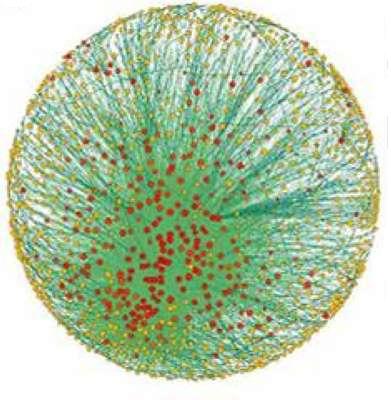
In the first such analysis ever conducted, Swiss economic researchers have conducted a global network analysis of the most powerful transnational corporations (TNCs). Their results have revealed a core of 787 firms with control of 80% of this network, and a “super entity” comprised of 147 corporations that have a controlling interest in 40% of the network’s TNCs.
Phi Beta Iota: It is not the first time this has been done, original work was done in the 1970's on inter-locking boards of directors, and complex forms of relationship analysis were pioneered by Samuel Milgram among others. It is the first time it has been done in digital form with large amounts of data. It is not, however, ”
the final answer.” For that one must understand deep secrecy, over-lapping proxies, the role of clandestine and covert entities, the cross-over among religious organizations, criminal organizations, and government entitites nominally responsible for justice but more often than not actively engaged in crimes against the public interest. Certainly worth a close read, but the banks are fronts, not the high table.
Since September 11, 2001, so-called “homegrown terrorists,” working alone or with others, have planned and in some cases implemented terrorist activities, contributed financial or other material support to others' terrorist activities, or become radicalized in the United States and then traveled to other countries to conduct terrorist activities directed against those countries or against the United States. This paper examines the cases of homegrown terrorism from 9/11 through 2010, highlights lessons learned from those cases that suggest actions for the future, and includes a chronology of numbers and case descriptions of terrorist events in the United States during that period. Most of the individuals involved are Muslim, but the numbers are small. A total of 176 Americans have been indicted, arrested, or otherwise identified as jihadist terrorists or supporters since 9/11. They were involved in 82 cases, a majority of which involve the actions of a single individual. Al Qaeda has increasingly used the Internet to build an army of followers. Many of the terrorists identified in this study began their journey online. However, al Qaeda has not yet managed to inspire its online followers to action. Few of the 32 locally hatched jihadist plots to carry out terrorist attacks in the United States since 9/11 got much beyond the discussion stage. Nevertheless, al Qaeda remains a threat. More terrorist attempts will occur. Traditional law enforcement, in which authorities attempt to identify and apprehend a perpetrator after a crime has been committed, is inadequate to deal with terrorists who are determined to cause many deaths and great destruction and who may not care whether they themselves survive. Public safety demands a preventive approach — intervention before an attack occurs. In addition to law enforcement, intelligence collection, and community policing, public reaction is an essential component of such preventive defense.
His Holiness the 14th Dalai Lama and Nobel Peace Laureates Rigoberta Menchu of Guatemala and Archbishop Desmund Tutu of South Africa, joined six other Nobel Peace Laureates urging President Obama to reject the Keystone XL pipeline, an environmental disaster in the making.
Phi Beta Iota: We find it fascinating that the activists are ignoring the larger crime, the use of fresh water to flush the tar sands in the first place.
Osama bin Laden spoke often of a strategy of “economic warfare” against the United States, a low-level war aimed at bankrupting the world's economic superpower. A decade after the 9/11 attacks, it's hard to argue that bin Laden's strategy was ineffective. The attacks themselves, according to the September 11 commission, cost Al Qaeda between $400,000 and $500,000 to execute. They have cost America, by our estimate, more than $5 trillion – a “return on investment” of 10,000,000 to one.