Nuclear/Climate Change: CLOSED 17 May 2011

03 Environmental Degradation, 05 Energy, 07 Health, 07 Other Atrocities, 08 Wild Cards, 11 Society, 12 Water, Communities of Practice, Corporations, Corruption, Cultural Intelligence, Earth Intelligence, Politics of Science & Science of Politics, Technologies

ROLLING UPDATE from Beginning of Crisis

SHORT URL: http://tinyurl.com/PBI-Japan-Update

Click on Image to Enlarge

16 May 2011

ALL:  Study: Seaports unready for climate change

CANADA:  Climate change threatens arctic coastlines

CHINA:  China’s Nuclear Arsenal: Status and Evolution

EUROPE-SPAIN:  Spanish Quake Jolts European Nuclear Debate

GERMANY-JAPAN-USA:  Nuclear Nations Turn To Natural Gas And Renewables

INDIA:  Manmohan Singh takes stock of country's nuclear arsenal

INDIA-PAKISTAN:  Towards An Indo-Pak Nuclear Lexicon: Minimum Nuclear Deterrence – Analysis

INDONESIA:  Strong earthquake strikes off Indonesia’s Java island

JAPAN:  Japanese Officials Ignored or Concealed Dangers

JAPAN:  Japan Sticks to Timeline for Solving Nuclear Crisis

Plant operator Tokyo Electric Power Co. also acknowledged that one of the factors contributing to a rapid meltdown of reactor cores was the failure to keep emergency batteries safe from the tsunami, preventing a key emergency cooling system from performing its intended function.

Meanwhile, Tepco said one of the key causes of a rapid meltdown at Unit No. 1 was the failure of two emergency cooling mechanisms—the suppression pool and the isolation condenser—to perform their intended functions.

PAKISTAN:  Pakistan's nuclear surge exposed

Indian slam, satellite and video, 100% jump by 2021.
Click on Image to Enlarge

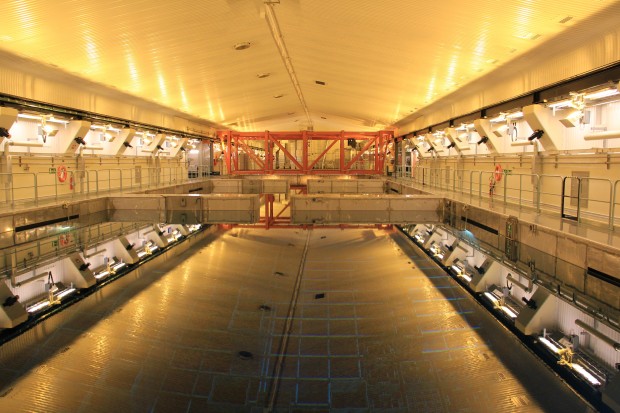
SWEDEN:  Sweden's Holding Tank For Nuclear Waste

“We have here about 2,000 tons that you are looking (at), and you can stand here as long as you want to,” she tells me before quickly adding, “If we take one of these bundles out of the water I will give you 20 seconds to leave this room alive.”

USA:  US reactor outages 50 pct above late-spring average

USA:  U.S. Nuclear Output Falls as Entergy, Progress Shut Reactors

Twenty- five of the nation’s 104 reactors were offline.

USA:  75% of Americans Have Never Heard of Climate-Gate, Study Reveals

Prior Updates, Graphics, and Original Overviews Below the Line

Continue reading “Nuclear/Climate Change: CLOSED 17 May 2011”
USG on Oil: Doing the Wrong Thing Righter….

01 Agriculture, 03 Economy, 05 Energy, 06 Family, 07 Health, 07 Other Atrocities, 09 Justice, 11 Society, 12 Water, Commerce, Corruption, Earth Intelligence, Government, IO Impotency, Power Behind-the-Scenes/Special Interests, Strategy, True Cost

Obama says ‘Drill, baby, drill.' Will new oil policy ease gas prices?

President Obama used his weekly address to announce steps to promote greater domestic oil production and reduce the burden of high gas prices. Republicans say it's not enough.

Big Oil's Political Ploy

Whatever else we might say about Big Oil in the United States, we have to give the industry credit for one thing: it has mastered the art of scamming us with a perfectly straight face.

Freshmen challenge energy subsidies

Pompeo and Labrador were joined by Grover Norquist of Americans for Tax Reform and Mike Needham of Heritage Action Fund. The two organizations joined a coalition of conservative groups in March, including Americans for Prosoperity, in a letter calling for an end to energy subsidies.


Click on Image to Enlarge

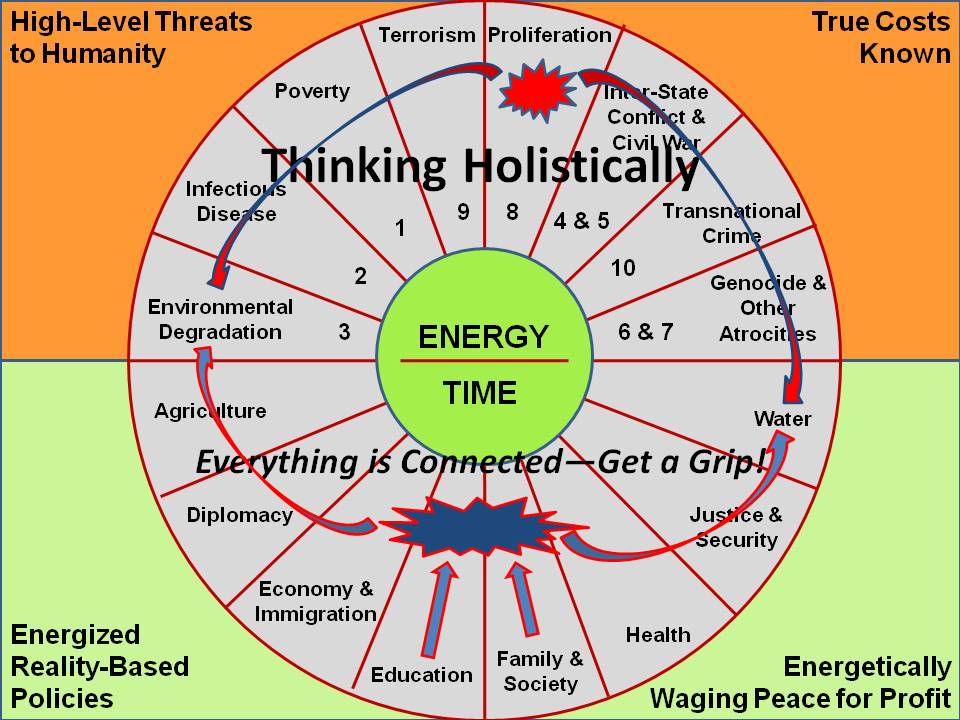
Phi Beta Iota: US politicians have substituted ideology for intelligence (decision-support) and borrowing for thinking.  There is nothing intelligent in US energy policy, because there is no policy–just a long string of subsidies and hand-outs and tax exemptions.  The oil drilling decisions are an example of doing the wrong thing righter, instead of the right thing (Russell Ackoff).  The “policy” decisions are also hypocritical because nothing being decided today will have substantive effect in less than ten years.  Here's what an intelligent government would use to think about energy futures…and everything else, all together.

Oil, Food, Middle Class Down = Long Emergency

01 Brazil, 02 China, 03 Economy, 03 India, 04 Indonesia, 05 Energy, 06 Family, 06 Russia, 07 Venezuela, 08 Wild Cards, 11 Society, Civil Society, Commerce, Commercial Intelligence, Corruption, IO Sense-Making
John Robb

D2 SCENARIO

I gave a little talk at a financial conference (Casey Research) that included the following very simple economic scenario:

  • Oil prices are going up (inexorably). China + Peak Oil + Financial diversification. Oil doesn't stop going up until GDP goes down. It's an inexorable force until then.
  • The US middle class is broken.  A hollow husk unable to withstand the slightest gust.  Regardless, it's the ultimate source of demand for the global economy. It's an immovable barrier.
  • When oil hits ~$150 a barrel the impact occurs between inexorable force and immovable barrier. The combo of higher prices at the pump and for everything else (food and other essentials) starts to crush middle class budgets and force defaults.  The economy shrinks until the price of oil goes down enough to be affordable again (for those still left in the middle class).

We keep repeat the pattern above until we're in the second depression (D2).  Long term low demand.

Phi Beta Iota: This is precisely why the BRICS (now including South Africa) and a new coalition, perhaps led by Cuba and Venezuela since Chile is refusing to lead, should focus on the immediate challenge of creating infinite free renewable energy–the foundation for global non-zero advances.  Such a strategy would be inherently ethical, legal, citizen-centered, and non-violent as well as non-intrusive on any conceivable concept of sovereignty or indigenous privilege.

Understanding Rising Food Prices

01 Agriculture, 01 Poverty, 03 Economy, 03 Environmental Degradation, 04 Education, 05 Energy, 06 Family, 07 Other Atrocities, 11 Society, 12 Water, Commerce, Commercial Intelligence, Corruption, Cultural Intelligence, Earth Intelligence, Government
Cheery Waves Recommends....

Bottom line:  ignorant government policies, and particularly the mandating of corn's use to make ethanol, have driven the price of corn up for real people who want to each corn and products containing corn (which turns out to be just about everything).

It's Getting Harder to Bring Home the Bacon

By MARY KISSEL, April 30, 2011

Wall Street Journal

C. Larry Pope, CEO of the world's largest pork producer, explains why food prices are rising and why they are likely to stay high for a long time.

It's also a business under enormous strain. Some “60 to 70% of the cost of raising a hog is tied up in the grains,” Mr. Pope explains. “The major ingredient is corn, and the secondary ingredient is soybean meal.” Over the last several years, “the cost of corn has gone from a base of $2.40 a bushel to today at $7.40 a bushel, nearly triple what it was just a few years ago.” Which means every product that uses corn has risen, too—including everything from “cereal to soft drinks” and more.

What triggered the upswing? In part: ethanol. President George W. Bush “came forward with—what do you call?—the edict that we were going to mandate 36 billion gallons of alternative fuels” by 2022, of which corn-based ethanol is “a substantial part.” Companies that blend ethanol into fuel get a $5 billion annual tax credit, and there's a tariff to keep foreign producers out of the U.S. market. Now 40% of the corn crop is “directed to ethanol, which equals the amount that's going into livestock food,” Mr. Pope calculates.

Continue reading “Understanding Rising Food Prices”

The Library of Utility

01 Agriculture, 01 Poverty, 02 Diplomacy, 02 Infectious Disease, 03 Environmental Degradation, 04 Education, 04 Inter-State Conflict, 05 Energy, 07 Health, 08 Proliferation, 11 Society, 12 Water, Earth Intelligence, History, Threats, Uncategorized
Lucius

“I imagine a library atop a remote mountain that collects the essential information needed to re-learn practical knowledge essential to civilization. This depot, open to anyone who journeys there, is the cultural equivalent of the Svalbard seed bank, a vault on the Arctic Circle that holds frozen seeds of crop plants from around the world. The utilitarian documents in this vault would be the seeds of culture, able to sprout again if needed. It would be the Library of Utility, and it would serve as civilization’s backup.”

Kevin Kelly – Author of   What Technology Wants.

Read the article The Library of Utility on the Blog of the Long Now Foundation.

See Also:

Worth a Look: Book Reviews on Civilization-Building

Worth a Look: Book Reviews on Conscious, Evolutionary, Integral Activism & Goodness

Reference: Five Major Trends Into the Future Include Severe Weather (More Severe, Frequent, & Costly)

01 Agriculture, 03 Economy, 03 Environmental Degradation, 05 Energy, 07 Health, 10 Security, 11 Society, Civil Society, Earth Intelligence

Trocaire reports severe weather as global trend

ThePost.IE 20 March 2011 By John Burke

An increase in severe weather incidents has been identified as one of the five major trends in global development aid.

The trends, which also include shifting geopolitical alliances, urban poverty, demand for natural resources and widening inequality, are contained in a new report by Irish aid organisation Trocaire.

The report, which was compiled using interviews with more than 100 global aid and development experts, will be published on Tuesday at the Leading Edge 2020 Conference in Dublin city centre.

Read balance of short article….

Leading Edge 2020 Home Page

Download the report:  Leading Edge 2020: Critical Thinking on the Future of International Development.

Biographies of Leading Edge 2020 Conference speakers

Phi Beta Iota: Severe weather trends are an act of man, not of God.  Global warming is an important but by no means the sole or even the most important environmental degradation component.

See Also:

Worth a Look: Book Reviews on Climate Change

Worth a Look: Book Reviews on Environmental Degradation (Other than Emissions)

Reference: APJ Abdul Kalam–Pure Wisdom

01 Poverty, 03 Environmental Degradation, 03 India, 04 Education, 05 Energy, 08 Proliferation, 11 Society, Advanced Cyber/IO, Articles & Chapters, Cultural Intelligence, Earth Intelligence, Ethics
APJ Abdul Kalam

‘To create better world, it is necessary to alleviate poverty’

Chicago, Apr 24:

Former President, Mr A P J Abdul Kalam today said that to create a better world, it is necessary to alleviate poverty, safeguard drinking water, use clean energy and ensure quality education and values for all.

Mr Kalam, who was honoured at a public reception by the Indo-American Centre (IAC) here, said: “The world is integrally connected through the environment, economy, people and ideas.”

He said that we need an educational value system, and ideas and innovations should not be politically inclined.

On political unrest in the Middle East, Mr Kalam explained how the Egyptian revolution for a change to democracy has spread to the Arab world.

“We need to stop corruption,” he said.

Continue reading “Reference: APJ Abdul Kalam–Pure Wisdom”

noble gold