Berto Jongman: The Costs of War — Human Costs, Economic Costss, Social + Political Costs with Alternatives and Recommendations

04 Inter-State Conflict, 05 Civil War, 07 Other Atrocities, 10 Security, 11 Society, Communities of Practice, IO Deeds of Peace, Officers Call, Peace Intelligence
Berto Jongman
Berto Jongman

Over 350,000 Killed by Violence, $4.4 Trillion Spent and Obligated

The wars begun in 2001 have been tremendously painful for millions of people in Afghanistan, Iraq, and Pakistan, and the United States, and economically costly as well. Each additional month and year of war adds to that toll. Moreover, the human costs of these conflicts will reverberate for years to come in each of those four countries. There is no turning the page on the wars with the end of hostilities, and there is even more need as a result to understand what those wars’ consequences are and will be.

The goal of the Costs of War Project has been to outline a broad understanding of the domestic and international costs and consequences of those wars. A team of 30 economists, anthropologists, political scientists, legal experts, and physicians were assembled to do this analysis. Their research papers are posted and summarized on this website.

We asked:

  • What have been the wars’ costs in human and economic terms?
  • How have these wars changed the social and political landscape of the United States and the countries where the wars have been waged?
  • What have been the public health consequences of the wars?
  • What will be the long term legacy of these conflicts for veterans?
  • What is the long term economic effect of these wars likely to be?
  • Were and are there alternative less costly and more effective ways to prevent further terror attacks?

Some of the project’s findings:
Continue reading “Berto Jongman: The Costs of War — Human Costs, Economic Costss, Social + Political Costs with Alternatives and Recommendations”

SchwartzReport: 25% of Adults World-Wide Enjoy Full Employment

03 Economy, 11 Society, Commercial Intelligence
Stephan A. Schwartz
Stephan A. Schwartz

This very important trend is virtually invisible. It's not that the data is unavailable, as this report shows. It is that it is not discussed. But if only 25 per cent of the adults in the world are employed full-time that means three quarters aren't. A major predictor of social ! unrest. Click through to see the important charts.

Only 1.3 Billion Worldwide Employed Full Time for Employer
Jon Clifton and Ben Ryan – The Gallup Organization

WASHINGTON, D.C. — About one in four adults worldwide — or roughly 1.3 billion people — worked full time for an employer in 2013. Gallup's Payroll to Population (P2P) rate, which reports the percentage of the total adult population that works at least 30 hours per week for an employer, has not grown since 2012.

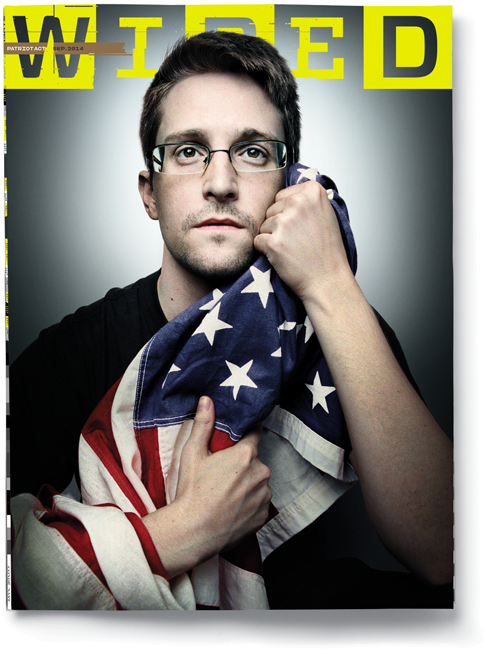
Edward Snowden with Jim Bamford in WIRED: Next NSA Revelations “Would Be the Death of All of Them Politically”

02 China, 04 Inter-State Conflict, 06 Russia, 07 Other Atrocities, 08 Wild Cards, 10 Security, 11 Society, Civil Society, Commerce, Corruption, Cultural Intelligence, Director of National Intelligence et al (IC), Government, Ineptitude, IO Deeds of War, IO Impotency, Military
Click on Image to Enlarge

The most wanted man in the world

Jim Bamford

WIRED, 13 August 2014

EXTRACTS

“It’s like the boiling frog,” Snowden tells me. “You get exposed to a little bit of evil, a little bit of rule-breaking, a little bit of dishonesty, a little bit of deceptiveness, a little bit of disservice to the public interest, and you can brush it off, you can come to justify it. But if you do that, it creates a slippery slope that just increases over time, and by the time you’ve been in 15 years, 20 years, 25 years, you’ve seen it all and it doesn’t shock you. And so you see it as normal. And that’s the problem, that’s what the Clapper event was all about. He saw deceiving the American people as what he does, as his job, as something completely ordinary. And he was right that he wouldn’t be punished for it, because he was revealed as having lied under oath and he didn’t even get a slap on the wrist for it. It says a lot about the system and a lot about our leaders.”

Read full article with many new revelations.

SchwartzReport: New GMO Approvals = 7X Pesticide Increase

01 Agriculture, 07 Health, Commerce, Corruption, Earth Intelligence, Government
Stephan A. Schwartz
Stephan A. Schwartz

Here is more on agricultural toxins. It never fails to amaze me that what seems so obvious: plants mutate and so do the bugs that attack them is not, in fact obvious. The siren call of more profit seems to trump all other considerations. Only citizen pushback is going to stop this trend.

New Wave of GMO Crops Poised for Approval Despite Public Outcry
LEAH ZERBE – Nation of Change

Despite its own admission that it will cause an up to seven-fold increase in chemical pesticide use, the U.S. Department of Agriculture (USDA) is poised to approve a new type of genetically engineered seed built to resist one of the most toxic weedkillers on the market.

SchwartzReport: First USG Push-Back on Monsanto — Banned from Wildlife Refuges

01 Agriculture, Commerce, Earth Intelligence, Ethics, Government
Stephan A. Schwartz
Stephan A. Schwartz

Here is some very good news. The Fish and Wildlife Service has announced “uses of neonicotinoid pesticides on wildlife refuges… will stop… along with GMO crops, at farming projects by 2016.”

Feds to Phase Out GMO Farms and Neonicotinoid Pesticides at Wildlife Refuges
MIKE LUDWIG – Truthout

After facing a series of legal challenges from environmental groups, the United States Fish and Wildlife Service will phase out the use of genetically modified (GMO) crops and controversial neonicotinoid pesticides at farming projects on national wildlife refuges.

National Wildlife Refuge System chief James Kurth has directed the agency to stop using GMO crops and neonicontinoids on refuge farms by January 2016, according to a July 17 memo obtained by activists last week. The Fish and Wildlife Service is the first federal agency to restrict the use of GMOs and neonicotinoids in farming practices.

Jean Lievens: P2P on Cooperativa Integral Catalana

03 Economy, Civil Society, Collective Intelligence, Commerce, Commercial Intelligence, Ethics, Liberation Technology
Jean Lievens
Jean Lievens

Enric Duran of the Catalan Integrated Cooperative has taken the time to comment on Michel Bauwens’ recent article on Open Coops, contrasting Bauwens’ proposals with the practical realities already under way in the CIC’s own forward thinking cooperativist environment.

Bauwens’ summary of these proposals include four key proposals which Duran addresses below. To give some context, the four proposals are:

  1. That coops need to be statutorily (internally) oriented towards the common good 
  2. That coops need to have governance models including all stakeholders
  3. That coops need to actively co-produce the creation of immaterial and material commons
  4. That coops need to be organized socially and politically on a global basis, even as they produce locally.

Here are Duran’s comments to each proposal.

Read full post.

noble gold