I will not replicate all that is at www.oss.net and to a much lesser extent, www.earth-intelligence.net, but do want to recognize a handful of extraordinary individuals by isolating their especially meritorious contributiions to the long-running debate about national intelligence reform and re-invention.
I'm often stunned by the lack of questions that adults are prepared to ask.
When you see kids go on a field trip, the questions pour out of them. Never ending, interesting, deep… even risky.
And then the resistance kicks in and we apparently lose the ability.
Is the weather the only thing you can think to ask about? A great question is one you can ask yourself, one that disturbs your status quo and scares you a little bit.
The A part is easy. We're good at answers. Q, not so much.
Former Defense Secretary Robert Gates has called out lawmakers for their inability to compromise and develop bipartisan strategies and policies to “address our very real and serious problems.”
During a speech in which he called Washington a town of “oversized egos and undersized backbones,” Gates said “zero-sum politics and ideological siege warfare are the new order of the day.”
Buddy Roemer is a candidate for the Republican nomination for president. He served in Congress from 1981-88 as one of the last truly conservative Democrats who crossed the aisle to back the Reagan agenda. He later was governor of Louisiana and switched party affiliation to the GOP. A longtime business executive, Mr. Roemer founded and was CEO of Business First Bank, a small community lender with $650 million is assets.
Memorable Line: “I'm a Methodist boy, and I believe in miracles.”
Memorable Line: “I want Washington DC to stop being the capital for corruption.”
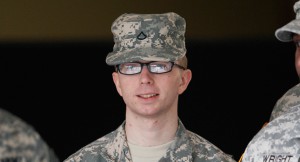
Article below, based on views of three or so retired senior military officers, two of them former Service TJAGs, takes an unfortunate tack on Manning's treachery. Their contention is that command and systemic failures set conditions for Manning to compromise documents. They assert that since he was “juniorest guy in the office,” everybody but him was responsible for what he did. I disagree. Responsibility for security is absolutely an individual one. Individuals sign general nondisclosure agreement SF-312 and other program-specific non-disclosure agreements as a priori conditions of access. Rules are stated up front. Personnel security clearances, training, and indoctrination are approaches used for our side. Gates, guards, guns, and all technical computer stuff are oriented against adversaries. Manning should have been able to work in a totally open storage area with hardcopy and softcopy documents of all classifications immediately at hand without anyone having to worry about him. Further, as we know, decision to commit treason is a profoundly individual one, often facilitated and rationalized by adversaries through considerations of sex, money, ideology, compromise, ego, excitement, etc. Individuals are supposed to individually withstand and deflect such adversary facilitations and inducements. So, in my mind, Manning is party at fault here. If justice system cannot generate a capital conviction for him, then he should go way of Jonathan Pollard, Israeli agent within NIS — life in prison, throw away key, No compassion on my part for either.
After 19 months in military prisons — much of the time in solitary confinement — Pfc. Bradley Manning finally emerged over the past week from the netherworld to which he has been confined since his arrest in the largest breach of classified information in U.S. history.
Seven days of hearings at Fort Meade, Md., produced what the prosecution called “overwhelming” evidence that the low-ranking Army intelligence analyst was the one who sent hundreds of thousands of military reports and diplomatic cables to the transparency website WikiLeaks.
But the hearing also produced equally compelling evidence of the larger issue that is often overlooked in discussions of Manning’s alleged misdeeds: the systematic breakdown in security that enabled a low-ranking enlisted man to abscond with a staggering quantity of classified Pentagonand State Department documents.
We are going to move from denial to realization. Physical world events will drive the process of realization. The primary trend is between stability and instability. We are moving from a multi-class system running from Super Elite to Unperson into a model of have's and have-nots, the unpersons. Labor has become a problem because less than 500 million are involved in life support activities thereby leaving more than 7 billion people very vulnerable to dependency (and treated as expendable containers). We are watching a redistribution process bound towards divestiture as more people become unpersons. Destruction of paper assets, debt collapse, bank failure, and war are all part of the redistribution process. With more unpeople, it becomes easier to reduce population through death and abuse. Our current economic structure has at least six trajectories of support; the physical world, human capital, transportation, technology, rule of law,and money.
Fukishima, Katrina, Gulf of Mexico oil spill — all examples of entire populations treated as “unpersons.”
Many of us believe that networked resilient communities are the key to the future. These communities are not only a way to survive the current global collapse, they are something more: The next step in social/economic organization. For those of us that are successful (by hook or crook) in building a resilient community, it will be a way of life so productive, vibrant and life affirming that will make our current lives look stagnant, backward, and feudal in comparison.
Currently, our big challenge is to find ways to acclerate the shift to resilient communities as quickly as possible. Why? The ongoing and rapid delcine in the global economic and political environment I've been describing here for the last five years, will make it increasingly more difficult to make a successful shift despite a greater willingness to do so (as in: finally seeing how truly screwed we all are). So, how can we outrun the current collapse into economic depression and political chaos?
One of the fastest ways to a) change behaviors, b) deploy tools, and c) route around bariers (political/economic corruption) is to do it digitally. Digital deployment is the way to get the “networked” portion of “networked resilient communities” rolled out. Let me show you how fast it can be. Here's the rate of deployment and adoption for new technologies over the last Century. The chart from Peter Brimelow that I found on Rob Carlson's site:
Click on Image to Enlarge
Note that with each new product, particularly those with strong network effects, we can see two things:
the lag between discovery and deployment is dropping over time.
the rate of adoption has accelerated over time.
Now that nearly everyone has a computer (either on a desk or in a smart phone), the rate of adoption for new tech has dropped from years to quarters. There's almost no lag between development and deployment, and applications that represent major innovations can roll out to globally significant levels in months. Here's a chart from Asymco that uses the most recent Android data.
Click on Image to Enlarge
Wow. Applications that run on these phones deploy even faster. Given how fast things move now, it's not hard to imagine that a new economic system (better design), decentralized financial wire service, or P2P manufacturing system could sweep the world in months, drawing in tens of millions of people into a ways of creating, trading, and sharing wealth. In short, new digital systems that make the transition to local production within networked resilient communities easier and faster since they can help generate the wealth required to do it without starving/freezing and the vision of the future that motivates people to persist despite setbacks.
Phi Beta Iota: To our great surprise, Brother John does not mention OpenBTS in relation to cell phones, or the Autonomous Internet Roadmap. The forthcoming book from Random House / Evolver Editions, THE OPEN SOURCE EVERYTHING MANIFESTO: Transparency, Truth, & Trust, make one core point over and over again: making anything “open” at “root” creates log of log adoption rates–in other words, if cell phone adoption or smart phone adoption is logrithmic now, making the pieces open will make today's adoption rates logrithmic again–meta-logrithmic. This is why there is a power-shift going on–bottom up common sense is being powered by both digital technology, and the access to one another and to information that digital technology brings to the public.
On 12 December, I described a concatenation of warmongering pressures that were shaping the popular psyche in favor of bombing Iran. Now, in a 21 December essay [also attached below], Steven Walt describes a further escalation of these pressures — in this case, via the profoundly flawed pro-bombing analysis, Time to Attack Iran: Why a Strike is the Least Bad Option, penned by Matthew Kroenig in January/February 2012 issue of the influential journal Foreign Affairs.
One would think that our recent experiences in Iraq and Afghanistan and our growing strategic problems in Pakistan, not to mention our economic problems and political paralysis at home, would temper our enthusiasm for launching yet another so-called preventative war. But that is not the case, as Kroenig's analysis and the growing anti-Iran hysteria in the debates among the the Republican running for president show (Ron Paul excepted) show. Moreover, President Obama’s Clintonesque efforts to triangulate the pro-war political pressures of the Republicans, while appeasing the Israelis, may be smart domestic politics in the short term, but they add fuel to the pro-war fires shaping the popular psyche. Finally, as I wrote last January, lurking beneath the fiery anti-Iran rhetoric are more deeply rooted domestic political-economic reasons for promoting perpetual war — reasons that have more to do with sustaining the money flowing into the Military – Industrial – Congressional Complex in the post-Cold War era than in shaping a foreign policy based on national interests.
While it is easy to whip up popular enthusiasm for launching a new war, our misadventures in Iraq and Afghanistan have shown that successfully prosecuting wars of choice are quite another matter. Nevertheless, as my good friend Mike Lofgren explains in his recent essay, Propagandizing for Perpetual War, devastating rebuttals like Walt's are likely to have little effect on the course of events.
One final point … a surprise attack on Iran would trigger a far tougher war to prosecute successfully that either Iraq or Afghanistan. If you doubt this, I suggest you study Anthony Cordesman’s 2009 analysis of the operational problems confronting Israel, should it decide to launch a surprise attack on Iran’s nuclear facilities.
If you'd like to read a textbook example of war-mongering disguised as “analysis,” I recommend Matthew Kroenig's forthcoming article in Foreign Affairs, titled “Time to Attack Iran: Why a Strike Is the Least Bad Option.” It is a remarkably poor piece of advocacy, all the more surprising because Kroenig is a smart scholar who has done some good work in the past. It makes one wonder if there's something peculiar in the D.C. water supply.
There is a simple and time-honored formula for making the case for war, especially preventive war. First, you portray the supposed threat as dire and growing, and then try to convince people that if we don't act now, horrible things will happen down the road. (Remember Condi Rice's infamous warnings about Saddam's “mushroom cloud”?) All this step requires is a bit of imagination and a willingness to assume the worst. Second, you have to persuade readers that the costs and risks of going to war aren't that great. If you want to sound sophisticated and balanced, you acknowledge that there are counterarguments and risks involved. But then you do your best to shoot down the objections and emphasize all the ways that those risks can be minimized. In short: In Step 1 you adopt a relentlessly gloomy view of the consequences of inaction; in Step 2 you switch to bulletproof optimism about how the war will play out.