EXTRACT 1: An endless supply of data, probably unparalleled in its breadth and depth, flows from every continent to a cluster of buildings on the edge of the English Garden in Munich. An encyclopedia of life, its dangers, its injustices, its coincidences, is being assembled there. There is probably no other place on Earth where the risks of the modern world are being studied more intensively and comprehensively than at the headquarters of Munich Re, the world's risk center.
EXTRACT 2: Today Munich Re wins accolades for its restraint, while its shareholders are eagerly awaiting the results of a new project. The goal of the project under development in Oechslin's department, more comprehensive than any other project before it, is to redefine the limits of knowledge by developing a global risk model.
Full Story Online
Phi Beta Iota: This is a superb article that ably documents how much can be known–and shared–that most governments and international organizations are simply not conscious of, or if conscious, exploiting microscopic bits of the data for nefarious purposes. These are the kind of people that could and should be at the heart of creating a World Brain and Global Game.
Huawei Android Smartphone ‘Ideos' Going To T-Mobile: Report
A few weeks into the future and an ad in the newspaper may look like this– looking for a Google powered smart phone? just spend $50- Amazed? Well that is what is the target of HUAWEI TECHNOLOGIES and T-MOBILE US inclusive. The former a Chinese telecom equipment provider and the latter the fourth largest US mobile carrier.
The Ideos was unveiled on Thursday in Berlin. Ideos is an Android 2.2, the latest version of Google Inc.'s free mobile operating system; ensembles a 2.8-inch touch screen; and can be a Wi-Fi hotspot, allowing other devices to connect to the Internet. Ideos is better option to all these who aren't willing to pay exorbitant for devices such as Apple Inc.'s iPhone or Verizon Wireless's Droid lineup. Such brands typically retail for more than $500 without a contract, or $200 with a two-year contract.
Phi Beta Iota: Free cell phones to the poor, and call centers that educate them free “one cell call at a time,” are the foundation for creating infinite new wealth. What most do not appear to understand is that just as with the genius of Gillette (sell the shave, not the shaver), in the 21st Century the cell phone and connectivity should be free, and it is the transmitted knowledge that is monetized (not sold, but monetized, e.g. early warning from farmers on disease strains, Twitters on earthquakes, etcetera.)
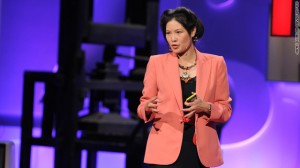
(CNN) — Discrimination against women and girls takes a staggering toll around the world, says author Sheryl WuDunn. It leads to as many as 100 million fewer females than males in the world.
Ending the oppression of women is the great moral challenge of the 21st Century, a cause she compares to fighting slavery in the 19th century and totalitarianism in the 20th Century.
The solutions, she says, are education and economic opportunity. Overpopulation is one of the larger contributors to poverty, WuDunn said. “When you educate a girl, she has significantly fewer kids.” Girls who go to school get married later in life and educate their children “in a more enlightened way.”
“So let us be clear about this up front: We hope to recruit you to join an incipient movement to emancipate women and fight global poverty by unlocking women's power as economic catalysts.
Phi Beta Iota: It merits comment that micro-lending was a success because its founder recognized that women, not men, would be the more reliable and productive catalyst. It also merits comment that the best aid investment, dollar for dollar, is in the education of women. What is missing is the “giant leap forward” that would come from distributing free telephones and creating multi-lingual call centers that educate women–and men–one cell call at a time, while serving as catalysts for harnessing the distributed intelligence of the Whole Earth, creating smart neighborhoods to smart nations to a smart planet.
1) Information-sharing and sense-making is “root” for multinational operations.
2) Education, intelligence, and research must all be open and multinational in nature.
3) Peaceful preventive measures rooted in open education and intelligence are the foundation.
4) Precision covert and clandestine multinational operations are the intermediate capability.
5) Hybrid operations by all eight tribes of intelligence, with the military as the “core force” for communications, intelligence-sharing and sense-making, logistics, and mobility, will be the norm.
6) Gandhi had it right–cannot kill swarms with machine guns, the only winning move is peace for all.
7) Yanus, Scowcroft, et al have it right–POVERTY is the #1 threat to humanity, eliminate poverty and everything else heals itself.
Core Link with Other Links (See Especially Those in Bold):
The world’s population will grow to 9 billion over the next 50 years — and only by raising the living standards of the poorest can we check population growth.
This is the paradoxical answer that Hans Rosling unveils at TED@Cannes using colorful new data display technology (you’ll see).
Phi Beta Iota: This is consistent with the report of the UN High-Level Threat Panel on Threats, Challenges, and Change, which identified POVERTY as the top threat to humanity, in part because it spawns everything else including Infectious Disease (#2), Environmental Degradation (#3, the poor doing more damage than all the corporations on the planet), and so on. See also:
Technology and development: A growing number of initiatives are promoting bottom-up ways to deliver energy to the world’s poor (Sep 2nd 2010)
AROUND 1.5 billion people, or more than a fifth of the world’s population, have no access to electricity, and a billion more have only an unreliable and intermittent supply. Of the people without electricity, 85% live in rural areas or on the fringes of cities. Extending energy grids into these areas is expensive: the United Nations estimates that an average of $35 billion-40 billion a year needs to be invested until 2030 so everyone on the planet can cook, heat and light their premises, and have energy for productive uses such as schooling. On current trends, however, the number of “energy poor” people will barely budge, and 16% of the world’s population will still have no electricity by 2030, according to the International Energy Agency.
But why wait for top-down solutions? Providing energy in a bottom-up way instead has a lot to recommend it. There is no need to wait for politicians or utilities to act. The technology in question, from solar panels to low-energy light-emitting diodes (LEDs), is rapidly falling in price. Local, bottom-up systems may be more sustainable and produce fewer carbon emissions than centralised schemes. In the rich world, in fact, the trend is towards a more flexible system of distributed, sustainable power sources. The developing world has an opportunity to leapfrog the centralised model, just as it leapfrogged fixed-line telecoms and went straight to mobile phones.
What has become abundantly clear is that the Obama administration has taken the Bush-era doctrine of the world as a battlefield and run with it. US special forces are now operating in seventy-five countries across the globe—up from sixty under Bush—and special operations sources say Obama is a major fan of the work of JSOC and other special operations forces.
Despite its portrayal in the movies, working at the Central Intelligence Agency isn’t glamour and danger all the time. In fact, for most officers, it’s more like a normal 9-to-5 job. This story is the first in a series that will debunk certain myths and misperceptions about working at the CIA.
Meet Brad, Chris, Larry, and Eleanor — all experienced CIA officers with time spent overseas. In this article, they’ll share their insights and do their best to debunk myths about being an Agency employee.
Phi Beta Iota: Just shaking our head. CIA, 9 to 5. The other observation is that unilateral anything is bad, bad, bad. We should be creating multinational regional stations and using host country case officers on the street, not muscle-bound guys whose idea of cover clothing is shorts and corafam shoes.