On the third Wednesday of every month, the nine members of an elite Wall Street society gather in Midtown Manhattan.
The men share a common goal: to protect the interests of big banks in the vast market for derivatives, one of the most profitable — and controversial — fields in finance. They also share a common secret: The details of their meetings, even their identities, have been strictly confidential.
Drawn from giants like JPMorgan Chase, Goldman Sachs and Morgan Stanley, the bankers form a powerful committee that helps oversee trading in derivatives, instruments which, like insurance, are used to hedge risk.
In theory, this group exists to safeguard the integrity of the multitrillion-dollar market. In practice, it also defends the dominance of the big banks.
The banks in this group, which is affiliated with a new derivatives clearinghouse, have fought to block other banks from entering the market, and they are also trying to thwart efforts to make full information on prices and fees freely available.
Phi Beta Iota: Derivatives are legalized financial crime, and a major reason why these criminal assets inflated in value seventeen times while asset-based values only went up five times during the same period addressed by William Greider in his latest book, Come Home America: The Rise and Fall (and Redeeming Promise) of Our Country. Any government that permits derivatives trading is itself complicit in this crime against humanity.
Around 60 countries worldwide are viewed as “systemically corrupt,” and with globalization multiplying the avenues by which corrupt practices cross borders and span the globe, experts are debating the nature of corruption and how to stop it.
By Robert Coalson for Radio Free Europe/Radio Liberty (RFE/RL)
ISN ETH Zurich 10 December 2010
EXTRACT: Systemic corruption cuts across key state institutions, runs from the top to the bottom, and is fundamentally political in nature. University of Colorado political scientist Christoph Stefes, who studies corruption in post-Soviet countries, says systemic corruption is qualitatively different from traditional notions of case-by-case malfeasance.
Click on Title to Read at Huffington Post and Make Comments.
EDIT of 10 Dec 10 to add missing links and correct typos, this version only.
A Strategic Analytic Model is the non-negotiable first step in creating Strategic Intelligence, and cascades down to also enable Operational, Tactical, and Technical Intelligence.
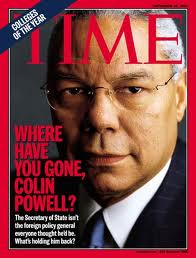
Phi Beta Iota: The most important decision Barack Obama faces is the fundamental one of whether he wants to lead a government that works for all, or continue to be a meaningless placeholder in the theater of the absurd. Electoral Reform is the only thing that matters at this point. Absent Electoral Reform, his mid-term Cabinet appointments will be meaningless–business as usual. Colin Powell is as good as it gets if he can reframe his sense of loyalty back to the Constitutional Oath and actually down-size the Pentagon program by a third or more, while shifting $200 billion a year to State, where Senator Chuck Hagel would be well qualified to get the place back to evidence-based policies and coherent strategic planning. Commerce is a big one–Clyde Prestowitz would be our recommendation, along with Joseph Stiglitz to Office of Management and Budget–see our Virtual Cabinet at Huffington Post. However stellar the appointments, nothing they do will matter absent fundamental Electoral Reform and a restoration of the integrity not only of the US executive policy process, but of the legislative deliberation process as well. Only Electoral Reform can create an honest representative Congress. There are many other critical changes to be made at the highest levels, but ONLY in the context of a restoration of the government being Of, By, and For We the People. Obama is one single piece of paper away from greatness. We observe with interest.
When things are not going well, until you get the truth out on the table, no matter how ugly, you are not in a position to deal with it. — Bob Seelert, Chairman, Saatchi & Saatchi Worldwide (New York), 2009
A Nation's best defense is an educated citizenry. – Thomas Jefferson, circa 1776
Knowledge will forever govern ignorance; and a people who mean to be their own governors must arm themselves with the power which knowledge gives. — James Madison, circa 1776
The truth at any cost reduces all others costs. — Robert Steele, 2010
In recent years, months, weeks, and days the confrontational convergence of 2012 has emerged with startling clarity. The key negative trends are these:
In short, the horror story collapses as soon as anyone gives it any serious thought. The Wall Street gang can hardly be faulted for trying cheap scare tactics for pushing its agenda; after all it worked so brilliantly with the TARP two years ago. At the time the plot line was that unless we immediately gave all our money to the Wall Street banks, with no questions asked, then the whole economy would collapse.
Joseph Stiglitz outlines a very sensible approach for placing the United States on a pathway toward correcting the problems paralyzing our political economy. Of course, his ideas will never be seriously considered by the let-them-eat-cake oligarchs now running Versailles on the Potomac, because to put this plan into action, someone must smash the Hall of Mirrors that is distorting what passes for reality in our collective OODA Loops. CS<
A five-part plan to cut the deficit, narrow inequality, and strengthen the economy—and why special interests would block it.
By Joseph E. Stiglitz, Slate, Monday, Dec. 6, 2010
Technically, reducing a deficit is a straightforward matter: One must either cut expenditures or raise taxes. It is already clear, however, that the deficit-reduction agenda, at least in the United States, goes further: It is an attempt to weaken social protections, reduce the progressivity of the tax system, and shrink the role and size of government— all while leaving established interests, like the military-industrial complex, as little-affected as possible.
Precis: history includes massive increase in defense expenditures, growth in inequality, underinvestment in public sector including infrastructure, and growth in corporate welfare. Remediation demands increased spending on high-return public investments, cut in military expenditures “not just funding for the fruitless wars, but also for the weapons that don't work against enemies that don't exist;” eliminate corporate welfare; create a fairer and more efficient tax system; 5% increase in taxes actually paod (focus on top 1%).
Joseph E. Stiglitz, a Nobel laureate in economics, is University Professor at Columbia University. The paperback version of his latest book, Freefall: Free Markets and the Sinking of the Global Economy,with a new afterword, was published in October.
Phi Beta Iota: The Deficit Commission has not produced any supporting documentation. The public intelligence available, of which the above is a small sample, is overwhelming in suggesting that the deficit commission is a criminal fraud being perpetuated on the American public. Wall Street and the two-party tyranny appear to believe that the public is both stupid and permanently inert, and that they can get away with this. Time will tell. We condemn it–and note that Joseph Stiglitz was appointed Director of the Office of Management and Budget (OMB) in the Virtual Cabinet at Huffington Post. We trust him.
Welt am Sontag in Germany asked me for an op-ed on Wikileaks. Here it is, auf Englisch. Hier, auf Deutsch.
Government should be transparent by default, secret by necessity. Of course, it is not. Too much of government is secret. Why? Because those who hold secrets hold power.
Now Wikileaks has punctured that power. Whether or not it ever reveals another document—and we can be certain that it will—Wikileaks has made us all aware that no secret is safe. If something is known by one person, it can be known by the world.


 Robert David Steele