Worth a Look: Learn to Lead–with Intelligence

04 Education, Ethics, Government, Intelligence (government), Methods & Process, Military, Officers Call

Learn to Lead

Dedicated to educating a network of intelligence professionals who Think and Live Leadership.

“Leadership and learning are indispensible to each other. ”

John F. Kennedy to the Dallas Citizen's Council, 22  Nov. 1963

This website is a labor of professional love for retired Senior Executive Service (SES) Bill Manthorpe, also Captain, USN (Ret).  Once serving as  Deputy Director of Naval Intelligence he followed this with over a decade of teaching at Johns Hopkins University and as an Adjunct Professor at the Joint Military Intelligence College.

This site is being added to the roster of Righteous Sites.

Journal: World’s Top Risk Data Managers

Analysis, Augmented Reality, Commercial Intelligence, Earth Intelligence, Geospatial, info-graphics/data-visualization, IO Sense-Making, Methods & Process, Policies, Research resources, Strategy, Threats, Tools

Berto Jongman Recommends...

A Safety Net for Global Capitalism

Inside Munich Re, the World's Risk Center

By Uwe Buse

EXTRACT 1:  An endless supply of data, probably unparalleled in its breadth and depth, flows from every continent to a cluster of buildings on the edge of the English Garden in Munich. An encyclopedia of life, its dangers, its injustices, its coincidences, is being assembled there. There is probably no other place on Earth where the risks of the modern world are being studied more intensively and comprehensively than at the headquarters of Munich Re, the world's risk center.

EXTRACT 2: Today Munich Re wins accolades for its restraint, while its shareholders are eagerly awaiting the results of a new project. The goal of the project under development in Oechslin's department, more comprehensive than any other project before it, is to redefine the limits of knowledge by developing a global risk model.

Full Story Online

Phi Beta Iota: This is a superb article that ably documents how much can be known–and shared–that most governments and international organizations are simply not conscious of, or if conscious, exploiting microscopic bits of the data for nefarious purposes.  These are the kind of people that could and should be at the heart of creating a World Brain and Global Game.

Journal: Femicide, Educating Women, Saving Earth

04 Education, 07 Other Atrocities, 11 Society, Civil Society, Collective Intelligence, Cultural Intelligence

CNN Story on TED Story

Tens of millions of ‘missing' girls

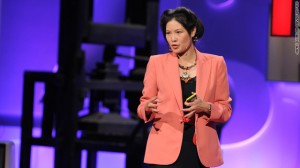
(CNN) — Discrimination against women and girls takes a staggering toll around the world, says author Sheryl WuDunn. It leads to as many as 100 million fewer females than males in the world.

Ending the oppression of women is the great moral challenge of the 21st Century, a cause she compares to fighting slavery in the 19th century and totalitarianism in the 20th Century.

The solutions, she says, are education and economic opportunity. Overpopulation is one of the larger contributors to poverty, WuDunn said. “When you educate a girl, she has significantly fewer kids.” Girls who go to school get married later in life and educate their children “in a more enlightened way.”

“So let us be clear about this up front: We hope to recruit you to join an incipient movement to emancipate women and fight global poverty by unlocking women's power as economic catalysts.

WATCH THE TED SHORT STORY

Phi Beta Iota: It merits comment that micro-lending was a success because its founder recognized that women, not men, would be the more reliable and productive catalyst.  It also merits comment that the best aid investment, dollar for dollar, is in the education of women.  What is missing is the “giant leap forward” that would come from distributing free telephones and creating multi-lingual call centers that educate women–and men–one cell call at a time, while serving as catalysts for harnessing the distributed intelligence of the Whole Earth, creating smart neighborhoods to smart nations to a smart planet.

Journal: Multinational Transformation

About the Idea, Collaboration Zones, Communities of Practice, Key Players, Policies, Threats, Topics (All Other)

A few thoughts:

1)  Information-sharing and sense-making is “root” for multinational operations.

2)  Education, intelligence, and research must all be open and multinational in nature.

3)  Peaceful preventive measures rooted in open education and intelligence are the foundation.

4)  Precision covert and clandestine multinational operations are the intermediate capability.

5)  Hybrid operations by all eight tribes of intelligence, with the military as the “core force” for communications, intelligence-sharing and sense-making, logistics, and mobility, will be the norm.

6)  Gandhi had it right–cannot kill swarms with machine guns, the only winning move is peace for all.

7)  Yanus, Scowcroft, et al have it right–POVERTY is the #1 threat to humanity, eliminate poverty and everything else heals itself.

Core Link with Other Links (See Especially Those in Bold):

Search: The Future of OSINT [is M4IS2-Multinational]

20100905 Multinational Postings at Phi Beta Iota is organized into the following topics but only covers the last year instead of all five years.  It just became too demanding a task.

Acquisition (Multinational)
Analytics for Multinational/Whole Earth (Concepts & Methods)
Brain-Power/Human Intelligence
Bottom-Up
C4I Fundamentals (Needs, Tools)
Citizen-Centered Information & Intelligence
Civil-Military
Concepts for Civilization
Corruption
Education
French-Language Items
Hacking Earth
Handbooks
Information & Intelligence
Operations
Peace Through Innovation
Strategy (or Not)

See Also:
2010 INTELLIGENCE FOR EARTH: Clarity, Diversity, Integrity, & Sustainability
2008 COLLECTIVE INTELLIGENCE: Creating a Prosperous World at Peace
2006 INFORMATION OPERATIONS: All Information, All Languages, All the Time
2003 PEACEKEEPING INTELLIGENCE: Emerging Concepts for the Future
2002 THE NEW CRAFT OF INTELLIGENCE: Personal, Public, & Political
Worth a Look: Book Review Lists (Positive)
Worth a Look: Book Review Lists (Negative)

Journal: General Petraeus–Human Terrain Team NOT

08 Wild Cards, Cultural Intelligence, Methods & Process, Military, Peace Intelligence
"Is that HTT crawling across the rug over there?"

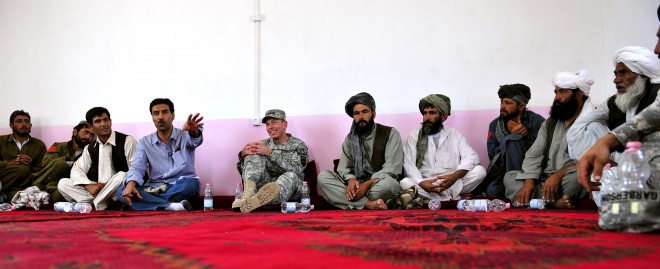
Did Gen. David Petraeus just call the Human Terrain System worthless? With a few choice sentences to the Wall Street Journal, the top commander in Afghanistan highlighted the disconnect between what the Army’s social science program is supposed to be doing — and what’s actually happening in the field.

We have never had the granular understanding of local circumstances in Afghanistan that we achieved over time in Iraq,” Petraeus told the Journal. “One of the key elements in our ability to be agile in our activities in Iraq during the surge was a pretty good understanding who the power brokers were in local areas, how the systems were supposed to work, how they really worked.”

Phi Beta Iota: The General fails to recollect that under the Cheney-Bremer regime, all were told to ignore the imams and tribal leaders.  It was only much later, after five years of failure, more or less, than some bright general decided to get back to basics.  As Winston Churchill liked to say, “The Americans always do the right thing, they just try everything else first.”  HTT has been a known failure since its inception.  For one view of how it should fit in with the other fourteen slices of Human Intelligence (HUMINT), see the new monograph from the Strategic Studies Institute,  Human Intelligence: All Humans, All Minds, All the Time (June 2010).    See also John Stanton on HTT Failures.

Bottom-Up Energy: Wait Not/Rely Not on Government & Industry

01 Poverty, 05 Energy, International Aid, Technologies
(energy from rice husks) See source article

Energy in the developing world

Power to the people

Technology and development: A growing number of initiatives are promoting bottom-up ways to deliver energy to the world’s poor  (Sep 2nd 2010)

AROUND 1.5 billion people, or more than a fifth of the world’s population, have no access to electricity, and a billion more have only an unreliable and intermittent supply. Of the people without electricity, 85% live in rural areas or on the fringes of cities. Extending energy grids into these areas is expensive: the United Nations estimates that an average of $35 billion-40 billion a year needs to be invested until 2030 so everyone on the planet can cook, heat and light their premises, and have energy for productive uses such as schooling. On current trends, however, the number of “energy poor” people will barely budge, and 16% of the world’s population will still have no electricity by 2030, according to the International Energy Agency.

But why wait for top-down solutions? Providing energy in a bottom-up way instead has a lot to recommend it. There is no need to wait for politicians or utilities to act. The technology in question, from solar panels to low-energy light-emitting diodes (LEDs), is rapidly falling in price. Local, bottom-up systems may be more sustainable and produce fewer carbon emissions than centralised schemes. In the rich world, in fact, the trend is towards a more flexible system of distributed, sustainable power sources. The developing world has an opportunity to leapfrog the centralised model, just as it leapfrogged fixed-line telecoms and went straight to mobile phones.

Continue reading “Bottom-Up Energy: Wait Not/Rely Not on Government & Industry”

Seed Money for Ideas Addressing Global Health Challenges–and the Fly in the Milk Bowl

01 Poverty, 02 Infectious Disease, 07 Health, 12 Water, Gift Intelligence, Peace Intelligence, Technologies

Unorthodox thinking is essential to overcoming the most persistent challenges in global health. Vaccines were first developed over 200 years ago because revolutionary thinkers took an entirely new approach to preventing disease. Grand Challenges Explorations fosters innovation in global health research.

The Bill & Melinda Gates Foundation has committed $100 million to encourage scientists worldwide to expand the pipeline of ideas to fight our greatest health challenges.Launched in 2008, Grand Challenge Explorations grants have already been awarded to 340 researchers from 34 countries.

Open to All Disciplines: Anyone Can Apply
The grant program is open to anyone from any discipline, from student to tenured professor, and from any organization – colleges and universities, government laboratories, research institutions, non-profit organizations and for-profit companies.

Agile, Accelerated Grant-Making
The initiative uses an agile, accelerated grant-making process with short two-page applications and no preliminary data required.

Applications are submitted online, and winning grants are chosen approximately 4 months from the submission deadline.Initial grants of $100,000 are awarded two times a year. Successful projects have the opportunity to receive a follow-on grant of up to $1 million.

Example: Water Sanitation Challenge that earns $100,000

De-compartmentalizing science through Grandchallenges.org

Phi Beta Iota: The problem with this well-intentioned initiative is that it throws money as items in isolation.  All well and good.  It would be much more impressive if it had a strategic analytic model that emphasized healthy lifestyle, healthy environment, and natural/alternative cures; and if it demanded some form of intelligence coordination in relation to all the other policies that impact on health far more negatively that we can solve–the bottom line is that we are killing our species faster than any amount of innovation can help it survive.  In our humble opinion.

noble gold