Mini-Me: Not only is the Greek default both inevitable and necessary, it may be the best possible catalyst for a new financial system combined with a massive global legal attack on Goldman Sachs, Morgan Stanley, and others that–with the full complicity of the US Government–“exploded” the global economy. Cases are starting to pop up that include racketeering charges (triple damages). My best guess is that Goldman Sachs, the IMF, the World Bank, and the Federal Reserve will cease to exist within 4-6 years.
NEW YORK, NY – SEPTEMBER 27: Over 700 hundred Continental and United pilots, joined by additional pilots from other Air Line Pilots Association (ALPA) carriers, demonstrate in front of Wall Street on September 27, 2011 in New York City. The pilots want to draw attention to the lack of progress on negotiations of the pilots' joint collective bargaining agreement ahead of the one-year anniversary of the corporate merger close date of United and Continental airlines.
Drawing on the Open Society Foundations' research into the worldwide impact of new and digital media, this forum will discuss the role that these evolving forms of media can play in the development and strengthening of democratic societies.
The discussion will consider questions such as:
Who owns today’s media? Is ownership concentration harmful to diversity—or essential for creativity in a globalized marketplace?
How can digital media help or harm public interest journalism?
Is editorial independence being strengthened or undermined?
Is the freedom of online media undermined by new gatekeepers?
How are citizens responding? Is digital media increasing activism and participation? Or is it overwhelming and numbing people with a cascade of ever-more information?
What is the overall impact of these changes and issues on democracy?
With panelists from Morocco, Spain, and the United States, this event promises international insights into a global issue.
The new wave of land deals is not the new investment in agriculture that millions had been waiting for. The poorest people are being hardest hit as competition for land intensifies. Oxfam’s research has revealed that residents regularly lose out to local elites and domestic or foreign investors because they lack the power to claim their rights effectively and to defend and advance their interests. Summary | Full report | (PDFs)
“Who understands the gibberish of the president of the United States before the General Assembly?” Castro asked.
AFP – September 26, 2011
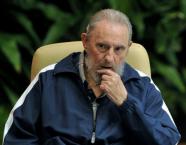
HAVANA – Cuba's Fidel Castro blasted Barack Obama's speech to the United Nations as “gibberish” on Monday, saying the US president used a rambling address to justify the “unjustifiable.”
In his first published column since July, the 85-year-old revolutionary icon slammed US and NATO intervention in Libya as “monstrous crimes” and said Obama — whom he called the “yankee president” — used a bully pulpit at the UN General Assembly last week to try and sway global opinion.
Fidel, who handed the presidency to his younger brother Raul Castro in 2006 due to a health crisis, has laid low in recent months, and his column published in state media was his first since July 3.
In Monday's piece he came out swinging, saying Obama distorted the situations in Syria, Iran, Iraq, Yemen, Egypt, Afghanistan, North Korea, Libya and the Palestinian conflict, and that the US leader used “a long rant to explain and justify the inexplicable and unjustifiable.”
“Who understands the gibberish of the president of the United States before the General Assembly?” Castro asked.
Castro also took issue with the “fascist methods by the United States and its allies to confuse and manipulate global opinion,” and said he was heartened by the “resistance” of his key allies Hugo Chavez and Evo Moralez, presidents of Venezuela and Bolivia, respectively, who criticized US and UN policy in their speeches.
“Has any nation been excluded from the bloody threats of this illustrious defender of international peace and security?” Castro said of Obama, whose UN quotes he cited extensively in his column.
“Who gave the United States such privileges?” Castro said.
He said countries must consider taking a stand at the General Assembly against the “NATO genocide in Libya,” an action Castro described as one of many “flagrant violations of principles.”
“Does anyone want it to be recorded that under their direction, the government of their nation supported the monstrous crimes by the United States and its NATO allies?” he said.
Washington and Havana are Cold War adversaries who have brought their mutual dislike and distrust into the 21st century, and Castro routinely makes political attacks on his ideological foe.
WHO PARTICIPATES IN “WHOLE SYSTEM” CONVERSATIONS? – PARTISANS, STAKEHOLDERS, DOMAINS, AND CITIZENS
by Tom Atlee
Consciously convened conversations have many functions. Many seek simply to get people talking with each other. Others try to bring together what they call “the whole system” to address that system's collective issues or dreams. Who is involved in these “whole system” conversations?
A “whole system”, in this case, involves all the parties who play – or could play – roles in some social unit or situation. The social unit could be a family or relationship, a group or organization, a community or a whole society. A situation might be, on the one hand, an issue, a problem, or a conflict – or, on the other hand, an inquiry, an opportunity, a shift, or simply a periodic reflection about what's happening. We can convene conversations around any of these things.
So how do we decide who the parties or players are? How do we “cut the pie” of the whole system? And, if we're ambitious, how do we elicit a “voice of the whole”?
I see four different approaches to defining who “a whole system” includes. Each approach has its own rationale and appropriate usages. They are not mutually exclusive, but are usually used more or less separately. Perhaps being aware of them and building synergies between them would enhance the power and wisdom of our conversations. These approaches include:
Phi Beta Iota: Tom Atlee is in our view the living founding father of Epoch B–there have been others before him, and there are other now, but for us, he is the spiritual center of gravity for doing the right thing now, here, in America. Please support his work on behalf of all of us.
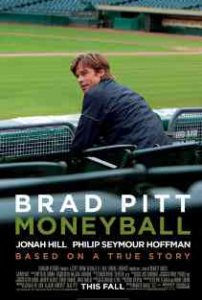
f you somehow missed it, they turned Michael Lewis’ book Moneyballinto a movie that premiered last weekend. Given how much coverage it got, I was stunned to see it come in third place at the box office, behind the re-released Lion King of all things.
I have been aware of the book and Billy Beane since Beane turned the baseball world on its ear by proving that the old school measure of talent, batting average, was necessary but not sufficient to make the best decisions about hiring, and talent is everything in baseball – or to put it in Yogi Berra-oid terms – 90% of baseball is 50% talent.
Beane showed that things lke on base percentage, slugging percentage, even the number of walks a player gets can have greater statistical impact on the outcome of games – and of course winning is what matters in the end. And for years, Beane was the only one managing a team this way, so he had the advantage and his team did better while spending less on their talent (because everyone was still so focused on batting averages). Now everyone follows this model so the playing field is once again relatively level (albeit a new higher level).
Friday I was listening to NPR and they were talking about the book and the movie and why the book was such a huge hit and the person they were interviewing said it really well – he said the reason Moneyball was such an “important” book was because it rattled an entire industry by showing it the set-in-stone metrics that industry was using were not enough, and that sent ripples into other industies suggesting that they rethink their metrics as well. In many respects, my book Rethink is a guide to helping organizations do just that.
After I heard that piece on NPR I saw two different articles in The New York Times talking about two very different companies who have followed the Moneyball/Rethink logic and offer some great examples of non-obvious changes.