
Taming Twitter’s Streams With Automated Web Sites
Unlike Facebook, whose builders strive to make it an ever more organized social network, Twitter seems to thrive on being a jumble. It is an egalitarian sort of mess: Twitter does not sort its users into categories, does not tag some as celebrities, does not map out who does lunch with whom in the real world. You and Shaquille O’Neal are Twitter equals, only he has an extra 2.8 million followers.
There is also a Web site, Listorious listorious.com where volunteers publish personally chosen lists of posters to follow based on specific themes. But it is hit or miss. The Best of Photography list is a sharp collection of 29 eye-catching feeds, but Tech News People is a pile of 499 journalists for you to sort through.
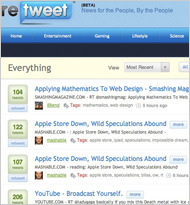
So, how do you figure out who to follow? Start with a sweeping generalization: Twitter users can be grouped into different categories. For each, there is an automated site somewhere that lets you follow the genre without having to find and follow dozens, or even hundreds, of individual Twitter streams.
Phi Beta Iota: This article provides an extraordinary bridge to the future, when Twitter could become the real-time feed for inputs easily sorted in an infinite number of “back offices” that remix the information by threat, policy, player, and zip code. The difference between Google and Twitter is that Twitter empowers the end-user, Google ravages the end user (intellectually and metaphorically speaking).





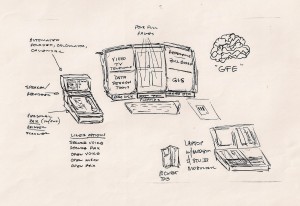 The software chapter in
 HACKERS ON PLANET EARTH (HOPE)
 Phi Beta Iota: Hackers are like astronauts, pushing the bleeding edge of the envelope. If the US Government had listened to us in 1991-1994, cyberspace would be secure today, and we would not be spending $12 billion a year on the cyber-scam game–outsourcing to beltway bandits fighting for the 100 folks that actually know how to do this stuff and can qualify for clearances. Our solution for the regional networks is gong to be multinational and open everything. This event is specifically recommended for young teens who show signs of intelligence and curiosity, and for mid-career officers beginning to realize that 80% of what they do is without merit, seeking a better way. This is where we do the right things righter, not the wrong things righter.