It's a pity this work is not more readily available. The best work right now that is available is Marc Pensky's Don't Bother Me Mom–I'm Learning!, whose 2005 article in Educational Review (December 2005/January 2006) on “Listening to the Natives,” first illuminated this huge distinction. As Pensky says, children today are no longer “little versions of us.”
Forthcoming in August 2008 is Born Digital: Understanding the First Generation of Digital Natives. The key point that I have seen in my broad reading is that the future is not here now–it will be here when the digital natives are digital adults, and overthrow the “command and control” (“do it because I say so”) regimes that are all too prone to corruption and misdirection behind closed doors.
5 for Christian wisdom, Chapters on Iraq Questionable, May 18, 2008
George Weigel
This was my first exposure to this author, who has 14 other books to his credit and was for seven years president of the ethics and public policy center. The essays that comprise the book were written over the course of 15 years, generally as lectures at Catholic centers of learning excellence. Each has a current introduction and explanation of provenance.
Highlights of this extraordinary work:
Six big ideas:
01 Religion and its moral views are a huge part of the public dialog
02 Abortion, euthanasia, and stem-cell research destructive of embryos violate first principles.
03 Free economy empowers the poor
04 Just war tradition balances freedom, justice, & security
05 John Paul II/Second Vatican was about challenging modernity to rediscover the value of truth and love
06 Catholic Church has a “form” from Christ
The author calls on reviewers to pay attention to his introduction to the book, which is indeed a very fine summary (but no substitute for a full reading). He outlines why he titled the book “Against the Grain:”
01 Political science is not just about statistics
02 Democracy is not just procedural
03 Challenges functional pacifism
04 Challenges the amorality of RealPolitic (AMEN!)
05 Asserts the inherent Christianity of America and the constant propositions (see The Thirteen American Arguments: Enduring Debates That Define and Inspire Our Country and also The Faiths of the Founding Fathers
06 Disintegration of mainline Protestantism *combined with* the abdication of universities from teaching values opened door for Catholic reflection but the door was slammed shut by the 1960's
I have a note at this point that the book is an inspiring example of political theology, and am surprised at its stark conservatism.
The author develops a theme throughout the book, to wit that there are three major spheres: the political, the economic, and the cultural, and that it is the Church–the Catholic Church alone among all religions in having diplomatic representation across 172 nations, that is a major player in the cultural arena while having a helpful influence on the other two spheres.
At this point I am furious to discover a really crummy index, mostly names. This work is too important to allow a lazy publisher to dismiss a proper indexing job, and I recommend the author demand a proper index for the paperback edition.
He cites John Paul II as saying that work is “becoming” not drudgery, and those who revere Peter Drucker will remember that he said precisely the same thing.
The author discusses how the Church “proposes”
01 Free *and* virtuous society (see my review of Forbidden Knowledge: From Prometheus to Pornography
02 Combination of democratic political community, free economy, *and* public moral culture
03 Democracy and economy are not machines that can run on their own. See the many books I have reviewed on the complete break-down of the government, predatory capitalism, and the mass media that has betrayed the public trust.
04 Freedom must be tethered to moral truths
05 Voluntary associations are vital (and citing others, freedom must characterize both a choice of faith and a choice of society)
06 Wealth is ideas, not just resources. See The Wealth of Networks: How Social Production Transforms Markets and Freedom and The Fortune at the Bottom of the Pyramid: Eradicating Poverty Through Profits (Wharton School Publishing Paperbacks).
07 Poverty in the 21st Century is about being excluded from the network that can create infinite wealth in every clime and place. AMEN!
I have another six pages of notes but am certain to run into the 100 word limit. A tiny taste of what else this author offers all of us:
Three competing political theologies today: Pragmatic Utilitarianism (Europe), Political Islamism (Caliphate), and Catholic Social Doctrine. Not sure where that leaves those discussed in American Fascists: The Christian Right and the War On America).
Quote: “The social doctrine of the Church is rarely preached and poorly catechized.” Quoting John Paul II, “Bishops don't know the social doctrine of the Church.” (pages 23 and 24).
Five specific issues
01 Need to appreciate Catholic international relations concepts and doctrine
02 Inter-religious dialog and global “social question” must be addressed
03 Emerging global economy & the environment must be addressed
04 Life issues *are* social doctrine
05 Priority of culture and deepening of civil society matters
Church's first task is to *be* the Church, not be too accommodating of political and economic norms de jure, and fully represent the Catholic Church in the ideal. This book is a superb manifestation of that ideal.
The author suggests that the Church makes three contributions in support of democracy, its natural ally:
01 Makes room for democracy by rendering unto Caesar
02 Makes democrats (citizens)
03 Enables “giving an account”
The author articulates strong feelings of betrayal in how three Supreme Court Justices in particular have sought to elevate the individual's self-determination above communal moral precepts, and he is especially damning of the Clinton Administration for seeking to make abortion-on-demand a human right worldwide.
I must close without listing the elements of the Catholic theory of international relations, or the five realities facing the Church. Buy the book (or some other reviewer, take those two chapters).
On Iraq, he is way out of his league on intelligence and policy matters. I did not allow that to detract from my appreciation of the book over-all, for his is a great mind, broadly read, and most challenging.
5.0 out of 5 stars Can Cause Discomfort, But This Book MATTERS
May 17, 2008
Grover Norquist
I was given this book as a gift, along with Groundswell: Winning in a World Transformed by Social Technologies and to my great surprise, being an estranged moderate Reagan Republican, I found that I am much more of a Libertarian than I realized, and this author, although he causes me great discomfort in some areas (such as privatizing Social Security), he makes complete sense. I learn he has been voted one of the 50 most powerful people in DC by GQ (2007) and I believe it. Senator McCain has better listen this time around. I urge all who are enthused with Senator Obama to read Obama – The Postmodern Coup: Making of a Manchurian Candidate. Senator Obama is NOT transparent and I consider his top foreign policy advisors to be dangerous–Dr. Strangelove (Brzezinski) has one last war with Russia left in him, and seriiousl believes he can confront the Chinese in Africa–this is lunacy (search for my Memorandum online <Chinese Irregular Warfare oss.net>.
The book lacks an index. This is a HUGE MISTAKE on the part of the publisher because there are too many important ideas in this book. The publisher should create and post online an index to this book. The publisher can also be criticized for failing to provide Library of Congress cataloguing information. This is a REFERENCE work. The author should consider holding the publisher accountable for such fundamental incompetencies that detract from the book's lasting value.
The five core reforms that he builds up to are:
1) Portable pensions
2) Competitive health care
3) Educational choice including home schooling
4) Outsourcing of all government functions possible
The author posits a stark choice between the Leave Us Alone movement, that appears to be growing daily (and included 27 secessionist movements that meet annually at a conference organized by Kirkpatrick Sale, author of Human Scale, and what he calls the Takings Group, the tax and spend elected officials both Republican and Democratic.
This is a serious reference work with an even mix of books, articles, and online citations.
There are some areas where the author could benefit from knowledge that is not yet mainstream–for example, we can blow away the Medicare unfunded obligations by negotiating prices that are 1% (ONE percent) of what we foolishly pay now, and as a recent PriceWaterHouseCooopers study documented so well, also eliminating the 50% of the medical professional that is waste, including (the author does address this–the tort lawyers like Senator John Edwards who make millions putting good doctors out of business so bad doctors can do more elective operations).
On balance–and this was my first exposure to this individual–I put the book down thinking to myself that this author deserves his reputation, and that he combines a very powerful intellect with an equally powerful moral force.
Can Cause Discomfort, But This Book MATTERS, May 17, 2008
Grover Norquist
I was given this book as a gift, along with Groundswell: Winning in a World Transformed by Social Technologies and to my great surprise, being an estranged moderate Reagan Republican, I found that I am much more of a Libertarian than I realized, and this author, although he causes me great discomfort in some areas (such as privatizing Social Security), he makes complete sense. I learn he has been voted one of the 50 most powerful people in DC by GQ (2007) and I believe it. Senator McCain has better listen this time around. I urge all who are enthused with Senator Obama to read Obama – The Postmodern Coup: Making of a Manchurian Candidate. Senator Obama is NOT transparent and I consider his top foreign policy advisors to be dangerous–Dr. Strangelove (Brzezinski) has one last war with Russia left in him, and seriiousl believes he can confront the Chinese in Africa–this is lunacy (search for my Memorandum online <Chinese Irregular Warfare oss.net>.
The book lacks an index. This is a HUGE MISTAKE on the part of the publisher because there are too many important ideas in this book. The publisher should create and post online an index to this book. The publisher can also be criticized for failing to provide Library of Congress cataloguing information. This is a REFERENCE work. The author should consider holding the publisher accountable for such fundamental incompetencies that detract from the book's lasting value.
The five core reforms that he builds up to are:
1) Portable pensions
2) Competitive health care
3) Educational choice including home schooling
4) Outsourcing of all government functions possible
The author posits a stark choice between the Leave Us Alone movement, that appears to be growing daily (and included 27 secessionist movements that meet annually at a conference organized by Kirkpatrick Sale, author of Human Scale, and what he calls the Takings Group, the tax and spend elected officials both Republican and Democratic.
This is a serious reference work with an even mix of books, articles, and online citations.
There are some areas where the author could benefit from knowledge that is not yet mainstream–for example, we can blow away the Medicare unfunded obligations by negotiating prices that are 1% (ONE percent) of what we foolishly pay now, and as a recent PriceWaterHouseCooopers study documented so well, also eliminating the 50% of the medical professional that is waste, including (the author does address this–the tort lawyers like Senator John Edwards who make millions putting good doctors out of business so bad doctors can do more elective operations).
On balance–and this was my first exposure to this individual–I put the book down thinking to myself that this author deserves his reputation, and that he combines a very powerful intellect with an equally powerful moral force.
I normally do not buy books coming out of Gartner or Forrester or other similar shops that produce cookie cutter products. I am very glad I was given this book. I was deeply impressed from page one and continually gratified and astonished as the level of detail as the book progressed.
This is a graduate course in New Age Marketing, and the only thing this book does not have is the need to address “true costs” and honor the triple-bottom line (profit, economic and social justice, and zero environmental footprint: memes are cradle to cradle, sustainable design, green to gold).
The book's bottom line: it's about LISTENING to PEOPLE, not about the technologies. The Presidential candidate that dismisses all their advisors and creates a national blog to address the ten high-level threats to mankind, the twelve policies that must be harmonized, and how nothing we do matters unless we give Brazil, China, India, Indonesia, Iran, Russia, Venezuela, and Wild Cards like the Congo a model for avoiding our mistakes while achieving our quality of life, should win. Then they can come to Chicago on Lincoln's birthday and participate in the Citizens' SUmmit being organized by Joseph McCormick, a co-founder and guiding light for Reuniting America (110 million strong and growing).
I am very impressed by the examples, and the fact that they are not presented in a cutesy box fashion but woven into the text.
The authors provide numbers that show how an investment in executive blogging and nurturing customers and partners can give back at least 150% if not more (I think it is closer to 5 to 1 RoI), and on the basis of the totality of the book, I take their word for it. I take this to the next level and would point out that the US Government investment of our dollars in “Strategic Communication” will continue to be a failure because no amount of “PR” is going to overcome the reality of our overbearing presence everywhere.
Very interesting to me was the authors' information, including tables, that shows that Republicans and Independents are not as active in the Web 2.0 environment, and this should be cause for concern among those who wish to challenge the shiftless Democrats and their smoke and mirror enthusiasm for Senator Obama, who is NOT transparent at all (see my review of Obama – The Postmodern Coup: Making of a Manchurian Candidate.
Because of this book I have decided to shift all of my online activity to Citizens-Party.org, leaving Earth Intelligence Network as an archive. My intent is to inspire individual public intelligence minutemen (and women) who can disclose the true costs of all products and services, and help us bring to bear the full diversity of public opinion on such controversial matters as the proposed $700 billion bailout of Wall Street speculators.
See also the images above under the book cover. Peace–and prosperity–in our time.
Elaborative Comment:
For those that send me emails asking for my usual summary, the bottom line on this book is that I cannot do it, do not want to do it, within the Amazon 1000 work limit. However, am adding a short edit to offer a bit more detail. This book cannot receive justice with a summary. It is literally an operating manual for the intersection of legacy industries and Web 3.0.
Re Steve Ballmer, am just blown away that they are willing to spend $40 billion and up for Yahoo, and evidently have no clue how to build Web 3.0 for under $10 billion, faster, better, cheaper than Google (see my review of Stephen E. Arnold's “Google 2.0: The Calculating Predator” not sold on Amazon, online from Infonortics UK. Here is the URL on how he is now at Plan C and evidently has no idea how to build on all that this book suggests:
http://www.newsfactor.com/story.xhtml?sto
ry_id=59703
There are no fewer than 10 cash-starved companies that are priceless and can be picked up for pennies. For the rest, see my review of “Bloomberg on Bloomberg” where he makes the case for building from the inside instead of buying. He says “Outsiders give you what you ask for, insiders give you waht you need.” Ballmer is assuredly a smart and talented individual, but in many ways he now strikes me as the Henry Kissinger of the private sector: he's become like a moron, unable to LISTEN (see my review of Daniel Ellsberg for a recounting of the converation Ellsberg has with Kissinger, “SECRETS: A Memoire.”) Ben Gilad says much the same thing in Blindspots: CEO's information is invariably filtered (incomplete), biased, late, and by my own experience: less than 20% of what should be presented to them.
Fascinated by three negatives on what would normally be considered a tipping point book. The point is that the “best and the brightest” very often get trapped in their own delusions–the Microsoft business development process DOES NOT WORK. Their process for screening vendors and consultants relies on lower common denominator minds, and cannot handle break-out visions, especially those that call for abandoning the legacy stuff that is not only untenable of on laptop, but not even marginally viable on a hand-held.
Very sorry to have offended several of you, eager to engage. I can change or add to the review, but only if you use the comments section as intended.
Superb, Well-Presented, Helpful at Multiple Levels, May 10, 2008
Ben Rigby
Edit of 18 May to recommend Groundswell: Winning in a World Transformed by Social Technologies as a different book, with more practical tips and annecdotal support, but in no way does that reduce my appreciation for this book. Both are excellent, I think of them as truly complementary of one another.
—–
I *like* this book. Although I have years of exposure to advanced information technology and read everything by gurus like Paul Strasssman (cf. Information Productivity: Assessing Information Management Costs of U. S. Corporationsand Stephen E. Arnold (Arnold IT, look for “Google 2.0: The Calculating Predator, not sold on Amazon), I learned stuff from this book, and I found it to be exactly right for getting an old-school CEO or other management skeptic “oriented.”
In 268 well-organized and well-presented pages, the book covers:
+ Blogging
+ Social Networking
+ Video and Photo Sharing
+ Mobile Phones
+ Wikis
+ Maps
+ Virtual Worlds
Each chapter has extremely clear headlines, gray boxes, figures, and endnotes. To get a sense of the book and the online offerings that back it up, visit mobilizingyouth.org, just add the www.
A special value is short essays from top practitioners including Mitch Kapor whose essay, next to last, focuses on the coming convergence of virtual worlds and social networking. Visit BigPictureSmallWorld for a sense of the possibilities there–I have very deep admiration for Medard Gabel, who built the analog World Game with Buckminster Fuller, and I am so very eager to see him create EarthGame(TM) in which we all play ourselves and have access to all information in all languages all the time–at that point, we will end looting of our commonwealth, end corruption, and create invite wealth or as he puts it in the title of his new book, “Seven Billion Billionaires.”
Most useful to me were the following:
+ Use all these tools internally to get a sense of them, before trying to do something with the broader online population
+ One billion people are connected, the rest are not, but what the billion do with their connections could impact on how quickly we get the other 5-6 billion connected and creating wealth
+ 55% of teens are active online, 80% of college students have a Facebook profile
+ Digg is an example of a global intelligence service in which every citizen is an intelligence consumer, collector, and producer
+ Cool examples that I will certainly look into include Care2, Causes, Hi5, and Gather
+ Politicians (including the three running for President now) simply do not get it. They are still using phone banks that call at all hours and spamming (Obama does less of it) instead of asking permission and then building on the relationship
+ I am very impressed by the natural manner in which the book communicates the relationship between having a good story with heroes, villians, and catalysts, and the sequence of fund-raising via text connection and follow-up. This book strikes me as both a very very good elementary text for digital immigrants (us old guys) and also a useful “once over” for the more experienced who may be overlooking a couple of pieces of the overall campaign.
+ The book emphasizes the many uses of the wiki, many of them internal, some external, but the most important being that wikis are a way of crowd sourcing. See the first book from Earth Intelligence Network, Collective Intelligence: Creating a Prosperous World at Peace (free at oss.net/CIB just add the www, but utterly lovely here at Amazon) and especially the later chapters on large scale collective and collaborative intelligence in action.
+ Tag clouds are vital, as is the selection of unique tags for clusters of informaiton you want to make easily available.
+ Virtual worlds are in their infancy, and when they finally develop, will be extraordinary as nuanced immersive learning environments (low cost low risk environmental, I would add).
The last essay from Katrin Verclas is great, and I selected the following quote with which to end this review–it captures the essence:
“Web 2.0 describes a participatory, bottom-up, decentralized world full of individual expression where people have direct access to one another and enjoy an unprecedented ability to organize, meet, and coordinate without centralized control or traditional hierarchies.”
Focused on Media, Art, Culture, Less So on Social Networks, May 10, 2008
Henry Jenkins
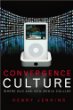
I come late to this book, published in 2006. I do not regret it. It is a bit too focused on media, art, and “culture” for me, but I cannot penalize the author for being a master of arcane tid-bits. This book is a collection of previously published articles reworked into a book–for me, that is a good thing, as I do not cover the sources that originally carried the pieces.
The book comes recommended by Howard Rheingold and Bruce Sterling, two of the originals, so that alone should encourage anyone interested in this area to take this book very seriously.
Although the author focuses on “participatory culture” the emphasis is this book is on the CULTURE part, not the social networks, integral consciousness, appreciative inquiry, co-intelligence, and so on as I have learned from my Eco-Topia colleauges.
The author himself speaks early on about the book speaking to three concepts:
+ Media convergence
+ Participatory culture
+ Collective intelligence
He gets an A for the first, a B for the second, and a C for the third.
I don't consider myself qualified to be critical of this book, so here are the tid-bits that grabbed me:
+ Paradigm shift is not about communications among individuals but rather about their *being* in *being* with one another (from one to many and one to one to many to many)
+ Author credits Ithiel de Sola Pool (1983) with seeing the transitions that were coming
+ Convergence changes relationships and logics
+ The biggest convergence may be the sharp total confrontation between top down attempts to keep control, and bottom up demands to wrest control
+ Media right now is being excessively influenced by the wealthy that can afford the trinkets (look for my 1993 rant to INTERVAL on “God, Man, and Informaiton: Comments to Interval” for the other side of the story)
+ Emotions and feelings of connection matter more–the author writes of an “affective economy”
+ Producers are finding they must agree to co-creation (this media or cultural trend has a counterpart in the business world, see the Business Week cover story of 20 June 2005 on “The Power of Us”)
+ Media industry is split between the prohibitionists and the collaborationists, and I am most fascinated to see mobile telephone companies in the latter category. If I had to place a bet on Nokia versus Google, I would go with Nokia.
+ Citing another author (always with credit) I am engaged by the concept of “adhocracies” as the opposite of bureaucracies.
+ Digital enclaves are becoming counter-productive, allowing nesting rather than engagement (at least among the one billion rich), need to get out and cross those cultural divides.
I am glad I got and read this book. It is clearly very learned in the media convergence and media-mind aspect, but it is not at all as versed as I was expecting in the nuts and bolts of participatory networking, appreciative inquiry, deliberative democracy, integral consciousness, world brain, etcetera, nor is it all oriented toward large scale problem solving with collective intelligence.

 Early Insights into the Future, May 24, 2008